Easement Rights Explained for Shared Driveways
You’ve got a shared driveway? Cool—welcome to the world of easements, where you and your neighbor legally agree to share that strip of pavement like campers around a fire pit (nobody wants five fires, right?). It’s not ownership, but it *does* give you the right to use it, anytime. Usually, one home benefits—the dominant estate—while the other hosts—the servient one. You’ll want this written down, not just handshakes and good vibes. Clear rules prevent snow-clearing wars or parking pileups. Think of it as setting campsite boundaries before the trip. Fair cost-sharing keeps peace, and yes, you can tweak or end it later—just talk it out, get it notarized, and boom: drama avoided. Oh, and if you’re curious how to map it, split bills, or handle a stubborn neighbor, we’ve got stories.
TLDR
- An easement grants legal right to use a portion of another’s property, like a shared driveway, without owning it.
- Shared driveway easements are commonly created by written agreement, necessity, or long-standing use.
- Recording the easement ensures public notice and protects access rights for current and future owners.
- Clear terms should define usage, maintenance responsibilities, and route to prevent disputes.
- Disputes can often be resolved through discussion, mediation, or legal action if necessary.
What Are Easement Rights in Real Estate
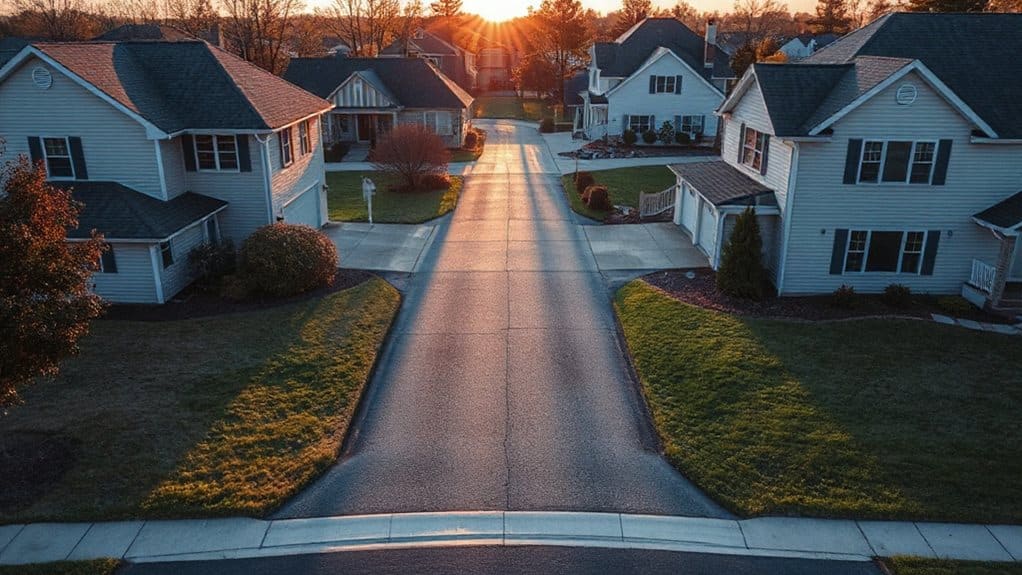
Envision this: you’re all packed up for a weekend camping trip, your cooler’s loaded, the dog’s bouncing in the backseat, and you’re ready to hit the open road—only to find someone’s fence blocking your only way out. That’s where easement rights come in, buddy! They’re legal permissions allowing you to use part of someone else’s land—like a shared driveway—without owning it.
Think of it as a neighborly hallway agreement, but for property. Super handy, right? You keep your freedom, they keep their yard, and nobody’s camping in the driveway! AEP works to reach voluntary agreements with landowners before considering other options. In many communities, these rights and how they’re enforced are governed by HOA rules.
How Shared Driveways Create Property Access
So, you’ve just bought your dream fixer-upper, right? If your only way in is a shared driveway, guess what? You might already have an easement—no paperwork needed!
Whether by necessity, long use, or a neighbor’s nod, these paths keep you rolling. Just don’t block it, or you’ll face side-eye—and maybe court!
Keep it clear, keep it kind, and everyone wins. Installing No Parking signs or physical barriers can help prevent cars from parking on lawns and protect your turf.
Understanding the Dominant and Servient Estate
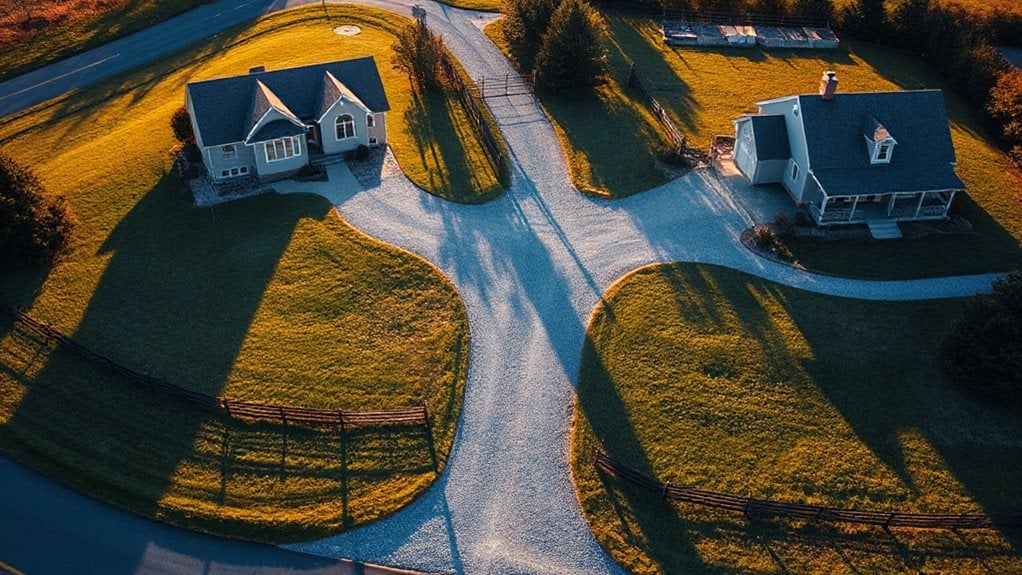
While you’re picturing weekend camping trips and backyard bonfires, let’s talk about something that mightn’t sound as fun but is super important—especially if your dream home shares a driveway.
You’ve got a dominant estate (yours!) benefiting from access, while your neighbor’s is the servient one, hosting the path. It’s teamwork: you get through, they keep ownership—no drama, just shared respect and smoother arrivals for your next escapade! Local law may affect rights and remedies for drainage and access issues, so check state rules for details.
Express Easements Through Written Agreements
You’ve got a shared driveway with your neighbor, and guess what? A written agreement is your best friend here—like packing a tent before a camping trip, it just saves everyone a ton of trouble later.
Make sure the document spells out exactly who can use the driveway, when, and for what (no surprise go-kart races at midnight, please), and don’t forget to sign, notarize, and record it so it’s locked in tighter than your bike chain on a hill.
Think of it as your driveway’s official rulebook—clear, fair, and way better than arguing over whose turn it’s to shovel snow! Properly recording an express easement also helps ensure enforceability and provides notice to future owners about recorded rights.
Written Agreement Requirements
If you’re picturing smooth weekend getaways to your favorite campsite or zipping back and forth to your lakeside cabin without a single legal hiccup, then nailing down a written agreement for a shared driveway is your first real escapade in grown-up property life—and trust me, it’s way more exciting than it sounds!
You’ve gotta get it in writing, signed by both of you, spelling out who can use what, where, and how—think access, maintenance, even snow shoveling duties.
No handshake deals; Mother Nature doesn’t care about good intentions when the plow’s late and the driveway’s icy!
Clear Terms Essential
Alright, let’s talk specifics—because that cozy cabin getaway you’ve been dreaming about doesn’t come with a rewind button when driveway drama hits. You *need* clear terms: spell out who uses what, where, and why.
Vague words? Hello, fights! Be precise—describe the path, purpose, and rules so everyone’s happy, neighbors stay friends, and your camping trips stay stress-free. Clarity isn’t just smart, it’s peace of mind.
Recorded for Protection
While you’re out there chasing sunsets and planning your next weekend escape to the woods, the last thing you want is a surprise land dispute mucking up your peace—so here’s the good news: when it comes to shared driveways, putting your easement in writing and recording it’s like strapping on a seatbelt for your property rights.
You protect everyone—your neighbor, your guest, even that cousin who shows up unannounced with a trailer in tow—by making things official, clear, and locked in public record, so no one’s left stranded.
Implied Easements Based on Longstanding Use
Envision this: you’ve just bought your dream cabin in the woods—peaceful, private, and perfect for weekend getaways with the family—and the only way to reach it’s down a narrow, tree-lined driveway you share with your neighbor.
You never signed paperwork, but that path? It’s likely an implied easement. If you’ve used it openly, continuously, and it was obvious before the land split, courts often say, “Yep, you’ve got a right!” It’s not magic—just common sense and a little legal history protecting your peaceful retreat. Courts typically look at factors like continuous, open use to find an implied easement, so it’s wise to understand your expectation of privacy and local laws.
Easements by Necessity for Landlocked Parcels
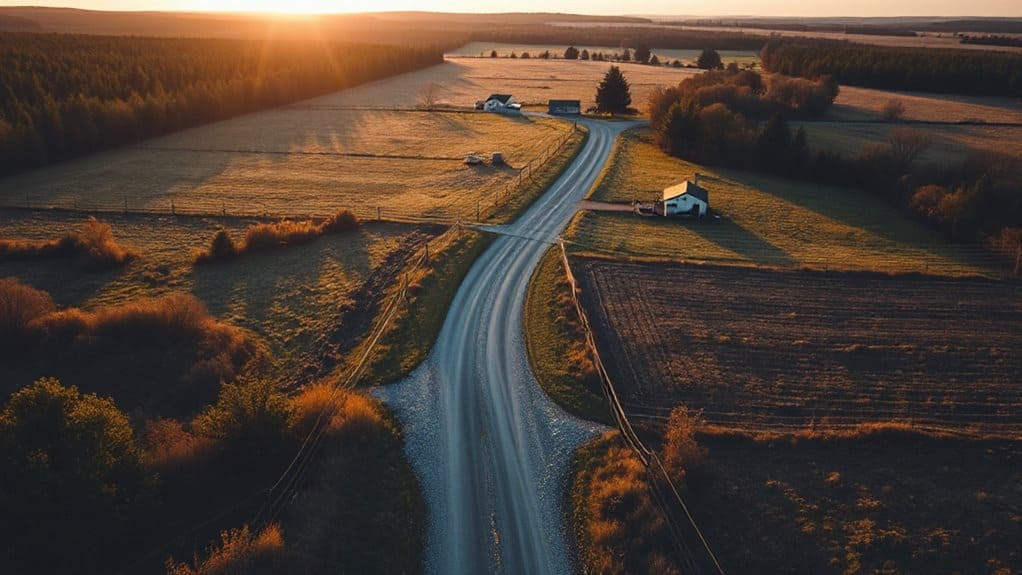
So, imagine this: you’re all packed up for a weekend of camping, roasting marshmallows, and sleeping under the stars at your brand-new wooded getaway—only to realize your property is completely surrounded by someone else’s land with no road in sight. Don’t panic!
If you once shared ownership and now have zero access, an easement by necessity might save your trip—it’s like the law tossing you a trail map when you’re lost. Just prove it’s truly the only way in, and you’re golden!
Recording Easements With Local Authorities
Alright, let’s talk about getting your shared driveway deal locked in with the local authorities—because no one wants a surprise fence blocking their path to the great outdoors!
You’ll need to write up the easement with all the key details, get everyone’s original signatures, and have it notarized—no scribbles or white out!
Then, send the document to your county recorder’s office, either online or by mail, and pay the fee (usually $20–$100).
Once it’s recorded, boom—it’s official, searchable, and protected in public records, just like that campground reservation you never want to lose!
Defining the Exact Driveway Access Route
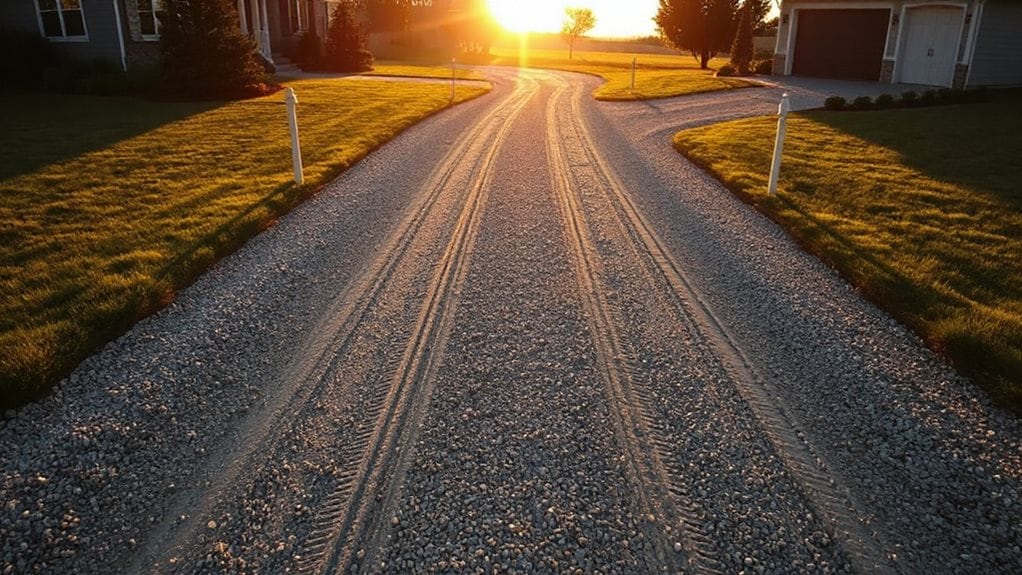
You’ve got to nail down exactly where that driveway goes—nobody wants to wake up to a tent in the middle of their easement because the path wasn’t clear, right?
Make sure the boundaries are marked like trail signs on a camping trip, so everyone knows where they can drive (and where they definitely can’t park their RV).
Lock it all in writing, with access points and route specs recorded, so your weekend getaway starts with escapade, not arguments.
Clearly Marked Pathway Boundaries
While you might think slapping a stripe down the middle of a shared driveway is all it takes to keep the peace, clearly marking the actual pathway boundaries is way more important—and trickier—than it sounds.
You’ll want fences, paint, or stones (with agreements!) to avoid confusion. Always survey first—trust me, no one wants a fence-in-the-wrong-spot surprise.
Record it legally, so future owners aren’t left guessing, arguing, or accidentally camping on someone else’s property!
Defined Access Points
So you’ve got your pathway boundaries sorted with neat paint lines or maybe some cute little garden stones—awesome, right?
Now, let’s nail down exactly where you and your neighbor can enter and exit, so no one’s backing into a bush or blocking the way to someone’s camping trip.
Clearly defined access points prevent confusion, keep traffic flowing, and make sure everyone’s driveway rights are respected—because nobody wants a driveway showdown before morning coffee.
Recorded Route Specifications
When you’re all packed up for a weekend camping trip and your neighbor’s minivan is double-parked across the driveway because nobody’s sure where the shared path actually goes—yeah, that’s when things get messy real fast.
You *need* that recorded route spelled out: it maps the exact path, prevents confusion, and keeps your outing on track—no detours!
Clear, legal descriptions mean everyone knows where to drive, park, and *not* block.
Let’s keep those wheels rolling smoothly!
Maintenance Duties for Shared Driveway Owners
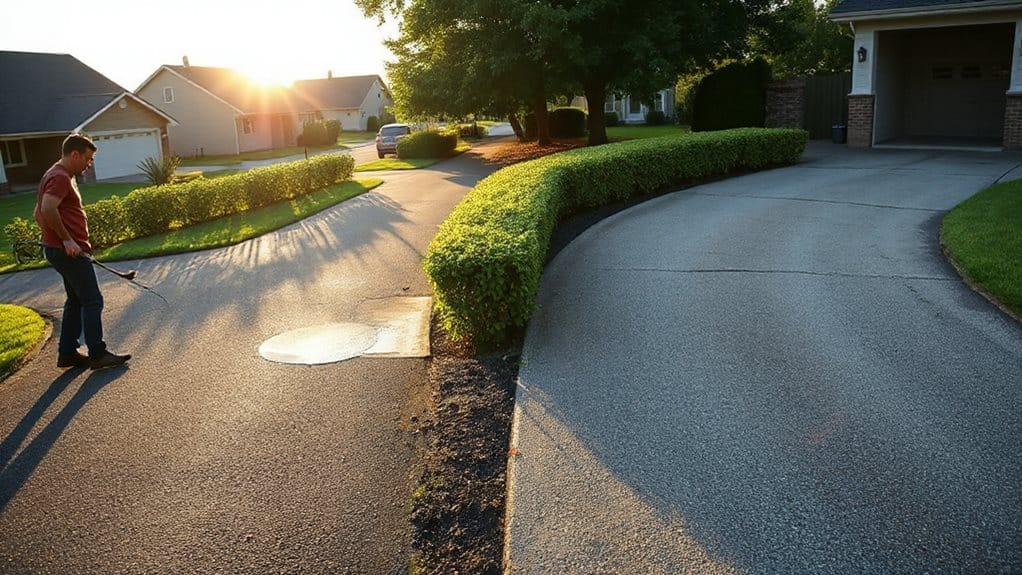
Envision this: you’re backing out of your driveway on a crisp winter morning, coffee in hand, ready for a weekend camping trip—only to hit a chunk of ice because your neighbor skipped snow removal again. Yikes!
To keep escapades (and driveways) running smoothly, clarify maintenance duties early: split costs fairly, assign chores like repairs or shoveling, and record it all legally. Teamwork prevents icy meltdowns—literally!
Usage Rules and Limitations on Shared Drives
Alright, you’ve got the snow shoveling schedule nailed and the repair fund set up—teamwork’s looking good!
Now, don’t turn your shared driveway into a parking lot, okay? Fire lanes must stay clear, no overnight parking, and sorry, your buddy’s food truck can’t camp here—commercial vehicles are a no-go. Keep it residential, keep it light, and always, always let neighbors pass.
Safety first, fun second—like camping, but with fewer s’mores and more rules!
Resolving Disputes Over Driveway Access Rights
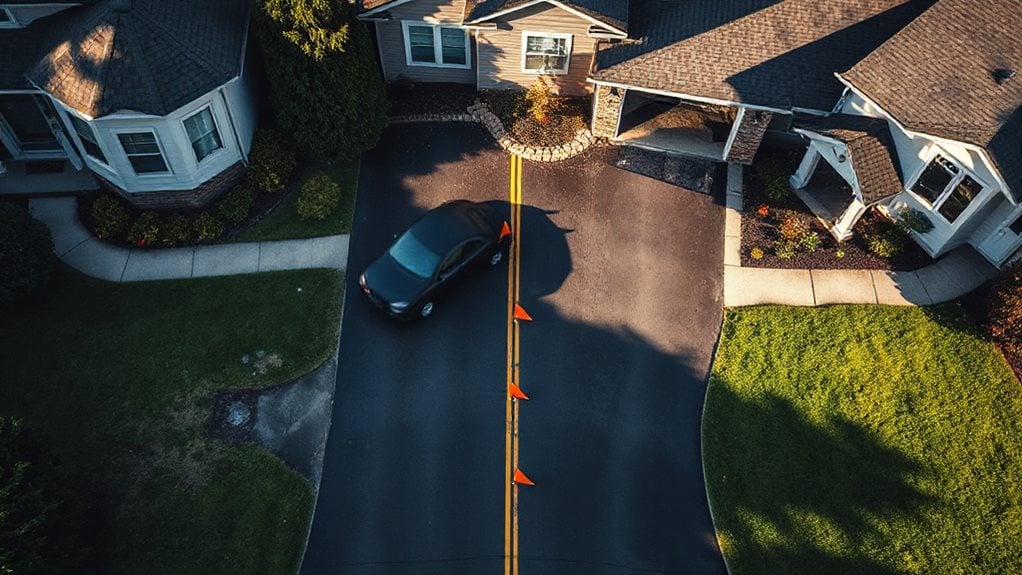
Even if you and your neighbor have been getting along great since the Great Snow Shovel Truce of ’23, driveway disputes can still pop up like a tent in a windstorm—suddenly and a little wobbly.
You’ve got options: talk it out calmly, review old documents (yes, even that dusty deed), or try mediation before things turn into a legal campground showdown.
Stay friendly, get everything in writing, and involve a real estate attorney early—because nobody wants their dream road trip blocked by a fence feud.
Ending or Modifying an Existing Easement
While you might’ve thought that once an easement’s set, it’s set in stone like a campground’s “No Vacancies” sign in peak season, the truth is you *can* actually end or change it—you just gotta follow the right trail.
You can agree with your neighbor to cancel or tweak it on paper, especially if needs shift—like if you finally pave that bumpy shared driveway or one of you sells the property.
Just remember: record the update, or future owners might be in for a wild ride!
Overall
So, now you know—easement rights aren’t just fancy legal jargon, they’re like the secret handshake for sharing driveways, kind of like splitting a campfire snack with your buddy! You’ve got the power to use, maintain, and even defend your access, as long as you play fair. Ever tried backing a camper into a tight spot? Yeah, clear driveway rules help! Stay smart, stay friendly, and keep those wheels rolling smoothly—happy camping, neighbor!