Extension Cords Overheating Outdoors: Common Causes
Your extension cord’s basically throwing a heat tantrum when you overload it with gadgets, leave it coiled like a sleepy snake, or let sun-baked pavement turn it into a griddle. Thin, flimsy cords overheat fast, especially if frayed or cheap—seriously, that 16-gauge wire’s no match for a 1500-watt heater. Summer heat + humidity? That’s a double whammy. Unspool it fully, check for cracks, and go rugged—your campsite’s about to get way safer (and way cooler). You’ll love what comes next.
TLDR
- Overloading extension cords with high-wattage devices exceeds amp capacity, generating dangerous heat outdoors.
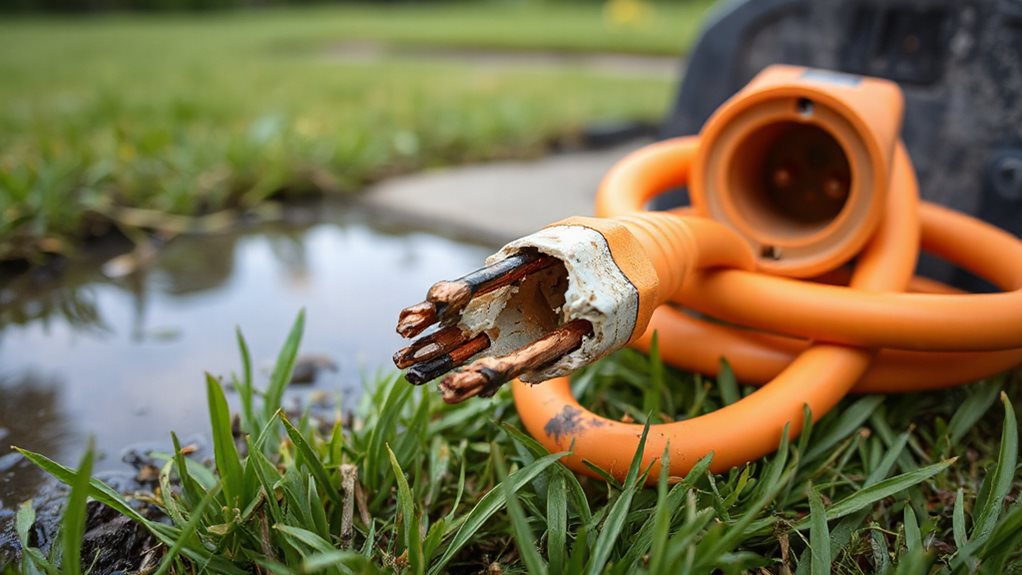
- Damaged or frayed cords with worn insulation increase resistance and risk of overheating in outdoor conditions.
- Using undersized cords (e.g., 16-gauge) for heavy loads causes excessive heat buildup due to higher resistance.
- Coiling extension cords during use traps heat, accelerating insulation melting and fire risk.
- Hot weather, sun exposure, and humidity reduce heat dissipation, worsening overheating in outdoor cords.
Why Outdoor Extension Cords Overheat in Summer
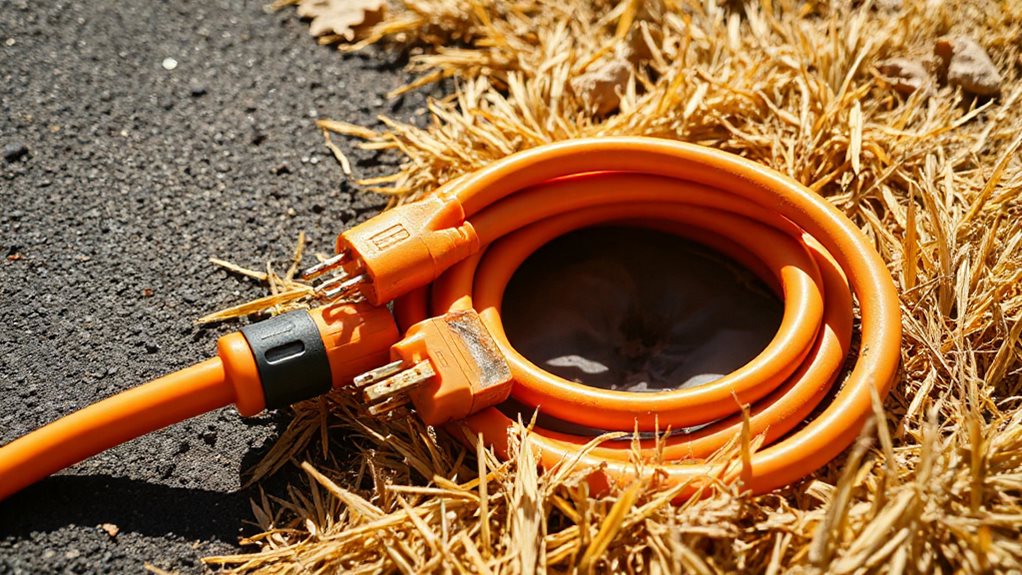
When the summer sun’s blazing and you’re out there powering up your popcorn machine for a backyard movie night—or maybe juicing up a fan at your campsite—your extension cord might be sweating more than you think.
Heat builds up fast, especially if it’s coiled, damaged, or too long, and humidity? Oh, it’s basically throwing a party inside your cord’s insulation.
Let it breathe, check for wear, and pick the right length—your gadgets (and s’mores) will thank you! Be mindful of the total amp draw on the circuit to avoid overloading and overheating cords.
Excessive load can quickly overheat cords when powering high-demand devices like fans or projectors outdoors.
Overloaded Circuits: Too Many Devices, One Cord
So here’s the deal—your extension cord might look tough, coiled up like a ready-to-strike garden snake, but it’s not magic, and it definitely can’t handle your entire summer setup all at once.
Plugging in lights, a fan, *and* the popcorn machine? Nope, that’s a heat-building, fire-risk party waiting to happen—especially outdoors where things get even hotter.
Your cord’s only rated for 13 amps, remember? Overloading it makes it hot—literally.
And if it’s warm to the touch, that’s your cue: unplug now, split up devices, and play it safe.
You’re camping, not cooking dinner on your wiring!
A 1500-watt heater alone draws about 12.5 amps on a 120 V circuit, which can bring a 13-amp-rated cord close to its limit if used outdoors with other devices; consider a 12.5 amps calculation before plugging in.
Frayed Wires and Damaged Insulation Risks
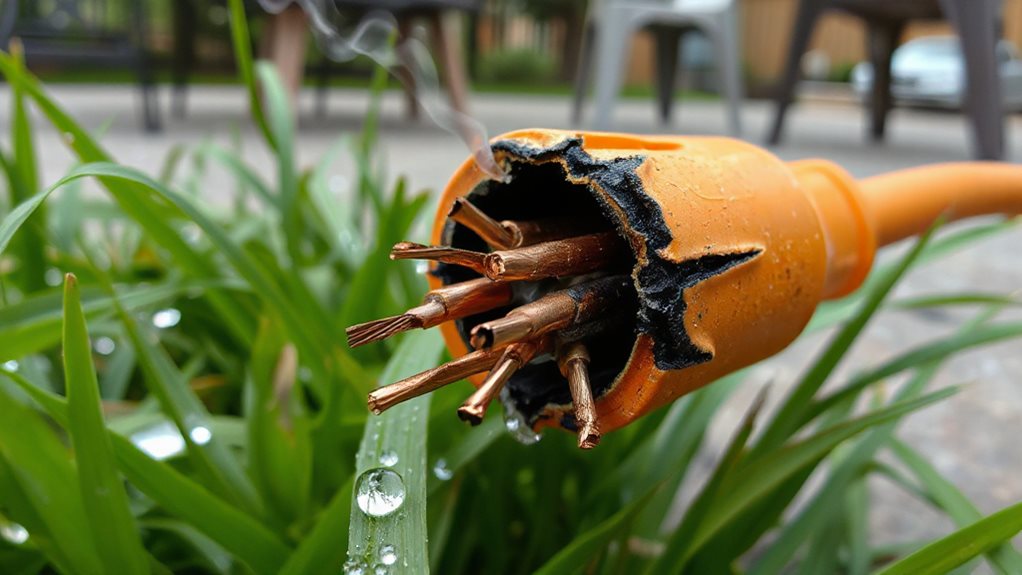
Okay, imagine this: you’re out at your favorite campsite, the grill’s sizzling, the string lights are glowing, and your playlist is *chef’s kiss*—but then you trip over a chunk of your extension cord that’s looking more like a chewed-up shoelace than a power lifeline. Yikes!
Frayed wires and cracked insulation aren’t just ugly—they can shock you, start fires, or ruin your epic outdoor vibe fast. Water, sun, and rough handling wreck cords, especially outside, so always check ’em before you plug in. Safety first, fun second—well, okay, safety *and* fun together! Modern safety-focused designs use controlled pulses and low current to reduce the risk of serious injury from electric shocks, but you should still inspect and replace damaged cords promptly (controlled pulses).
How Cheap Cords Melt in High Heat
You just fixed that frayed cord from last weekend’s campout—phew, close call with the sizzling sound and that weird burnt toast smell—so you toss it back in the bin and grab the cheapest replacement you can find at the gas station, right? Don’t do it!
Those flimsy cords overheat fast outdoors, especially in the sun or humidity—thin wires, weak insulation, and corroded prongs turn your power source into a meltdown waiting to happen.
Unwind it fully, check the plugs, and invest in a rugged, outdoor-rated cord—your cooler, lights, and phone will thank you! Also, using properly sized wire like 12-gauge can reduce overheating and voltage drop on longer runs.
Why Long or Thin Cords Overheat Faster
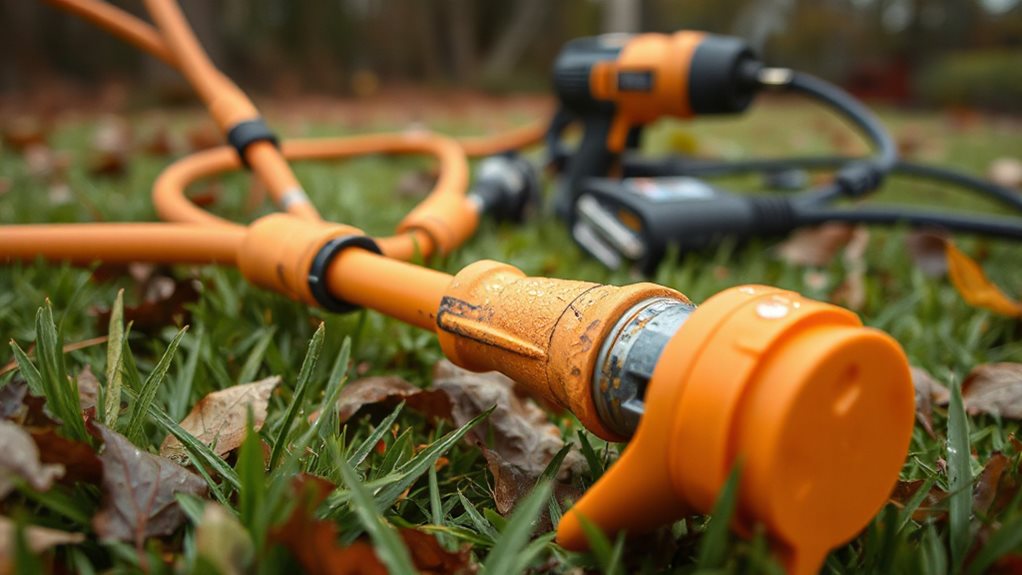
You know that awesome camping trip where you’re all set to fire up the coffee maker and charge your phone, only to find your extension cord feeling like a hot dog on a grill?
Well, if you’re using a long or skinny cord, that’s basically asking for trouble—longer cords build up more resistance, and thinner wires (like those flimsy 16-gauge deals) overheat way faster, especially when you’re powering something beefy like a heater or fan. Remember that a 1500 watt heater produces about 5120 BTU/hr, so heavy loads significantly increase the risk of overheating.
Wire Gauge Matters
Envision this: you’re out in the backyard, ready to power up your favorite outdoor tools or maybe even set up some cozy string lights for a campout, when—uh-oh—the extension cord starts feeling hotter than your science teacher’s lava lamp on a sunny day.
That’s a big clue you’re using the wrong wire gauge! Thinner cords (like 16-gauge) overheat fast, especially with heavy-duty gear or long runs. You need thicker wires—14-gauge or lower—to handle the juice safely.
Don’t risk a meltdown; match your cord to your device’s power needs. Your tools (and your s’mores) will thank you!
Length Increases Resistance
That sizzling sensation you felt in the last section? Yep, long cords make it worse—every extra foot fights your current like a muddy trail on a camping hike.
Thin wires? Even stickier. The longer the cord, the more it resists, heats up, and risks melting.
Seriously, unspool that whole cord—coiled = oven. Keep it short, thick, and safe, okay? Your blender (and tent) will thank you!
Coiled Cords Trap Dangerous Heat
Ever yanked out a coiled extension cord for your camping trip lights or outdoor movie setup, only to leave it all wound up while powering your gear?
That cozy coil traps heat like a sleeping bag in July—inner wires overheat, insulation softens, and boom, you’ve got a fire risk!
Unspool it fully, let heat escape, and keep your outings safe, fun, and flame-free.
Safety first, explorer!
How Summer Weather Makes Cords Overheat
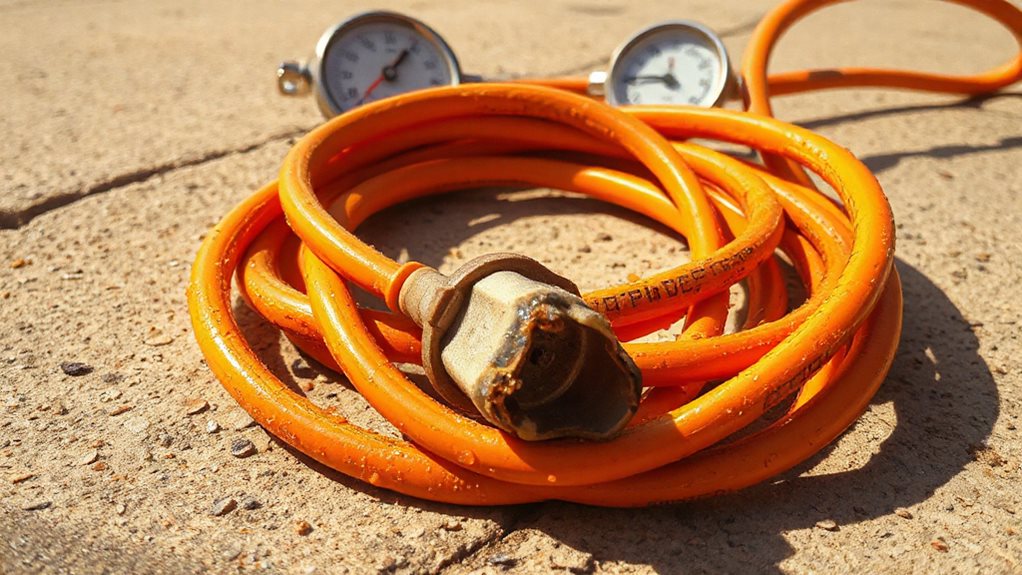
You’ve unspooled your cord like a pro—nice work avoiding that coiled heat trap—but hold up, because summer itself is sneaking in like a heatwave ninja to turn your trusty extension cord into a sizzling surprise.
Hot air, blazing sun, and your booming outdoor party all team up, making cords hotter than a campfire skillet. Humidity? It’s like a sweaty hug that won’t let heat escape.
And when you’re running lights, a fan, *and* the blender for smoothies? Yikes. Even the best cord can overheat if it’s not ready for summer’s triple threat: heat, sun, and your epic backyard bash.
Stay cool, stay safe, and pick a beefier cord—your s’mores will thank you!
Overall
So, you’re out camping, lights strung up, cooler running, and boom—your cord’s hotter than July asphalt! Yeah, we’ve all been there. Overloading, sun-baked cheap cords, or that sneaky coiled wire trap heat like a thermos. But now you know the fixes, right? Ditch the frayed junk, unspool that cord fully, and pick a thick, rated one. Stay safe, stay cool, and keep those s’mores roasting—without the fire hazard!