Why Do Plants Droop After Watering?
You’re probably seeing your plant droop after a drink because the roots are gasping for oxygen—over‑watering or a soggy pot chokes them, just like a hiker stuck in a rainstorm, and the foliage wilts; heavy, poorly drained soil holds water too long, and clogged drainage can invite rot‑loving molds, while too much water in a small pot squishes the roots, causing a sudden “too much water” shock; even heat, wind, or low humidity can make the leaves feel like a tired camper, and fertilizer salts may add osmotic stress, so check the soil texture, improve drainage, and give the roots a breather—keep reading to discover the fixes.
TLDR
- Overwatering saturates soil, cutting off root oxygen and causing hydraulic failure, leading to drooping.
- Poor drainage or heavy, compacted soil traps water, creating root rot and mushy roots that wilt the plant.
- Excess water can shock the plant, temporarily reducing turgor even though the soil feels moist.
- High humidity or low airflow may mask root stress, so leaves appear limp despite adequate moisture.
- Inadequate pot size or root‑bound conditions limit water uptake and exacerbate drooping after watering.
Why Overwatering Causes Plant Wilting (and How to Spot It)
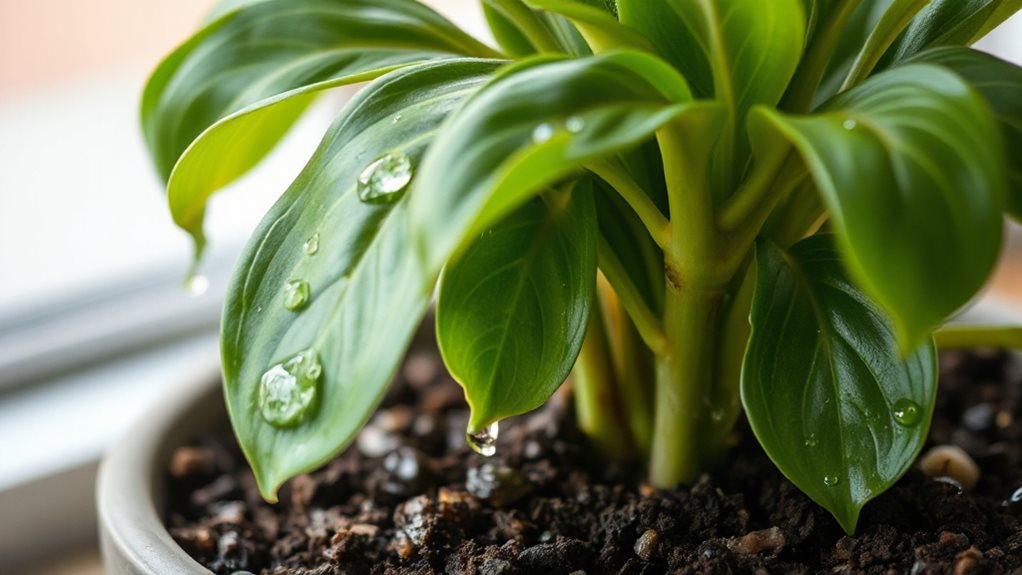
Ever wondered why a plant can look droopy even after you’ve just given it a generous drink? You’re overwatering, so the soil’s saturated, choking roots of oxygen, and the fine roots suffocate, causing hydraulic failure and wilting. Heavy, poorly drained soils can worsen the problem by holding water against roots for longer periods, especially in compacted pots with poor drainage.
Spot the heavy pot, soggy feel, black mushy roots, and yellowing lower leaves—these signs scream “too much water,” not drought. Clogged drainage can reactivate soil‑dwelling molds that infect roots, compounding the damage.
How Under‑watering Leads to Plant Wilting (and How to Spot It)
After we’ve explored how too much water can choke a plant’s roots, let’s flip the script and talk about the exact opposite problem—what happens when a plant doesn’t get enough H. You’ll notice leaves drooping, curling, and turning crispy, while roots shrink, become brittle, and can’t pull moisture from bone‑dry soil; the top inches feel powdery, and older foliage yellows, then browns, signaling urgent hydration before growth stalls. Check soil moisture with a probe to confirm deep watering is needed rather than assuming the problem is overwatering.
Root‑Bound Pots and Plant Wilting: What to Look For
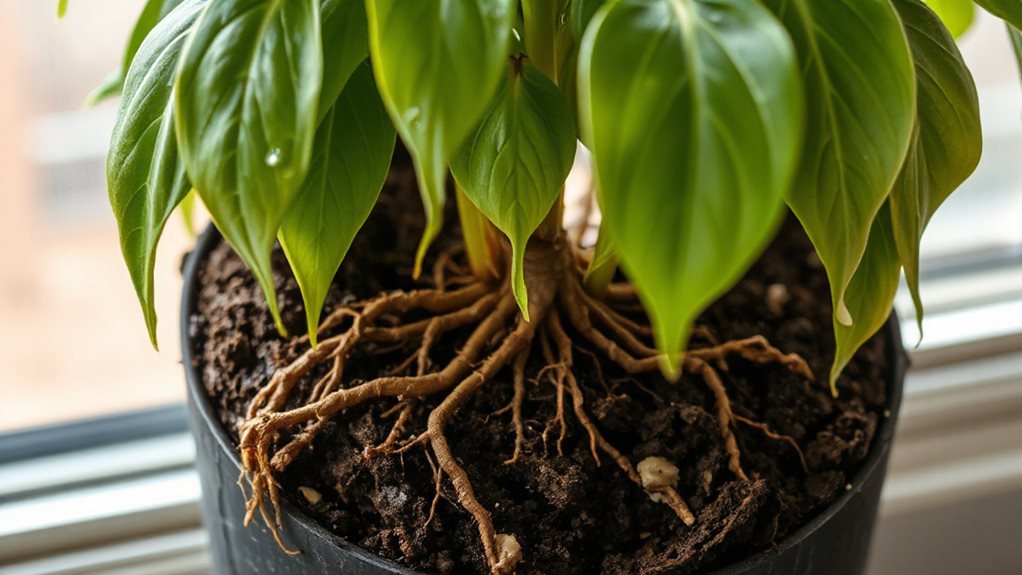
You might notice your plant’s pot looks snug, like a tent that’s been packed too tight, and that’s a big clue the roots are circling the rim, choking the soil’s ability to hold water; have you ever tried to pull a plant out and felt a solid mat of roots resisting your fingers? If the pot’s size seems to limit growth, it’s time to repot before the plant starts staging a wilt‑fest, so grab a bigger container, gently loosen the root ball, and give those roots room to spread out like campers setting up tents in a spacious campground. Trust me, swapping to a roomy pot is like giving your plant a fresh adventure, and you’ll see the drooping disappear faster than you can say “campfire marshmallows”! Homeowners are legally required to follow rules recorded in property records that can include maintenance of common areas, and similarly, regular care and appropriate pot size are required to keep plants healthy.
Pot Size Limits
So, why does your plant keep drooping even after you’ve given it a good drink? If the pot’s too small, roots jam together, squeezing out soil and water, so the plant feels thirsty right away—think of it as a cramped campsite where everyone’s hogging the fire.
Watch for cracked containers, roots spilling out, or water disappearing in a day.
Upgrade to a bigger pot, give those roots room, and the droop will vanish.
Root Circling Signs
When your plant’s pot is too cramped, the roots can start to grow in circles like a campsite where everyone’s setting up tents on the same spot, and that’s when you’ll see the classic “root‑circling” signs.
You’ll spot horizontal roots hugging the trunk base, a trunk that hardly tapers, leaves turning yellow, and the whole plant leaning like a tired camper after a long hike.
Spotting these clues early lets you help the plant thrive.
Repot Timing Tips
A cramped pot can turn a thriving plant into a droopy camper, and the trick is timing the repot just right—think of it as planning a road‑trip pit stop before the engine overheats.
You’ll want to repot between March and September, when growth spikes, and act fast if wilting matches a multi‑year stay.
Skip winter, pick a larger, well‑draining container, and watch the plant bounce back.
Heat, Wind, and Low Humidity: Triggers of Plant Wilting
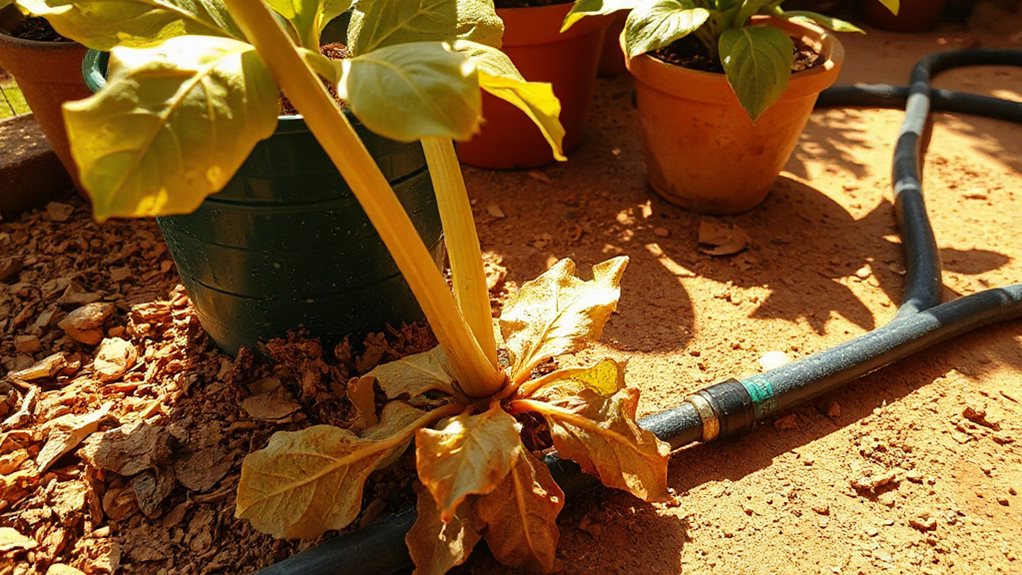
Ever notice how your garden looks like a sleepy camper after a scorching day, the wind whipping through the leaves and the air feeling as dry as a desert trail?
Heat makes leaves lose water faster than roots can sip, wind strips the humid blanket off them, and low humidity pulls moisture straight out, so turgor drops and drooping appears—like a tired camper needing a cool, shady night before sunrise. Fences and other structures can create a microclimate that reduces heat and wind stress, helping plants retain moisture and avoid wilting.
Fertilizer Salt Buildup and Plant Wilting: Osmotic Stress Explained
You’ve probably noticed that after a heavy feeding, your garden looks like it’s been on a salty road trip, and that’s because the extra fertilizer builds up a crust of salts that slashes the soil’s water potential, making it harder for roots to sip water.
Have you ever wondered why the leaves start to curl and turn yellow even though the soil is still moist?
Try flushing the bed with a good soak of fresh water—think of it as a quick rinse after a muddy hike—to wash away the excess salts and restore the osmotic balance, and you’ll see the plants perk up like campers after a hot cup of cocoa.
Prune or pinch back leggy stems after addressing salt buildup to encourage bushier, healthier regrowth.
Osmotic Pressure Impact
Ever wondered why your garden’s greens droop right after you give them a good drink? You’re seeing osmotic pressure at work: fertilizer salts raise the external solute level, making soil hypertonic, so water rushes out of root cells, collapsing turgor. The cells lose rigidity, leaves sag, and even a quick soil flush can rescue them—think of it as a camp‑trip rescue for thirsty plants.
Salt Accumulation Symptoms
After we’ve seen how osmotic pressure can pull water out of root cells, the next thing to watch for is the tell‑tale signs that salts are actually building up in the soil. You’ll notice chalky white crusts on the surface, salty rims around drainage holes, and leaf edges browning or scorching; stems droop, foliage shrivels, and even fertilizer caps get a salty rim, signaling nutrient lockout.
Flushing Techniques Explained
Ever wondered why a quick “water‑down‑the‑pot” can rescue a wilted leaf that looks like it’s survived a desert trek? You flush by pouring twice the pot’s volume, wait 30‑60 minutes, then repeat—think of it as a rainstorm for the roots, washing out sodium and chloride. Do it every 4‑6 months, use low‑mineral water, and your plants will thank you with greener, happier leaves.
Quick Soil‑Moisture Test Before You Water Again
A quick soil‑moisture test before you water again is basically your garden’s “check‑engine light,” and it’s as easy as squeezing a handful of dirt and feeling for a ball‑like shape—if the soil crumbles, you know it’s thirsty, but if it holds together, you’ve got enough moisture to keep the plants happy.
You’ll press, observe color, maybe stick a chopstick, then decide—no over‑watering, just confident care.
Step‑by‑Step Fixes for Wilting Plants
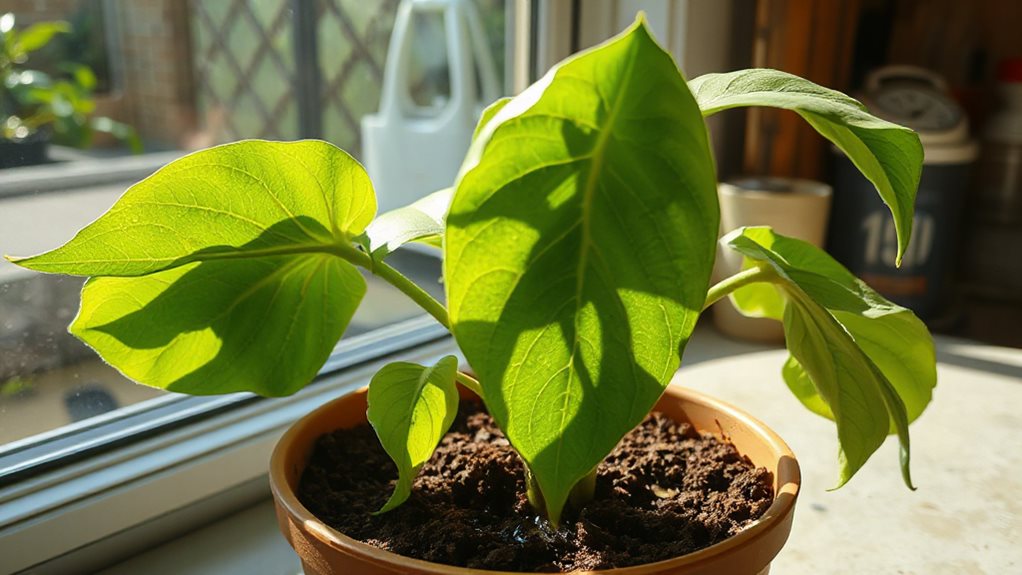
So, why do your leafy friends suddenly look like they’ve just finished a marathon? First, check soil moisture; if it’s soggy, stop watering and let it dry for days, then water only when the top two inches feel dry.
If leaves stay limp, treat possible root rot with fungicide, repot in fresh mix, and trim dead roots.
Adjust light, avoid pot‑bound roots, and keep temperature steady.
Preventive Practices to Keep Your Houseplants Upright All Year
Why let your indoor jungle sag when you could keep every leaf standing tall year‑round? Check soil 2‑3 cm deep, water only when the surface feels dry, and use a meter to avoid guesswork; add drainage holes, a light mix, coir or gravel for airflow, and keep pots out of standing water. Group plants, mist lightly, and use a humidifier to maintain steady humidity.
Overall
So, next time you see a plant drooping, remember it’s not just a sad face—it’s a clue about water, roots, and even the weather, and you can totally fix it by checking soil moisture, giving it room to breathe, and adjusting your watering schedule, so grab a moisture meter, give those roots a little space, and watch your green friends perk up like campers spotting a sunrise after a night under the stars!