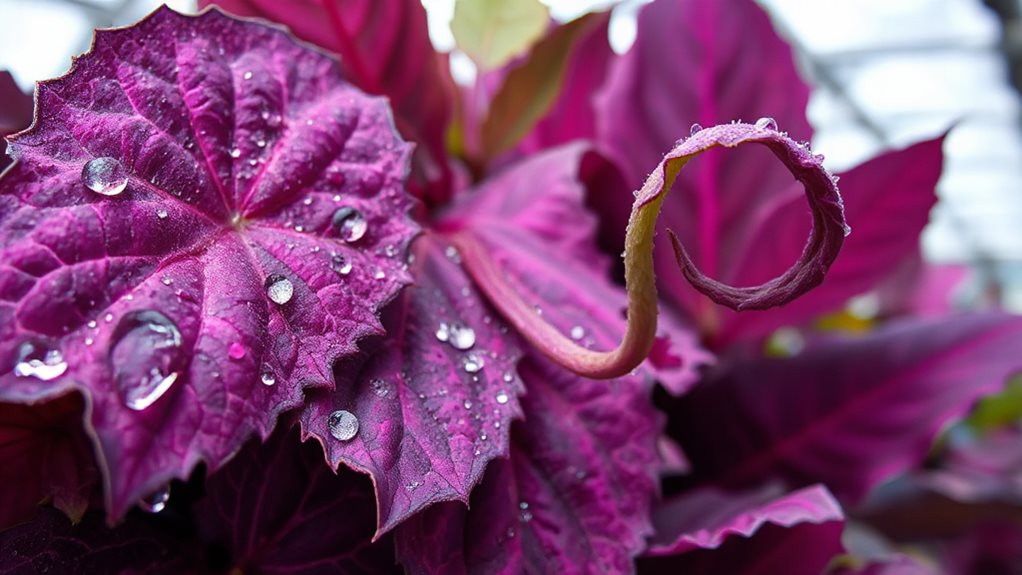
Why Do Plant Leaves Turn Purple?
You see purple leaves when the plant’s “fuel”—phosphorus or magnesium—is low, so it makes anthocyanin pigments that act like a protective sunscreen, especially on cool nights or under bright light. Too much or too little water can block nutrient uptake, and stress from heat, drought, or root rot can trigger the same hue. Think of it as a campfire turning orange when the wind picks up—your plant’s signal flare. If you keep an eye on soil pH, moisture, and fertilizer, you’ll spot the cause fast, and the next section will show you exactly what to do.
TLDR
- Anthocyanin accumulation in response to stress, light, or temperature changes can give leaves a purple hue.
- Phosphorus deficiency blocks sugar transport, causing sugar buildup and anthocyanin production, especially in older leaves.
- Magnesium shortage reduces chlorophyll, leading to yellow interveinal patches and violet‑tinted older foliage.
- Over‑ or under‑watering, root rot, and nutrient lockout (P, Mg, K) impede uptake, triggering purple pigmentation.
- Soil pH, drainage, and temperature affect nutrient availability; acidic or cold conditions often intensify purple leaf coloration.
Why Phosphorus Deficiency Turns Leaves Purple
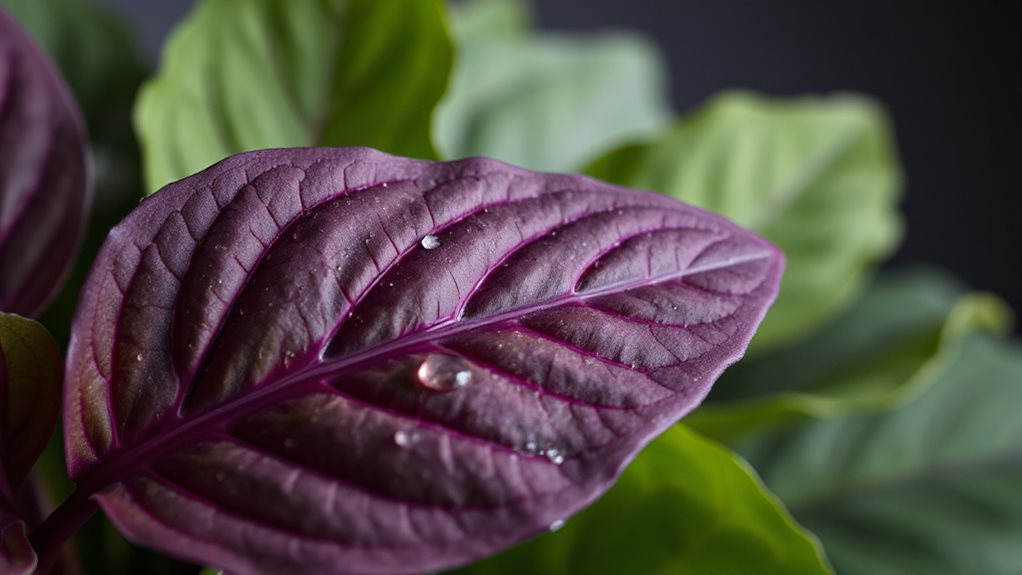
Ever wondered why a plant’s leaves can turn a royal shade of purple when it’s low on phosphorus? You’ll notice older leaves darkening, then purpling at tips, because cold soil, high pH, poor drainage, or excess iron block phosphorus uptake, forcing sugars to pile up and trigger anthocyanin production. Think of it as the plant’s emergency signal, just like a camper’s bright flag warning friends of trouble. Cold soil can also inhibit phosphorus uptake, leading to the same purpling effect. Sunlight exposure can worsen leaf stress and affect pigment changes in a way similar to how UV causes surface degradation.
How Magnesium Shortage Causes Yellow‑Purple Leaves
But guess what? Magnesium is the heart of chlorophyll, so when it’s missing, the green fades, leaving yellow interveinal patches that can turn a violet‑tinted purple on older leaves, especially in tomatoes, as the plant shuffles Mg to new growth. Regular soil testing helps catch deficiencies like this early by revealing nutrient imbalances and soil pH levels.
Purple Leaf Color: Anthocyanin Build‑Up Explained
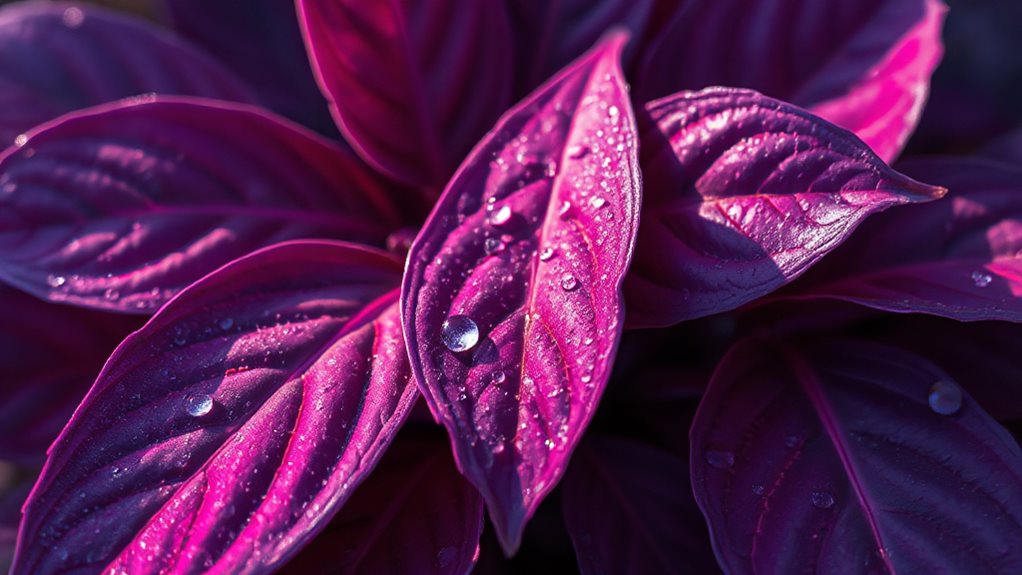
Why do some leaves turn a fierce, camp‑fire‑purple when the sun sets? You’ll see anthocyanins piling up in vacuoles as sugars mingle with anthocyanidins, especially after warm days and cool nights, high light, and low phosphates spark the reaction; acidic leaf tissue pushes reds, while less acidic tones turn purpler, protecting cells like sunscreen on a camping trek. This color can also signal underlying issues such as nutrient lockout affecting growth even when leaves appear healthy.
Diagnostic Checklist: Is the Purple Color a Problem or a Natural Response?
You’ll want to check if the purple hue is a sign of a nutrient deficiency—like phosphorus or magnesium being low—or just a natural stress‑induced pigment response, because the difference changes how you treat the plant, so ask yourself whether the leaves look uneven, stunted, or if the coloration spreads uniformly like a happy camper’s sunrise; if it’s the former, consider adjusting soil pH, watering habits, or adding fertilizer, but if it’s the latter, you can enjoy the colorful display and maybe even snap a pic for your next camping blog post. For persistent issues, also test and adjust your soil pH to around 6.3–6.5 to ensure nutrients remain available.
Nutrient Defptom or
Ever wondered why some leaves look like they’ve been painted with a splash of violet while others stay green, and whether that hue is a warning sign or just nature’s own fashion statement?
You’ll spot phosphorus‑deficient seedlings showing purplish tops, magnesium‑lacking mature leaves yellowing then reddening, and potassium‑starved foliage turning violet at the edges; diagnose by checking leaf age, soil moisture, and pH, then fix with compost, Epsom salt, or potassium‑rich fertilizer.
Natural Stress‑Induced Pigment
Ever wondered why a leaf can turn a deep violet just because it’s been soaking up a blazing sunrise or battling a dry spell, and whether that hue is a red‑flag or just the plant’s own way of saying “I’m handling this”?
You’ll see betacyanins and anthocyanins spring up when light, heat, or drought stress nudges the plant, acting like sunscreen and antioxidant armor, so the purple often means the plant’s adapting, not failing.
Purple Leaf Stress From Over‑/Under‑Watering
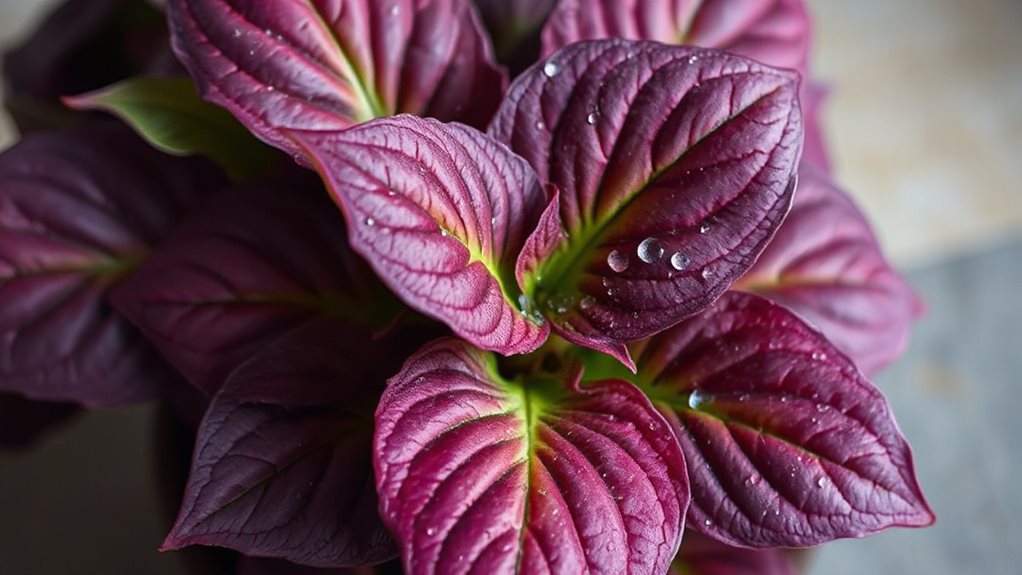
You’ve probably noticed your garden herbs turning a weird shade of purple after a rainy spell, and that’s usually a sign your roots are drowning in rot and can’t pull up phosphorus, magnesium, or potassium, so the plant pumps out anthocyanins to protect itself.
Have you ever wondered why the same purple hue shows up when the soil is bone‑dry? That’s the plant’s stress response to drought, which also blocks nutrient uptake and triggers a burst of purple pigment—so keep the watering schedule steady, and you’ll avoid both over‑ and under‑watering drama.
Soil pH and nutrient availability can influence which nutrients become limited, contributing to purpling in stressed plants, so test and adjust soil pH as needed.
Root Rot Effects
Think of your plant’s roots like a campsite’s water supply—if the stream’s too high or too low, everything goes sideways, and the leaves start flashing purple as a warning flag.
Overwatering drowns roots, inviting Phytophthora and Pythium to feast, while drying out then soaking shocks them, spurring brown, mushy roots.
Those stressed roots choke oxygen, trigger anthocyanins, and you see those purple leaves warning you to adjust watering.
Nutrient Uptake Blockage
So, why do your plant’s leaves flash purple when the water supply gets messed up?
Over‑ or underwatering blocks phosphorus, magnesium, and potassium uptake, so roots can’t feed the foliage, and the leaves turn reddish‑purple.
Poor drainage or cold, soggy soil does the same, trapping nutrients.
Fix moisture levels, improve drainage, and watch the purple fade.
Stress‑Induced Anthocyanin Build‑Up
Ever wondered why your garden’s foliage sometimes flashes a deep violet when you over‑ or underwater it? When you stress a plant, it pumps up anthocyanins—tiny pigments that act like sunscreen. Salt, drought, or excess water trigger MYB75, JA, and ABA signals, boosting MATE transporters and biosynthetic genes. The result? Protective purple hues that say, “I’m coping, and I’m still thriving!”
Light, Temperature & Purple Foliage Triggers
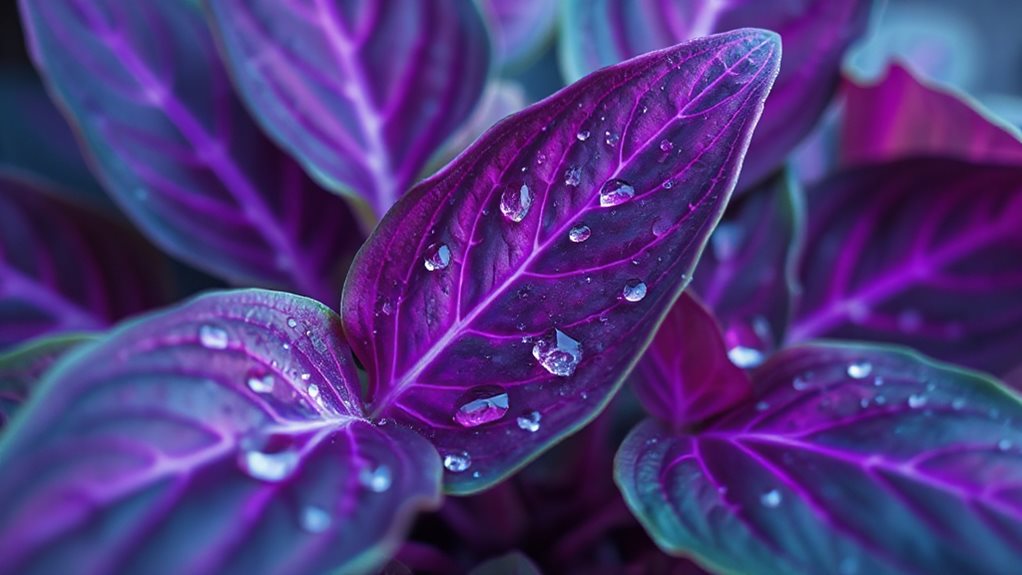
Ever wondered why a leaf can look like it’s wearing a midnight cape just because the sun’s cranking up or the air’s sizzling? When bright light hits, plants crank up anthocyanins, masking green and flashing purple for UV armor; when heat spikes, metabolism scrambles, also boosting those pigments, while cool nights slow chlorophyll, letting the violet hue shine through, especially in succulents and shade‑loving seedlings.
Soil pH & Nutrient Availability for Purple Plants
You’ll notice that keeping the soil pH between 6.0 and 7.5 is like setting the perfect campsite—too acidic or too alkaline throws off the whole vibe and makes phosphorus shy away, so your plants start showing those purple patches you’ve seen on corn and tomatoes; have you ever tried testing the root‑zone pH with a simple kit and felt the thrill of catching a hidden nutrient problem before it spreads?
Adjusting pH with lime or sulfur, timing fertilizer applications to match the growing season, and watching how quickly the leaves bounce back can be as satisfying as finding a hidden trail on a hike, and it’s amazing how a small change in acidity can unlock a flood of nutrient uptake efficiency.
Give it a try, and you’ll see the difference faster than you can set up a tent—plus, you’ll have a great story to brag about at the next garden club meeting!
Soil pH Balance
A good soil pH is the secret sauce that lets purple‑hued plants really shine, because the acidity or alkalinity of the ground directly controls which nutrients are available for the plant’s roots to sip.
You’ll want a balanced 6.5‑7.0 range, not too acidic or alkaline, so those anthocyanins pop like campfire colors.
Test, adjust with pine bark or sulfur, and watch the foliage thrive.
Nutrient Uptake Efficiency
So, why does the soil’s pH feel like a backstage pass for your purple‑hued plants?
When pH sits between 6.0‑7.0, iron, manganese, zinc dissolve happily, letting roots sip nutrients, while phosphorus thrives at 6.5, boosting seed remobilization.
Mycorrhizal friends amplify phosphorus and nitrogen uptake, and a modest 2 mM potassium keeps water flow lively, ensuring vivid stems and robust growth.
Fertilizer Timing Strategies
Ever wonder why the perfect fertilizer schedule feels like planning a road trip for your purple‑hued garden? You’ll start in late fall, sprinkling low‑nitrogen, high‑phosphate granules before October ends, then pause roses to dodge frost‑sensitive shoots. In spring, feed early‑morning foliar sprays every three days, keep pH between 6.0‑7.0, and add crab‑lobster mix at planting for vibrant purple leaves.
Purple Leaf ID for Tomato, Marigold, Prayer Plant, Begonia
Ever wondered why your tomato, marigold, prayer plant, or begonia might flash a surprise shade of purple, just like a sunrise over a campsite? Spotting purple on tomatoes often means phosphorus shortage, while marigolds may be reacting to intense light or cool soil; prayer plants show stress‑induced purple on lower surfaces; begonias turn purple when phosphorus or iron lack hits. Recognizing these cues helps you guide fellow gardeners.
Quick Fixes: Adjust Water, Light & Fertilizer
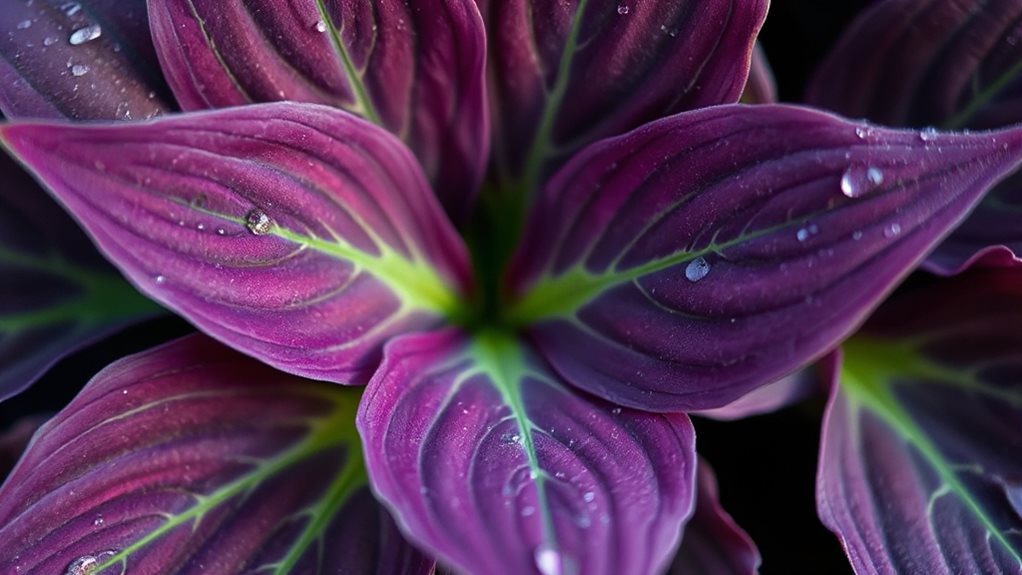
Ever wondered why your garden looks like a campsite at sunrise, with leaves flashing purple instead of green? You can fix it by watering just enough—no soggy roots, no bone‑dry soil—so phosphorus and magnesium stay available; trim the light schedule to 16 hours on, 8 off, and raise bulbs a bit; then apply a phosphorus‑rich fertilizer if tests show a shortage, balancing nutrients to keep the purple at bay.
When to Seek Professional Help for Persistent Purple
So, when those purple leaves keep hanging on like a stubborn tent‑pole after weeks of tweaking water, light, and fertilizer, it’s a clear sign you’ve hit the “call‑a‑pro” stage.
If you see wilting, mushy stems, foul soil, pest‑induced spots, or disease‑like blotches that won’t quit, call an arborist or plant pathologist ASAP, because DIY won’t save a dying root system.
Preventive Schedule to Keep Purple Leaf Issues at Bay
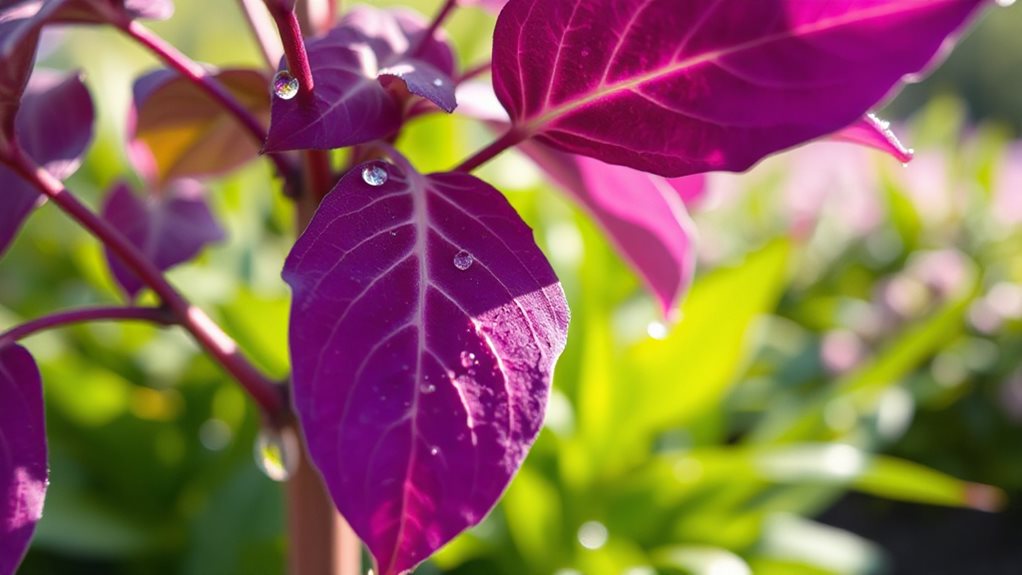
Ever wondered how a simple calendar can stop your garden from turning into a purple‑themed amusement park? Start by testing soil before planting, then schedule weekly pH checks, bi‑weekly phosphorus‑focused fertilizing (avoid 15‑0‑15 ratios), and daily temperature logs to keep roots warm. Add shade cloths when light spikes, prune for airflow, and drizzle Epsom salt every few weeks—your plants will thank you.
Overall
So, if your leaves are pulling a purple‑hued makeover, it’s probably a nutrient‑ or water‑issue, not a fashion statement—unless you’re growing a flamboyant begonias, of which. to fertilizer,, your mix, and give your plants a breather from over‑watering, you’ll keep them green and happy. Remember, a quick soil test and a dash of phosphorus or magnesium can turn that violet drama back into leafy bliss, and you’ll feel like a plant‑care wizard on a camping adventure!