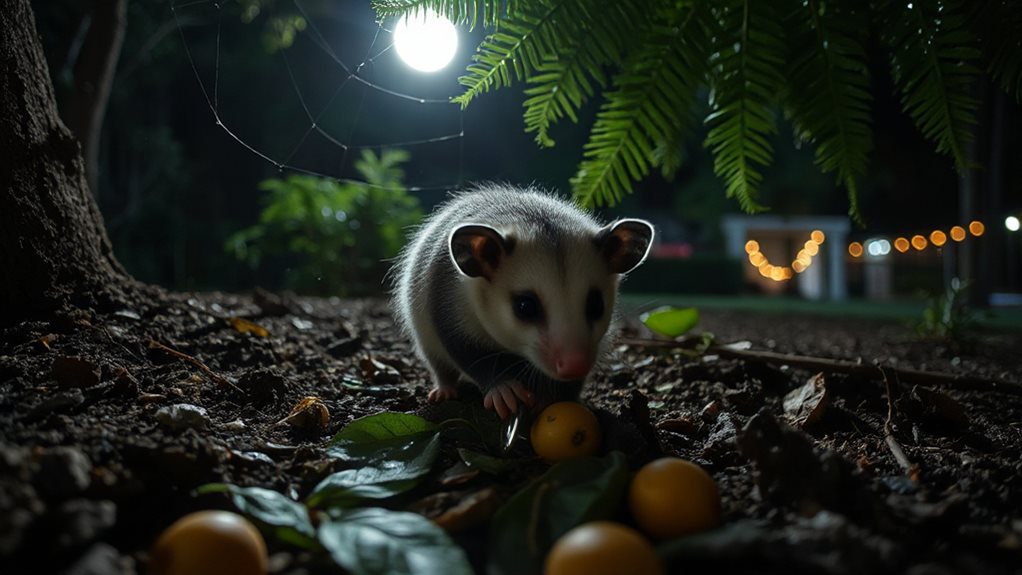
Why Do Possums Dig in Gardens?
You’ll see possums digging in your garden because they’re on a midnight snack hunt, sniffing out ripe veggies, fallen fruit, pet food, and the tiny insects and grubs hiding just under the surface—especially after rain when prey crowds near the topsoil. They often reuse existing burrows, making shallow 3‑inch holes near paths, and they’re drawn to overflowing trash cans, open compost, and forgotten pet bowls. If you clear those attractants, seal containers, and add a low fence or motion‑activated lights, you’ll cut down the digging, and the next tips will show you exactly how.
TLDR
- Opossums dig shallow holes to sniff out and access food like compost, trash, fallen fruit, and pet scraps.
- They target soil‑dwelling prey (insects, larvae) that become concentrated near the surface after rain.
- Existing animal burrows are often reused, so digging occurs near pre‑existing tunnels or shelter.
- Night‑time scavenging is guided by strong scents, leading them to dig where food sources are nearby.
- Attractive garden features—overflowing trash cans, open compost, and fruit trees—stimulate digging behavior.
Why Opossums Dig in Gardens and How to Stop It
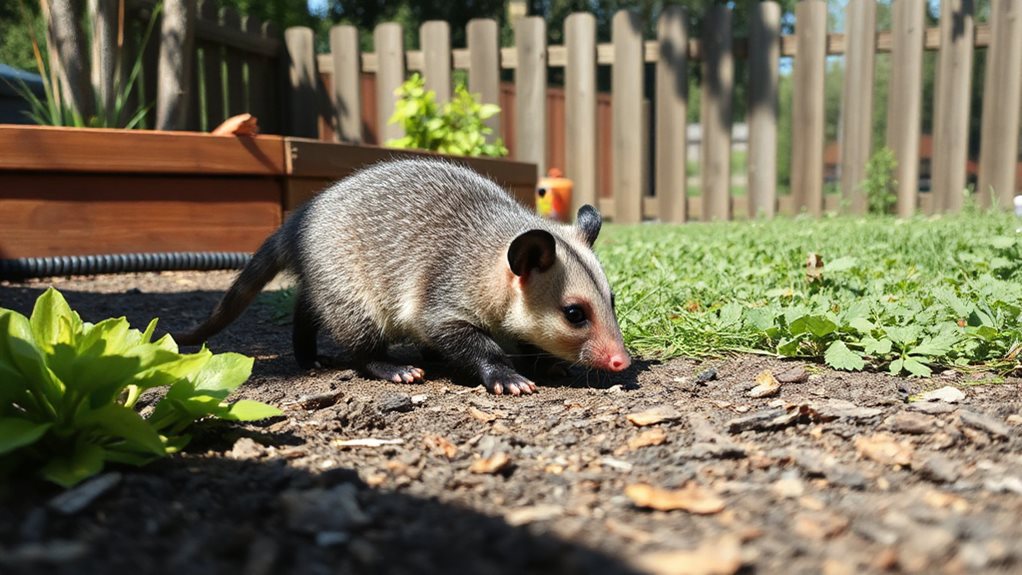
Ever wondered why those sneaky opossums pop up in your garden like uninvited campers? They raid compost, sniff pet food, and hunt rotting fruit, so they dig shallow holes to sniff out snacks, but you can stop them by sealing trash cans, covering food, and trimming overhanging branches; install a low fence, block den entrances, and keep the area clean—your garden stays safe and pest‑free. Opossums often take over existing animal burrows rather than digging their own, so reuse existing burrows to reduce their attraction to your garden. Regular maintenance like removing food sources and eliminating sheltered spots can prevent repeated visits and reduce digging by addressing habitat attractants.
Opossum Digging: Insects, Grubs, and Soil‑Living Prey
Why do opossums turn your garden into a bug‑hunt playground? You’ll see them sniffing grubs, crickets, and ants, then using sharp claws to flip turf, mulch, and straw into shallow pits. They hunt slugs, termites, boxelder bugs, and even yellowjackets, guided by night‑time scents and delicate feet that avoid deep digging. Their high‑protein cravings make every soil‑dwelling critter a tasty treasure. After heavy rain they may dig more actively as wet soil concentrates soil‑dwelling prey near the surface.
Spotting Opossum Digging: Shallow vs. Deep Holes
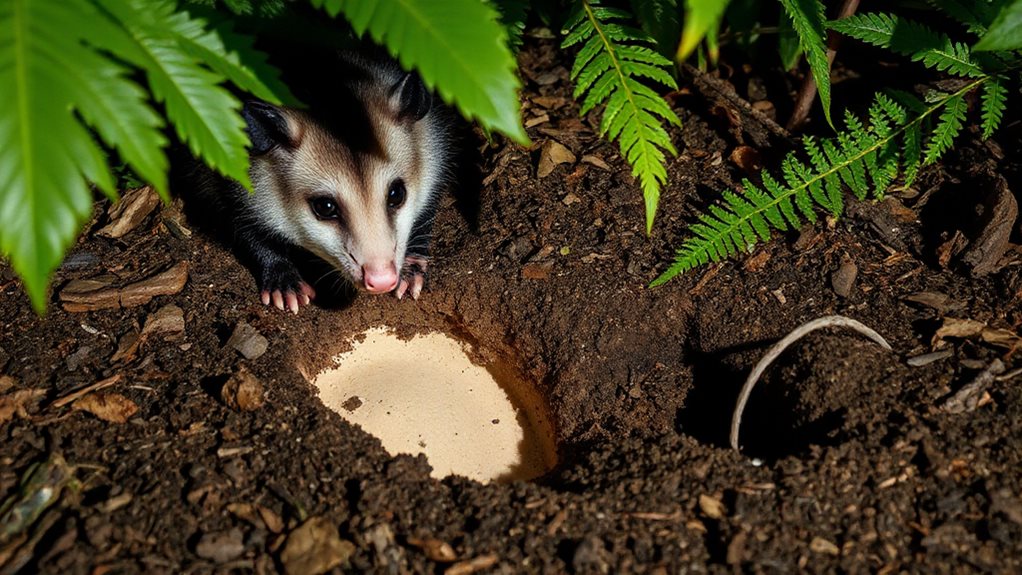
So, you’ve spotted those tiny, uneven pits in your garden and are wondering whether they’re the work of a shy opossum or something else entirely? Shallow holes are just 3‑inch openings, often near paths, with flour footprints and rolled sod, while deep holes need a 4‑inch entry, are blocked by buried mesh, and rarely show turf damage. Look for droppings, scratches, and overturned soil to tell the difference.
Opossum Digging Attractants: Trash, Compost, and Pet Food
You’ve already figured out how to tell a shy opossum’s shallow pit from a deep one, now let’s talk about what’s actually luring them into those holes in the first place—trash, compost, and even your pet’s dinner.
Overflowing cans spill stinky odors, open compost piles ooze rotting scraps, and forgotten pet bowls sit like all‑you‑can‑eat buffets, inviting nocturnal scavengers to feast and dig. Earthworms and other soil life can also attract opossums by drawing in insects and improving soil scent profiles, so preserving healthy soil may influence digging behavior.
Quick Steps to Eliminate Oposum Food Sources
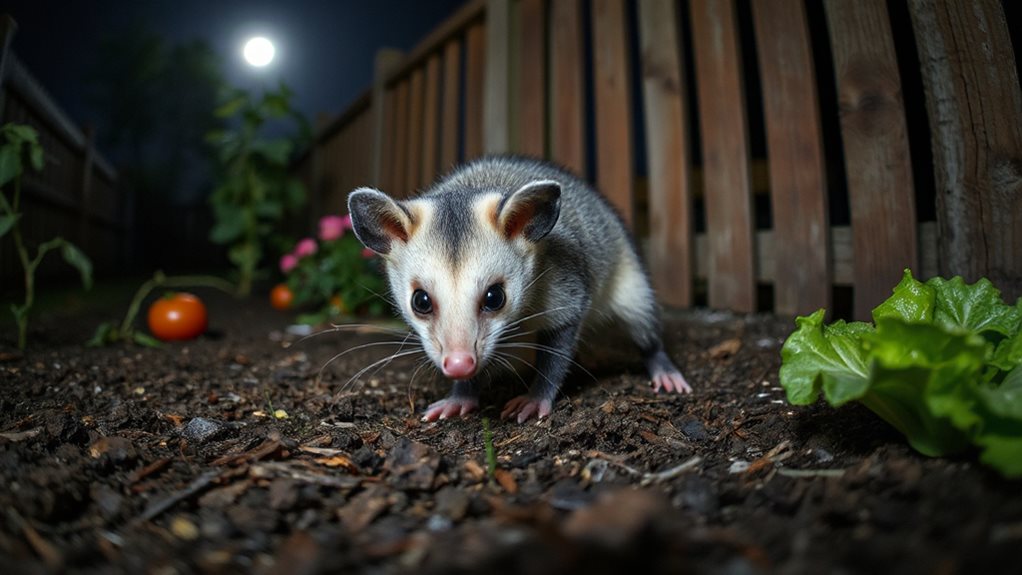
Ever wonder why your garden feels like a midnight buffet for opossums? You can stop that by promptly picking ripe veggies, sweeping up fallen fruit, and tossing rotting plant matter daily, moving bird feeders away from garden edges, using squirrel‑proof designs, and cleaning spilled seeds each morning, storing pet food in sealed containers, and sealing trash cans tightly—simple steps, big results. Be cautious around outlets and wiring when installing outdoor lights or motion sensors, and call an electrician if you notice flickering lights or other electrical hazards.
Leverage Opossums for Tick, Slug, and Rodent Control
You’ll be amazed to see a single opossum munch through thousands of ticks each season, practically turning your garden into a tick‑free zone while you’re out camping, and you might wonder how many slugs and snails it will gobble up under the mulch—trust me, it’s a surprisingly effective, chemical‑free pest‑busting squad.
Imagine the relief when those little rodents scurry away because the nocturnal opossum is already snacking on mice and rats, cutting down the rodent population without any aggressive confrontations.
Fresh bait should be used regularly to maintain effectiveness, especially since bait consistency can change over time and reduce attractiveness to pests.
Tick Consumption Benefits
Ever wonder why a backyard opossum can feel like a tiny, furry superhero on your next camping trip? You’ll love how it grooms away 90‑plus percent of ticks, slashing disease risk while you enjoy the woods; a single opossum gobbles roughly 5,000 ticks each season, turning your yard into a natural vacuum, so you protect neighbors and feel like a wildlife champion.
Slug and Snail Suppression
A backyard opossum can turn your garden into a snail‑free zone, and the secret’s surprisingly simple: leave a few pieces of dried cat food out, and those fuzzy foragers will swoop in, gobble the snails, and leave the slugs untouched, so you get a tidy yard without any extra work.
You’ll notice zero snail damage, fewer chemical sprays, and just a little neighbor‑dog bark, which feels like a tiny price for a thriving, snail‑free oasis.
Rodent Population Reduction
Acknowledge this: you’re setting up a backyard campout for your family, and a curious opossum wanders in, sniffing around the fire pit, while silently hunting the night‑time rodents that love to nibble your snacks. You’ll love how opossums munch mice and rats, slashing pest numbers, and their nightly foraging cuts chemical rodent use, protecting kids, pets, and neighbors alike.
Why Opossums Choose Decks and Patios for Nests
So why do opossums keep setting up camp under your deck or patio? You’ll find they love the dry, protected shelter from cold, the tiny gaps that let their claws slip through, and the safety from predators that the elevation offers.
They pile sticks and leaves into a cozy nest, stay near trash or pet food, and enjoy the easy access to nearby bushes for quick foraging trips.
Night‑time Barriers to Stop Oposum Digging
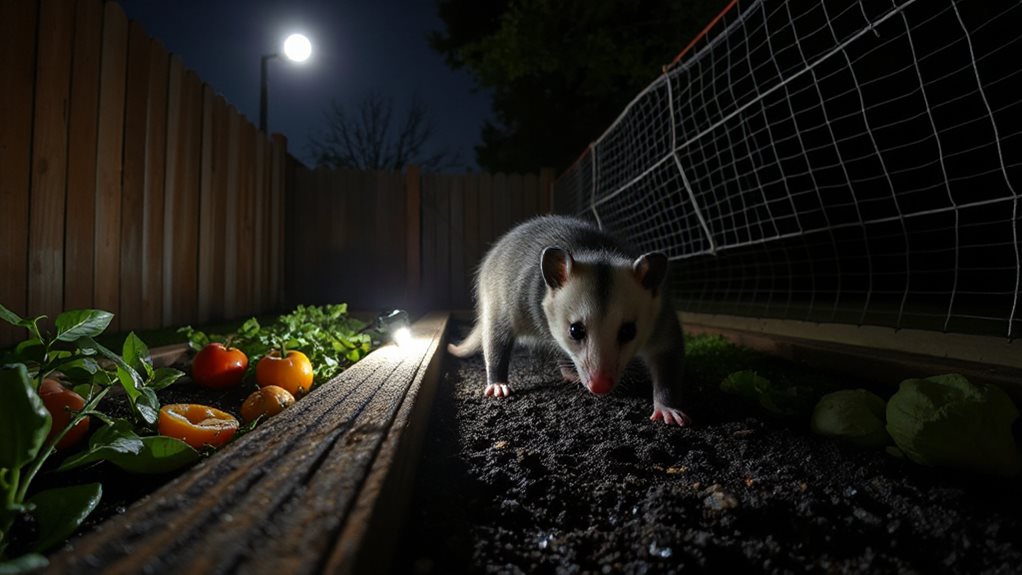
You’ll love how a sturdy night‑time fence, buried a foot or two underground and topped with an outward‑angled lip, can block those sneaky opossums from tunneling under your garden while you’re out camping under the stars;
have you tried securing your trash cans and compost bins with tight‑fitting lids, because a sealed scent‑free zone makes them lose interest faster than a mosquito at a summer bonfire;
and don’t forget to seal every gap under decks, sheds, and porches—think of it as setting up a “no‑camping” zone for critters, which keeps your garden tidy and your evenings drama‑free, all while you enjoy the glow of fireflies and the occasional night‑hike.
Install Night‑time Fencing
Ever wondered why your garden feels like a midnight escapade park for possums, and how a simple night‑time fence can turn it into a no‑entry zone?
Install four‑foot wire mesh with a 45‑degree overhang, keep gaps under 5 mm, use self‑closing gates no larger than 5 cm, trim overhanging branches, and add motion‑sensor LED lights to startle intruders, ensuring your garden stays safe and serene.
Secure Trash and Compost
Ever wondered why your trash and compost become midnight snack stations for possums? You can lock lids tight, stash pet food in airtight containers, and toss garbage daily, so nothing smells inviting.
Seal compost in a bin or wrap it in hardware cloth, keep fruit off the ground, and use motion lights and ammonia rags to make the area unappealing and safe for your garden guests.
Block Access to Nesting Sites
After you’ve locked down the trash and sealed the compost, the next battle is keeping opossums from turning your garden into a midnight campsite by digging into hidden nesting spots—think of it as setting up a night‑time obstacle course that they just can’t beat.
Bury 4‑foot fencing a couple feet deep, angle tops outward, add electric wires around fruit trees, and install motion‑activated lights near entry points; seal crawl spaces with hardware cloth, and trim brush to eliminate cozy hideaways.
Humane Deterrents and Habitat Modifications
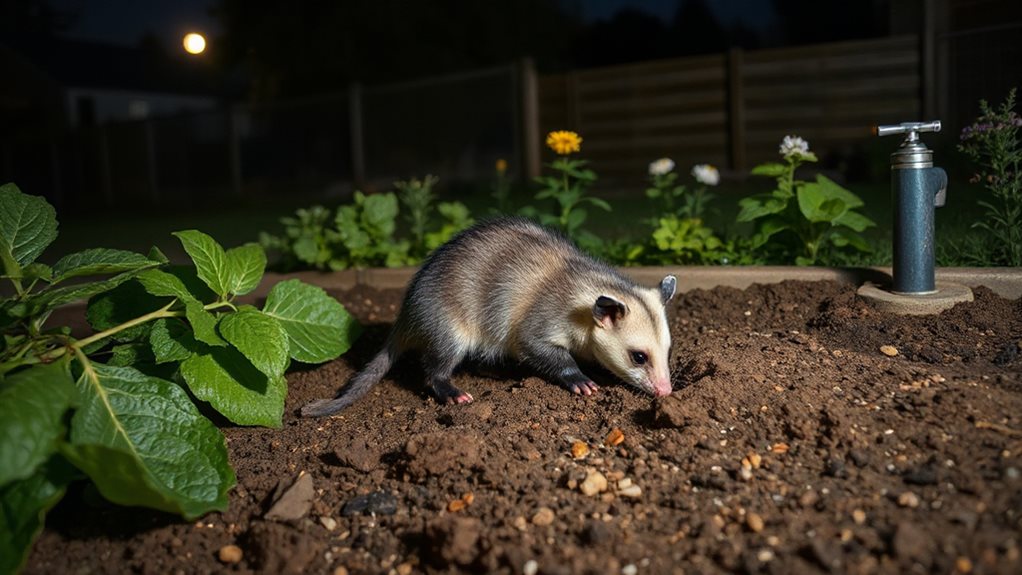
So, how do you keep those curious opossums out of your garden without hurting them? You can bury a 4‑foot fence a foot underground, bend its top outward, and use wire mesh so they can’t climb; clear brush, firewood, rock stacks, and prune overhanging branches to erase hideouts. Add motion‑lights, sharp rose cuttings, and sealed compost, then enjoy a pest‑free, wildlife‑friendly space.
Deciding When to Keep or Repel Opossums in Your Garden
You’ll want to weigh the tasty benefits—those tick‑eating, slug‑snacking opossums can turn your garden into a pest‑free campsite—against any occasional veggie nibble you might notice, so start by checking if the damage is real or just a rumor.
Ask yourself: does the wildlife‑friendly vibe outweigh the hassle of a knocked‑over compost bin or a midnight trash‑can raid, and are you comfortable using humane deterrents or just letting them stay?
If you’re leaning toward keeping them, set up a simple fence or a compost cover, but if the mess outweighs the perks, try a motion‑sensor light or a scent repellent and see how the garden vibes change.
We Evaluate to Food Benefits
Ever wonder why an opossum strolling through your garden might be more helpful than a pesky raccoon? You’ll love how it munches snails, slugs, beetles, and even pesky rats, sl cleaning up rotting fruit and carrion, which cuts pesticide use and disease risk. Its tick‑eating habit sl off thousands of ticks, protecting you and neighbors—nature’s own pest‑control superhero.
Assessing Garden Damage
Wondering whether those nocturnal footprints and half‑eaten berries mean you should keep the opossum or kick it out? Look for hind‑foot tracks, chewed fruit, and compost ransacking; if you see multiple signs, it’s likely an opossum.
Minor rotting‑produce nibbling’s okay, but repeated fruit‑tree loss, fecal piles, or insulation soiling signals it’s time to repel, protect your garden, and keep everyone safe.
Choosing Management Strategies
So, how do you decide whether to roll out the red carpet for your garden’s nocturnal visitor or to set up a “no‑entry” sign? Weigh the pest‑eating perks against fruit theft, then choose: fence beds with 4‑ft mesh, clean up fallen berries, seal trash, or spray peppermint‑vinegar deterrents. If you love helping neighbors, share your success story!
Balancing Garden Health With Opossum Presence
How can you keep your garden thriving while still welcoming the nightly visit of an opossum?
You’ll love that they munch 5,000 ticks, slugs, and hornworms, so your veggies stay healthy; just cover compost, block den sites, and use a 2‑foot fence with a underground skirt, remember opossums prefer rotten fruit, not your fresh tomatoes, and they’ll clean up debris, letting you serve nature and neighbors alike.
Overall
Now you’ve got the scoop on why possums dig, how to spot their tunnels, and the tricks to keep them out without hurting a thing, so why not turn your garden into a no‑dig zone and still enjoy the wild vibes? Try sealing food sources, setting up night‑time barriers, and using scent‑based deterrents—think of it as a camping excursion for pests, but with you in charge. With a little patience and humor, you’ll protect your veggies and maybe even earn a nocturnal neighbor’s respect. Happy gardening!