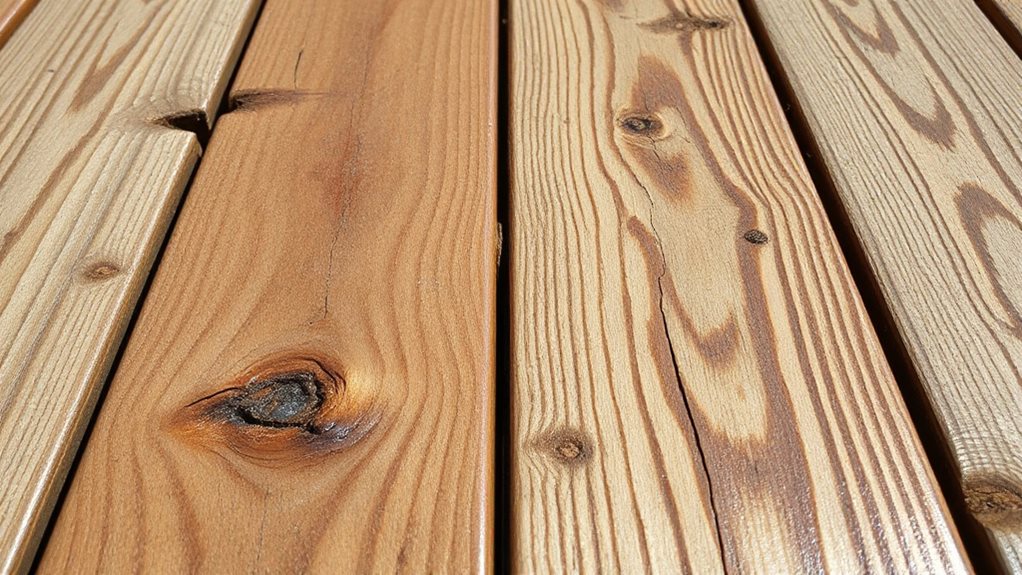
Why Does Deck Stain Look Blotchy? Causes and Fixes
You’re probably seeing dark spots and light streaks because the stain didn’t soak evenly—over‑applying creates a tacky film that pools, while missed sanding or leftover glue blocks absorption, and humid or scorching weather either traps moisture or flashes‑dries the surface. Use a wide‑bristle brush or roller, keep a wet edge, back‑roll after spraying, and prep the wood by cleaning, sanding, and applying a pre‑stain conditioner if needed. Choose a semi‑transparent or oil‑based stain that matches your wood and climate, and you’ll avoid those blotchy surprises, plus you’ll discover even more tricks ahead.
TLDR
- Applying too much stain creates a moisture barrier, leaving the surface tacky and blotchy.
- Insufficient wood preparation—no cleaning, sanding, or pre‑conditioner—causes uneven absorption and dark spots.
- High humidity or rain during curing traps moisture, resulting in white speckles and uneven color.
- Excessive heat (>90 °F) flash‑dries the surface, preventing deep penetration and causing patchy appearance.
- Using the wrong stain type for the wood (e.g., oil‑based on pine without conditioner) leads to blotches; choose semi‑transparent for cedar/redwood or solid for weathered boards.
Over‑Applying Stain: Tacky, Blotchy Results
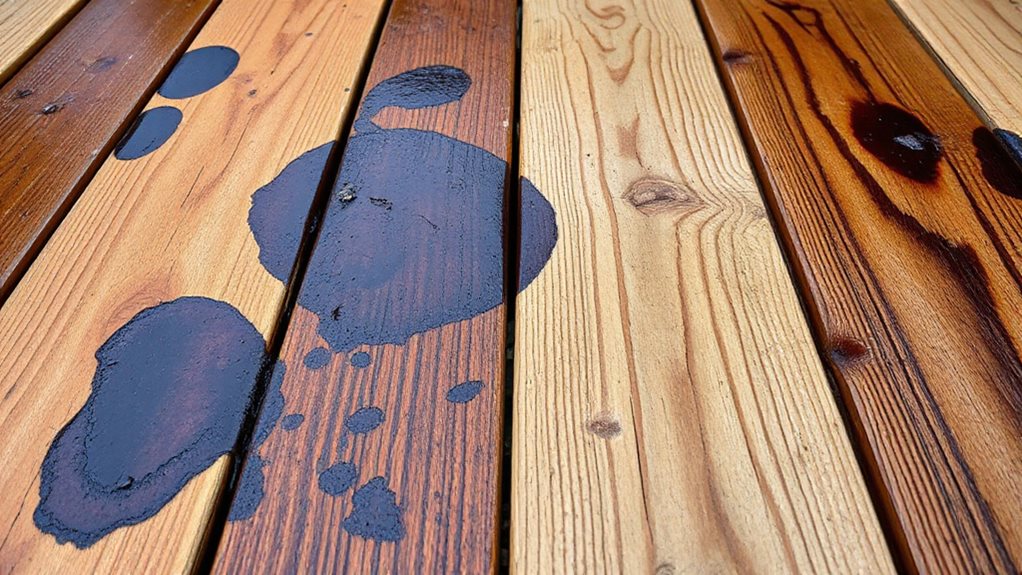
Ever wondered why a fresh‑coated deck can feel like a sticky playground after you’ve slathered on too much stain? You’re probably exceeding the wood’s absorption limit, so the excess creates a moisture barrier, pools, and stays tacky for days. Insufficient drying time often worsens the tackiness, especially in humid conditions.
Improper Wood Preparation and Deck Stain Blotchiness
After you’ve learned that slathering on too much stain can leave your deck feeling like a sticky playground, the next thing to watch out for is how you prep the wood before you even pick up the brush.
Clean off debris, sand to open grain, strip any glue, and use a pre‑stain conditioner on pine—otherwise you’ll see dark spots, light patches, and a blotchy mess that ruins your outdoor vibe. Planting aromatic herbs like rosemary nearby can help deter pests that might damage wood and surrounding plants.
How Weather Can Mess Up Your Deck Stain
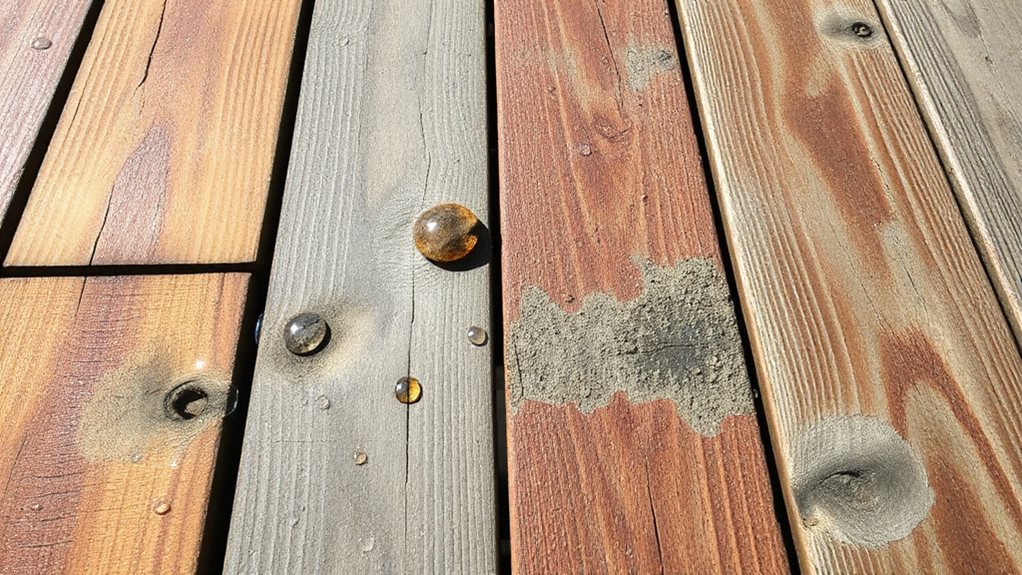
Why does a sunny, humid afternoon feel like a sneaky trap for your deck stain? High humidity traps moisture, so the stain clings unevenly, while scorching heat above 90°F flashes‑dries the surface, preventing deep penetration and leaving blotchy spots. Rain before the coat cures creates white speckles and peeling.
Aim for 40‑70 % humidity, 50‑90 °F, and keep rain at bay for 24‑48 hours. Avoid applying stain during high transpiration periods when rapid moisture movement and surface drying can lead to uneven absorption.
Application Techniques to Avoid Spotty Streaks
When the sun’s blazing and the air feels sticky, you’ve already seen how those conditions can turn a fresh coat of deck stain into a patchwork of blotches, so the next step is directing the actual application to keep those streaks at bay. Use a wide‑bristle brush for long, even strokes, keep a wet edge, overlap sections, and back‑roll after spraying; rollers or pads speed coverage while maintaining uniform saturation, preventing those annoying spotty streaks. Consider addressing moisture or surface issues beforehand to avoid uneven absorption and blotching, since surface preparation is key to consistent results.
Pick the Right Stain for a Uniform Finish
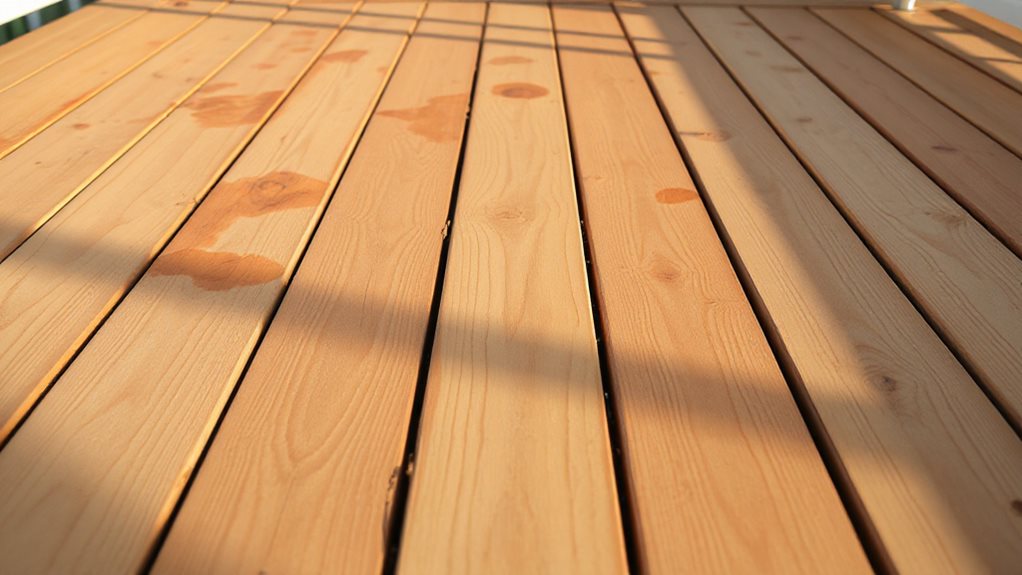
Ever wondered how picking the right stain can turn a patchy deck into a smooth, picture‑perfect surface, just like a well‑planned campsite? Choose semi‑transparent for cedar or redwood to highlight grain and protect against rot, or go solid on weathered boards for uniform color that lasts three years. Prefer water‑based for quick drying, low VOCs, and easy re‑coating, or oil‑based for deep penetration and richer hue when you’re camping in humid climates. Preserve soil structure to maintain earthworm activity that supports overall ecosystem health and long‑term outdoor surfaces.
Overall
Now that you’ve got the know‑how, you can turn that blotchy deck into a smooth, adventure‑ready surface—just envision yourself sipping cocoa by the campfire on a perfectly stained porch. Remember to prep the wood, pick the right stain, and apply it evenly; don’t let rain or too much product ruin the vibe. Give it a try, watch the magic happen, and soon you’ll be bragging about your flawless deck to every friend who’s ever tried DIY. Happy camping—and happy staining!