Why Do Frogs Gather Near Houses After Rain?
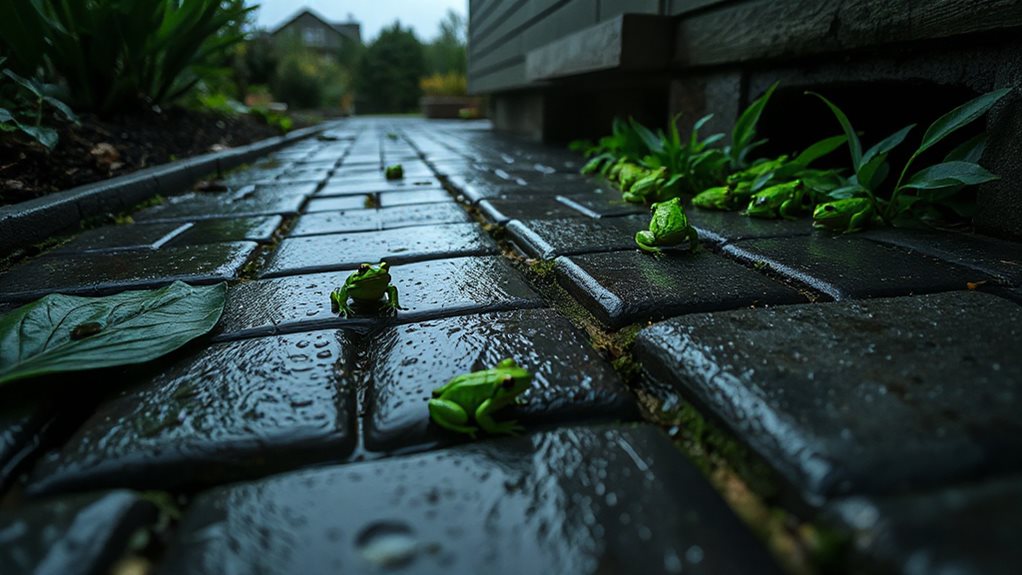
When rain hits, the air gets humid, fresh puddles pop up, and frogs hear the perfect breeding soundtrack, so they sprint out from under decks, porches, and planters like campers finding a new campsite. The moisture revives their skin, lets them sip from damp ground, and the temporary pools become instant egg‑laying spots, while insects buzz around for a tasty snack. You’ll see them hopping everywhere, especially where dark, damp corners hide, and if you keep going, you’ll uncover even more cool frog facts.
TLDR
- Rain creates moist microhabitats and fills nearby puddles, providing ideal breeding sites for frogs.
- Increased humidity and cooler temperatures reduce water loss, encouraging frogs to emerge from underground shelters.
- Temporary pools formed after rain offer safe egg‑laying locations close to homes.
- Abundant insects in damp conditions supply a rich food source for active frogs.
- Dark, damp corners and structures (e.g., deck gaps, mulch) retain moisture, attracting frogs to hide and rest near houses.
Why Does Rain Trigger Mass Frog Surfacing Near Homes?
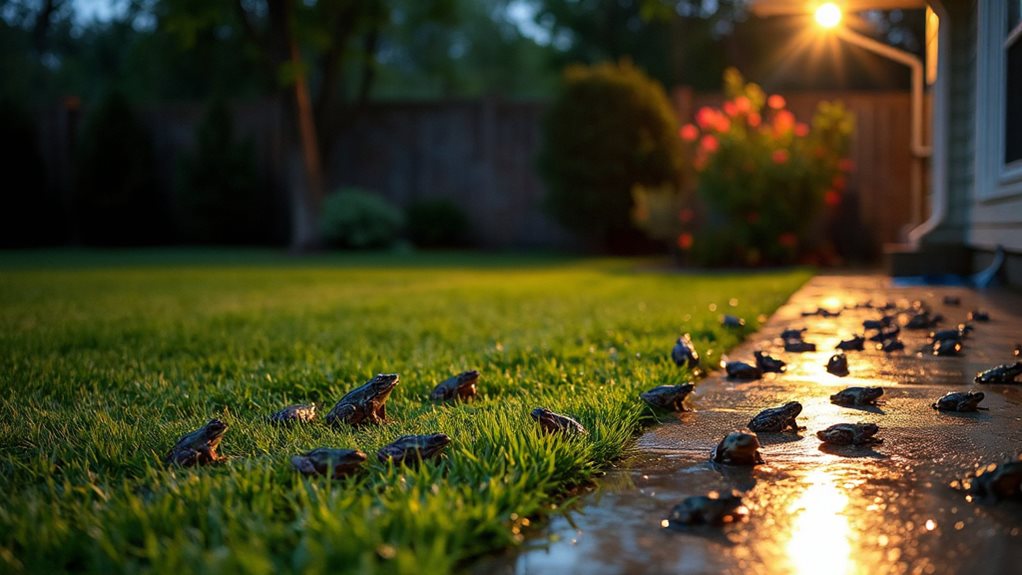
Ever notice how a sudden summer downpour turns your backyard into a frog‑filled concert hall? You’ll see frogs dash from underground mud shells because rain spikes humidity, drops pressure, and fills vernal pools—perfect breeding spots. These cues trigger a hormonal rush, so they scramble toward moist house‑side microhabitats, croaking loudly while you sip cocoa, amazed at nature’s instant party. Frogs become active during rainy periods when drought abates. Many of these damp microhabitats also attract insects like mosquitoes, providing abundant food sources for the frogs.
How Do Physiological Tricks Enable Frog Surfacing During Dry Spells?
When the rain finally stops and the air stays dry, you might wonder why frogs still pop up around your house instead of staying hidden underground.
You’ll love how they thicken skin lipids, crank up urea, and shrink evaporative loss, while their bladders act like water tanks, reabsorbing moisture and even cooling them.
Their ventral drink patches sip damp ground, turning a dry spell into a quick hydration pit‑stop.
Local conditions like nearby soil permeability and drainage can influence where these frogs choose to surface.
Where Do Frogs Hide Under Porches, Decks, and Planters After Rain?
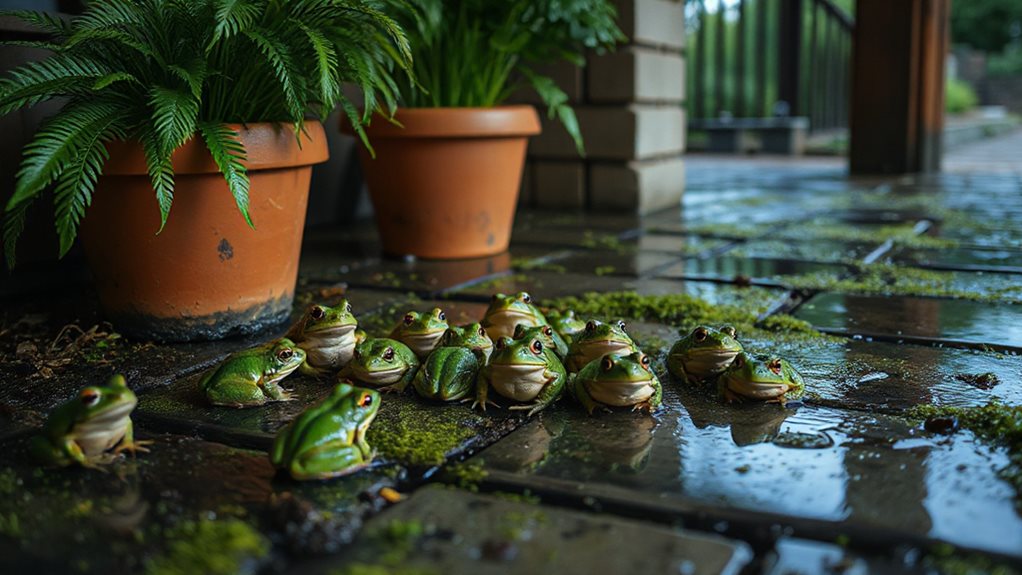
So, where do those sneaky frogs set up camp under your porch, deck, and planters after a rainstorm? You’ll find them tucked in dark, damp corners—between deck boards, beneath mulch, and inside buried terracotta pots—where moisture lingers, insects buzz near lights, and leaf litter offers cozy burrows.
Check those shady spots, and you’ll spot their tiny, excited “campers” thriving in your home’s humid hideaways. Adding organic matter like compost around these areas can improve drainage and reduce long-term moisture buildup that attracts frogs.
Why Do Breeding Calls and Temporary Pools Attract Frog Surfacing Post‑Storm?
Why do frogs suddenly pop up after a storm, croaking like tiny campers at a music festival? You’ll notice their breeding calls surge because rain spikes humidity, signaling perfect breeding conditions, and those fresh puddles become instant egg‑laying venues.
The boisterous croaks broadcast health, attract females, and mark territory, while the soft, wet ground lets them hop straight to the new pools near your house. High humidity and still air after rain also prolong amphibian activity and make nearby temporary pools ideal for egg laying.
How to Protect Pets From Frog Toxins When Frogs Surface After Rain?
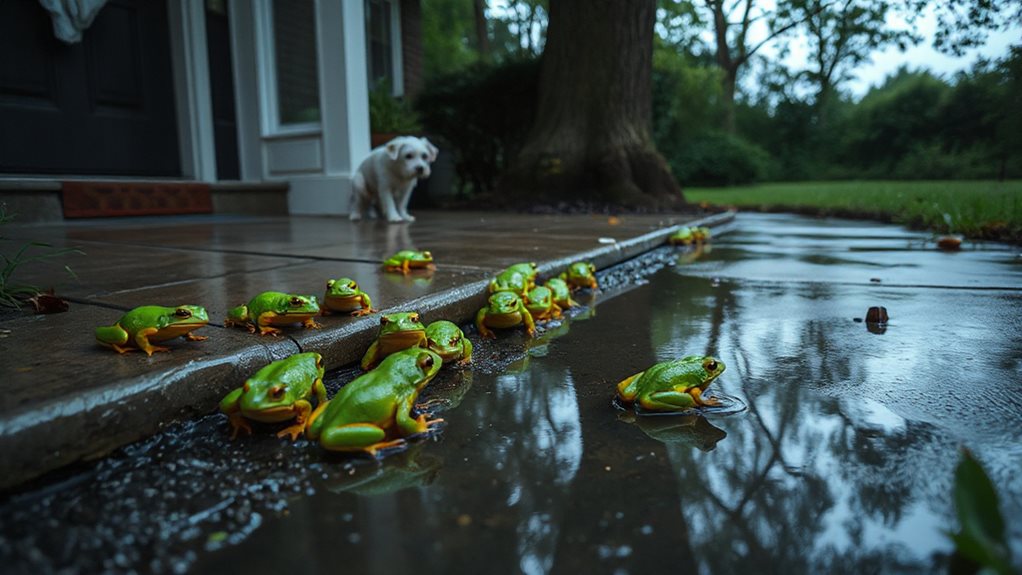
Ever wonder why your pup suddenly looks like it’s auditioning for a frog‑crazed reality show after a rainstorm? Keep it safe by supervising night walks, wiping bowls nightly, and teaching “leave it” commands; if a toad appears, flush its mouth outward with water, rub gums, avoid milk, and call the vet instantly.
Spotting red gums or drooling? Act fast, protect your buddy. Frogs and toads are more active after rain because moisture attracts amphibians, increasing the chance of pet encounters.
Overall
So, after a rainstorm you’ll spot frogs hopping out from under porches, deck corners, and planters, because the damp earth and temporary puddles give them a chance to hydrate, hunt, and call mates—perfect for a quick breeding boom. Remember, they’re just taking advantage of the moisture, not plotting a takeover, so enjoy watching their slick moves, keep pets safe from any toxic skin secretions, and maybe even snap a photo for your next camping story.