Why Do Flies Swarm Around Compost Bins?
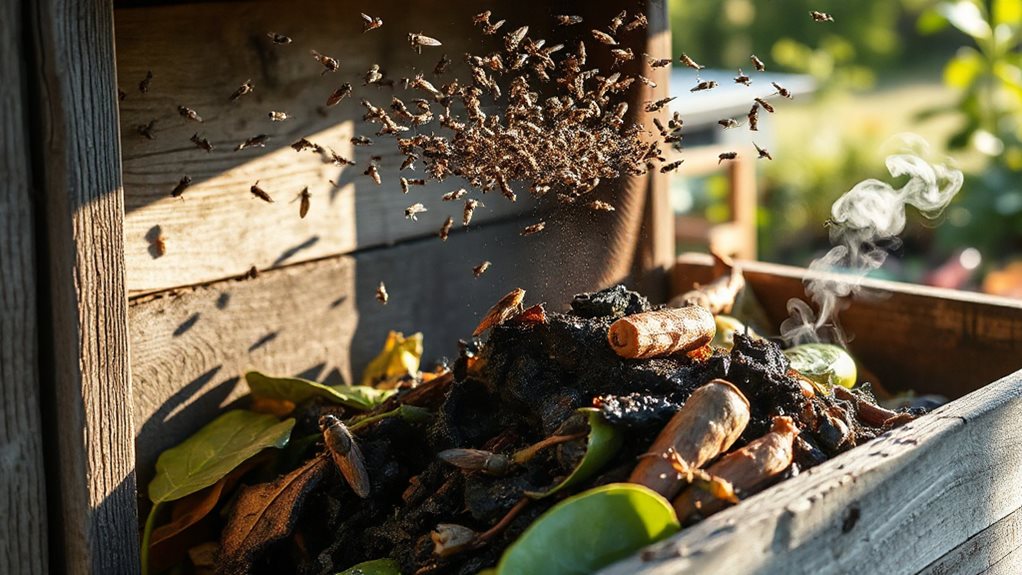
You’re seeing flies swarm because the sweet, fermenting aromas from rotting fruit, banana peels, and moist kitchen scraps act like an all‑you‑can‑eat buffet that triggers their antennae, while open lids and soggy pockets give them easy egg‑laying spots; the microbes release acetic acid, ethanol, and fruity volatiles that lure fruit flies upwind, and the lack of dry brown material means the bin stays damp and anaerobic, perfect for larvae—if you keep the lid tight, layer browns over greens, and turn the pile regularly, you’ll cut the scent and moisture, and the next tip will show you how to trap the remaining pests.
TLDR
- Flies are attracted to the sweet, fermenting odors produced by moist, nitrogen‑rich kitchen scraps and rotting fruit.
- Open lids or missing brown covers expose these odors, making the compost an easy feeding site for adult flies and larvae.
- Excess moisture creates anaerobic pockets that amplify volatile compounds (ethanol, acetic acid), further luring flies.
- A proper brown‑to‑green ratio (≈2:1) and adequate aeration reduce moisture and odor, limiting fly breeding grounds.
- Burying fresh scraps under a thick dry layer (e.g., shredded cardboard or straw) and using a tight‑fitting, mesh‑vented lid blocks fly access and suppresses swarms.
Why Flies Are Drawn to Compost Bins?
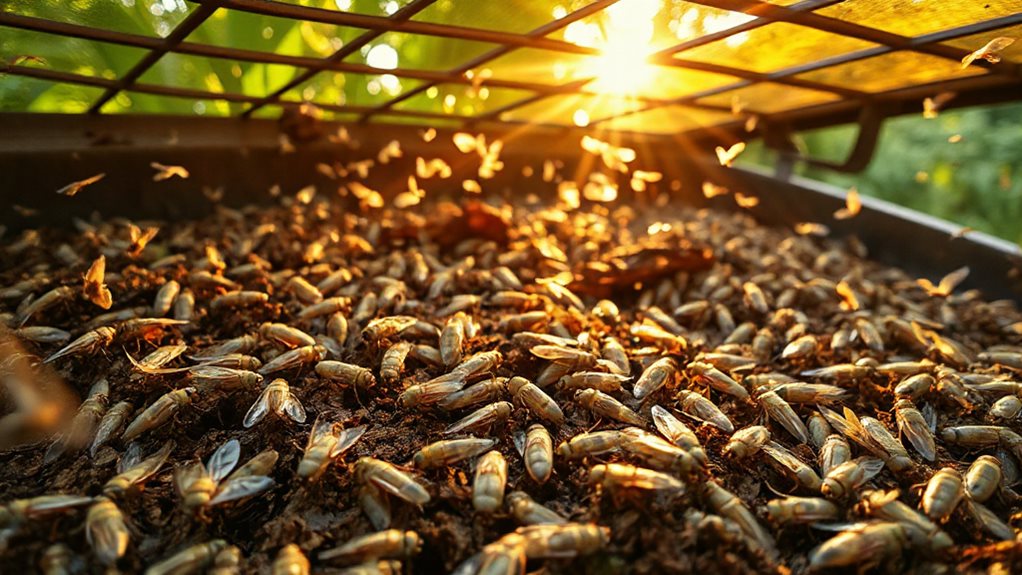
Ever wondered why a compost bin can feel like a fly‑magnet hotspot? You’re seeing fruit flies because rotting fruit and banana peels scream “buffet!” for their larvae, especially when moisture piles up and oxygen drops, creating a damp, nitrogen‑rich stew. Open lids or missing brown cover expose the feast, so keep it sealed, balance greens and browns, and you’ll curb the swarm. A sunny, well‑ventilated location reduces moisture and makes the surface less inviting for flies. Dogs and other animals drawn to compost can spread contaminants from droppings or spoiled food, so supervise pets and prevent scavenging to reduce risk.
How Fermentation Odors Lure Fruit Flies to Kitchen Scraps?
When you toss banana peels, coffee grounds, and wilted lettuce into the kitchen trash, you’re basically setting up a mini‑fermentation fiesta that fruit flies can’t resist, because the microbes break down those scraps into a cocktail of acetic acid, ethanol, and fruity volatiles that smell just like the overripe berries they’d chase in an orchard.
Their antennae sniff the vinegar‑like scent, DM1 glomerulus fires, and they surge upwind, lured by ethanol‑boosted aromas, turning your trash into a bug‑magnet buffet.
A typical fruit‑filled container like a pint can produce substantial fermenting odors because a pint of fruit is roughly 2 cups of biomass for microbes to act on.
When Excess Moisture Creates a Breeding Ground for Flies?
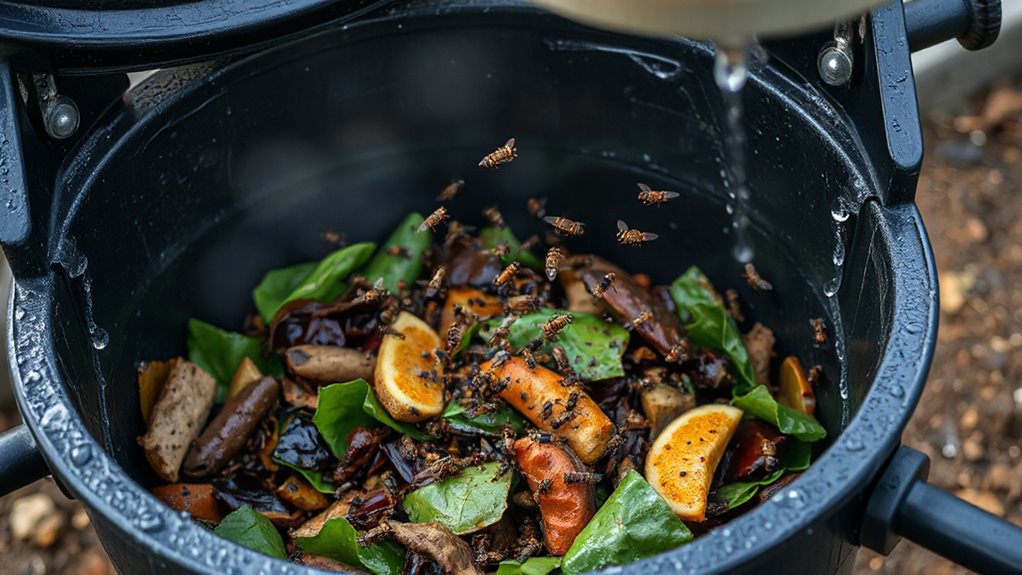
You’ll notice that when the compost gets soggy, the water squeezes out the air and creates those stagnant wet zones where flies love to hang out, so you might wonder why that happens; it’s because the excess moisture blocks oxygen, turning the pile into an anaerobic playground that slows down decomposition and releases the smell that lures larvae.
Try spreading the soggy bits thin, turning the pile, and adding dry browns like shredded cardboard—this simple tweak can dry out the pockets, kill the eggs, and keep the flies at bay.
Trust me, I’ve seen a bin turn from a smelly swamp into a fresh, thriving compost garden just by fixing the moisture, and it feels as rewarding as finding a perfect campsite after a rainstorm.
Shaded, cooler spots can also help preserve moisture balance and reduce the rapid drying or overheating that stresses compost microbes, creating a more stable microclimate for healthy decomposition.
Moisture Traps Air
Ever wondered why a soggy compost bin feels like a magnet for flies? When water fills the pores, it pushes air out, creating anaerobic zones that smell nasty, drawing flies like campers to a campfire. You can spot the problem when the bin feels like a soaked sponge; excess moisture over 60 % triggers this shift. Keep it dry, add brown material, and turn it often.
Stagnant Wet Zones
Remember how a soggy bin feels like a magnet for flies, right? You’ll notice stagnant wet zones where water squeezes out air, turning the pile anaerobic, so flies love it.
Those damp, nitrogen‑rich spots keep rotting food alive longer, letting larvae thrive.
Fix it by turning the compost, adding dry browns, and keeping moisture balanced—your bin stays fresh and fly‑free.
The 2 : 1 Brown‑to‑Green Rule to Control Nitrogen and Moisture
You’ll notice that when you keep a solid 2 : 1 mix of carbon‑rich browns to fresh greens, the pile stays dry enough to feel like a well‑packed campsite tarp, yet moist enough for microbes to work their magic; isn’t it cool how a handful of shredded leaves can soak up excess juice from kitchen scraps, preventing that soggy, fly‑magnet mess?
Try adding about four to eight inches of browns over your greens, then give it a good turn—think of it as setting up a tent, you want the right balance of shelter and airflow.
If the smell stays earthy and the texture feels like a wrung‑out sponge, you’ve nailed the nitrogen‑moisture balance, and you’ll be on your way to a fast‑decomposing, odor‑free compost that even a camper would brag about.
Good aeration from turning and using coarse browns helps keep temperatures ideal for microbial activity, reducing odors and fly attraction.
Balance Carbon‑Rich Browns
A solid compost pile starts with the right mix of carbon‑rich browns and nitrogen‑packed greens, and the sweet spot is usually a 2 : 1 brown‑to‑green ratio by volume—think three scoops of dry leaves or straw for every scoop of kitchen scraps. You’ll notice that adding plenty of leaves, straw, or shredded paper soaks excess moisture, curbs ammonia smells, and fuels the microbes that generate heat, keeping the pile lively and bug‑free while you share the bounty with friends.
Control Moisture Levels
Ever wonder why a soggy compost bin suddenly feels like a fly‑magnet campsite after a rainstorm? You keep it damp, not wet, by layering three parts brown—leaves, cardboard, wood chips—over each part green, letting the browns soak up excess water and odor. When you smell slime or see flies, toss more brown, turn the pile, and watch the moisture balance, and the flies, disappear.
How Skipping Aeration and Turning Invites Fly Infestations?
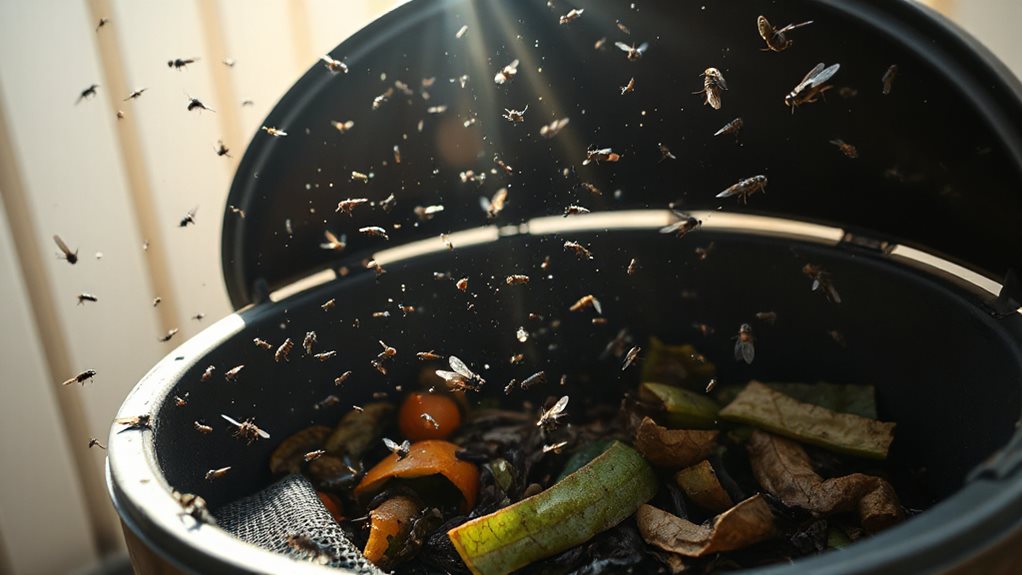
When you skip aerating and turning your compost bin, you’re basically turning it into a cozy hotel for flies, and not the kind you’d brag about on a camping trip.
The pile becomes soggy, oxygen‑starved, and full of exposed food scraps, so flies lay eggs, larvae feast, and the cycle repeats.
Turn it regularly, add browns, and keep moisture balanced to evict those unwanted guests.
Railings and similar sheltered nooks and gaps around outdoor structures can also harbor insects and increase local fly activity.
Hot vs. Cool Compost: Temperature Thresholds That Stop Larvae
Skipping aeration turned your compost into a fly‑friendly hotel, but cranking up the heat can shut that party down faster than a night‑time campfire. When temperatures hit 115°F, larvae start fleeing, and at 120°F they die; active piles often soar to 140°F, eradicating flies in two weeks.
Cool it below 15°C and eggs won’t hatch, while 16‑19°C barely lets young larvae survive—so you control the crowd by adjusting the thermostat.
Freezing Kitchen Scraps to Kill Fly Eggs and Cut Odors
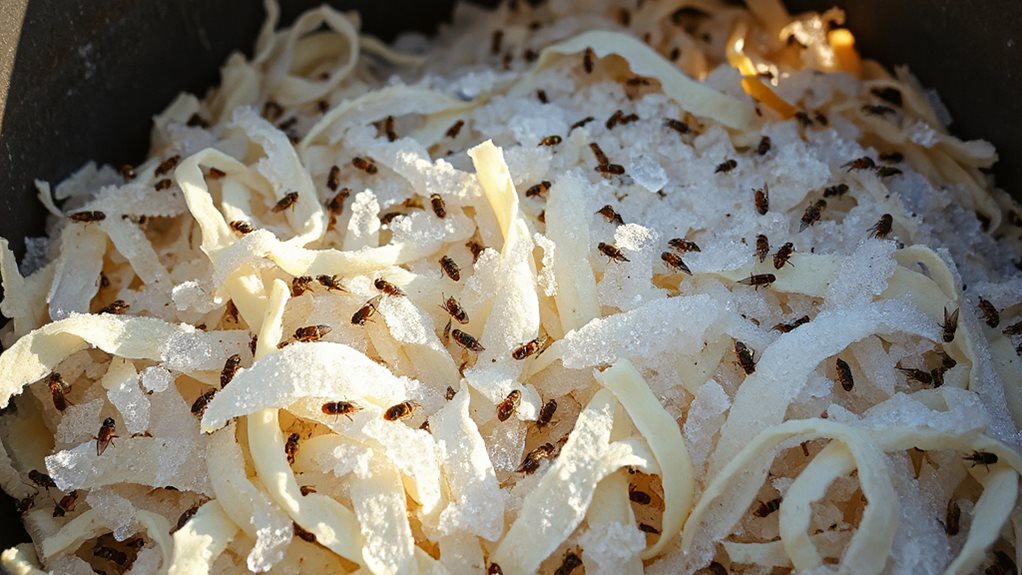
Ever wonder why your kitchen scraps sometimes turn your compost bin into a fly‑infested campsite? Freeze them! Pop fruit peels, banana skins, or soggy veggies into zip‑lock bags, lock them in the freezer for at least 24 hours, then thaw before feeding the worms. The deep freeze kills eggs and larvae, slashes the stinky rot, and leaves a fresh, earthy scent that even campers would love.
Additional Egg‑Killing Tricks for Compost (e.g., Blanching, Lime)
Ever wondered how a quick dip in boiling water can turn your compost from a fly‑infested nightmare into a tidy, camp‑ready campsite?
Blanch veggies for one to two minutes, then shock them in ice water; the heat denatures proteins, dries scraps, and stops eggs from hatching.
Sprinkle a cup of lime per cubic yard, mix well, and watch it raise pH, desiccate larvae, and keep flies away while you prep meals for the next hike.
How Worm Bins Out‑Compete Flies for Food and Space
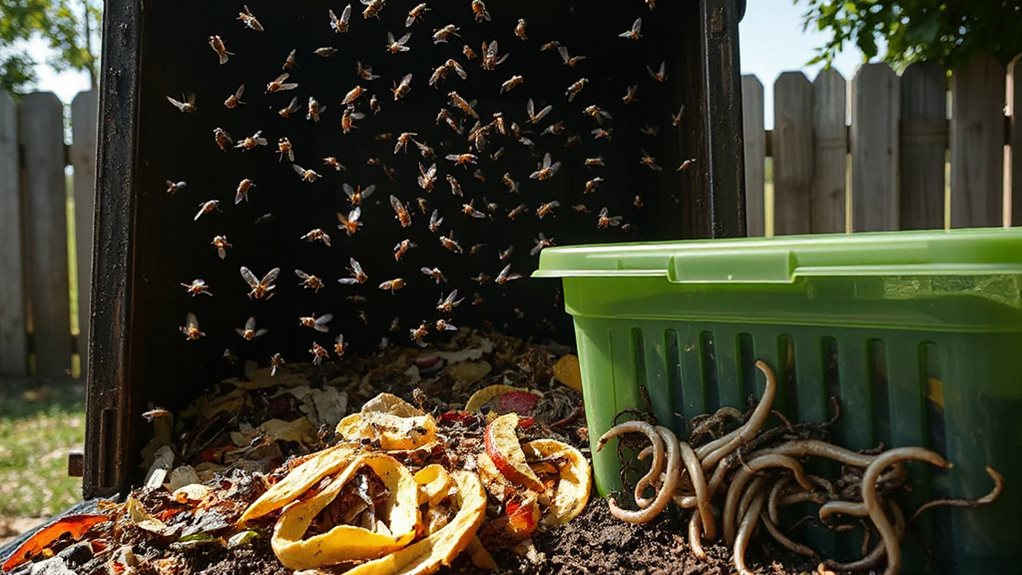
A worm bin can actually out‑compete flies for every bite and nook, and it’s pretty cool when you think about it—just envision your campsite kitchen, the smells of fresh veggies, and a bustling crew of tiny, wriggly recyclers that gobble up waste faster than a campfire eats marshmallows. You bury food deeply, add carbon‑rich bedding, balance pH with shells, and stir often, so worms dominate the lower layers while flies stay out.
DIY Apple Cider Vinegar Traps to Catch Compost Flies
So, you’ve just set up a compost bin at the campsite and notice a swarm of tiny, buzzing flies turning your fresh‑veg feast into a buzzing nightmare—don’t worry, a simple apple‑cider‑vinegar trap can swoop in like a superhero sidekick, pulling those pests away with a sweet, fermented scent that mimics overripe fruit, while a drop of dish soap breaks the surface tension so the flies sink instead of sipping, and a piece of clear plastic wrap punctured with tiny holes lets them in but keeps them from escaping, turning a jar or mug into a miniature fly‑free zone that’s as easy to assemble as packing a tent, and you’ll see the results in just a day or two, with the added bonus of feeling like a campsite‑hacker who’s outsmarted nature’s tiniest nuisances.
Layering Food Scraps Under Brown Material to Block Flies
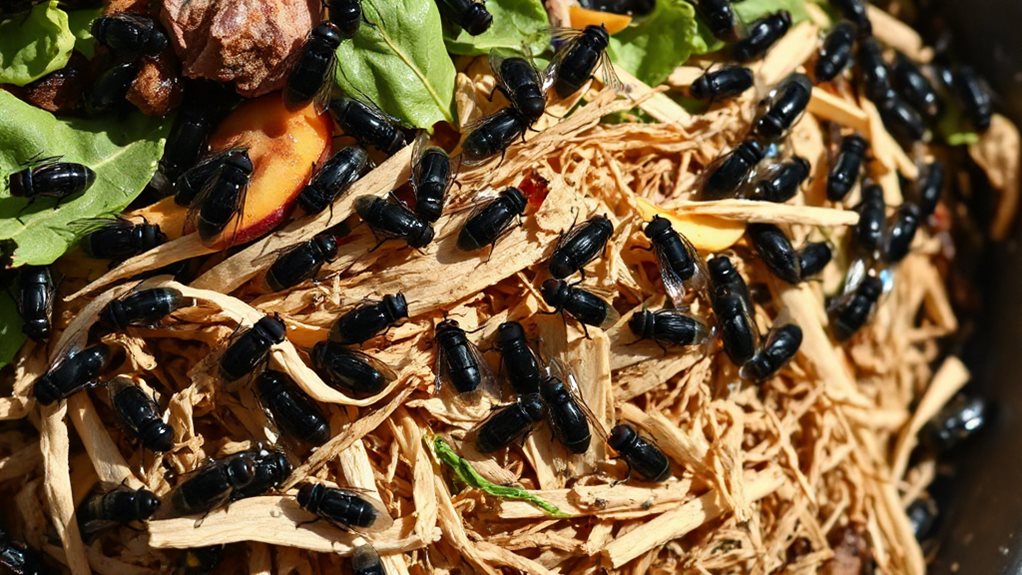
Why let those pesky compost flies crash your campsite feast? You’ll keep them at bay by burying fresh scraps under a thick brown blanket—think straw, leaves, shredded newspaper. As you add fruit peels, first them under a layer of dry material, sealing odors and drying moisture. This simple bio‑filter trick not only blocks flies but speeds decomposition, so your meals stay fresh and your guests stay happy.
Choosing Compost Bin Lids That Deter Flies While Letting Predators In
Choosing the right lid for your compost bin is like picking the perfect campsite gear—it has to keep the bugs out while still letting the good critters do their job, and you’ll be amazed at how a simple design tweak can turn a fly‑infested mess into a thriving mini‑ecosystem. Use a tight‑fitting lid with a fine‑mesh vent, add a charcoal filter for odor control, and leave a small opening for beetles and earwigs to swoop in and eat larvae, keeping flies at bay.
Overall
You’ve got the know‑how to keep flies out of your compost, so you’ll enjoy fresh scraps without the buzzing hassle—just remember to balance brown and green, keep it dry, turn it often, and use a simple cider‑vinegar trap when needed. Have you tried layering food under leaves? It works like a charm! Now you can focus on the fun stuff—like camping trips where you’ll love the scent of a well‑managed pile, not a swarm of flies. Happy composting!