Will Ducks Fly in the Rain? Here’s What to Expect
You’ll see ducks still taking to the sky when a light drizzle rolls in, because the quick pressure dip and gusty wind spark a pre‑rain flight surge that can start ten minutes before the first splash, and even heavy rain only grounds them temporarily as they huddle under trees or wait for the storm to pass before darting back to fresh puddles and newly formed ponds, so if you stick around you’ll uncover exactly how to time your hunt and where the post‑storm water hotspots pop up.
TLDR
- Ducks often stay active during light rain, making short, low‑level flights to feeding spots.
- Pre‑rain pressure drops trigger a surge of sprinting flights about ten minutes before drops begin.
- Heavy rain grounds ducks; they huddle under trees or low vegetation, avoiding high‑altitude flight.
- Species differ: dabblers and shoveler flocks forage in drizzle, while mergansers and wood ducks seek shelter.
- After rain stops, ducks quickly relocate to fresh ponds and newly flooded areas, resuming normal flight patterns.
How Light Rain Alters Duck Flight Paths
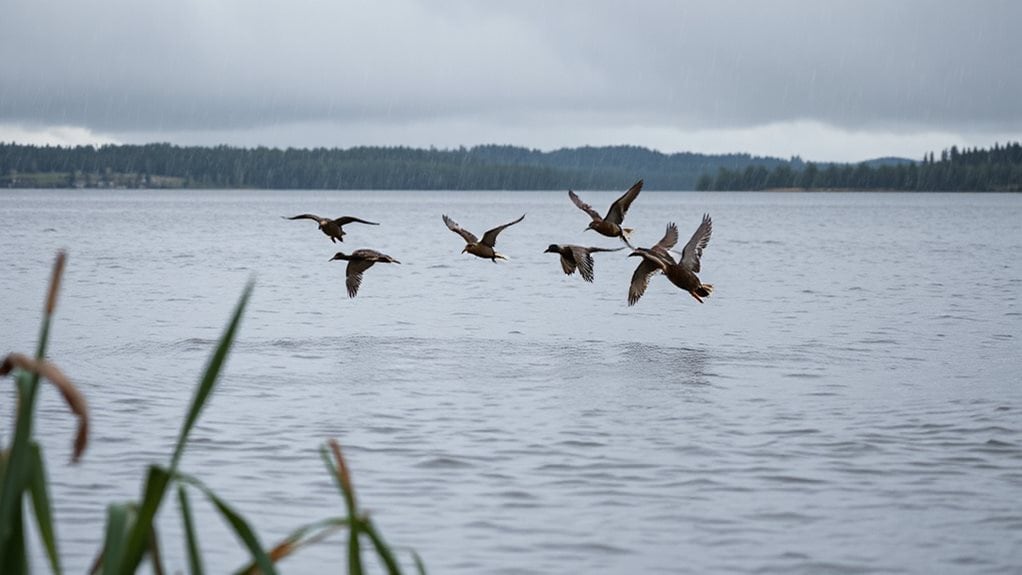
When light rain starts to patter, ducks don’t just huddle under a tree—they actually tweak their whole flight game, and you’ll love watching the show. You’ll see them swapping night‑time feeding for early‑day swoops, hugging fields and coves as drizzle blurs sightlines, and buzzing between sheltered spots because wind and rain together *enhance* their movement, making every splash feel like a tiny *journey*. Their activity often spikes right before the rain begins, with a noticeable surge in flight patterns. Wet, humid conditions can also increase insect activity, giving ducks more food resources and encouraging short flights between feeding areas.
Why Heavy Rain Grounds Duck Flight
Even if the sky opens up and pours down like a busted sprinkler, ducks quickly learn that heavy rain isn’t a great time for trips; the unbroken drops turn their usual sleek glide into a soggy, wobbly shuffle, so they swap soaring for huddling under the nearest tree or burrow, and you’ll swear they’re playing a game of “who can stay driest” while the world around them turns into a watery obstacle course.
You’ll notice they stay low, avoid diving, and hug fields because rain blinds their vision, hides hunters, and makes wings heavy; wind may push them, but the flood‑filled terrain forces them to pause, making you appreciate their cautious, service‑oriented behavior.
Heavy rain also increases nearby insect activity, providing abundant food that can influence duck foraging behavior.
Which Species Stay Active in Drizzle: Puddlers vs. Divers
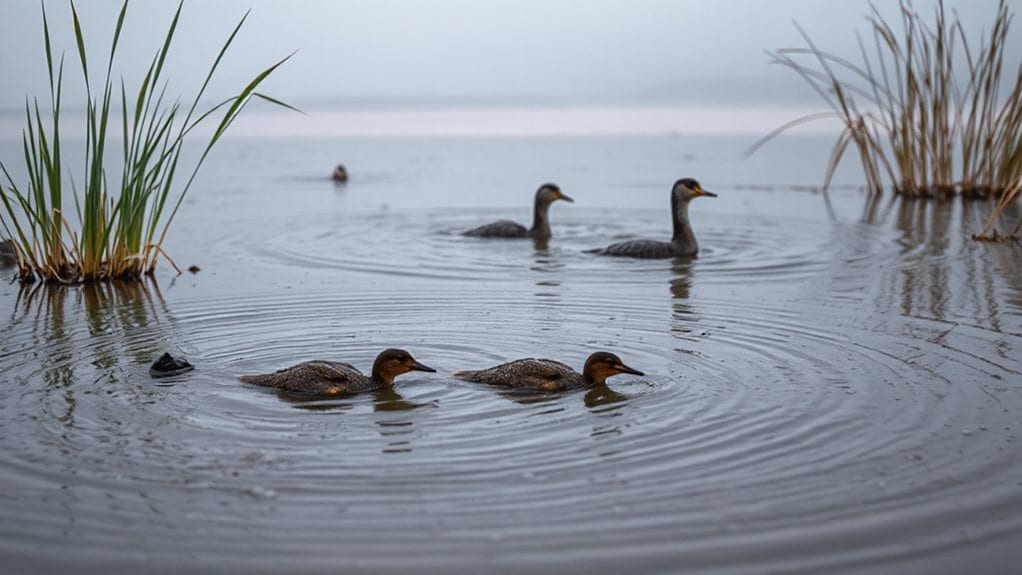
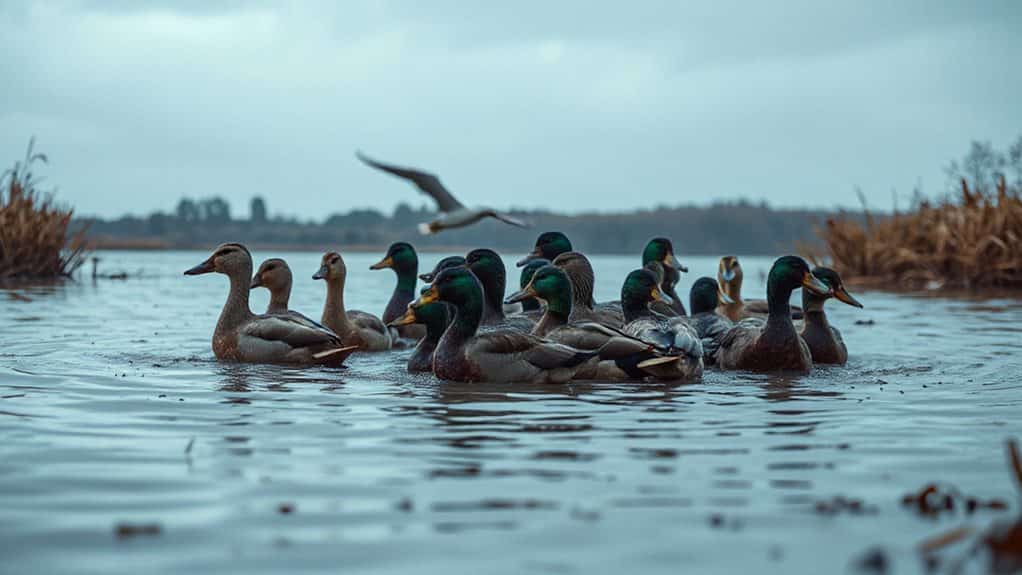
If a light drizzle rolls in while you’re out camping by the lake, you’ll see dabbling ducks—those “puddle‑loving” birds—keep on waddling, splashing, and feeding as if the sky just added a few extra sparkle sprinklers, whereas submerging ducks tend to hunker down, waiting for the rain to stop before they plunge into deeper water.
You’ll notice shoveler flocks foraging, wood ducks sheltering in trees, and mergansers darting for fish, while divers stay low, preferring deeper, drier spots.
For nearby nesting areas or sheltered cavities, consider that enclosed spaces can limit exposure to weather and pests, similar to how enclosed nests reduce fogger effectiveness when treating wasps.
When Ducks Fly Before and After Rain – Timing Your Hunt
You’ll notice the ducks buzzing around like a packed summer camp just before the clouds burst, because the pressure drops and the wind starts to stir, pushing puddlers and swimmers into a pre‑rain flight surge that can start ten minutes before a thunderstorm hits. After the rain stops, they’re practically on a road‑trip, hopping between fresh ponds and new feeding spots for up to ten days, especially when a big downpour creates new water in places like the Bootheel or Delta. Dragonflies also become more active around these new waters, helping control mosquitoes by eating both adults and larvae, which can make the newly formed ponds lower in mosquitoes and more attractive to ducks.
Pre‑Rain Flight Surge
When a storm’s pressure drops start to whisper that rain’s on the way, ducks suddenly turn into the world’s most enthusiastic commuters, sprinting across the water just ten minutes before the first drops hit, and you’ll see their flocks buzzing like a downtown train station just before rush hour.
Position decoys in sheltered coves, watch barometric cues, and ride the surge—divers will scramble, puddlers linger, and your hunt hits peak excitement.
Post‑Rain Relocation Patterns
After the clouds finally break and the rain tapers off, ducks don’t just sit around waiting for the sun to shine—they sprint to the nearest fresh‑water pockets, turning fields, low‑lying pastures, and even flooded woods into thriving snack bars.
You’ll find them flocking to dry sloughs and river backwaters within hours, so scout low spots, glass flooded woods, and follow fresh water trails for the best post‑rain harvest.
Where to Scout Post‑Storm Water Dumps for Immediate Activity
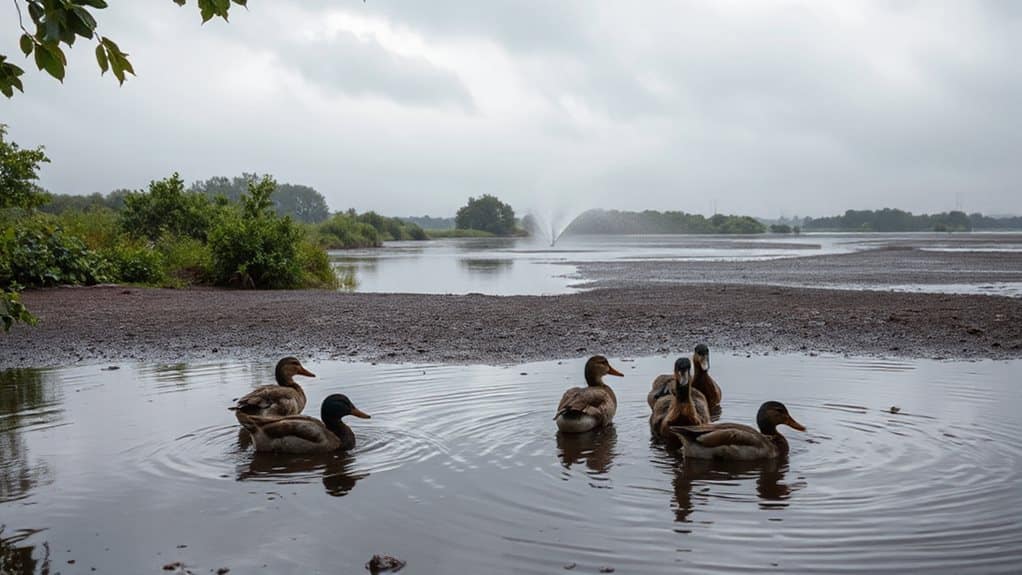
Scouting post‑storm water dumps starts with a quick walk‑around of the neighborhood’s storm‑drain network, and you’ll be amazed at how many hidden treasure‑troves of debris pop up right after a heavy rain.
Check park edges, community fields, and any public lot near outlet pipes; note clogged grates, oily slicks, and plastic piles.
Photograph, log each find in Marine Tracker, and share the data to help volunteers prioritize cleanup.
Also be mindful that nearby vegetation can suffer from salt buildup after storms, which affects plant health and helps indicate pollution sources.
Why Rain Helps You Stay Hidden in the Blind
When rain pours, the steady patter drowns out any rustle you make, so hunters can’t spot your silhouette, and the overcast sky turns everything into a gray blur that hides your movement like a secret hide‑and‑seek game.
Have you ever noticed how the wet ground muffles footsteps, making echoes fade and turning the forest into a quiet whisper where you can slip past unnoticed?
Rain Masks Hunter Silhouette
Even if the sky’s turning gray, that steady drizzle can be your secret weapon for staying invisible in a duck blind, because the rain’s soft, diffused light blurs the hard edges of your silhouette and makes it harder for waterfowl to pick you out of the background.
You’ll notice the outline melting into mist, making ducks think you’re just a ripple, while the patter drowns your movements and even washes away scent, letting you linger longer without spooking the flock.
Cloudy Skies Hide Movement
Rain doesn’t just wash away scent—it also turns the sky into a giant, soft‑focused blanket that makes every movement look like a lazy ripple on a pond, so you can stay concealed while the clouds do the heavy lifting.
The overcast diffuses light, erasing shadows and flattening silhouettes, while droplets scatter and, blurring depth; thus, you blend into the gray, making ducks think you’re just another cloud drifting by.
Moisture Dampens Sound Echoes
If the sky turns into a watery curtain, the world suddenly sounds like it’s wrapped in a cozy blanket, and that’s exactly why rain can turn a hunting blind into a stealth‑masterpiece.
You’ll notice wet leaves and soggy ground gobble up footsteps, while humid air muffles high‑pitched echoes; that means your movements stay hidden, and even curious ducks can’t hear you, so enjoy the quiet, rain‑powered camouflage.
How to Set Up a Camouflaged Blind for Drizzly Conditions
When the sky turns a soft gray and a light drizzle starts, you’ll find that setting up a camouflaged blind is actually a lot more fun than it sounds—think of it as a secret hide‑and‑seek game with the ducks.
Choose a downwind spot near reeds, anchor the treated‑wood frame with stakes, drape mottled netting, seal seams with tape, add a floor tarp, and test it before sunrise.
Debunking Common Rain‑Intensity Myths for Duck Hunters
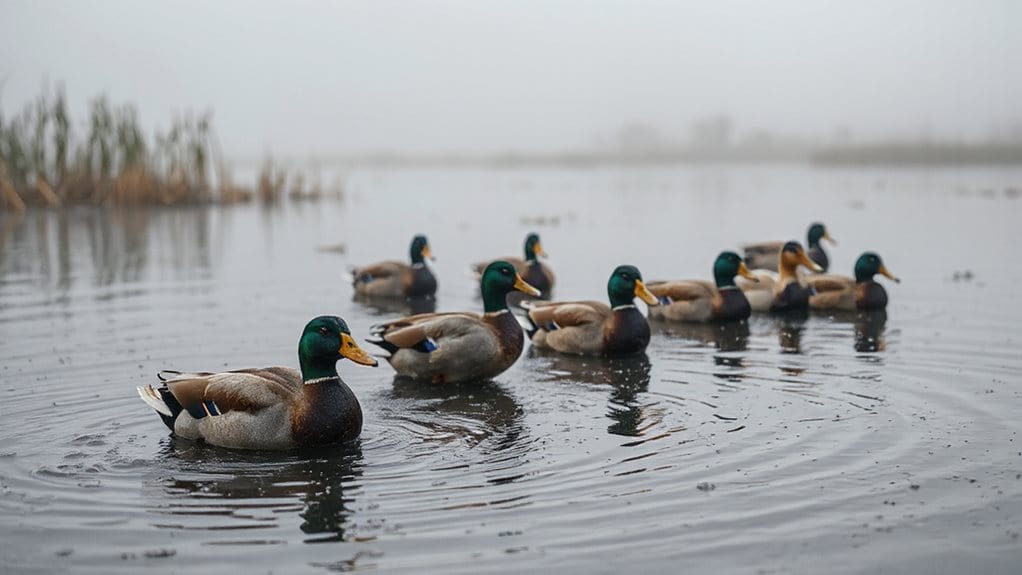
Even though a drizzle might seem like a perfect excuse to stay inside, it actually turns the wetlands into a lively duck highway, and busting the myths about how rain intensity affects those feathered commuters can save you a lot of guesswork.
Light rain enhances flight, so keep low‑level decoys humming; heavy downpours tuck birds into timber, but they’ll burst out right after, especially before storms, so plan your calls and camp gear accordingly.
And Finally
So, when the clouds open up, remember that light rain can actually give ducks a slick, low‑drag glide, while heavy downpours force them to hunker down and wait it out; you’ll see puffers buzzing in drizzle, but divers tend to stay put until the sky clears. Time your hunt right after the storm, scout those post‑rain water dumps, and set up a camouflaged blind that blends with the soggy scenery—trust me, a little drizzle can turn a boring morning into an epic journey, and you’ll love the thrill of spotting those feathered flyers in action.