Is a Red Light Good for Bearded Dragons?
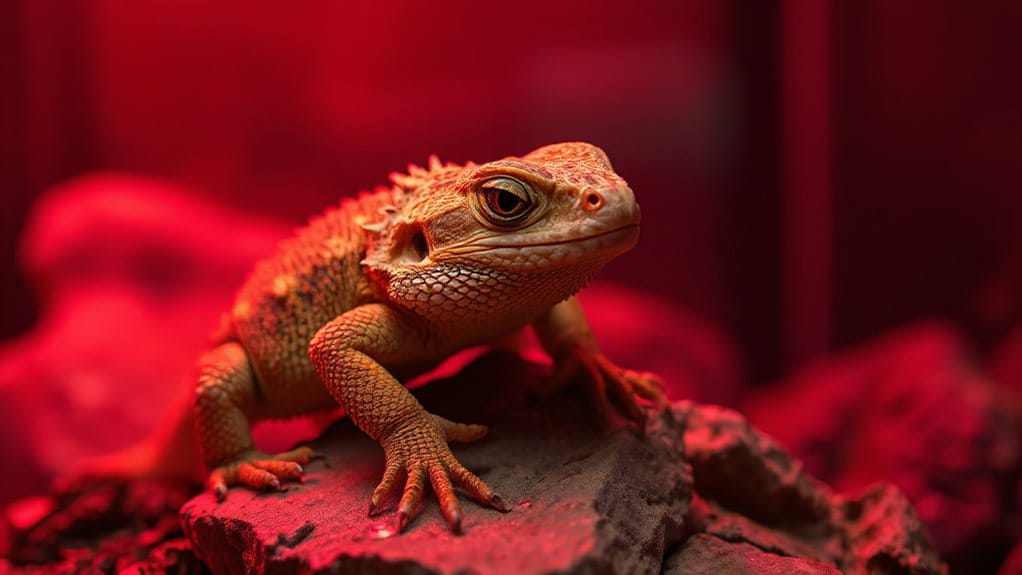
You’ll find that a red night‑light looks cool, but it actually tricks your dragon’s eyes into thinking dawn’s still coming, throws off its internal clock, and barely adds any warmth compared with a proper heater, so keep it off after sunset to let your bearded dragon relax, eat well, and sleep soundly; the red light can also stress the animal, mess with melatonin, and even cause eye strain if the pupil can’t dilate properly—turn it off, keep the night temperature around 60‑70 °F, and you’ll see a calmer, healthier pet, plus a few extra tips await you if you stick around.
TLDR
- Red LED night lights can disrupt bearded dragons’ circadian rhythms, leading to stress and appetite loss.
- Their vision detects deep reds, so lingering red light after dusk interferes with melatonin production.
- Red bulbs provide minimal heat; they cannot replace proper reptile heaters for maintaining safe nighttime temperatures.
- Recommended nighttime range is 12–24 °C (55–75 °F), with a target of 16–21 °C (60–70 °F); use a heater only if temps fall below 16 °C.
- Monitor health without red light using infrared thermometers, thermal imaging, and regular checks of shedding and activity patterns.
How Does Red Light Disrupt a Bearded Dragon’s Circadian Rhythm?
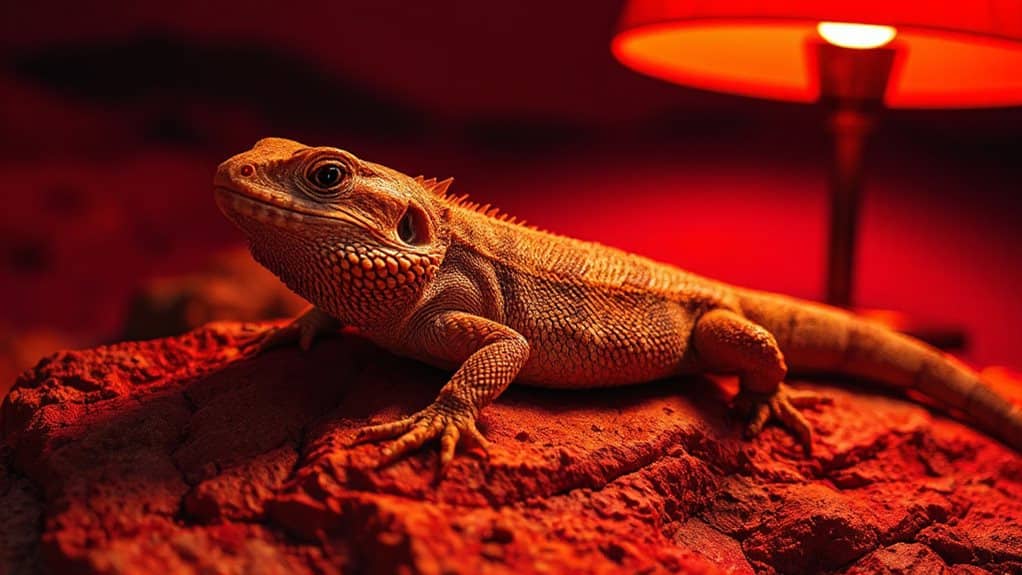
When you turn on a red LED night your bearded dragon’s terrarium, it’s like tricking the little reptile into thinking sunrise just happened, and that sneaky glow can throw its whole internal clock off balance. Red light fools its eyes, shifting activity patterns, delaying temperature peaks, and weakening circadian resilience, so the dragon stays restless, stressed, and loses appetite—just like a camper lost without a proper sunrise. This effect mirrors findings that rodents perceive long‑wavelength red light, which disrupts their circadian rhythms. Small round holes in lawns can indicate animal activity such as birds pecking for grubs and ants, which also illustrates how nocturnal or crepuscular disruptions affect wildlife behavior.
What Nighttime Temperature Should a Bearded Dragon Have Without Red Light?
You’ll want the night to feel like a cool campsite, keeping the enclosure between about 12‑24 °C (55‑75 °F) so your dragon can settle into a natural thermal gradient and stay comfortable without any red‑light glare.
Have you ever noticed how a slight dip in temperature wakes you up for a morning hike? Check the spot with a reliable thermometer, adjust the ceramic heat emitter if it drifts below 17 °C (62 °F), and you’ll give your bearded dragon the perfect night‑time chill while still preventing any freezing surprises.
Consider maintaining soil nutrients to support root crops like sweet potatoes if you also garden near your enclosure.
Optimal Nighttime Temperature Range
Even if you’ve never set up a campsite, you’ll get a thrill image how a bearded dragon’s night‑time temperature should dip, because just like us, they love a good cool‑down after a sunny day.
Aim for 60‑70 °F (16‑21 °C) nightly; if your house stays above 59 °F, you’re fine.
Use a ceramic heater only when temps slip below 60 °F, and keep lights off for a proper sleep cycle.
Thermal Gradient Importance
Even though you’re not setting up a campsite for your bearded dragon, think of the night as a cool‑down hike after a sunny trek—just like we love a breezy evening, your reptile craves a temperature dip, so aim for about 60‑70 °F (16‑21 °C) when the red light is off, and you’ll keep the little explorer comfortable without any extra heat.
Maintaining a gentle thermal gradient lets the dragon find a cooler zone, supports natural circadian rhythms, and encourages morning activity, so you’re essentially giving it a night‑time spa retreat.
Monitoring Temperature Fluctuations
When night falls and the red light goes out, think of your bearded dragon’s enclosure like a campsite that’s cooling down after a day of hiking—aim for a cozy 60‑70 °F (16‑21 °C) zone, because that gentle dip lets the reptile settle in for a good night’s sleep without freezing.
Use a ceramic heat emitter, set a thermostat lower than daytime, and check the reading every few hours; if your room drops below 59 °F, add supplemental heat, but never let the enclosure get colder than the room.
This routine mirrors natural night‑time drops, keeps metabolism humming, and prevents lazy, sluggish mornings.
Can a Bearded Dragon See Red Light? The Truth About Reptile Vision
So, can a bearded dragon actually see red light? You’ll be glad to know they do—thanks to a special red‑sensitive cone, they spot deep reds even in dim conditions, just like spotting a campfire glow on a forest trail.
Their vision spans 300‑700 nm, so UV and red hues pop, influencing behavior and stress.
How Does the Heat Output of Red Light Bulbs Compare to Proper Reptile Heaters?
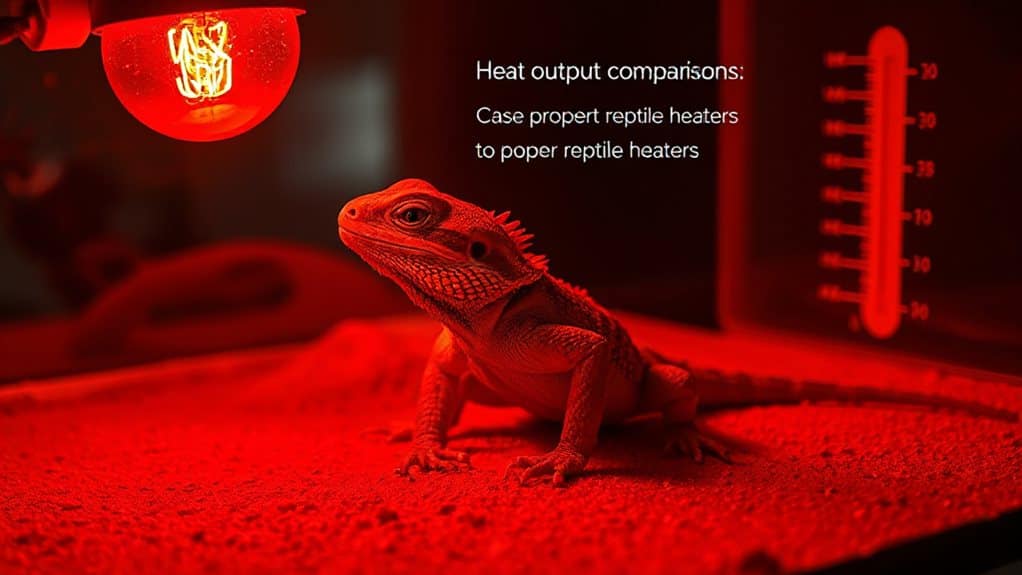
A red light bulb might look like a cheap, camp‑fire‑style lamp for your bearded dragon, but its heat output is more like a flickering match than a full‑blown camp stove.
Halogen heaters flood the enclosure with IR‑A and IR‑B, warming deep tissues, while red bulbs only produce weak, narrow IR‑C spots, leaving the ambient air chilly and your dragon sluggish.
Use proper reptile heaters for balanced, safe warmth.
If you notice any persistent buzzing, crackling, or warmth from the enclosure’s electrical setup, turn off power and call a licensed electrician right away.
Why Does Improper Lighting Cause Stress and Restlessness in Bearded Dragons?
You’ll notice that when the light stays on like a never‑ending campfire, your dragon’s internal clock gets scrambled, so it can’t settle into a proper night‑time rest, and that constant “dusk” vibe pumps up stress hormones like a mischievous camp‑fire prank.
Have you ever tried to sleep under a red lantern that never turns off? It’s the same—your bearded buddy ends up pacing, glass‑surfing, and looking grumpy because its circadian rhythm is out of sync.
Disrupted Circadian Rhythms
Ever wonder why a bearded dragon can turn into a jittery little journey the moment its light schedule goes off‑track? When red LEDs linger past dusk, they scramble the dragon’s internal clock, muting the dark‑phase pigment peak that signals “sleep time.”
This mis‑entrainment spikes UV‑visible reflectance, jolting activity into daylight hours, and leaves your reptile restless, stressed, and ready for a midnight camping journey.
Reduced Restful Sleep
When the night lights stay on, your bearded dragon’s sleep gets hijacked, and it ends up feeling like a camper who forgot to turn off the lantern before hitting the sack.
You’ll notice restless pacing, glass‑surfing, and yawning, because constant red glare blocks melatonin, shortens deep sleep by up to thirty percent, and leaves eyes strained, making the dragon irritable and keen for a dark, cool night.
Elevated Stress Hormones
If you’ve ever left a campfire blazing all night, you know how the lingering glow can keep you buzzing with energy instead of drifting into a cozy slumber—well, the same thing happens to your bearded dragon when a red night light stays on, because that constant crimson hue tricks its brain into thinking it’s still daytime, scrambling its circadian clock and spiking stress hormones like cortisol.
This hormonal surge makes your dragon restless, appetite drop, and metabolism wobble, so ditch the night‑light and give it true darkness for calmer, healthier nights.
Can Red Light Damage a Dragon’s Eyes Through Pupil‑Dilation Failure?
Even though you might think a dim red night‑light is as harmless as a campfire glow, it can actually throw a bearded dragon’s eye‑control system off balance, and that’s where the trouble starts.
Red bulbs don’t trigger proper pupil constriction, so UV sneaks in, stressing retina and muscles; over time, this can blur vision, cause strain, and even lead to permanent damage, especially for caring keepers.
How to Monitor Your Dragon’s Health at Night Without Using Red Light?
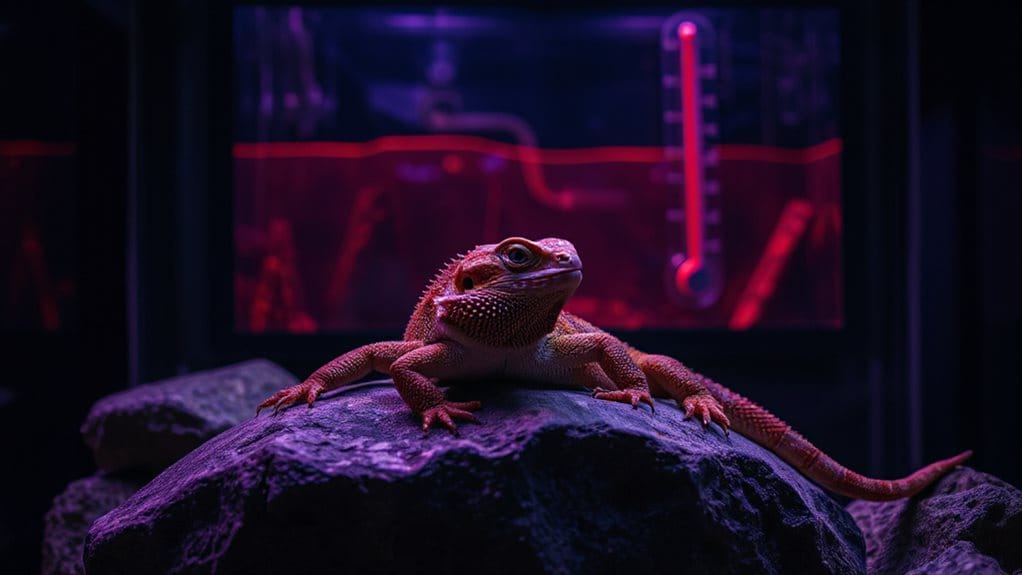
Envision this: you’re camping under a star‑filled sky, your lantern’s soft glow barely touching the tent, and you still want to know if your bearded dragon is sleeping soundly without turning on a red night‑light.
Use an infrared thermometer or a probe gauge, peek through clear glass, note daytime activity, log shedding, and trust thermal imaging for quiet, stress‑free checks. Maintain steady temperatures and avoid excessive warmth to prevent stress and disrupted sleep cycles for your dragon, which can be monitored with a temperature probe.
And Finally
So, you’ve learned that a red night‑light can mess with a dragon’s internal clock, make its eyes squint, and even crank up stress, so ditch the glow and stick to a cool, dark perch instead—just like you’d leave a campsite lamp off after bedtime. Keep the temperature steady, watch for signs of restlessness, and trust a simple, dark night to let your scaly buddy recharge. Your dragon (and your peace of mind) will thank you!