Why Blackberry Bushes Won’t Flower (And What to Do About It)
If your blackberry bushes aren’t flowering, don’t panic—you’re definitely not cursed! Sometimes they need a couple of years to grow up, but other times, cramped roots, soggy or too-acidic soil, frost damage, or forgotten pruning are secretly sabotaging your berry dreams. Pests might even be munching the flower buds undercover! Give your bushes space, fresh soil, proper pruning, and a watchful eye for bugs. Stick around, because there are easy tricks to get those blooms rolling!
TLDR
- Immature or unhealthy canes, often from plant decline or early frost damage, prevent blackberry bushes from flowering.
- Improper pruning or failure to remove old canes reduces new growth and limits flowering potential.
- Poor soil conditions, including improper pH or limited root space, can inhibit flower development.
- Pest infestations and environmental stressors like temperature extremes or over-spraying disrupt blooming and pollination.
- Choosing suitable, disease-resistant varieties and maintaining proper care improve flowering and fruit production.
Why Isn’t My Blackberry Bush Flowering?
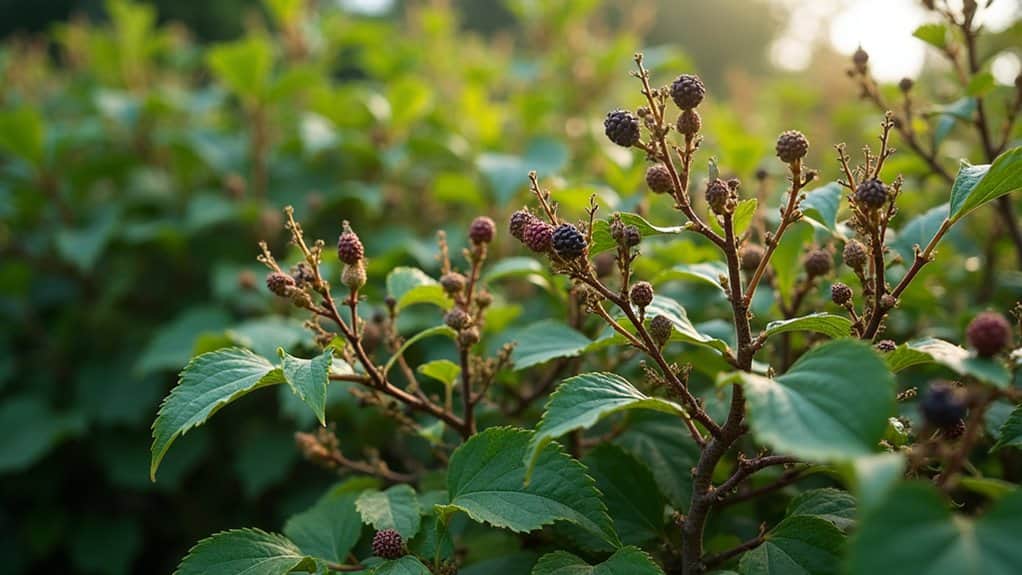
Even though it’s super exciting to dream of picking fresh, juicy blackberries right off the bush, sometimes those prickly plants just don’t seem interested in throwing a single flower party, no matter how patiently you wait.
Your blackberry bushes might skip flowering if they’re still young and waiting on plant maturity, if you’ve skipped proper pruning, if sunlight isn’t hitting, or if there’s a sneaky nutrient imbalance! Additionally, ensuring your soil has the right test parameters can make a significant difference in promoting healthy flowering.
Common Reasons Blackberry Bushes Don’t Bloom
When you’re out in the garden, daydreaming about all the blackberry picking you’ll do on your next camping trip, it can be super frustrating to see those bushes stubbornly refusing to bloom, right?
Sometimes, it’s just a matter of maturity—young canes need time.
Other times, it’s poor pruning, not enough light, or lousy soil.
Give your canes some TLC, and flowering should follow!
Ensuring your blackberry bushes have proper soil health and amendments can also make a significant difference in encouraging blooms.
How Pruning Impacts Blackberry Flowers
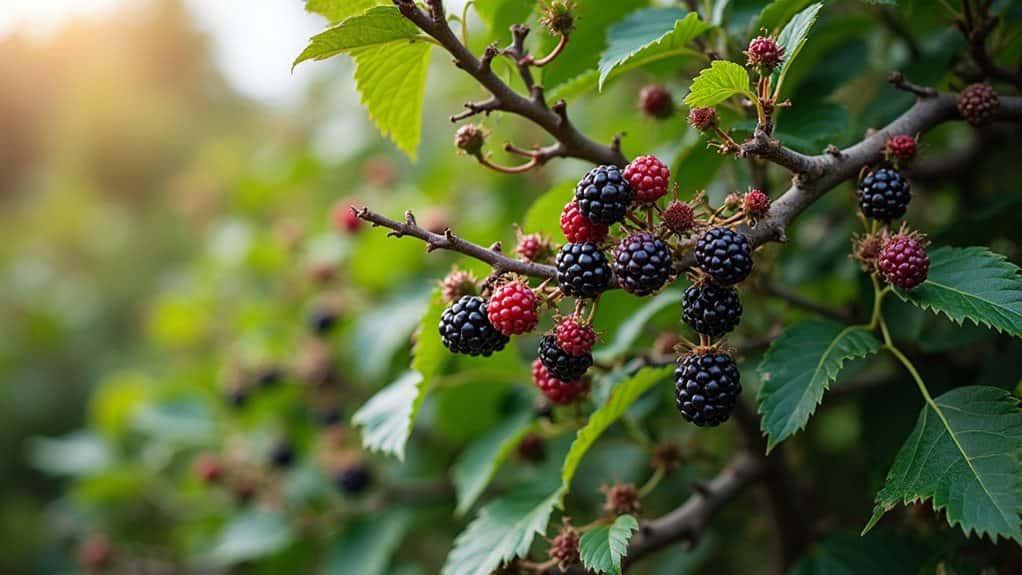
If you’ve ever come back from a camping trip dreaming of fresh blackberry cobbler, only to find your backyard bushes looking more like a wild tangle than a berry buffet, let’s talk about pruning—because it’s a total breakthrough for getting those sweet blooms.
Proper pruning means cutting out old floricanes, encouraging new primocanes, and never overdoing it, or you’ll accidentally sabotage your blackberry bushes’ flowering potential!
Does Your Blackberry Bush Need More Root Space?
Although it’s easy to get caught up daydreaming about picking fat, juicy blackberries after a big camping trip, your bush might’ve other ideas if its roots are cramped up like you in a tiny tent. Blackberry bushes need plenty of root space to support flowering. If your container size is small, consider a transplant and always check root health—your future berry-picking expeditions depend on it! Ensuring proper seal all entry points can also help prevent pests that might harm your plants.
What Soil and Water Do Blackberries Need to Bloom?
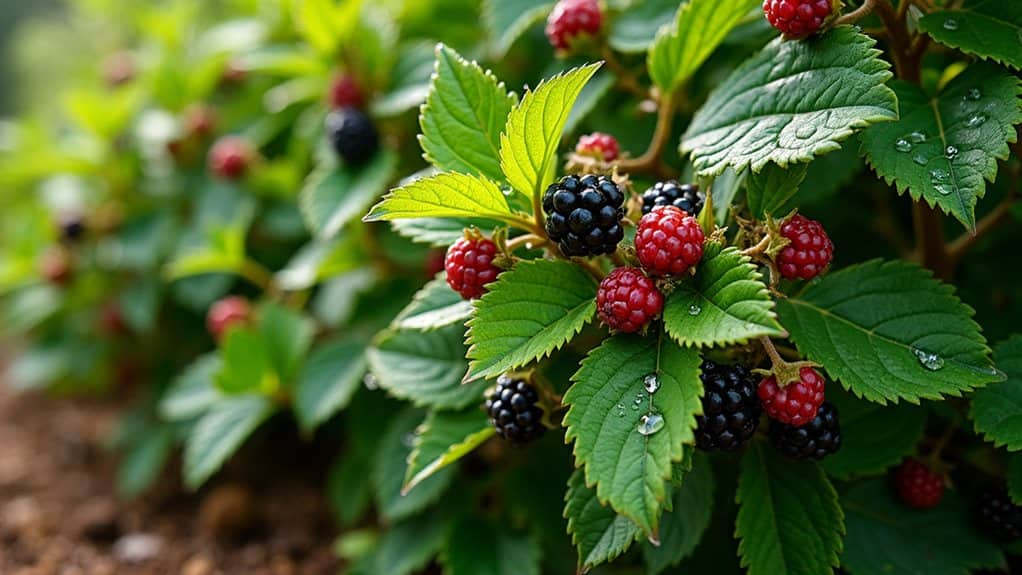
Just like you wouldn’t want to set up your tent on a muddy, swampy patch at the campsite, your blackberry bushes have some strong opinions about where they put down roots! They need well-drained, slightly acidic soil (think pH 5.5–6.5).
They also require regular watering—about 1 to 2 inches per week. Keep the moisture just right; too much or too little means fewer flowers and sadder blackberries!
Best Blackberry Varieties for Reliable Flowering
If you’re tired of waiting forever for your blackberry bushes to bloom, you’ll want to check out some varieties that are famous for actually producing flowers—like the classic floricane types, the speedy primocane-flowering choices, and even compact plants perfect for balconies.
A new variety with disease resistance can help ensure healthy, abundant blooms year after year.
Proven Floricane-Flowering Varieties
Once you start dreaming about picking juicy blackberries right off the bush during a summer camping trip, you’ll want to know which varieties are actually going to show up and flower when you need them.
Stick with proven floricane-flowering varieties like ‘Marion,’ ‘Chester,’ or ‘Natchez’ for reliable flowering and fruit production.
Top Primocane-Flowering Choices
While floricane-flowering blackberries like ‘Marion’ and ‘Chester’ have their charm, sometimes you want a berry bush that’s a little less picky about when it decides to show off its blooms—especially if you’re dreaming of gobbling up fresh blackberries on your next camping trip or impressing your friends with a homegrown snack by late summer.
Primocane-flowering blackberry varieties like ‘Prime-Ark® Freedom’ and ‘Prime-Ark® 45’ bloom on first-year primocanes, meaning less pruning, more reliable flowering, and earlier fruiting.
If you want to serve up fresh berries with minimal fuss, these are your go-to choices!
Compact Balcony-Friendly Types
Even though sprawling blackberry brambles might look cool when you’re hiking in the wild, nobody wants their balcony turning into a jungle—especially when there’s barely enough space for your favorite camping chair!
That’s why compact blackberry varieties like ‘Baby Cakes’ and ‘Jewel’ are perfect for balcony growing. They’re primocane-flowering, disease-resistant, and bred for container cultivation.
These qualities give you reliable flowering success without wild, tangled chaos.
How Pests and Stress Affect Blackberry Blooms
You wouldn’t want pesky bugs like thrips or those sneaky fruitworm beetles munching on your blackberry bushes right before you’re ready to set up your dream camping breakfast, right?
When pests attack the leaves and canes, or when plants get stressed out from too much spraying, your poor blackberry bushes can end up so frazzled that they simply skip blooming altogether.
A soil pH imbalance can also stress the plants and interfere with nutrient uptake, further reducing their chances of flowering.
Common Blackberry Pest Threats
If you’ve ever gone berry picking on a warm summer day, nothing ruins the expedition faster than uncovering your blackberry bushes just won’t bloom.
Pests are often the sneaky culprits behind the disappointment. Tiny thrips, mites, and raspberry fruitworm beetles love to party on the undersides of leaves, causing infestation and plant stress.
Check your plants often—catching pests early can mean the difference between feast and famine!
Stress Factors Inhibiting Blooms
While blackberry bushes might look tough enough to survive anything, they can actually be real drama queens when it comes to stress—especially the kind caused by sneaky pests!
If you’ve ever camped out in your backyard and spotted thrips or mites, you know pests damage more than just leaves—they mess with plant health.
Stress from pests can totally disrupt pollination, stopping blackberry flowering before it even starts.
Preventing Damage for Flowering
Camping out next to your blackberry bushes, flashlight in hand, can feel like a wild adventure—until you realize the real drama is happening right under your nose.
Pests like thrips and fruitworm beetles sabotage flowering by munching on buds, while too much pesticide can chase away pollinators.
Prioritize plant health with regular checks and smart pest management, so your blackberry bushes can truly serve with blooms!
Easy Ways to Get Your Blackberry Bush to Flower
Let’s be real—nothing’s more disappointing than waiting all season for your blackberry bush to bloom, only to end up with a bunch of leafy vines and zero flowers.
Here’s the trick: start pruning those overgrown vines, focus on new primocanes, and use proper timing—floricanes get the chop after fruiting.
Keep the canes around sixteen, and always make sure your blackberry bushes soak up plenty of sunlight! Additionally, removing dead or crossing branches can improve airflow and help promote flowering pruning techniques.
When to Replace a Non-Flowering Blackberry Bush
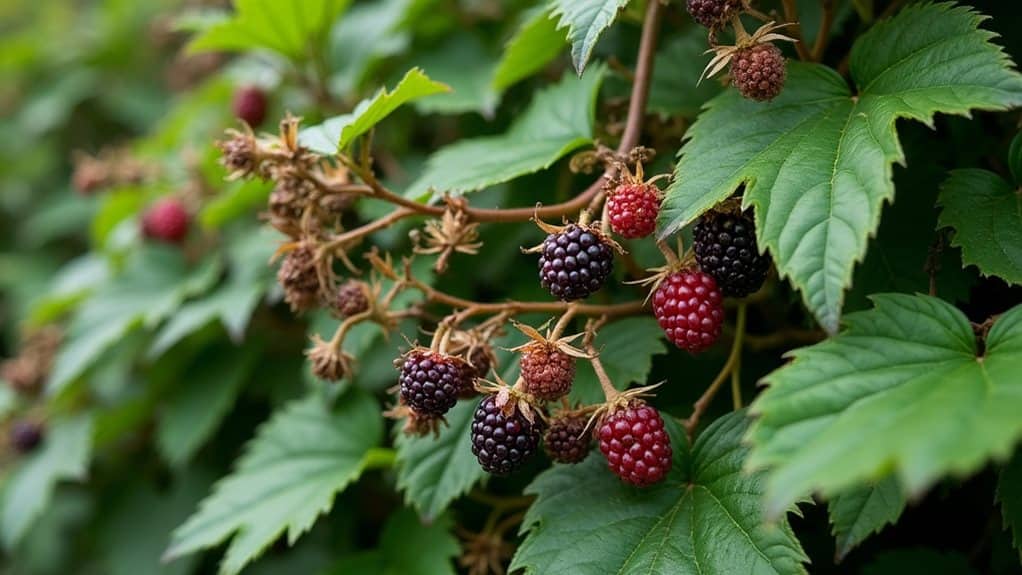
Even if you’ve poured your heart into babying that stubborn blackberry bush, sometimes it just refuses to show any signs of flowering. And honestly, that’s super frustrating—kind of like packing all your gear for a camping trip and realizing you forgot the tent! If your non-flowering blackberry has zero cane development or fruit production after three years, and plant decline is obvious, replacement is your best bet for plant health. Early planting can also contribute to poor flowering, as it may expose the plant to frost damage or temperature extremes that hinder growth.
Overall
So, if your blackberry bush is acting more like a grumpy cactus and refusing to bloom, don’t give up! Check the roots, fix the soil, give it a good haircut, and watch out for sneaky pests—just like prepping for a camping trip, you’ve gotta plan ahead for tasty rewards. Honestly, it’s super satisfying when those first flowers pop out, and you know you made it happen. Trust me, you’ll be the berry boss of your backyard!