Hibiscus Dropping Leaves Indoors? Here’s Why
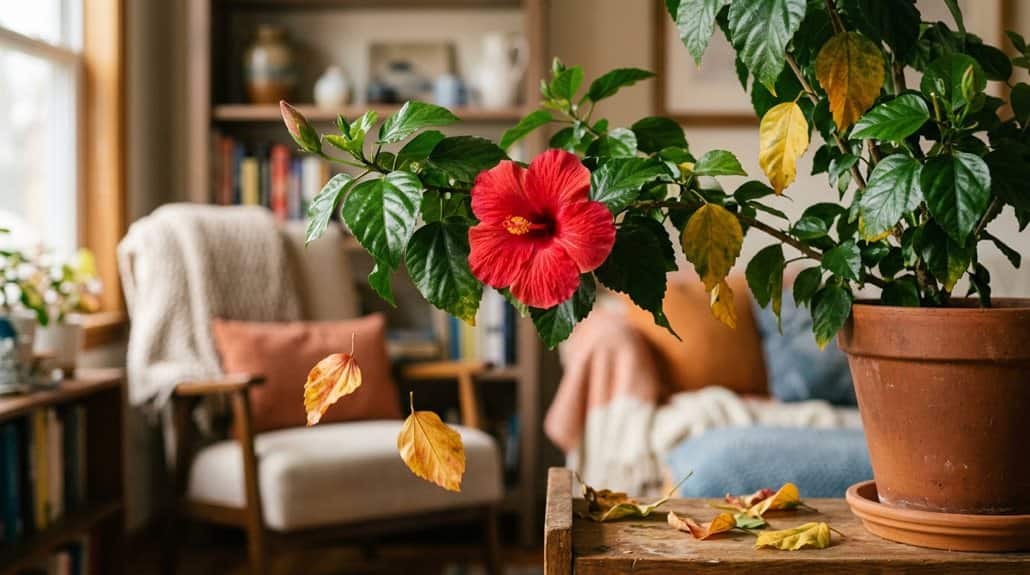
If your hibiscus is dropping more leaves than you lose socks on a camping trip, chances are it’s feeling out of sorts because of indoor life—things like not enough sunlight, wild temperature swings, soggy or bone-dry soil, or even sneaky little pests can stress it out big time! Check the lighting, water only when the top inch of soil is dry, and watch for bugs. Trust me, with a few adjustments, your hibiscus can bounce back—and you’re just about to find out how!
TLDR
- Sudden changes in indoor light, temperature, or humidity can stress hibiscus, causing leaves to drop.
- Overwatering or underwatering disrupts root health and leads to leaf loss.
- Pest infestations, such as spider mites or aphids, can trigger leaf drop and visible leaf damage.
- Insufficient light or low humidity indoors often weakens hibiscus, making leaves more prone to falling.
- Pruning after leaf drop encourages healthy regrowth and helps the plant recover from stress.
Why Is My Hibiscus Dropping Leaves Indoors?
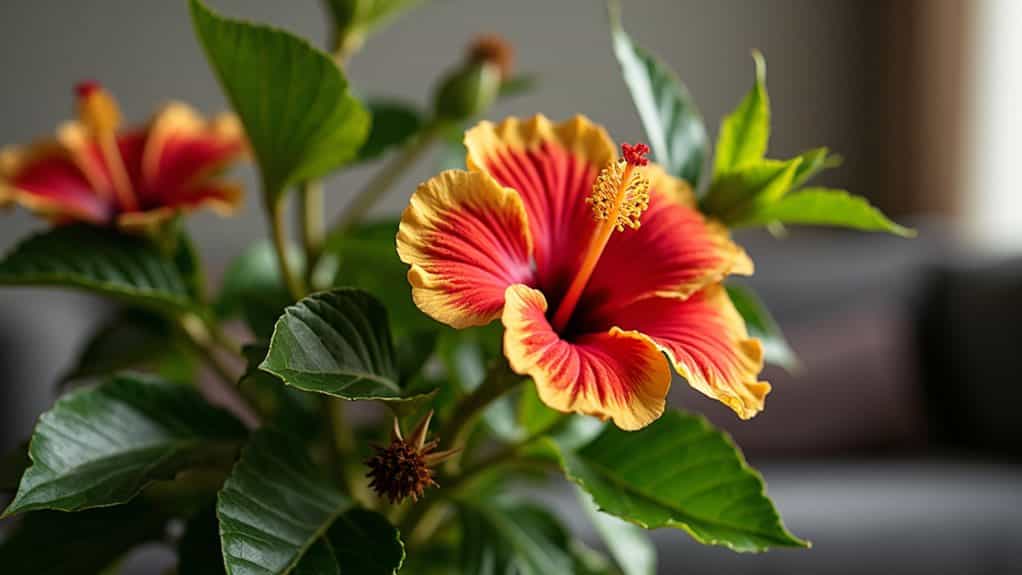
Even if you’re a pro at keeping your hibiscus happy outside, bringing it indoors can sometimes feel like you’re trying to take a wild camper and plop them into a fancy hotel—there’s bound to be some drama! Your indoor hibiscus might experience leaf drop from all the environmental stress—think root shock from overwatering, sneaky pests, or even the plant’s natural “hibiscus hibernation” season. Ensuring proper soil testing can help identify and correct issues with soil nutrients or pH that contribute to stress. Give it patience and care!
Environmental Triggers: Light, Temperature, and Humidity
When you bring your hibiscus indoors, it’s almost like inviting a tropical camper to crash at your place for the winter—sure, it’s cozy inside, but there’s a lot your plant needs to adjust to! If your hibiscus doesn’t get enough light, or if temperature and humidity aren’t just right, it’ll drop leaves faster than a camper fleeing a surprise snowstorm, trust me! Poor airflow and sudden changes in conditions can also cause stress, leading to leaf drop. Overwatering can further exacerbate the problem, making your plant more vulnerable to environmental shifts.
Watering Mistakes That Cause Hibiscus Leaf Drop
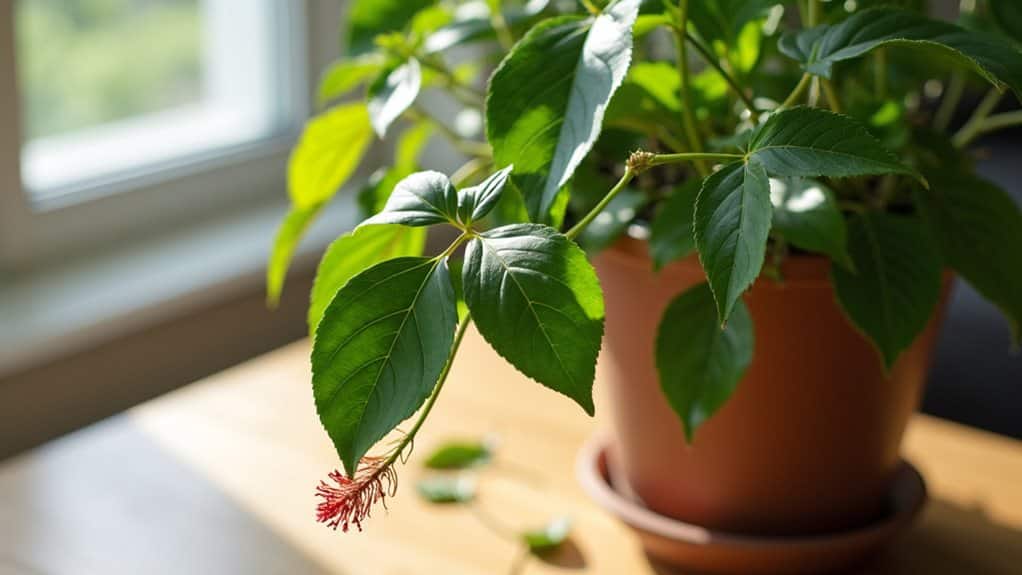
Before you start pouring water into your hibiscus’s pot like you’re filling up a canteen before a big hike, let’s talk about one of the most common reasons your plant might be dropping leaves indoors: watering mistakes.
Overwatering leads to root rot and leaf drop, while underwatering can send your plant into survival mode. Always check the soil—don’t just trust a schedule—and avoid soggy, poorly drained conditions!
Common Indoor Pests and Diseases (and Fixes)
Let’s face it, hibiscus plants might look tough with their glossy leaves and bold blooms, but they can be total drama queens when it comes to indoor pests and diseases—kind of like that one friend who always gets bitten by mosquitoes on a camping trip.
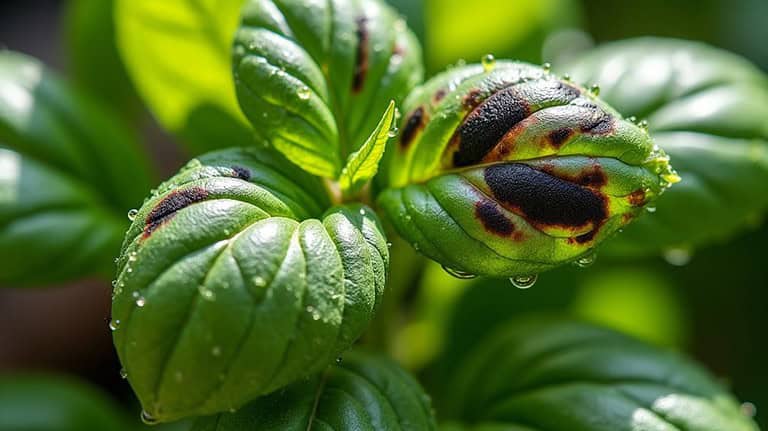
Watch out for spider mites and aphids, as they trigger leaf drop and leave behind sticky messes or even fungal mold. Inspect often, treat quickly! Additionally, keeping an eye out for pest infestations can help prevent more serious damage and yellowing of leaves.
Adjusting Hibiscus Light and Humidity Indoors
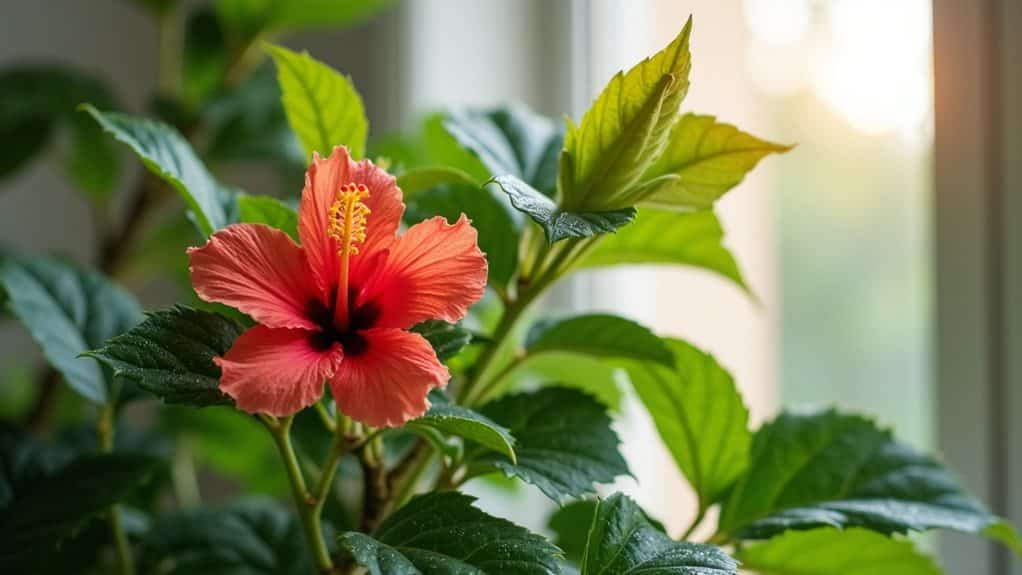
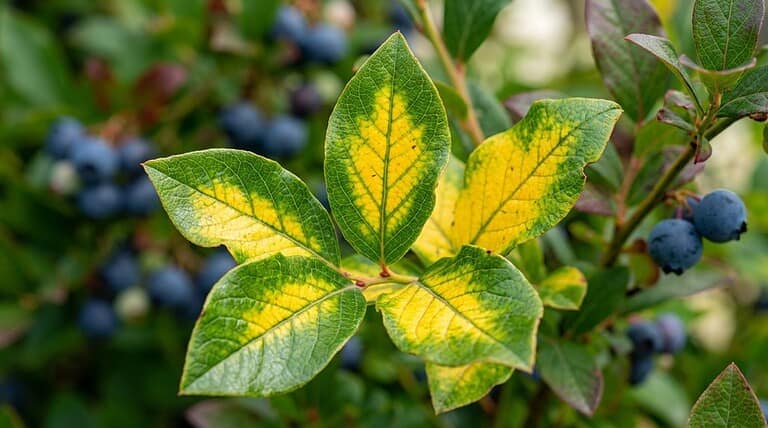
Even though you might think bringing your hibiscus inside is as simple as tossing your sleeping bag in a tent and calling it a night, there’s a bit more to it—especially if you want to avoid a sad pile of yellow leaves on your living room floor.
Give hibiscus leaves a enhancement by adjusting indoor humidity to 50-60%, placing them near a sunny window, and using gradual light adjustment.
Be mindful of overwatering, as cooler winter temperatures and reduced light can cause soil to stay soggy, leading to root rot if not carefully managed.
Pruning Hibiscus After Leaf Drop
Now that your hibiscus has dropped its leaves, it’s actually the perfect time to grab your clippers and give it a good haircut—think of it as a camping trip for your plant, where it comes back wilder and stronger! If you cut back those branches to about 4-6 inches in late autumn, trim away anything weak or dead, and don’t be afraid to go a bit bold, you’ll help your hibiscus grow back fuller, bushier, and ready to show off next season. Trust me, I once pruned mine right after a leaf drop, and after a bit of patience (and maybe some pep talks), it came back looking like it had just come back from a tropical expedition! Regular pruning can also prevent issues like unstable or top-heavy plant structure, ensuring your hibiscus stays healthy and upright.
Timing and Technique Matters
Once your hibiscus has dropped most of its leaves, it’s actually the perfect moment to break out those pruning shears—think of it as giving your plant a fresh haircut before it goes on a long camping trip (minus the marshmallows, of course).
Stimulating Healthy Regrowth
While your hibiscus might look a bit like it’s auditioning for a spooky campsite after dropping its leaves, this is actually an awesome chance to help it bounce back stronger than ever.
Grab your pruners and cut the branches back to about 4-6 inches—think of it as a fresh haircut before a camping trip! Pruning after leaf drop encourages healthy regrowth, reduces pests, and sets up epic future blooms.
Steps to Help Your Hibiscus Recover After Leaf Drop
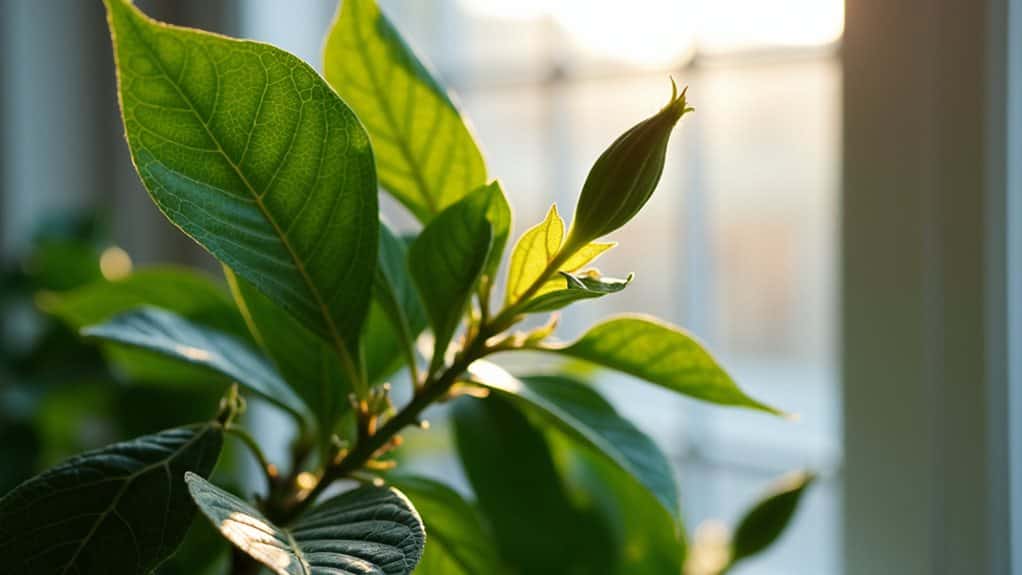
Even though it can feel pretty discouraging to see your hibiscus suddenly dropping its leaves, don’t worry—there’s actually a lot you can do to help it bounce back.
Honestly, watching a plant recover is almost as exciting as planning your next camping trip!
Try gentle pruning to remove weak stems, give your indoor hibiscus bright light, water only when dry, and keep the room cozy and humid—patience pays off!
Ensuring your hibiscus has the right soil conditions can make a significant difference in its recovery and overall health.
Preventing Hibiscus Leaf Drop Indoors
Let’s face it, watching your hibiscus drop leaves indoors is about as fun as realizing you forgot your marshmallows on a camping trip—nobody wants that!
For effective indoor hibiscus care and leaf drop prevention, give your plant plenty of sunlight, steady temperatures, and a bit of humidity.
Keep up with watering routines, check for pests, and manage plant stress management like a pro—your hibiscus will thank you!
Additionally, ensuring proper maintenance and inspection of your plant’s environment can help prevent stress-related leaf drop.
Overall
So, if your hibiscus is dropping leaves indoors, don’t panic—think of it as your plant’s way of saying, “Hey, I need a little help here!” Adjust the light, water, and humidity, check for sneaky pests, and give it some TLC. Honestly, caring for plants is a lot like camping—you’ve got to be prepared, pay attention, and sometimes, just laugh when things go haywire. With patience and a little know-how, your hibiscus will bounce back in no time!