Why Squash Vines Wilt Suddenly (And How to Save Them)
If your squash vines suddenly wilt overnight, don’t panic—it’s usually not a thirst crisis but a sign of hidden pests like squash vine borers munching inside the stems, or diseases like bacterial wilt sneaking in through hungry cucumber beetles, and sometimes it’s just too much or too little water, or mulch gone wild. Check for holes, frass (looks like sawdust), or goo at the base, slice out the borer if you find one, and act fast! Want the scoop on keeping your squash perky all season?
TLDR
- Squash vine wilting is often caused by squash vine borers, bacterial wilt, water stress, or root suffocation from excess mulch.
- Early signs include sudden drooping, holes or frass at the stem, and yellowing leaves.
- Inspect stems for borer holes or frass, and remove infested tissue to save affected vines.
- Remove and destroy infested plant material, and use organic insecticides to manage pests.
- Prevent future wilting by rotating crops, planting resistant varieties, and monitoring for early pest or disease activity.
Why Are My Squash Vines Wilting Overnight?

Even though it’s totally normal to freak out a little when you walk outside in the morning and see your once-happy squash vines looking like they just pulled an all-nighter at summer camp, don’t panic just yet!
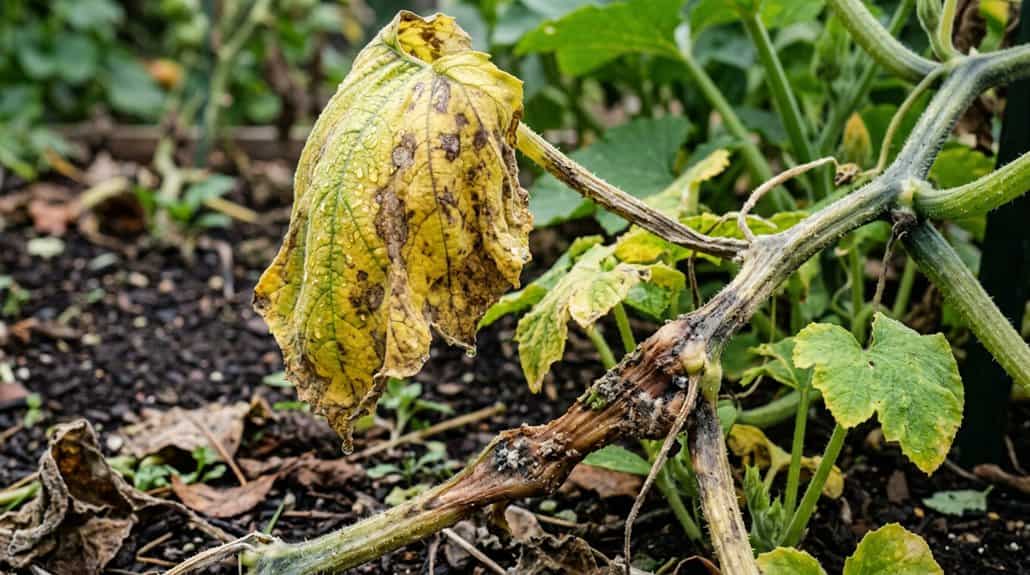
Overnight wilting often means squash vine borers are causing stem damage, or cucumber beetles have spread bacterial wilt. Check for holes or goo at the stem—it’s like detective work for gardeners!
Is It Pests, Disease, or Water Stress?
When your squash vines suddenly look as droopy as a tent after a rainstorm, it’s time to play plant detective and figure out what’s really going on—is it sneaky pests, a nasty disease, or just your squash plants being a bit dramatic about their watering schedule?
Squash vine borer damage, bacterial wilt, or water stress each cause wilting, but only some allow plant recovery—so identifying the culprit matters!
Be mindful that excess mulch, especially if piled against the stems or kept wet, can also contribute to plant stress by suffocating roots or encouraging disease related to mulch over-application.
What Early Warning Signs Should I Look For?
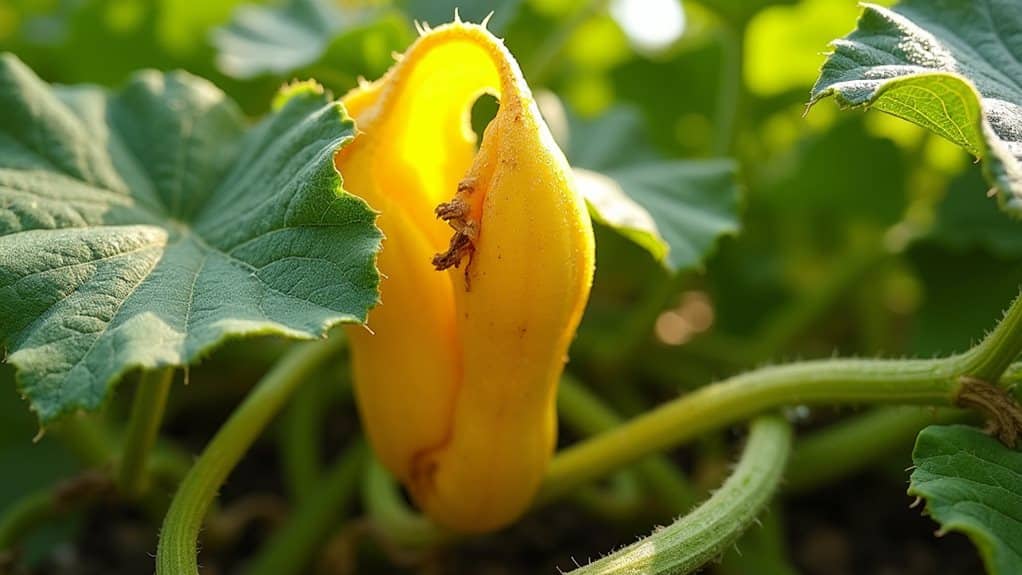
So, you’ve spotted your squash vines looking a little sad and now you’re on the hunt for clues—let’s get right into all the sneaky signs that trouble’s brewing! Watch for wilting leaves, especially if they perk up at night. Peek at the base for stem damage or sawdust-like frass, a sure sign of borer activity. Notice leaf yellowing or sudden plant decline? Don’t ignore those! Ant activity and soil aeration can influence plant health by affecting soil moisture and nutrient flow around your garden.
How Can I Save Wilting Squash Vines Right Now?
Although it’s easy to panic when you spot your squash vines flopping over like tired campers after a long hike, don’t worry—you’ve got some quick moves to try before throwing in the towel!
First, inspect the base of the plant for squash vine borers. If you see holes or frass, carefully slit the stem, remove any infested plant parts, and try organic insecticides. Additionally, checking for signs of nesting sites around your garden can help prevent further infestations by wasps that may be attracted to your plants.
Your squash can still bounce back!
How Do I Prevent Squash Vines From Wilting Next Season?

You’ve patched up your wilting squash vines for now, but if you’re anything like me, you don’t want to deal with another garden drama next summer!
Next season, plant resistant varieties, rotate your squash plants, and stay alert for vine borers.
Use crop rotation, practice smart pest management, and check your plants often—trust me, catching problems early is the best way to save your garden (and your sanity!).
Additionally, maintaining proper soil conditions and avoiding over-fertilization can help keep your vines healthy and resilient. Soil pH testing ensures optimal nutrient availability for vigorous growth.
Overall
So, next time your squash vines look like they’re throwing a dramatic tantrum and collapsing overnight, don’t panic! Check for sneaky bugs, weird spots, or dry soil, then jump into action like a plant-saving superhero. Honestly, catching problems early is way easier than fixing a squash disaster later. Trust me, I’ve lost a few zucchinis to lazy watering and sneaky bugs—don’t be me! Keep your vines happy and you’ll have plenty of squash for camping snacks all summer long.