Planting a Spring Herb Garden for Herbal Teas
You’ll want to start your spring herb tea garden by choosing beginner-friendly favorites like chamomile, mint, and lemon balm, which thrive in well-draining, organic-rich soil with plenty of morning sunlight. Whether you’re planting in containers for mobility or directly in the ground for stability, harvest these aromatic gems just before they bloom on sunny mornings to capture peak essential oils – trust me, there’s nothing quite like sipping tea from your own garden! Keep exploring to uncover the secrets of perfect timing and storage techniques.
Quick Guide
- Choose classic tea herbs like chamomile, mint, lemon balm, and lavender that thrive in spring conditions.
- Ensure well-draining, organic-rich soil with proper sunlight and water requirements for optimal herb growth.
- Consider container planting for mobility and drainage control versus ground planting for stable moisture.
- Start herbs from seeds for cost-effectiveness, cuttings for quicker results, or starter plants for instant gratification.
- Harvest herbs in sunny mornings before blooming when essential oils are at peak concentration.
Selecting the Best Herbs for Your Tea Garden
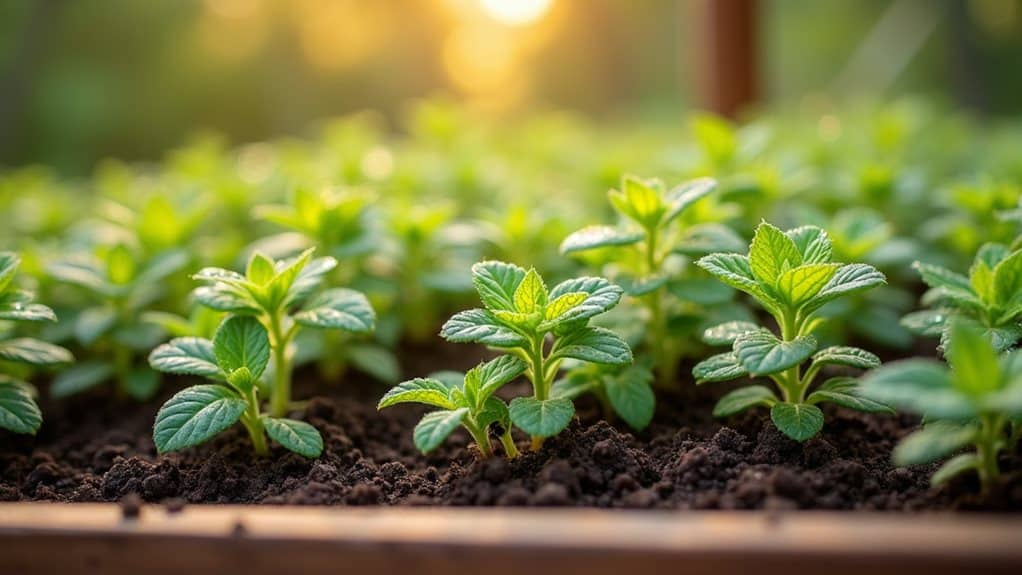
When you’re planning your spring herb garden for the perfect cup of homemade tea, choosing the right herbs can feel as thrilling as picking the perfect campsite for your next outdoor adventure – there are so many incredible options, and each one brings its own special flavor to the experience!
Consider classic favorites like chamomile for relaxation, mint for digestion, and lemon balm for gentle citrus notes. For the best flavor and potency, harvest your herbs just before blooming on a sunny morning when the essential oils are at their peak concentration. Additionally, ensure your garden location receives at least six hours of sunlight daily to promote healthy herb growth.
Understanding Growing Conditions and Soil Requirements
Now that you’ve picked your perfect tea herbs, it’s time to create the ideal growing environment where they’ll absolutely thrive – and trust me, getting these conditions right is like setting up the perfect campsite where everything just clicks!
You’ll need to take into account three vital factors: how much sunlight and water your herbs crave, whether your soil drains properly (because soggy roots are as miserable as sleeping in a flooded tent), and whether you want to plant directly in the ground or use containers for more control. Most tea herbs will need rich, organic soil as the foundation for healthy growth and robust flavor development. Ensuring your soil is well-draining will help prevent root rot and create a healthier environment for your herbs.
Understanding these growing requirements will change your herb garden from a struggling mess into a flourishing tea paradise that’ll make you feel like a gardening genius every time you step outside!
Sunlight and Water Needs
Why do some herb gardens flourish while others struggle to produce those aromatic leaves you’re craving for your homemade teas?
It’s all about sunlight and water! Most herbs need six hours of daily sunshine to develop intense flavors, while Mediterranean varieties like rosemary prefer deep, infrequent watering.
Group similar herbs together for easier care.
Soil Drainage Requirements
Although you’ve perfected the sunlight and watering dance, there’s another crucial piece of the puzzle that’ll make or break your herb garden dreams: soil drainage!
Your herbs absolutely hate soggy feet—think of them as picky campers who refuse wet sleeping bags.
Well-draining soil prevents root rot, mimics their Mediterranean homeland, and keeps those precious tea leaves healthy and flavorful.
Container Vs Ground Planting
When deciding between containers and ground planting for your spring herb garden, you’re basically choosing between two completely different growing experiences—and trust me, I’ve tried both with varying degrees of success (and a few spectacular failures that taught me important lessons)!
Containers offer mobility and better drainage control, while ground planting provides stable moisture and ample root space.
Container vs. In-Ground Planting Options
Before you start digging up your backyard or hunting for the perfect pots, you’ll need to decide whether your herbal tea garden should call containers or the ground its home – and trust me, this choice will shape everything from how often you’ll be watering to whether you’ll be chasing runaway mint plants around your yard next summer! Additionally, using a quality potting mix can significantly enhance the growth and flavor of your herbs, ensuring a bountiful harvest for your teas.
Propagation Methods: Seeds, Cuttings, and Starter Plants

Once you’ve mapped out your perfect herb garden spot, you’ll face the exciting decision of how to actually get those aromatic plants growing – and let me tell you, there’s something almost magical about watching a tiny basil seed evolve into a leafy powerhouse that’ll flavor your evening tea!
You’ve got three fantastic options: starting from seeds (cheapest but requires patience), taking stem cuttings from existing plants (my personal favorite for mint and rosemary), or buying starter plants from the nursery (instant gratification, though pricier).
Planting Timeline and Spacing Considerations
Now that you’ve chosen your propagation method and you’re practically bouncing with excitement to get those future tea ingredients in the ground, timing becomes your best friend – and trust me, I learned this lesson the hard way after losing an entire batch of basil seedlings to a surprise late frost that had me crying into my empty teacup!
Wait until mid-April through early May after your area’s last frost date, then space those herbs properly – give small ones like thyme 8-12 inches, while larger mint and lemon balm need 18-36 inches to spread their wings without turning into botanical bullies.
Proper Harvesting Techniques for Maximum Flavor
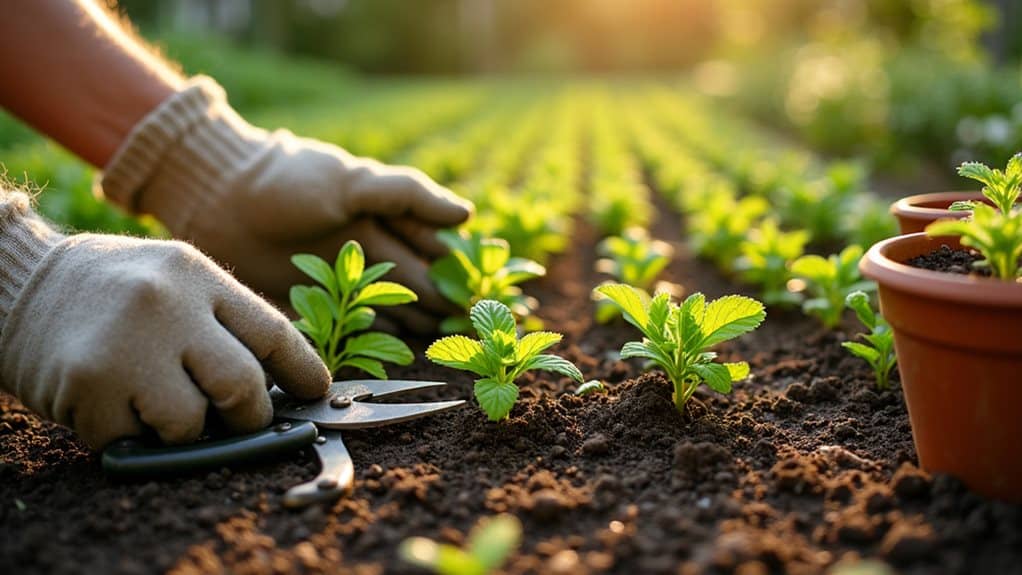
You’ve nurtured your herb garden through spring’s ups and downs, and now comes the thrilling part that’ll make or break your perfect cup of herbal tea – knowing exactly when and how to harvest those precious leaves and flowers for maximum flavor punch!
Think of harvesting as the grand finale of your gardening journey, where timing becomes as vital as packing the right gear for a camping trip, because one day too early or too late can mean the difference between a mediocre brew and liquid gold that’ll warm your soul around the campfire.
The secret lies in understanding that each herb has its own sweet spot for peak flavor, followed by proper handling techniques that preserve those essential oils and aromatic compounds you’ve worked so hard to cultivate.
Optimal Harvest Timing
While you might think any time of day works for picking your herbs, the secret to revealing those incredible, aromatic flavors that’ll make your homemade teas absolutely sing lies in perfecting the art of timing your harvest just right.
You’ll want to grab those fragrant leaves in the morning after dew evaporates but before intense sun hits them.
Post-Harvest Processing Methods
Perfect timing is just the beginning of your herbal tea expedition because what you do with those freshly picked leaves and flowers in the next few hours will make or break the incredible flavors you’ve been nurturing all season long.
Start by gently rinsing your herbs to remove dirt, then strip stems before bundling loosely for proper air circulation during drying.
Drying and Storing Your Homegrown Herbs
Once your herb garden starts producing those fragrant leaves and delicate flowers, you’ll want to preserve their peak flavor and medicinal properties for cozy tea sessions throughout the year, whether you’re camping under the stars or warming up by the fireplace at home.
Air dry small bundles in shady, well-ventilated areas, then store in airtight glass containers away from sunlight.
Health Benefits and Safety Guidelines for Herbal Teas
After you’ve perfected the art of preserving your garden treasures, you’ll want to understand exactly what magical benefits these homegrown herbal teas can bring to your health—and more importantly, how to enjoy them safely whether you’re sipping by a crackling campfire or relaxing in your kitchen.
Your ginger tea fights inflammation while chamomile calms anxious minds perfectly.
Cost Savings and Sustainability Advantages
While sipping that perfect cup of homegrown chamomile tea by your campfire might feel like pure luxury, you’re actually making one of the smartest financial decisions of your gardening journey—and I’m not just talking about the pennies you’ll save!
Those few-dollar seed packets contain hundreds of seeds, creating abundant harvests that’ll replace expensive store-bought herbs for months.
Wrapping Up
You’ve got everything you need to create your own incredible herb tea garden, and trust me, there’s nothing quite like sipping a steaming cup of mint tea you grew yourself while sitting around a campfire! Your future self will thank you when you’re enjoying fresh, flavorful teas that didn’t cost a fortune at the store, plus you’ll have the satisfaction of knowing exactly what’s in your cup—it’s a win-win situation!