Deck Boards Shrinking Gaps Increasing: What’s Normal vs a Problem
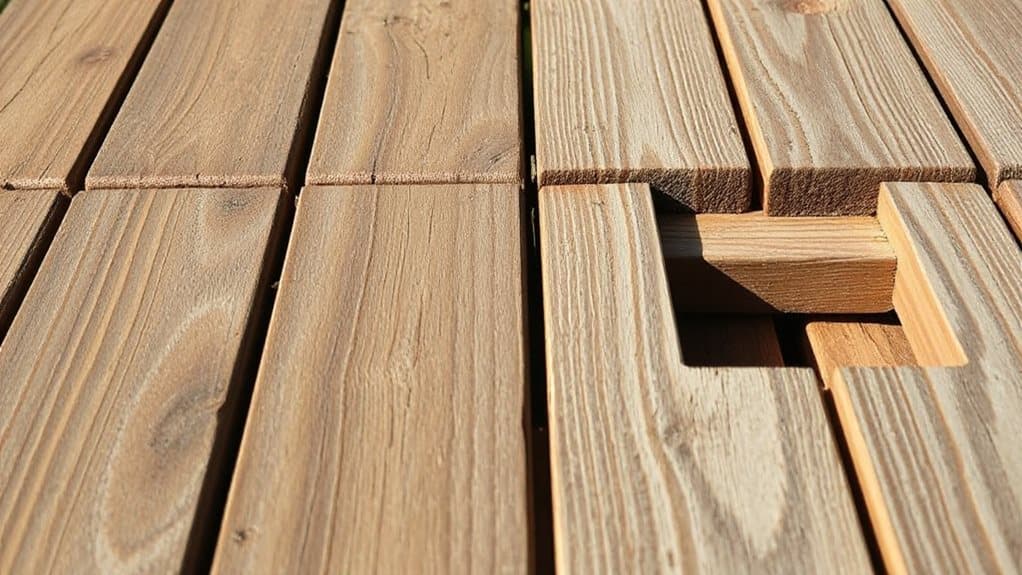
You’ve seen it—those sneaky gaps between deck boards opening up like tiny alligator mouths, right? Totally normal when wood breathes with the seasons, especially if it dried after installation. Most gaps stay between 3/16″ and 3/8″, which is perfect for drainage and won’t swallow your flip-flops. But if they’re wider, uneven, or wobbly? Uh-oh—could be rot, bad fasteners, or sagging joists. And nobody wants a surprise foot trap on summer BBQ night! Let’s check what’s really going on.
TLDR
- Small gaps (3/16″ to 3/8″) are normal due to seasonal wood expansion and contraction.
- Gaps wider than 3/8″ or uneven spacing may signal installation or structural issues.
- Boards installed damp can shrink excessively as they dry, increasing gap size.
- Wobbling, sagging, or rotting boards indicate serious problems needing repair or replacement.
- Proper installation with dry lumber, spacers, and correct fastening prevents excessive gaps.
What Causes Deck Board Gaps to Widen Naturally?
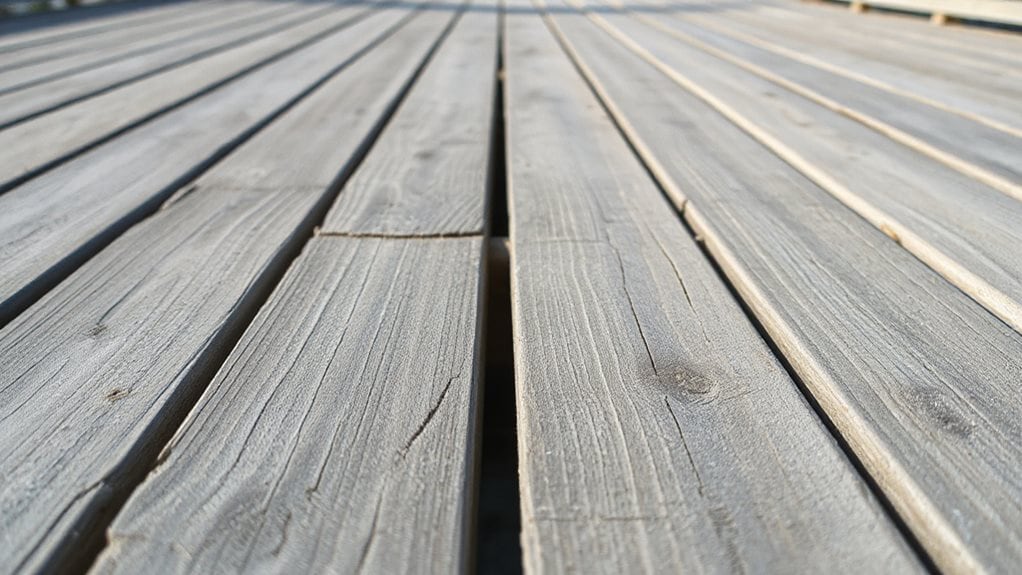
While it might seem like your deck is playing a sneaky game of hide-and-seek with its boards, those widening gaps are actually just part of the natural rhythm of outdoor living—kind of like how your tent fabric tightens up in the morning dew and sags a bit under the afternoon sun when you’re camping. Temperature swings, humidity changes, and wood or composite materials breathing in and out cause gaps to grow and shrink all year long. You’re not doing anything wrong—your deck’s just living its best seasonal life! Proper spacing helps prevent moisture buildup and extends the life of your deck by allowing water to drain and boards to expand without damage. Proper installation practices like correct fastener placement and spacing help reduce cracking and excessive shrinkage over time.
How Much Shrinkage Is Normal for Deck Board Gaps?
So you’ve got your deck built, maybe even rocked out a few summer barbecues or stargazing nights on it, and now you’re noticing some gaps popping up between the boards—don’t panic, because a little shrinkage is totally normal, kind of like how your favorite hiking boots loosen up after a long trail and then snug back down when they dry.
You’ll usually see 3/16″ to 3/8″ gaps form, especially if your pine or redwood boards were installed a bit damp; that’s just wood doing its thing, drying out and settling into its forever home. This amount of movement is similar to how topsoil vs lawn soil differ in texture and behavior, with materials settling and changing as moisture levels change.
When Do Deck Board Gaps Signal Real Damage?
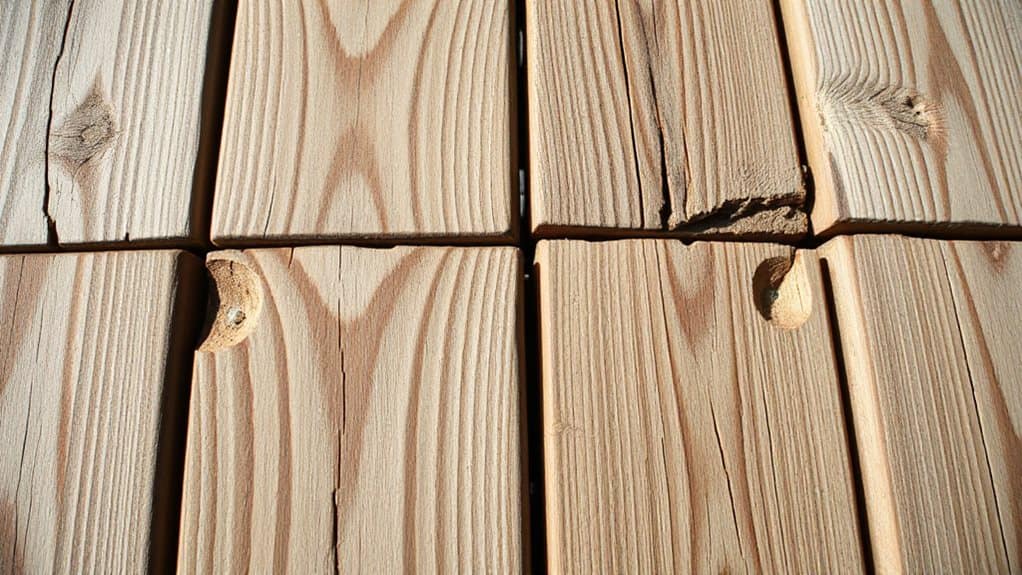
If those gaps between your deck boards start looking more like alligator-filled moats than cozy little breathing spaces, it’s time to play detective—because while a bit of shrinkage is totally normal, wide or uneven gaps can be nature’s way of whispering (or, let’s be honest, screaming) that something’s seriously off underneath.
Are your boards wobbling, sagging, or pulling away? That’s not just a gap—it’s a red flag. Check for rot, warped joists, or rusted fasteners; these sneaky issues weaken your deck’s backbone.
Don’t wait for a full collapse—fix it now, so your backyard campouts stay safe, sturdy, and seriously fun! Also remember to check local building codes and permit requirements for deck repairs and rebuilds, especially if the work involves attachment to the house or raising the deck height, and consult guidance on deck stability when planning structural fixes.
How to Prevent Excessive Deck Board Gaps
Grab your tool belt and channel your inner deck detective—because nailing the perfect gap between deck boards isn’t just carpentry, it’s *art* (with a side of science and a sprinkle of common sense).
Use dry boards with 3/16-inch spacers—like 16D nails—or let wet ones shrink naturally; acclimate lumber first, space joists right, and clamp snug, not tight.
Avoid gaps wider than 3/8”—no one wants a stiletto surprise!
Follow manufacturer guidance and local codes to determine safe overhang limits and support for your deck (overhang limits).
Can You Fix Large Deck Board Gaps: Or Should You Replace Them?
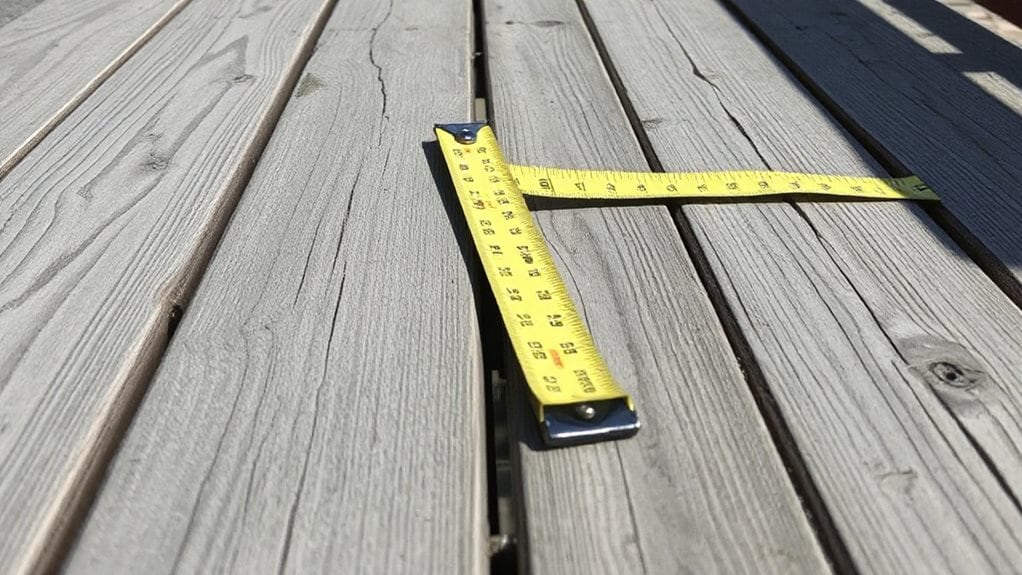
You’ve nailed the spacing game from the get-go—dry boards, trusty 3/16-inch spacers, maybe even used an old 16D nail like a pro—so why are you now staring at gaps wide enough to lose a bag of trail mix through? Don’t panic!
You can often fix large gaps by removing and rescrewing boards, pushing them tighter, or shimming stubborn spots. Use soaked stain-matched rope for quick cosmetic fixes, but replace warped or deeply rotted boards—your deck’s safety matters most.
With a little elbow grease, you’ll have it looking trail-ready again in no time! Address underlying moisture and drainage issues to prevent recurrence by improving drainage and backfill behind or around the deck where soil saturation could be contributing to board movement.
Overall
So, you’ve seen those gaps popping up like surprise guests on your deck—totally normal when wood dries out, right? But if they’re wide enough to lose your hot dog down, uh-oh. A little shrinkage? Expected. Huge cracks? Time to act. You’ve got options: fix ‘em or replace ‘em, depending on how dramatic the damage is. Keep your deck happy, and it’ll stick around for all your epic backyard hangouts—maybe even your next s’mores party!