How Often Should You Seal a Wood Deck?
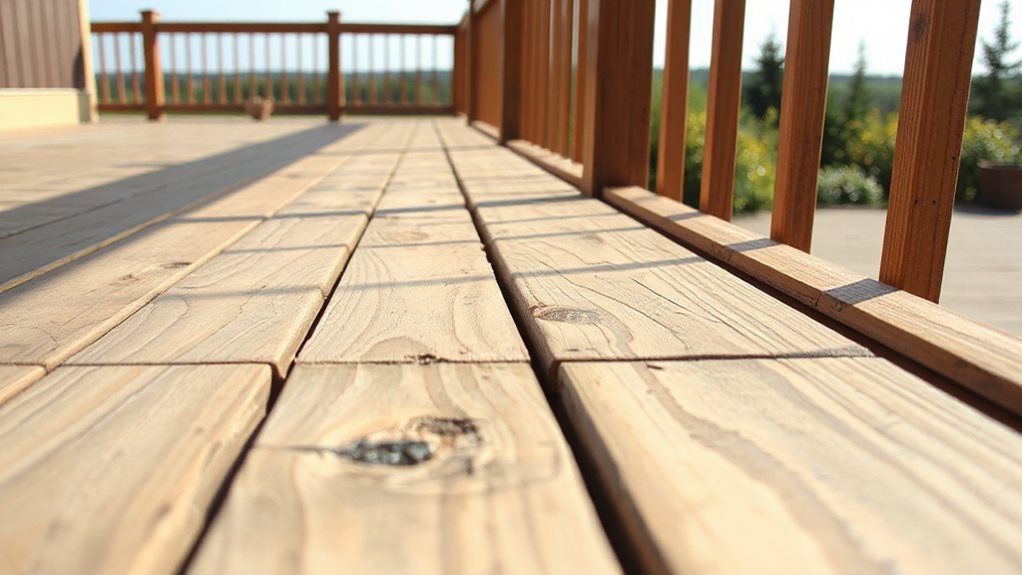
You should start resealing your deck a year or two after the first coat, then aim for a 2‑year rhythm for most woods—though soft cedar or redwood may need a touch more care, and dense ipe or teak can stretch a bit longer before they look tired. In scorching sun or high‑traffic zones, tighten the cycle to 12‑18 months, while shaded spots might last up to five years. Keep an eye on water‑bead tests, gray spots, or fading; if the water sinks, it’s time to act. Stick to this schedule and you’ll keep your deck camping‑ready, and the next tips will show you exactly how to pick the perfect sealant.
TLDR
- Seal the deck within 1–2 years after the first coat, then reseal every 2–3 years, adjusting for high‑traffic or UV‑exposed areas.
- Softwoods like cedar and redwood generally need resealing every 2–3 years, especially after a water‑bead test shows soaking.
- Dense hardwoods such as ipe and teak follow a similar 2–3‑year schedule, but their finish may last longer before fading appears.
- Climate influences frequency: hot southern zones may require resealing every 1–2 years, while covered decks in milder climates can stretch to five years.
- Inspect regularly for gray tones, fading, dull spots, or water soaking; perform an annual water‑bead test after heavy use or storms to decide if resealing is needed.
How Often Should You Seal Your Deck?
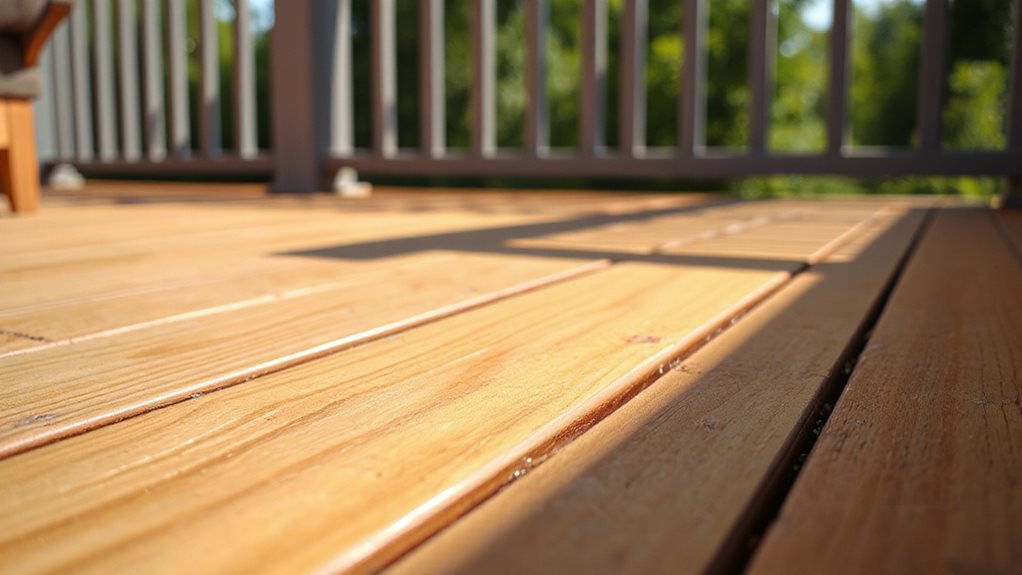
So, how often should you actually seal your deck? You’ll want to start resealing within one to two years after the first coat, then stretch it to two‑three years once you’ve stained twice, especially if you’re protecting a space where friends gather for camping‑style barbecues. Check for water beading, gray spots, or faded wood, and remember UV‑heavy, high‑traffic zones may need extra love. Proper moisture content is essential for sealant adhesion. Check for persistent pooling or soggy areas that can signal drainage problems and hidden moisture risks before sealing soil saturation.
Deck Sealing Frequency by Wood Type (Cedar, Redwood, Ipe, Teak)
You’ve just learned that most decks need a fresh coat every couple of years, but the exact timing changes once you look at the wood itself—so let’s talk about cedar, redwood, ipe and teak and see how each one decides when it’s thirsty for sealant.
Cedar and redwood, being soft and porous, need resealing every 2‑3 years, often after a water‑bead test shows soaking.
Ipe and teak, denser hardwoods, also follow a 2‑3‑year rhythm, but their lower absorption lets the finish linger a bit longer, so check for fading before you grab the brush.
Consider pairing sealing with under-deck drainage or ventilation improvements to protect joists and extend sealant life by reducing trapped moisture and mold risk; see drainage and ventilation options for more.
Deck Sealing Frequency in Different Climates
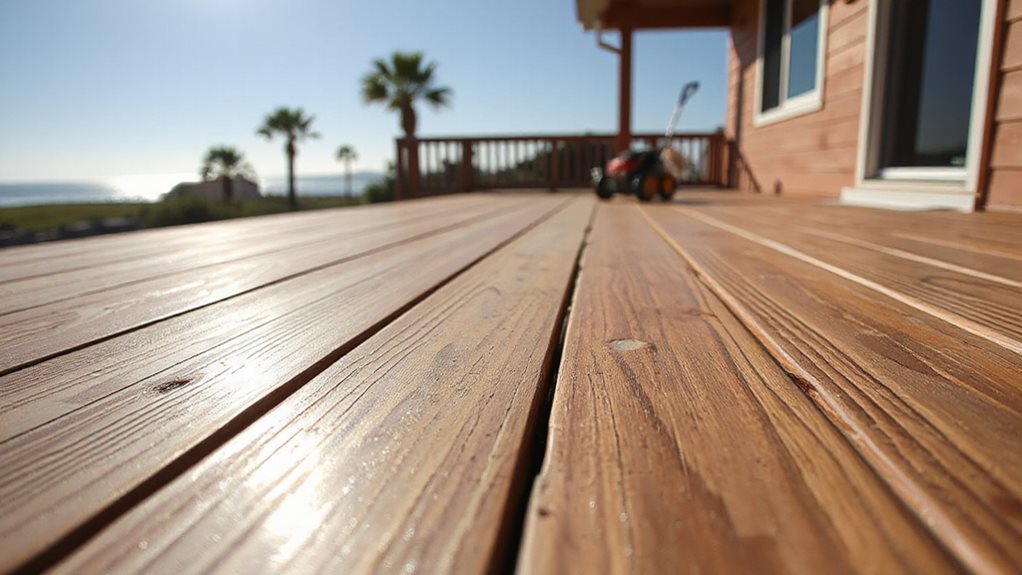
Ever wondered why your deck seems to age faster in some places than others? In scorching southern zones you’ll reseal every 1‑2 years, because UV rays bleach and crack wood like a sun‑baked cookie.
In the Pacific Northwest, heavy rain forces a 1‑3‑year cycle, while covered decks can stretch to five years or more. Adjust your schedule, check the water‑beads test, and keep your guests safe and happy. Stairs and steps often deteriorate sooner due to poor drainage and trapped moisture that accelerate rot.
How Traffic & Usage Affect Your Deck’s Sealing Schedule
You’ll notice that the spots where you host parties or let the kids and pets run wild need a fresh coat every year or two, because the constant foot traffic and occasional spills wear the sealant down fast.
In contrast, the quiet corners where you just enjoy a coffee or read a book can stretch the sealing interval to three years or more, especially if a roof or canopy shields them from the sun.
Buzzing electrical issues like loose wiring in outdoor outlets are an unrelated but important home-safety concern to be aware of when planning outdoor activities.
High‑Traffic Areas
Ever wonder why the spot where you set up the grill and the path you sprint across for a quick snack seem to wear out faster than the rest of the deck? Heavy foot traffic, pets, and sun together erode sealant quickly, so you should reseal yearly or even every 12‑18 months. Check for gray tones, do a water‑sprinkle test, and keep sweeping debris to extend protection.
Low‑Traffic Zones
Usually, the quiet corners of your deck—those spots where you barely set a chair or a lone potted plant—don’t get the same wear and tear as the grill‑side or swing‑area, so you can stretch the sealant’s life a lot longer.
In low‑traffic zones, aim to reseal every 2‑3 years, especially if sun hits it; shaded or covered spots may last up to five years, so check the water‑bead test and look for grayish drying before deciding.
Family & Pet Activity
Most of the time, a deck that’s constantly buzzing with kids, grandparents, and a rambunctious dog turns into a high‑traffic arena, and that means the sealant gets worn down much faster than in a quiet corner.
When to Reseal: Water Test, Graying, Fading & Wear
So, how do you know when your deck’s begging for a fresh coat of sealant? Sprinkle water—if it soaks instead of beading, the seal’s cracked; look for gray streaks, faded color, or dull spots from sun and foot traffic. Test each year, especially after heavy use or storms, and when any sign appears, clean, brighten, then reseal before the next gathering. Planting aromatic herbs like rosemary and mint nearby can also help deter pests that might damage wood finishes.
Choosing the Right Deck‑Sealing Product (Penetrating, Clear, Stain, Hybrid)
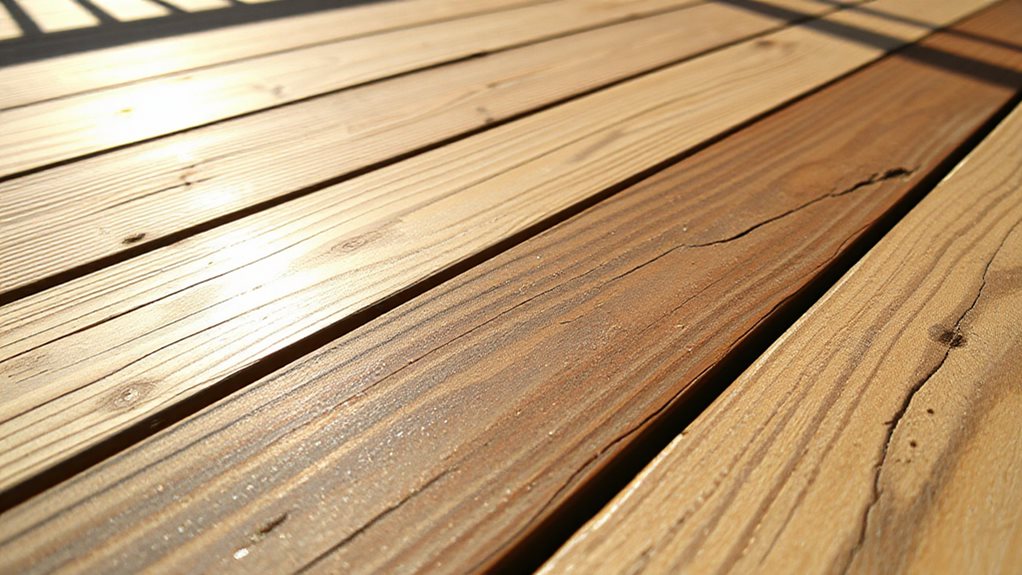
Ever wondered which deck‑sealing superhero fits your backyard escapade? Choose penetrating sealers like Seal‑Once Marine for deep moisture protection, especially on pressure‑treated wood, or go clear with Defy Extreme for UV‑shielded transparency that won’t crack.
If you crave color, TWP Pro gives semi‑transparent flair while hybrid Defy Extreme Wood Stain blends depth and cleanup.
Match climate, wood type, and VOC concerns, then apply confidently.
Overall
So, keep an eye on your deck like you’d watch a trail map before a camping trip—check the water test, watch for gray spots, and note any fading or wear, then seal it when the wood looks thirsty or dull. Remember, different woods and climates shift the schedule, but a good rule of thumb is every 1‑3 years. Pick a product you trust, follow the instructions, and enjoy a deck that’s as ready for BBQs as you are for the next excursion!