How Deep Should Garden Mulch Be?
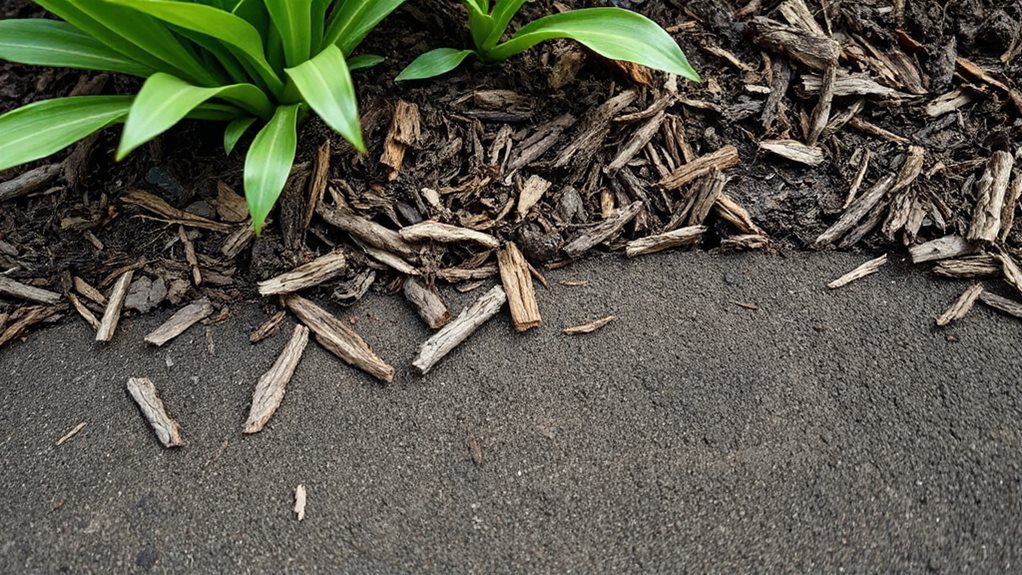
You’ll want about two‑to‑three inches of mulch on most beds—enough to choke 80‑95 % of weeds while still letting water and air reach the roots, and you can push it up to four inches in scorching spots for extra moisture lock‑in. For flower beds use fine wood chips, three inches for pathways with coarse bark, and give trees and shrubs a three‑inch ring (or two inches of shredded bark) with a one‑inch gap around trunks. Veg seedlings thrive under a thin one‑inch layer that protects without smothering. Soil type matters too: clay likes thinner blankets, sandy soils can handle deeper layers, and mixing coarse and fine materials lets you fine‑tune the depth. If you keep an eye on settling and refresh annually, you’ll stay on top of it—plus there’s a lot more to explore!
TLDR
- Aim for a 2–3 inch mulch layer for most garden beds, keeping total depth under 4 inches to allow water and air penetration.
- Use coarse bark or wood chips 3–4 inches deep on pathways, and fine wood chips 2–3 inches on flower beds, maintaining a 3‑inch gap from stems.
- For trees and shrubs, apply 2 inches of fine shredded bark or 3 inches of coarse bark, leaving a 1‑inch clearance around the trunk and extending to the drip line.
- In vegetable gardens, a thin 1‑inch mulch layer suppresses weeds, conserves moisture, and protects seedlings without hindering emergence.
- Adjust depth to soil type: thinner layers for clay soils, deeper (up to 4 inches) for sandy soils, and match material texture (coarse vs. fine) accordingly.
What Mulch Depth Do Most Gardens Need?
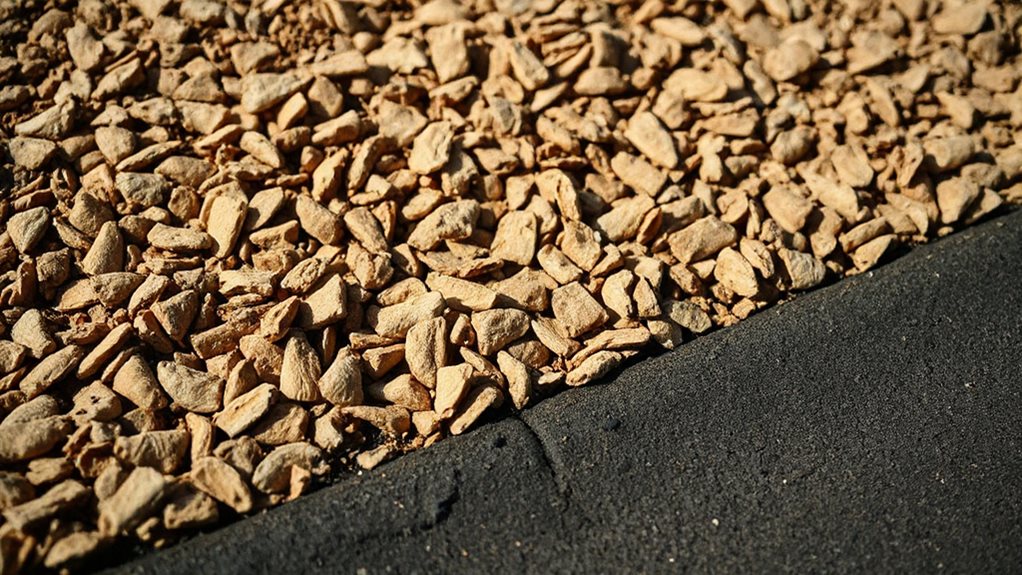
So, how thick should you actually pile that garden mulch? You’ll want about two‑to‑three inches, which gives plants enough moisture and weed protection without choking them, Think of it like packing a backpack for a hike—enough gear to stay comfy, but not so much you can’t move. Keep it under four inches, feather away from trunks, and you’ll keep the soil happy and healthy. For sun‑exposed areas, aim for the higher end of that range to enhance moisture retention. A 2–3 inch layer can block approximately 80–95% of weeds while still allowing water and air to reach roots.
Recommended Mulch Depth for Flower Beds & Pathways (2‑3 Inches)
You’ve got the right idea about keeping mulch under four inches, now let’s talk about how that rule plays out in flower beds and garden paths—think of it like packing a campsite: you need enough gear to stay comfy, but not so much you can’t move around.
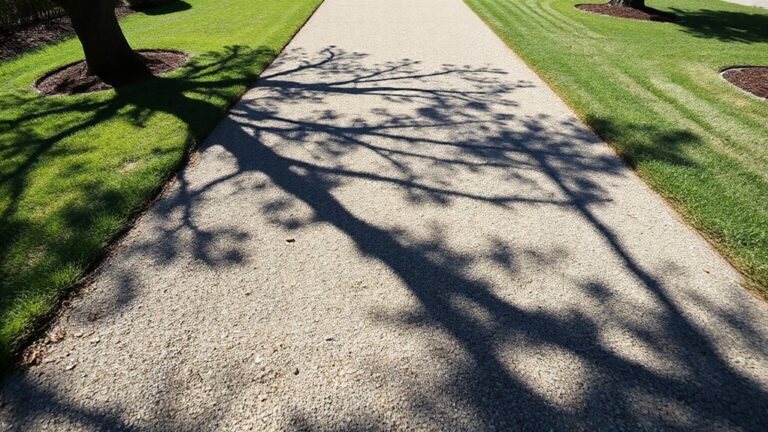
For beds, spread 2‑3 inches of fine wood chips, keeping a three‑inch gap from stems; for paths, lay 3‑4 inches of coarse bark, edge it, and water to settle—this balances moisture, weeds, and stability without suffocating roots. Aerating compacted clay and adding organic matter can improve drainage and root growth, especially where mulch alone can’t fix poor infiltration.
Optimal 3‑4 Inch Mulch for Trees, Shrubs & Fruit Trees
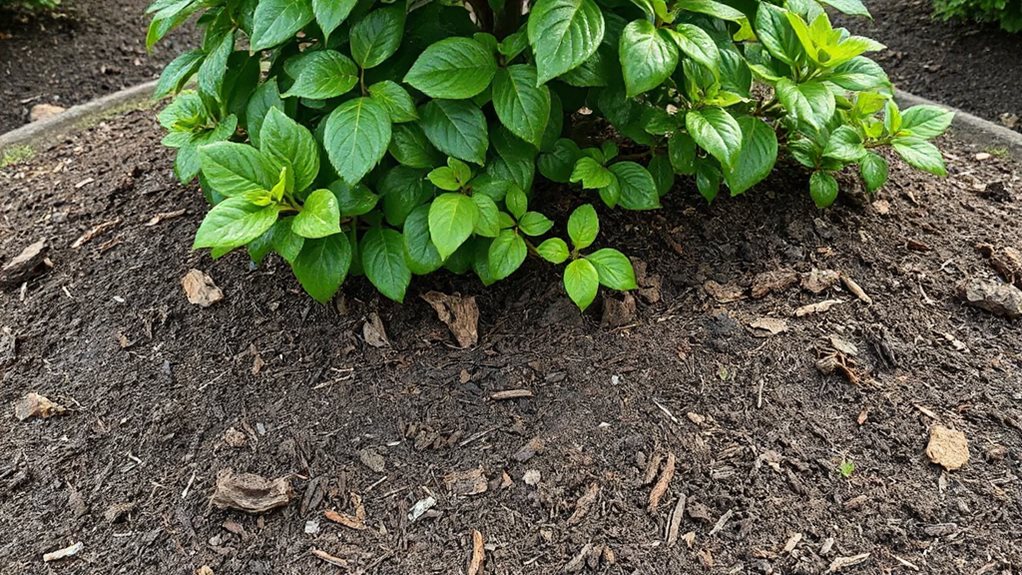
Ever wondered why a tree’s “camping gear” feels just right at 3‑4 inches of mulch? You’ll keep roots happy by spreading coarse bark to three inches, fine shredded bark to two, and always leave a one‑inch gap around the trunk—no volcanoes!
Extend the ring to the drip line, check drainage, and rake old mats; this prevents rot, enhances moisture control, and lets your garden guests thrive. Adding and refreshing mulch regularly also reduces the chance that grass and weeds will exploit gaps and seams to grow through.
When 1‑Inch Mulch Is Best for Vegetable Gardens
Ever wonder why a thin blanket of mulch can feel like a cozy campfire for your veggies? You’ll love that one‑inch layer smothers weeds by eighty percent, keeps soil moist like a rain‑catching tarp, and moderates temperature so seedlings stay comfy.
Use it for direct‑seeded carrots, beets, and leafy greens—light enough not to crush sprouts, yet thick enough to protect and feed the soil.
Heat and moisture from nearby hard surfaces can still affect edge beds, so pay attention to soil moisture when mulching near pathways.
How Soil Type and Mulch Material Influence the Right Depth
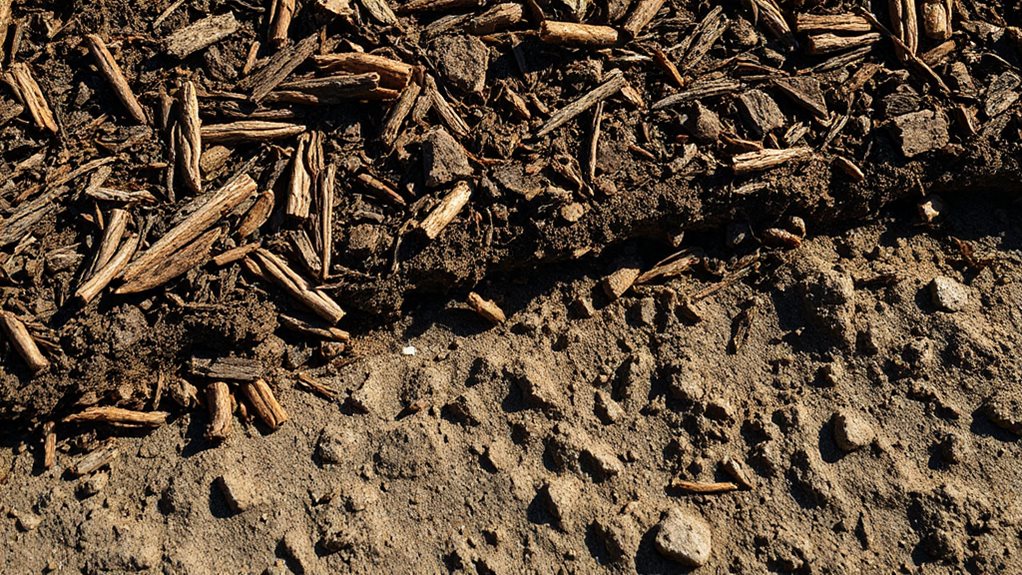
You’ll notice that the texture of your soil basically decides how deep you should go, because a clay garden will choke if you pile on a thick blanket while a sandy patch loves a generous layer. Then think about the mulch you pick—coarse wood chips need about four inches, but fine grass clippings should stay under two, so you can tweak the depth to match both the ground and the material. Try mixing and matching, and you’ll see the perfect combo that keeps weeds out, moisture in, and your garden feeling like a well‑packed campsite! Sheet mulching also builds long‑term soil health by adding layers that improve structure and water retention, encouraging microbial activity.
Soil Texture Determines Depth
A few inches of mulch can make a world of difference, and the secret sauce is the soil texture beneath your garden beds. If you’re on sand, pile 3‑4 inches of coarse wood chips so water doesn’t vanish like a campfire after a rainstorm; clay lovers, stick to 2‑3 inches to keep roots breathing. Well‑drained spots love deeper layers, while heavy soils need thinner blankets—think of it as matching your tent to the terrain.
Mulch Type Adjusts Rate
So, ever wondered why the same mulch that works great under a pine tree can turn a vegetable patch into a soggy swamp? You’ll see coarse chips or bark need three‑to‑four inches for airflow, while fine grass clippings or sawdust stay under two inches, otherwise roots suffocate.
Organic straw degrades fast, so start thinner; inorganic rock never shrinks, so keep it under an inch. Adjust depth, keep plants happy, and your garden thrives.
How to Apply Mulch at the Recommended Depth
Ever wondered why a garden looks so cozy when the mulch is just right? You spread the material evenly, keeping a one‑inch gap around each plant’s base, and avoid “mulch volcanoes.”
For flowerbeds, aim for two to three inches; for trees, three to four inches, but never pile over four.
Use a rake or your hands, check depth with a ruler, and enjoy the tidy, camp‑ready look.
Maintaining the Right Depth: Settling, Replenishment & Seasonal Tweaks
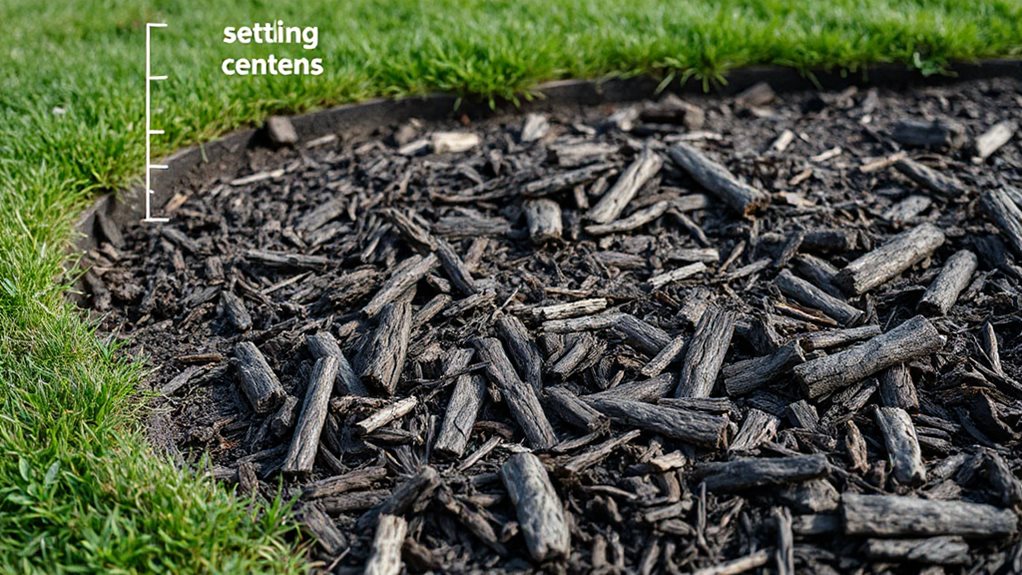
You’ve got the mulch spread just right, but the fun doesn’t stop there—now it’s time to keep that perfect depth from turning into a soggy mess or a barren desert. Check it each season, rake loose compacted spots, and add an inch of fresh mulch when it drops below two inches; remember, spring and fall are your best chances to refresh, just like packing a campsite.
Overall
So, now you’ve got the low‑down on mulch depths, and you’re ready to turn any garden into a cozy campground for plants—just envision a perfect tent set up on a soft, even carpet of earth. Remember, 2‑3 inches for flower beds, 3‑4 for trees, and a skinny 1‑inch layer for veggies, then adjust for soil and material. Keep an eye on settling, add a fresh layer when it thins, and enjoy watching your garden thrive like a well‑packed backpack on a sunny trail. Happy mulching!