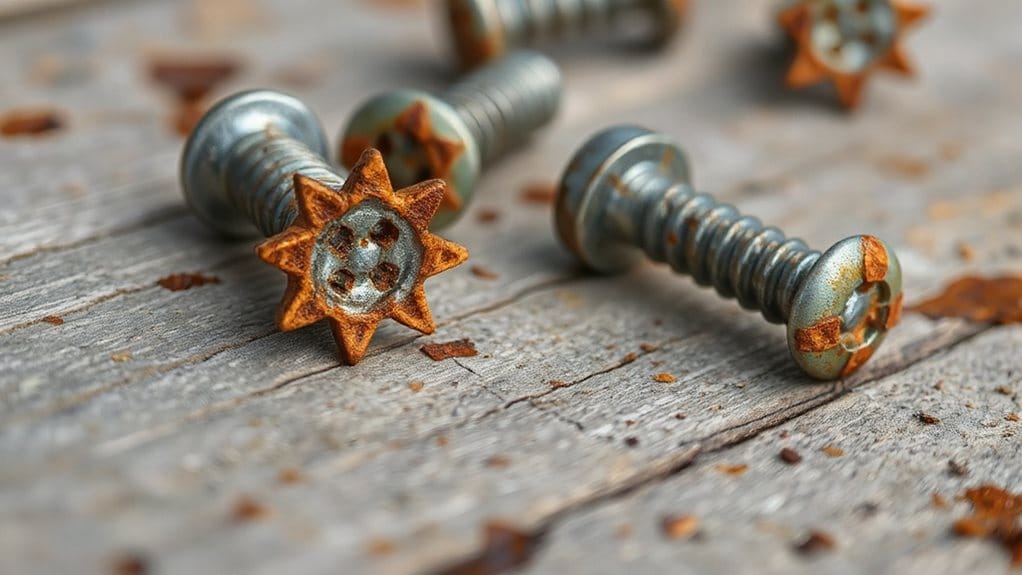
Deck Fasteners Rusting Prematurely: Causes and Solutions
Yeah, your deck screws are probably rusting fast because cheap ones can’t handle treated wood’s copper—it’s like a science experiment gone wrong! Moisture, salt air, and wrong screw types speed things up, turning your deck into a corrosion party no one wanted. But hey, switch to hot-dip galvanized or stainless steel, add joist tape, and boom—longer life, less drama. Think of it like upgrading your tent for rainy camping: smart moves beat soggy disasters. You’ve got way more cool fixes coming your way.
TLDR
- Cheap or uncoated fasteners corrode quickly when exposed to ACQ-treated wood’s high copper content.
- Moisture accelerates rust by enabling electrochemical reactions between treated wood chemicals and metal fasteners.
- Galvanic corrosion occurs when copper in treated lumber interacts with steel, acting like a battery with water present.
- Coastal environments increase rust risk due to salt air, humidity, and the hygroscopic nature of salt.
- Use hot-dip galvanized or Type 316 stainless steel fasteners, along with joist tape and proper installation, to prevent premature failure.
Why Deck Fasteners Fail Prematurely
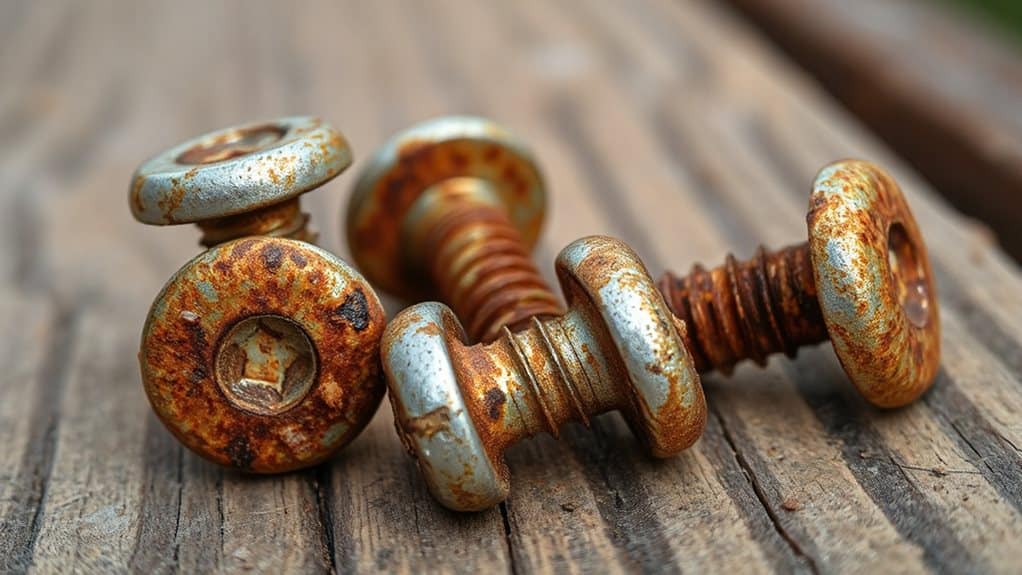
So, envision this: you’re out on your deck, grilling burgers for a summer cookout or prepping for a cozy camping-style night under the stars—except suddenly, a loose railing gives way, or worse, a joist creaks like it’s about to quit on you. Yikes!
That’s usually because cheap fasteners can’t handle treated wood’s high copper levels, corroding fast—especially without protective tape. Using the wrong screws? Like bringing a marshmallow to a steak fight—fun, but useless when things get serious. ACQ-treated wood significantly accelerates corrosion in uncoated or inadequately protected fasteners, leading to premature structural failure. Hot-dip galvanized or stainless fasteners are recommended for long-term durability, especially in contact with treated lumber and coastal or humid environments, because they offer superior corrosion resistance.
How Moisture Accelerates Rust on Deck Screws
Imagine this: you’re out on your deck at sunrise, brewing coffee for a morning outing or prepping the grill for a backyard s’mores night, when you notice something ugly and orange creeping around your screw heads—rust, already?
Yep, moisture’s to blame, even if things look dry. That invisible film of water teams up with oxygen, heat, and sometimes salt or chemicals, speeding up rust faster than marshmallows disappear at a campfire. Placing fasteners made from non-stainless metals in persistently damp conditions also increases corrosion risk, so choose corrosion-resistant materials when possible.
Why Treated Wood Corrodes Metal Fasteners
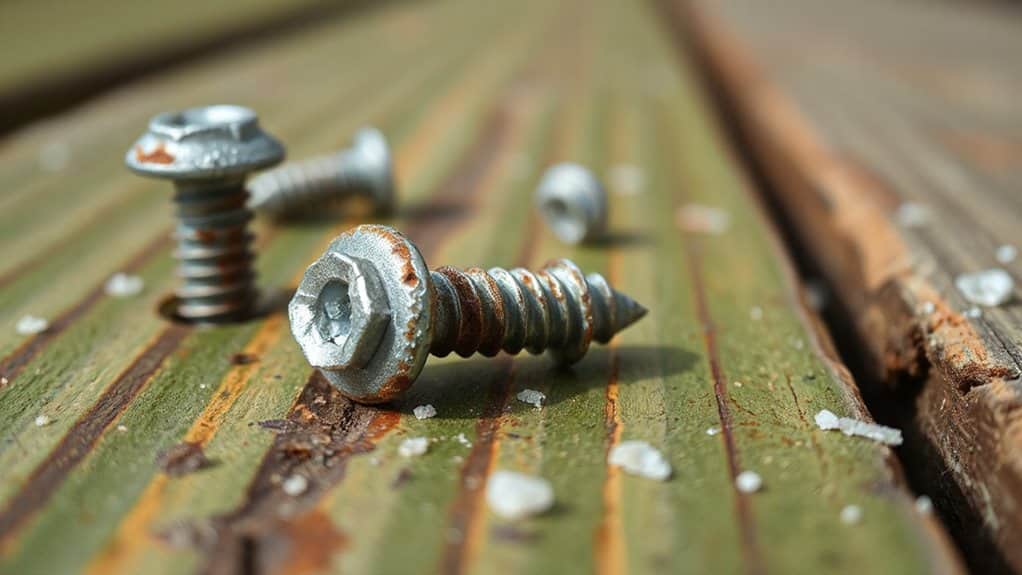
You know that awesome deck you built for summer hangouts and backyard camping? Well, the treated wood you used—super helpful against rot and bugs—can actually team up with moisture to wage war on your screws and nails through sneaky chemical reactions.
Think of it like a tiny battery forming in your deck: the copper in the wood and your metal fasteners play opposite roles, sparking galvanic corrosion that eats away at cheaper screws faster than a squirrel through a granola bar—so picking the right fastener isn’t just smart, it’s your deck’s superhero move.
This process is worsened when moisture is present, since water facilitates the electrochemical reaction and accelerates galvanic corrosion.
Chemical Reactions With Treated Wood
Even though your deck might look tough enough to survive a zombie apocalypse, the real battle is happening at a microscopic level—especially if you’ve got treated wood holding it together.
That copper protecting your wood? It’s secretly teaming up with moisture to wage war on your steel screws, turning them into rusty relics, kind of like forgotten campfire tools—yikes!
Galvanic Corrosion In Action
While your deck might seem like a solid fortress against the elements, there’s actually a sneaky science experiment going on behind the scenes—especially if you’re using treated wood and metal fasteners together.
Moisture sneaks in, copper from the wood teams up with your fasteners, and boom—galvanic corrosion starts eating away. Think of it like a tiny battery, but instead of powering your flashlight, it’s quietly wrecking your deck screws. Wild, right?
Fastener Material Compatibility
So here’s the deal: ever wonder why your deck screws are turning into rusty toothpicks while the wood still looks fine? Blame the copper in modern treated wood—it’s like a magnet for rust, especially when it rains or humidity spikes.
Skip flimsy galvanized nails; go for hot-dip or stainless steel (Type 316 if you’re near the coast). Your future DIY projects—and camping-worthy decks—will thank you!
Common Installation Mistakes That Cause Rust
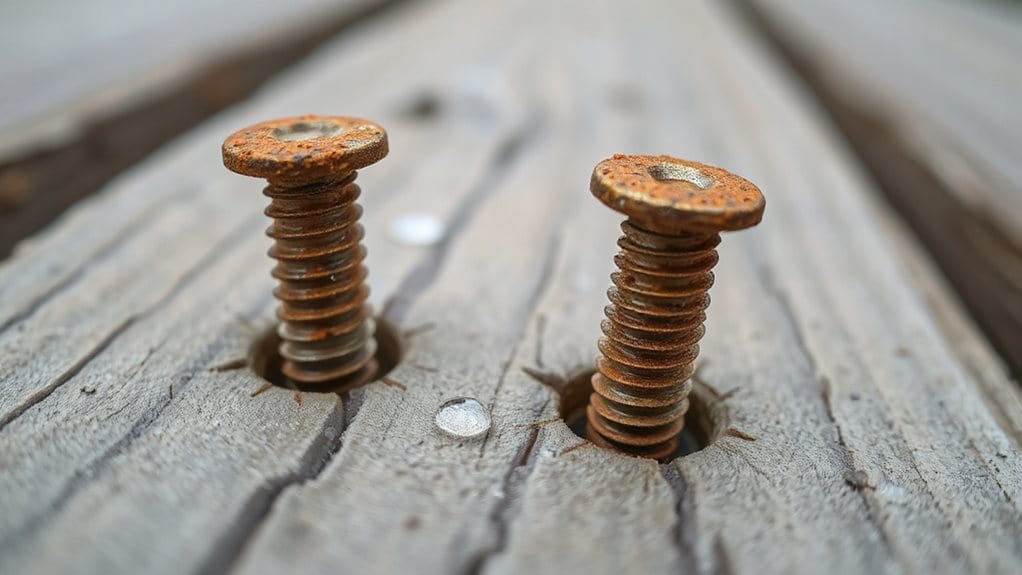
You know that proud feeling when you’ve just finished building your deck and you’re already imagining summer barbecues, stargazing nights, or even setting up a cozy spot for your morning coffee?
But uh-oh—using nails instead of screws, skipping corrosion-resistant coatings, or driving fasteners wrong can invite rust and ruin your hard work.
Don’t forget joist tape and adhesive, too; they’re like seatbelts for your deck—small but life-saving!
Many building codes also require using approved connectors like joist hangers or structural screws to ensure durable, code-compliant connections.
How Humidity and Salt Air Damage Deck Screws
You know that salty breeze at the beach? It’s not just invigorating—it’s sneaky, teaming up with humidity to trap corrosive gunk on your deck screws like an uninvited guest at a campfire cookout.
When salt air crashes the party, especially within 300 feet of the shore, it speeds up rust faster than a kid on a s’more sugar rush, especially if you’re using anything less tough than 316 stainless steel. Tanks are more likely to lose pressure in extreme cold than to burst, so keeping them properly maintained helps prevent related corrosion issues tank pressure.
Humidity Traps Corrosion
Imagine this: you’re out on your deck sipping lemonade during a sticky summer evening, the air so thick you could almost spread it on toast, and suddenly—*pop*—a screw head snaps off when you lean on the railing.
Humidity’s sneaky, right? It traps moisture in tiny crevices, teams up with heat, and basically throws a corrosion party on your screws—no invite needed!
Salt Air Accelerates Oxidation
Sailing into the salty breeze might sound romantic—until that same sea air starts turning your deck screws into rusty crumbles.
You see, salt’s sneaky superpower? It pulls moisture from the air, creating a wet party on your fasteners, speeding up rust.
And yep, even 50 miles inland, that salty kiss can tag along.
Skip the heartbreak—choose 316 stainless, avoid mixing metals, and keep your deck excursions dry and strong!
Coastal Climates Weaken Fasteners
That salty breeze might make your hair smell like the ocean and your afternoon hammock nap feel like a beach vacation, but it’s also throwing a not-so-fun party on your deck screws—kind of like inviting uninvited guests who eat all your snacks and leave rust behind.
Humidity hugs your hardware daily, rain traps moisture in tiny corners, and heat speeds up rust’s mischief. Even coated screws can’t hide forever.
You’ve got to fight back with marine-grade 316 stainless steel—it laughs in the face of salt, shrugs off moisture, and keeps your deck safe, strong, and expedition-ready for years. Check fasteners often, replace weak ones fast, and give your outdoor space the armor it deserves.
Best Rust-Proof Fasteners for Decks
Ready to nail your deck build—without the nasty surprise of rust creeping in too soon? For salty coastal air, grab Grade 316 stainless steel—it laughs at ocean spray!
In milder zones, 304/305’s a wallet-friendly champ. Epoxy-coated? Great for treated wood, like when I built my lakeside fire pit.
Ceramic-coated screws? Super tough, no pre-drilling needed. Skip basic zinc—your deck deserves better!
Overall
So, you’ve seen how moisture, salty air, and even your deck wood can team up to rust those screws—kind of like a sneaky villain squad, right? But hey, don’t sweat it! Grab stainless steel or coated fasteners, nail the installation, and your deck’ll stay solid for years. I once camped on a wobbly deck (not fun), so trust me—doing it right *matters*. Now go build something awesome, and maybe plan a s’mores night on your rust-free fortress!