Circuit Breaker Trips Only at Night: Possible Causes
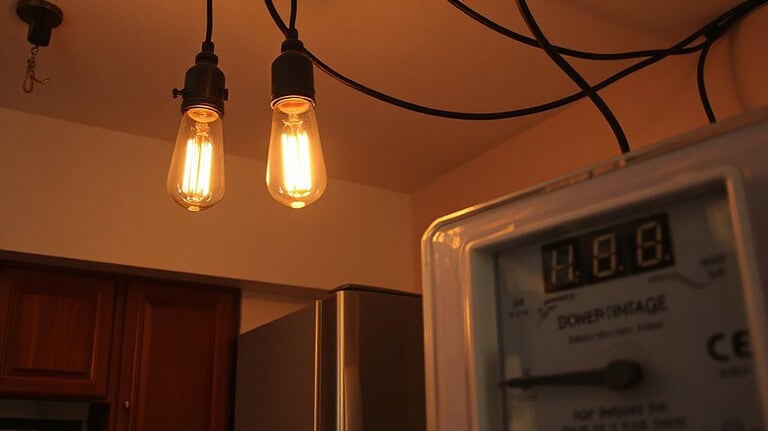
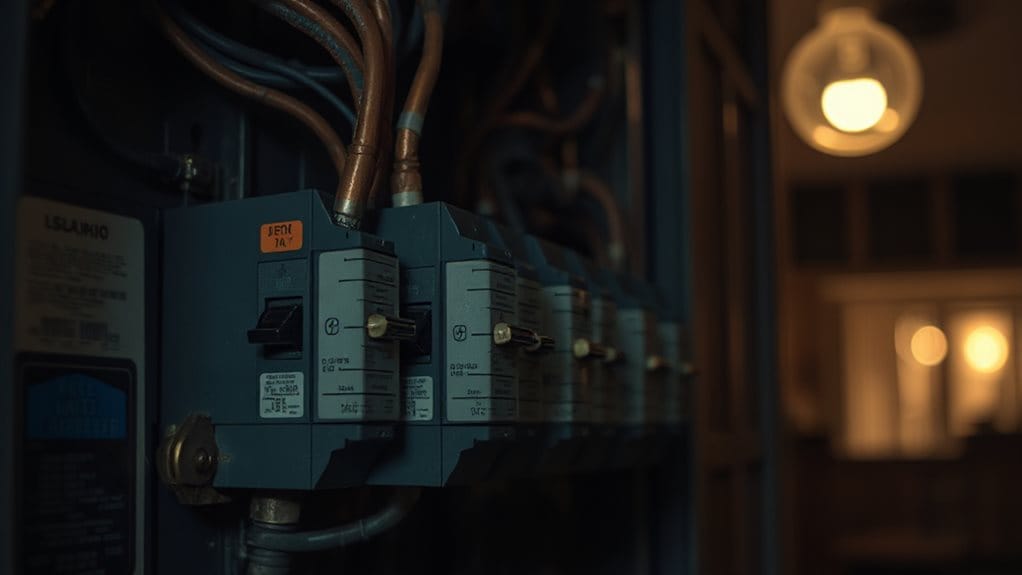
So your breaker keeps bailing at night? You’re not alone—think holiday lights, space heaters, and the fridge all vying for power like campers crowding around a single lantern. Humidity sneaks in, wires contract in the cold, and aging breakers get jumpy. Add a motion-light surge or a worn appliance, and boom—trip city. Ever smelled something weird or heard buzzing? That’s your cue. Let’s uncover what’s really flicking the off switch after dark.
TLDR
- Nighttime use of heaters, ovens, and lights can overload circuits, especially when multiple high-wattage devices run simultaneously.
- Increased humidity at night may cause moisture buildup in panels, leading to ground faults and GFCI breaker trips.
- Cooling temperatures cause metal components and wires to contract, loosening connections and triggering arcing or trips.
- Aging or degraded wiring with cracked insulation can cause short circuits, especially under nighttime electrical loads.
- Old or failing breakers may trip at night due to normal load fluctuations, temperature changes, or internal wear.
Overloaded Circuits During Evening Use
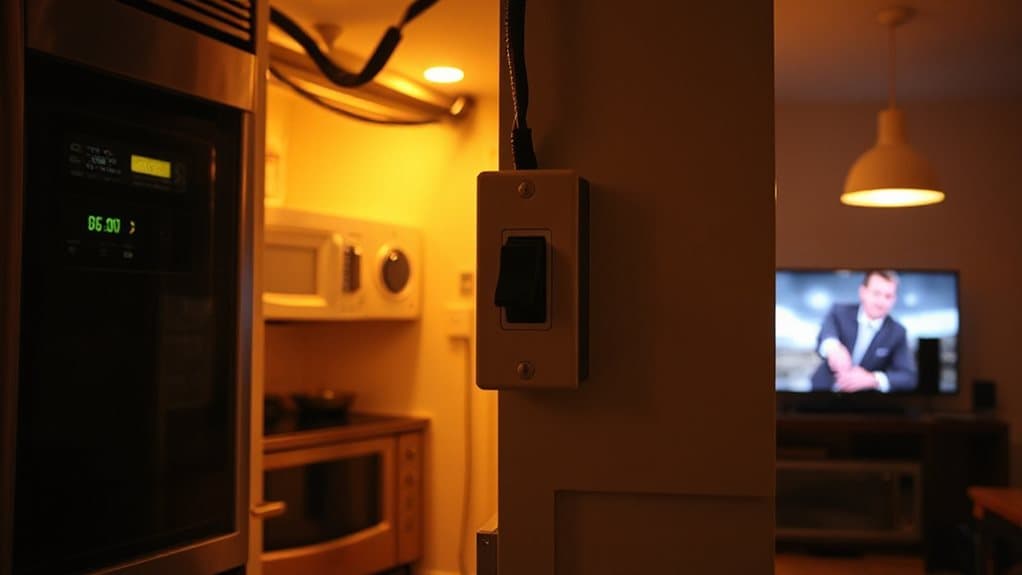
You’ve probably had one of those cozy winter evenings where everything’s going great—your holiday lights are twinkling, the oven’s roasting your famous garlic potatoes, and your space heater’s humming along to keep the chill away—when *bam!* the lights suddenly flicker and the room goes quiet. Sound familiar? That’s your circuit saying, “Hey, I can’t do it all!”
You’re not alone—holiday cooking, heating, and dazzling decorations often team up like overeager campers crowding one tiny fire pit. And just like at camp, when too many hands reach in at once, things go *poof*. Unplug a few items, spread out the load, and give each appliance its own “spot by the fire”—your outlets will thank you! A single 1500-watt heater alone draws about 12.5 amps on a typical 120 V circuit, which can push a standard household circuit close to its limit when combined with other appliances.
Overloaded circuits can generate excessive heat and increase fire risk, especially when multiple high-wattage devices operate simultaneously.
Temperature Fluctuations Affecting Breaker Performance
So your lights went out mid-bake, and you swear you didn’t plug in too much—no roasting pans, no extra strings of tinsel lights, just a quiet night in.
But here’s the twist: as temperatures drop at night, metal parts inside breakers contract, loosening old connections and sometimes causing tiny sparks or arcing—kind of like when your campfire crackles unexpectedly.
That little jolt? Your breaker sees it as trouble and trips, playing superhero even when you just want dessert.
Keeping breakers at proper temperatures and maintaining connections can reduce these issues, especially when propane vapor production ceases around ‑44 °F and similar cold-related effects are present.
Increased Humidity Triggering Nighttime Trips
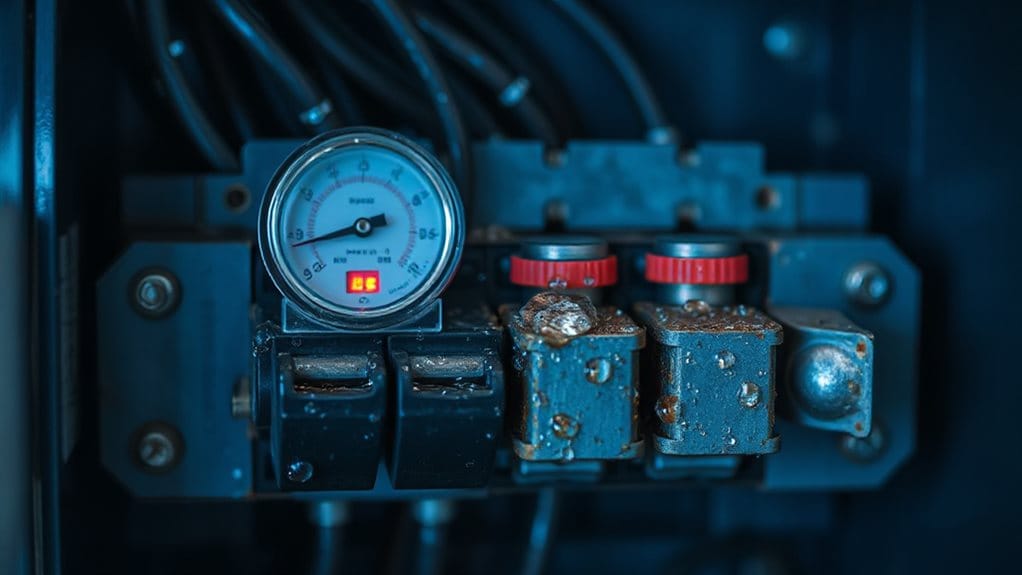
Sometimes, when the night rolls in and the air gets thick with dew, your circuit breaker might just decide it’s had enough—kind of like how your tent zipper jams when it’s too damp during a camping trip.
Humidity sneaks into panels, corrodes wires, and creates sneaky electrical paths, especially in coastal areas.
You wake up to a tripped breaker? Yep, moisture’s the usual suspect.
Check seals, improve airflow, and maybe invest in a dehumidifier—your circuits will thank you like a warm campfire after a soggy hike!
Also consider installing continuous monitoring devices to help detect moisture-related electrical issues before they cause trips.
Appliance Cycling Patterns After Dark
You know how your fridge kicks on at night like it’s prepping for a midnight snack run? Well, that little surge—plus your HVAC cycling hard to keep the house cozy—can team up and push your circuit breaker to its limit, kind of like overloading a backpack on a camping trip.
And if an appliance’s acting up after dark, say with a worn-out motor or dodgy wire, it’s basically waving a flag saying, “Hey, I’m the reason the lights just blinked!” HVAC systems also often run more at night, and if the system’s airflow is low or the ductwork is restricted it can increase load on the blower motor, worsening trips.
Refrigerator Nighttime Surge
While the house settles into a quiet hush and you’re probably dreaming about tomorrow’s camping trip—tent pitched under the stars, s’mores warming over the fire—your refrigerator kicks into high gear, working harder than you might think during those cool nighttime hours.
Cooler air outside makes it cycle more, especially if coils are dusty or settings are too cold. That extra effort? It can spike energy use, potentially tripping breakers—annoying, right? Check those temps, clean the coils, and let your fridge chill without the drama.
HVAC Cycling Load
That midnight *click-click-thump* you hear isn’t just the house settling or a rogue raccoon plotting a snack heist—it might be your HVAC throwing a mini tantrum every few minutes, especially after dark.
If your system’s short cycling—shutting off every 3–5 minutes—it’s stressed, inefficient, and possibly oversized. Dirty filters, bad airflow, or a wonky thermostat could be tricking it.
Fix it, and you’ll save energy, money, and peace—like upgrading a leaky tent before a big camping trip!
Appliance Faults After Dark
Ever had your fridge throw a late-night rave when the rest of the house is trying to sleep? Yeah, those after-dark cycles aren’t just annoying—they can trip breakers.
Dirty coils, bad seals, or a wonky thermostat might be throwing the party. Clean those coils, check the door gasket, and verify settings—your compressor (and camping plans) will thank you!
Faulty or Aging Appliances Drawing Excess Power
Envision this: you’re snug in bed, the house is quiet, and—bam!—the lights flicker and die as the circuit breaker trips *again* in the middle of the night. Sound familiar? That old water heater or fridge might be the sneaky culprit, working overtime and sucking up way more power than it should.
Think of it like a camper’s lantern sputtering on a dying battery—clunky, inefficient, and begging for help. Unplug suspect appliances one by one, especially those older, groaning units—your breaker (and your peace of mind) will thank you! Older appliances can draw more current as components age and should be checked for excessive amp draw.
Outdoor Lighting and Motion-Activated Devices Straining Circuits
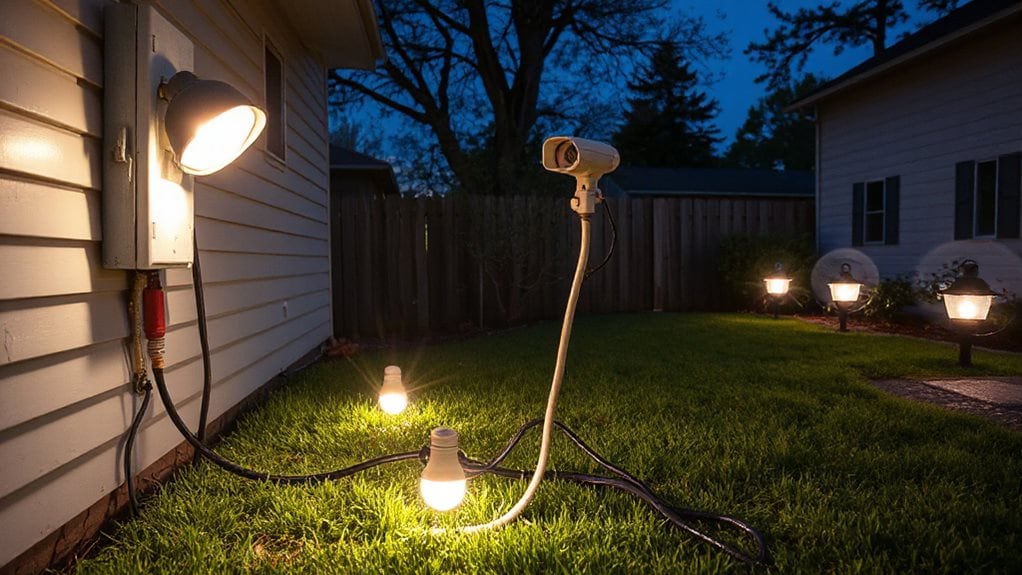
Sometimes, when you’re winding down after a long day—maybe you’ve just gotten cozy with a book or are about to rewatch your favorite camping excursion documentary—the lights outside suddenly blast on, and *bam*, the breaker trips like it’s trying to start a campfire with too much kindling.
That surge from motion lights flipping on all at once? It’s a power spike party your breaker didn’t RSVP to—especially if wires are worn, connections are iffy, or the converter’s groaning under the load.
You’re not just lighting the yard—you’re giving your circuit a full-contact sport.
Shared Circuits With Bathroom and Exterior Fixtures
Okay, so your motion-sensing lights might be throwing a power tantrum at night, but what if the real culprit isn’t outside at all—what if it’s hiding behind your bathroom mirror?
Yep, if your bathroom shares a circuit with outdoor outlets, moisture from dew or bugs in a lamp can trip the GFCI and kill your lights—or your curling iron.
Not ideal when you’re prepping for a camping trip at midnight!
Hidden Short Circuits or Ground Faults Activating at Night
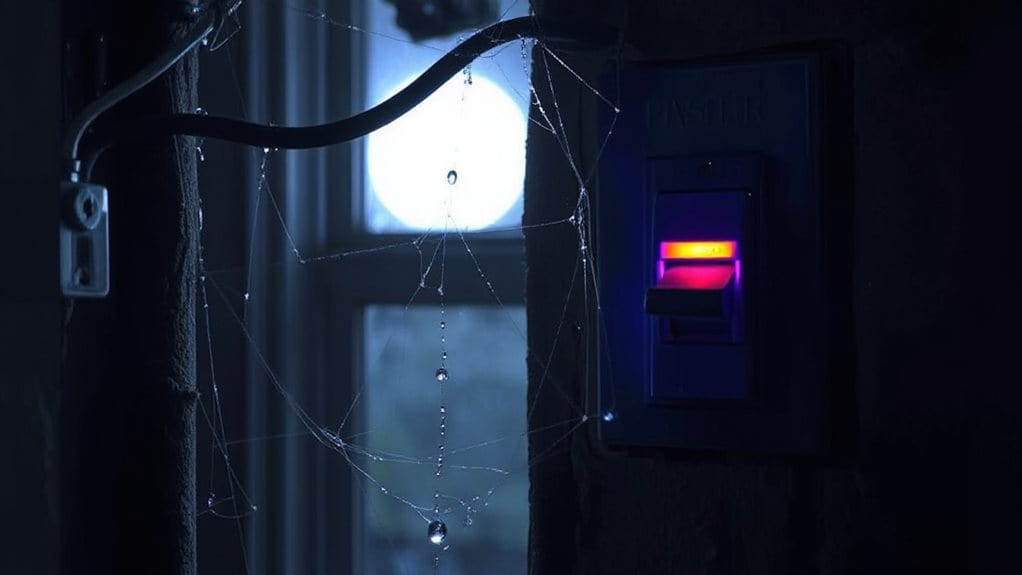
You know that annoying moment when your lights flicker or the breaker trips right as you’re toasting marshmallows in the living room like it’s a campout? Well, sneaky ground faults or hidden shorts might be waking up at night, thanks to dew creeping into outdoor boxes or mice throwing a midnight rave in your walls.
Check those GFCI outlets and listen for buzzing sounds—because nothing kills a cozy night vibe faster than a surprise blackout!
Hidden Wiring Faults Emerge
While you’re tucked in bed dreaming of mountain trails and s’mores by the campfire, your home’s electrical system might be staging a midnight drama all its own—thanks to sneaky wiring faults that only show up when the house settles down and the temperature drops.
Loose connections, chewed wires, or damp walls can spark trouble when humidity rises and things cool off, causing breakers to trip.
You might hear faint buzzing, notice a weird smell, or see scorch marks—don’t ignore them! These clues are like nature’s warning signs, just like dark clouds before a storm.
A quick call to an electrician keeps your home safe, so you can keep planning that next outing without worry.
Nighttime Ground Fault Triggers
When the house quiets down and the crickets start their nightly concert, your circuits might just be gearing up for a surprise performance—thanks to sneaky ground faults that love the cover of darkness.
Cooler temps make wires contract, moisture creeps in, and boom—your GFCI trips! Humid bathrooms, aging appliances, or tiny leaks team up at night, turning dew into drama.
Unplug, inspect, and stay one step ahead—your home (and peace of mind) will thank you!
Short Circuits Under Load
That sneaky ground fault we just talked about? It might actually be a short circuit under load—like when your family’s nighttime routines crank up demand, and *bam*, wires with damaged insulation finally touch.
Loose connections heat up, overloaded circuits stress out, and faulty appliances throw a party. Ever had a lamp flicker like it’s possessed? Yeah, that’s not ghosts—time to investigate!
Degraded Wiring and Failing Circuit Breakers
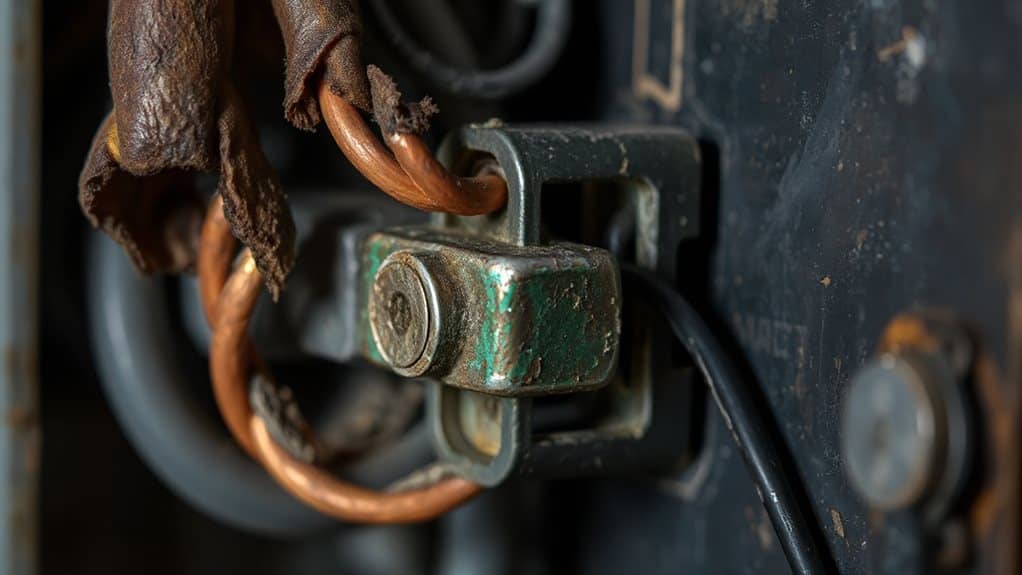
If your lights suddenly flicker off in the middle of a cozy night, and you’re left fumbling for a flashlight like you’re on some unplanned camping outing—except without the s’mores or cool bug zapper sounds—it mightn’t be ghosts or bad luck, but something way more sneaky: degraded wiring or a tired, old circuit breaker throwing in the towel.
Over time, wires wear out, insulation cracks, and breakers get sluggish—kind of like how your knees feel after too many hikes. Nighttime cooling shrinks materials, wiggling loose connections or exposing tiny gaps in worn insulation, letting electricity escape where it shouldn’t.
Humidity sneaks in, corrosion builds up, and boom—your breaker trips, trying to keep you safe. You wouldn’t ignore frayed tent ropes before a big trip, so why overlook aging wires?
Overall
So, your breaker keeps bailing at night? Yeah, it’s annoying—like that one campfire that won’t stay lit no matter how much you blow on it. Could be too many gadgets partying after dark, a sneaky short, or even old wiring throwing a tantrum. Don’t sweat it, though—track down the culprit, maybe call an electrician buddy, and soon you’ll be back to roasting marshmallows without a flicker. Stay curious, stay safe, and hey—let’s keep the lights on, okay?