
Why Are Skunks Digging Holes in My Yard?
You’re spotting 4‑8‑inch scoop‑shaped holes because skunks are hunting grub‑filled soil and carving cozy night‑time shelters under your deck, a habit that spikes in spring’s soggy earth, fall’s dwindling insects, and even late‑winter roaming males scouting den sites. Their sharp claws scoop out 3‑inch cones of soil, leaving loose rings and a musky scent, while moist, compacted ground teems with beetles, earthworms, and tasty grubs. If you keep the lawn short, seal gaps, and add motion lights, you’ll curb the digging—keep going for more tricks to outsmart these nocturnal campers.
TLDR
- Skunks dig to find food such as grubs, beetles, and earthworms, which are abundant in moist, soft soil.
- They create shelter dens under decks, mulch, or other dark, protected areas for safety and temperature regulation.
- Seasonal factors—spring rain-softened earth, fall pre‑winter foraging, and late‑summer grub peaks—drive increased digging activity.
- Compacted or poorly drained soil concentrates insects and makes the area more attractive for skunk foraging.
- Preventive measures like mowing short, aerating soil, sealing entry gaps, and adding motion‑activated lights can reduce digging.
Skunk Digging: How to Identify Hole Patterns
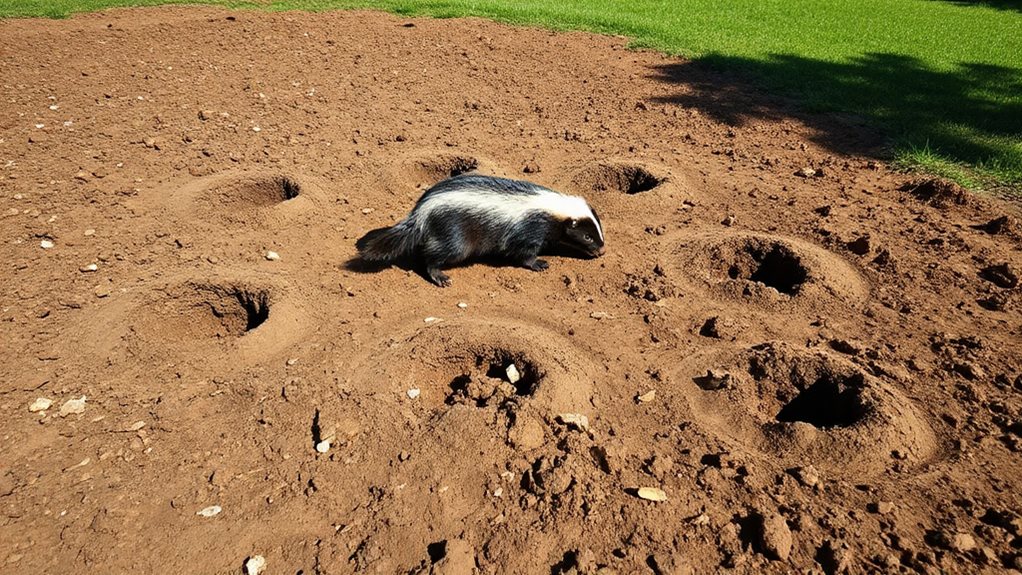
Ever wondered why your yard looks like a mini‑obstacle course of tiny tunnels? You’ll spot skunk holes by their 4–8‑inch scoop‑shaped mouths, loose soil rings, and uniform size from nose‑pressing digs. Look for clusters under decks or mulch, and notice the musky scent, paw prints, and flipped turf patches—clear signs you’re dealing with a curious, nocturnal digger. Skunks are attracted to moist soil because it supports abundant insects and grubs. Many gardeners find that correcting drainage problems reduces skunk activity by making yards less attractive to their prey.
Why Skunks Dig: Food, Shelter, and Seasonal Drivers
Why do skunks keep digging holes in your yard? You’ll notice them hunting grubs, beetles and earthworms, using sharp claws to scoop out 3‑inch cones of soil, especially at night when insects are abundant.
They also seek cozy, dark spots under decks or sheds for shelter and raising kits, moving stones and roots to shape dens. Their digging spikes in spring and late summer when food and breeding needs surge. Deep soil compaction and poor drainage can make lawns more attractive to skunks seeking exposed prey, so addressing soil compaction can reduce digging.
Seasonal Triggers That Intensify Skunk Digging
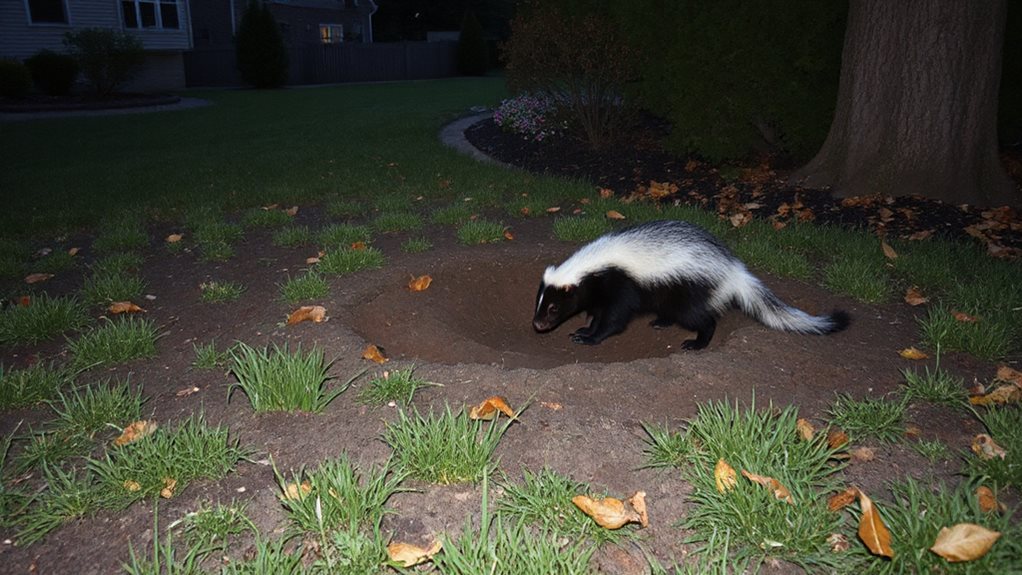
You’ve already seen how skunks hunt grubs and beetles, scooping out neat three‑inch cones of soil, so let’s talk about what makes that digging go into overdrive at different times of year.
In spring, moist rain‑softened earth and a post‑winter weight‑gain sprint send them tunneling; fall brings pre‑winter gorging as insects dwindle; late winter males roam, females scout den sites, and grub peaks in late summer spark frenzied excavations, all amplifying their activity. Low outdoor water pressure can also concentrate insect prey near damp soil, indirectly increasing skunk foraging in your yard by creating higher moisture areas.
Preventing Skunk Damage: Lawn‑Care and Exclusion Tips
So, how can you turn your backyard from a skunk‑friendly campsite into a tidy, no‑dig zone without turning it into a boring desert?
Mow short, clear debris, and aerate to keep soil dry and bug‑free; seal gaps with mesh or steel wool; bury hardware cloth around decks, add thorny hedges, and set motion lights.
Spray predator urine or dish‑detergent mix to keep skunks wandering elsewhere.
Planting nearby native flowering plants will also support beneficial insects and maintain continuous blooms.
When to Call a Pro for Safe Skunk Removal
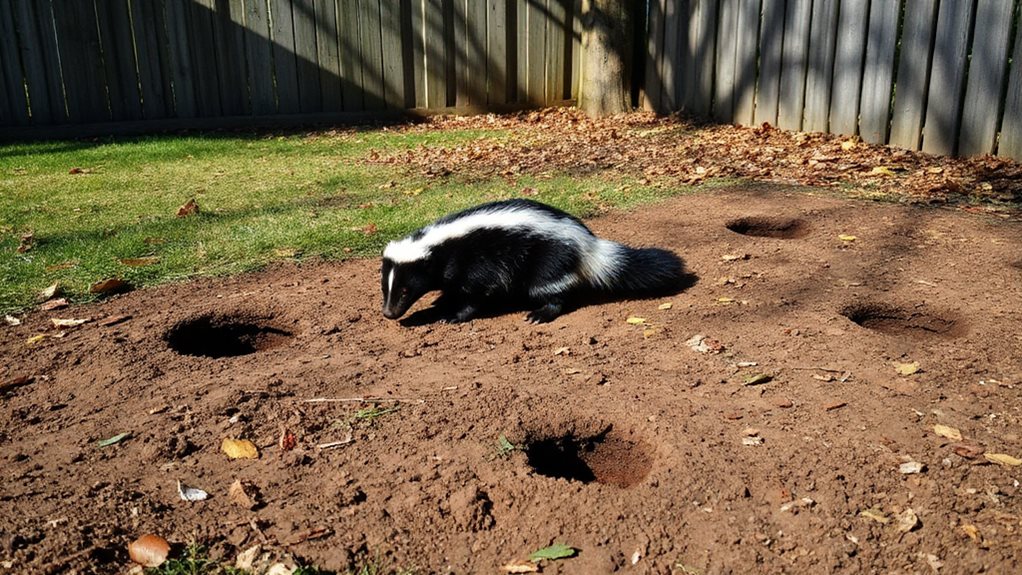
Ever wondered if that skunk’s nightly tunnel‑digging mission has crossed the line from “cute critter” to “full‑blown backyard disaster”? When you spot a hard‑to‑reach den under a deck, a dead skunk, or spray that lingers weeks, call a pro.
Their $150‑$300 inspection, humane traps, and exclusion keep families safe, prevent damage, and avoid nasty spray exposure. Shelter and sheltered spaces like under decks can harbor dens that require professional removal.
Overall
Now you’ve got the scoop on why skunks are digging, when they’re most active, and how to keep your lawn safe—so grab a shovel, set up some fences, and maybe even turn those fresh into a fun backyard adventure, because tackling wildlife can feel like a mini‑expedition, right? If the holes keep popping up, don’t hesitate to call a pro; a quick expert visit can save you time, stress, and a whole lot of skunk‑scented surprises. Happy digging (or not)!