What Size Ground Wire for 100 Amp Service?
You’ll need a #8 AWG copper grounding‑electrode conductor for a typical 100 A service, unless the ungrounded service‑entrance conductors are larger or you’re using aluminum, in which case NEC Table 250.66 bumps the size up to #6 AWG copper or #4 AWG aluminum; basically, check the size of your hot wires first, then match the GEC to the biggest one, because the code ties the ground to that conductor, not the breaker, and if you’re wiring a sub‑panel you can often stay at #8 Cu or #6 Al even when the hot conductors are upsized for voltage drop—keep an eye on the tables, and you’ll avoid the common “just use #8 everywhere” mistake, plus you’ll be ready for the next job in wiring.
TLDR
- NEC Table 250.66 requires a #8 AWG copper grounding‑electrode conductor (GEC) for a typical 100 A service with #8 AWG copper or #6 AWG aluminum service‑entrance conductors.
- If the service‑entrance conductors are larger than #8 AWG copper (e.g., #6 AWG copper), the GEC must be upsized to #6 AWG copper.
- Aluminum GECs follow the same rule; a #6 AWG aluminum GEC is the minimum for a 100 A service with #6 AWG aluminum service‑entrance conductors.
- Equipment‑grounding conductors (EGCs) for branch circuits on a 100 A feeder are sized by NEC Table 250.122: minimum #8 AWG copper or #6 AWG aluminum, regardless of the feeder conductor size.
- When using only rods, pipes, or plates as electrodes, the GEC may be limited to #6 AWG copper, but the minimum remains #8 AWG copper for standard 100 A services.
What Ground Wire Size Does NEC Table 250.66 Require for a 100 A Service?
You might be wondering what size ground wire the NEC actually calls for when you have a 100 A service, and the answer is surprisingly straightforward once you peek at Table 250.66.
For a typical 100 A setup you’ll need 8 AWG copper (or 6 AWG aluminum) GEC, unless you’re only tying into a rod, pipe, or plate electrode—then 6 AWG copper works, letting you save a little wire while staying safe. The minimum GEC size is determined by the largest ungrounded service‑entrance conductor as required by NEC Table 250.66. PVC pipe supports are often used to route grounding conductors because they are corrosion resistant and cost‑effective.
Identify the Service‑Entrance Conductor Size Before Selecting a GEC
First, you’ll want to double‑check the rating of your service‑entrance conductor—if it’s #3 copper or #1 aluminum you’re already at the NEC minimum for a 100 A service, but many folks use #4 copper or 2/0 aluminum for extra headroom and longer runs.
Next, pull up NEC Table 250.66 and see which grounding‑electrode conductor size lines up with that entrance size; the table makes the match‑up crystal clear, so you won’t have to guess.
Finally, remember to pick a GEC that exactly mirrors the entrance conductor’s ampacity—if your service wire is sized for 100 A, the ground wire must be sized accordingly, and you’ll feel as confident as packing the perfect tent for a weekend camping journey!
For long runs you may choose a larger conductor to reduce voltage drop and improve performance.
Verify Service Conductor Rating
Let’s kick off by figuring out just how big the service‑entrance conductors are before we pick a grounding electrode conductor (GEC), because the NEC says the GEC size hinges on the largest ungrounded conductor feeding the service.
Check the load, note copper vs. aluminum, add parallel areas, then match that total to Table 250.66—ensuring you’re not undersizing, just like packing the right gear for a camping trip.
Consult NEC Table 250.66
Since you’re about to size the grounding electrode conductor (GEC) for a 100‑amp service, the first thing to do is figure out just how big the service‑entrance conductors are, because NEC Table 250.66 ties the GEC size directly to the largest ungrounded conductor feeding the service.
Look up that conductor’s gauge—typically #3 Cu or #1 Al for 100 A—and then match it to the table’s minimum GEC, which lands you at #8 Cu or #6 Al.
This guarantees your grounding can handle fault currents, just like packing the right gear for a camping trip.
Match GEC to Conductor Size
When you’re gearing up to pick the right grounding‑electrode conductor, the first thing you’ve got to do is figure out how big the service‑entrance conductors are, because NEC Table 250.66 ties the GEC size directly to the largest ungrounded conductor feeding the service—think of it like checking the size of your hiking boots before you hit the trail, you wouldn’t want to end up with a shoe that’s too small and hurts your feet, would you?
Measure each phase, add parallel areas, then match the GEC to that equivalent size, remembering copper or aluminum changes the calculation, and don’t forget the #6 AWG minimum for rod electrodes.
Copper GEC Sizing: When #8 AWG Is Correct and When a Larger Size Is Needed
If you’re setting up a 100‑amp service and wondering whether the #8 AWG copper grounding‑electrode conductor (GEC) will do the job, the short answer is usually yes—unless your electrode type forces you to go bigger.
Use #8 for rods, pipes, plates, or a simple Ufer, but switch to #6 or larger when the code caps at 6 AWG for those electrodes, or when service conductors exceed 2 AWG.
Choosing the Right Aluminum GEC With Table 250.66
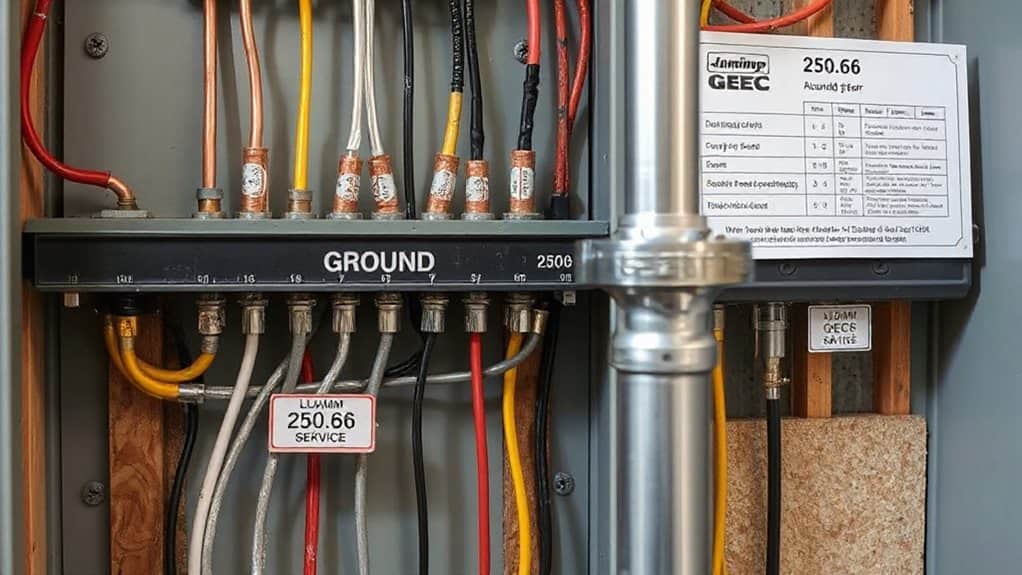
You’ll find that picking the right aluminum grounding electrode conductor is as easy as checking Table 250.66, because the table directly ties the GEC size to the biggest ungrounded service‑entrance conductor you have, so for a 100‑amp load with #2 AWG aluminum service wires you’ll need a #6 AWG aluminum GEC—just like the #8 AWG copper counterpart.
Have you ever noticed how the table even tells you the exact size when you’re using parallel aluminum runs, adding up their circular‑mil areas to match a single‑conductor entry?
Always remember that conductor material matters for ampacity and code compliance, with copper and aluminum requiring different gauges due to their differing conductivities (see conductor comparison).
Aluminum GEC Sizing Rules
Even though the NEC can feel like a maze of numbers, picking the right aluminum grounding electrode conductor (GEC) is actually pretty straightforward once you get the hang of Table 250.66—think of it as your campsite map that tells you exactly which trail (or wire size) to follow so you don’t end up lost in the woods.
Use 6 AWG Al for 1/0 or smaller services, 4 AWG for 2/0‑3/0, and 2 AWG for 250‑500 kcmil, remembering rod and pipe limits of 4 AWG and securing every connection with listed Al‑compatible hardware.
Reference Table 250.66 Values
Alright, imagine yourself at the campsite again, but this time you’re pulling out the map that tells you exactly which trail-blazing wire to use for a 100-amp service—Table 250.66.
You look up #2 AWG aluminum service, see #6 AWG aluminum GEC, then spot #1/0-2/0 needing #4 AWG, and notice anything above 3/0 jumps to #2 AWG, unless you’re only tying into rods, where #4 AWG caps everything.
Match Conductor Ampacity Directly
So, how do you pick the perfect aluminum grounding‑electrode conductor (GEC) for a 100‑amp service without getting lost in the code jungle?
You match the service size—#2 AWG aluminum—to Table 250.66, which tells you #6 AWG aluminum is the minimum.
Think of it like packing the right tent size for a camping trip: you need enough room for safety, not just for fun.
Why Ground Wire Size Isn’t Determined by the Main Breaker Rating
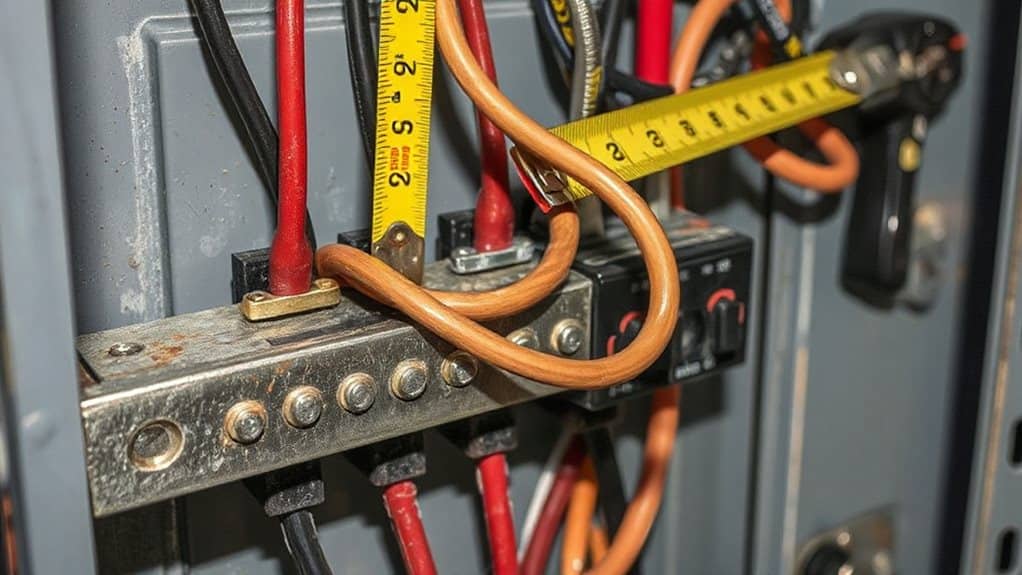
When you’re setting up a 100‑amp service, you might think the main breaker’s rating decides the ground‑wire size, but actually the NEC says otherwise, so let’s clear that up before you get tangled in wires.
The code ties grounding‑electrode size to the ungrounded conductor’s gauge, not the breaker, so a #8 copper GEC fits typical 100‑amp setups, regardless of the breaker’s amp rating.
Regular inspection and proper maintenance help ensure grounding and breakers remain safe and effective, especially as components age over 30 years.
Distinguishing GEC vs. EGC: Ground Wire Size Implications
You’ll notice that the GEC, which ties the whole service to the earth, is sized by the biggest service‑entrance conductor, while the EGC, protecting each branch circuit’s equipment, follows the over‑current device rating; this means a 100 A service might need a 4 AWG copper GEC but only an 8 AWG copper EGC.
Have you ever wondered why the two aren’t just the same wire?
Think of it like packing for a camping trip: you bring a sturdy, heavy‑duty rope to secure the tent (the GEC) and a lighter, flexible cord for your lanterns (the EGC), each chosen for its specific job, and you’ll avoid a tangled mess.
Regular inspection and timely replacement of grounding components help prevent corrosion and ensure reliable grounding, which supports safety and proper operation of electrical and plumbing systems.
GEC vs EGC Distinction
Even though the letters GEC and EGC look alike, they actually play totally different roles in a house’s electrical system, and that difference decides how thick the ground wire has to be.
The GEC ties the service neutral to earth, sized by the service conductor per Table 250.66, while the EGC protects outlets and appliances, sized by the breaker per Table 250.122.
Sizing Rules and Applications
We’ve already seen how GEC and EGC wear different hats—one ties the neutral to earth, the other protects our devices—so now let’s figure out exactly how big each hat needs to be for a 100 A service.
For a #3 copper service, use #8 copper GEC; for #1 aluminum, use #6 aluminum GEC.
The EGC follows Table 250.122, so #8 copper or #6 aluminum protects a 100 A breaker, unless voltage-drop upsizing demands larger.
Size the EGC for a 100 A Feeder Using NEC Table 250.122
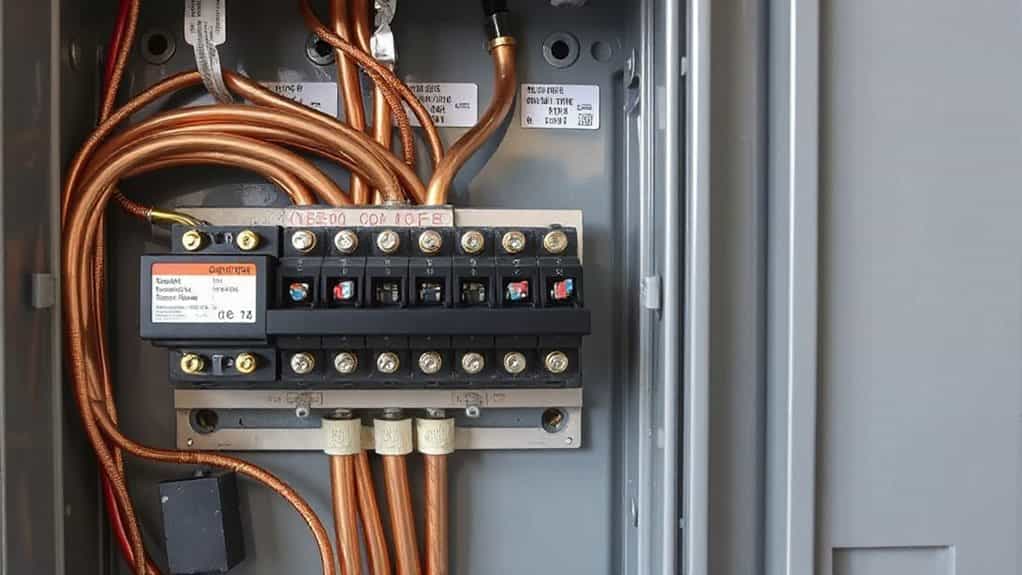
When you’re setting up a 100‑amp feeder, the first thing you’ll notice is that the equipment‑grounding conductor (EGC) isn’t sized by the load at all—it’s dictated by the breaker’s rating, and that’s where NEC Table 250.122 swoops in like a trusty camp guide.
For a 100‑amp breaker, you must use at least 8 AWG copper (or 6 AWG aluminum) regardless of phase size, ensuring fault currents trip the OCPD safely.
Sub‑Panel Ground Wire Size: When a Smaller Wire Is Allowed
If you’re wiring a sub‑panel and the feeder’s phase conductors are beefed up for voltage‑drop reasons, you might wonder whether the grounding wire has to be just as massive—spoiler alert: it doesn’t.
NEC Table 250.122 lets you keep the EGC at #8 Cu or #6 Al for a 100 A breaker, even if you used #2 Al for the hot wires, as long as the breaker protects the circuit.
Just run both together, and you’re good.
Common Mistakes: Assuming a Universal “#8 AWG for 100 A” Rule
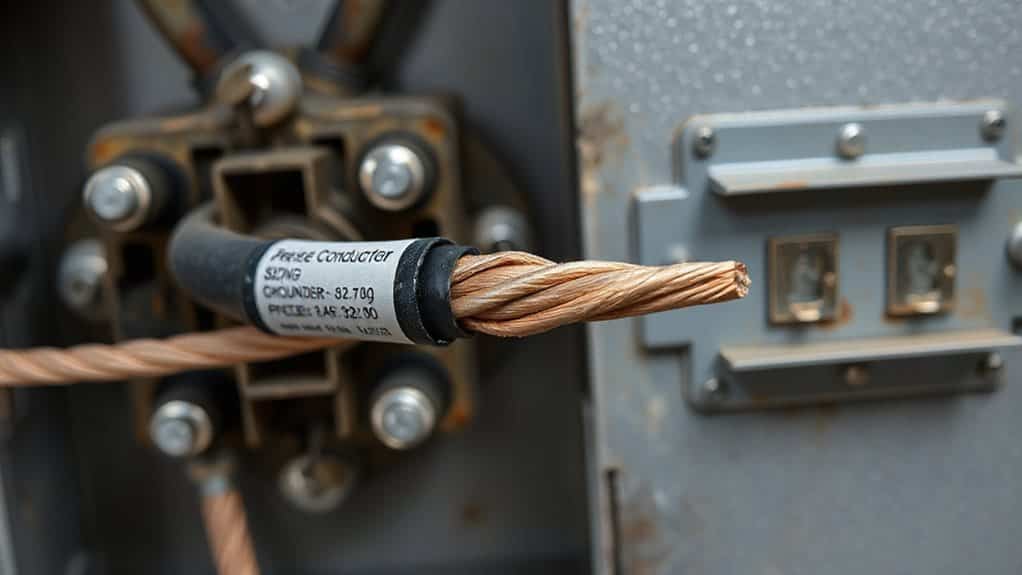
You might think the rule “#8 AWG for 100 A” works everywhere, but that’s a classic shortcut that trips up a lot of DIYers, especially when they’ve just learned that a sub‑panel’s ground can stay small even if the hot wires are beefed up.
Step‑by‑Step Checklist to Verify Correct Ground Wire Size for Your 100 A Service
Even though figuring out the right ground wire for a 100 A service can feel like planning a cross‑country road trip, the checklist is actually as straightforward as packing your gear before a camping quest—just make sure you’ve got the right tent, the right snacks, and in this case, the right conductor.
First, identify your service‑entrance conductors and material; then consult NEC Table 250.66, match copper to copper or aluminum to aluminum, verify caps for rods, and document everything for the inspector.
Finally, test resistance to confirm it’s under 25 Ω.
Reference Table: Copper vs. Aluminum Ground Wire Sizes for 100 A and 200 A Services
Ever wonder why picking the right grounding wire feels a bit like packing the perfect gear for a weekend hike?
For 100 A, copper’s #8 works, while aluminum needs #2; jump to 200 A and copper upgrades to #4, aluminum to #2.
And Finally
So, you’ve nailed down that a 100‑amp service doesn’t automatically demand a #8 copper ground—size hinges on the service‑entrance conductor, material, and NEC Table 250.66, not the breaker itself; remember, if you’re using aluminum, you’ll need a larger gauge, and sub‑panels can sometimes get away with a smaller wire. Double‑check the table, measure your conductors, and you’ll avoid the “one‑size‑fits‑all” trap—then you can focus on the real escapade: camping trips, campfire stories, and maybe a night under the stars with a perfectly grounded RV!