Setting Up a 40 Gallon Tank for a Ball Python
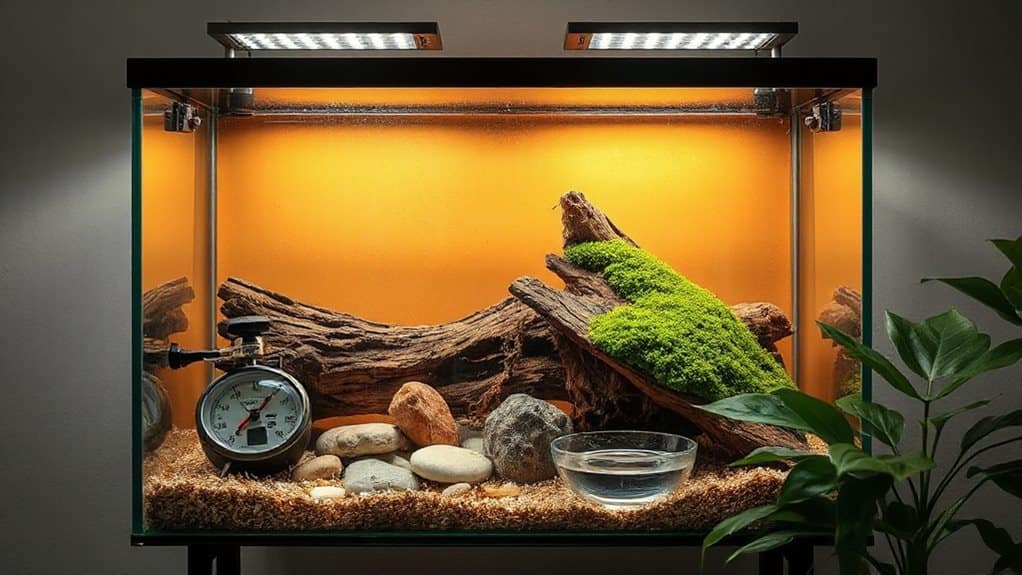
You’ll love how a 40‑gallon tank (about 36×18×16 in) gives a ball python plenty of room to stretch while staying cozy, especially if it’s a male under four feet; the low height helps keep heat steady with a lamp and mesh top, and a sturdy 3/8‑in steel frame with a snap‑on mesh cover stops any escape attempts. Use coconut fiber substrate for 60‑80 % humidity without mold, add a warm basking spot (80 W halogen at 95‑104 °F) and a cool night side (ceramic emitter at 70‑78 °F), and place hides on both sides, a heavy water bowl near the warm hide, and a clear feeding spot opposite. Keep a digital hygrometer in the middle and a second one in the humid hide, log everything, and you’ll spot shedding or health issues early—keep going and you’ll uncover even more tricks.
TLDR
- Use a 40‑gallon tank (~36″ × 18″ × 16″) with a sturdy mesh cover and steel frame for stability and escape prevention.
- Provide a temperature gradient: 95–104 °F basking spot (80 W halogen), 86–90 °F under‑tank heat pad, and 70–78 °F night area with a ceramic emitter.
- Substrate with coconut fiber (e.g., Zoo Med Eco Earth) to maintain 50–60 % humidity and resist mold, adding a humid hide if needed.
- Install a 22″ T5 HO 5.0 UVB tube 36″ above the bar, paired with a 6000–7000 K LED, and replace UVB annually.
- Include two hides (warm and cool), a heavy water bowl near the warm hide, and monitor temperature/humidity with digital probes and a log.
What 40‑Gallon Tank Size and Shape Suit Adult Ball Pythons?
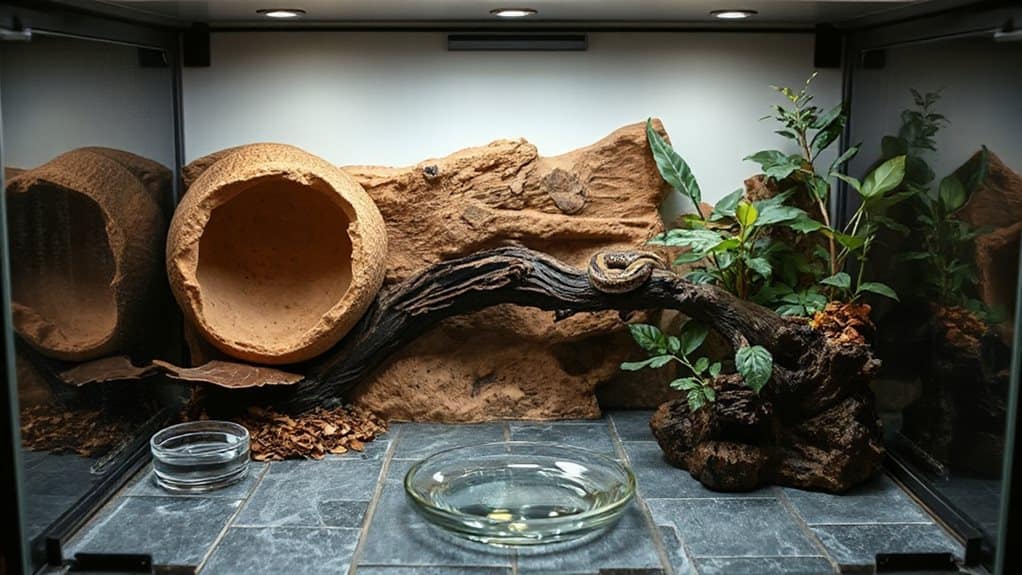
A 40‑gallon breeder tank—think 36″ × 18″ × 16″, roughly 4.5 sq ft of floor space—acts like a cozy campsite for most adult ball pythons, especially the guys that stay under four feet long, because you’ll have just enough room to stretch out, hide, and sip water without feeling cramped, and the lower height actually helps keep the temperature stable, so you can set up a heat lamp and a mesh top without losing vertical clearance; just visualize your snake as a tiny camper, unrolling a sleeping bag on the floor, and you’ll see why this size works so well for males, while females that grow past five feet might need a bigger “RV” to stay happy. Shallow, well-drained substrate and accessible water placement help surface-active behaviors in confined enclosures and mimic the shallow root zone conditions many shallow-soil plants prefer.
For males under four feet, this layout gives two hides, a water bowl, and room to investigate, making care simple and rewarding.
Larger females, however, may outgrow it quickly, so consider a bigger tank to avoid cramped conditions and keep their wellbeing top priority.
Adult ball pythons typically require at least 4 sq ft of floor space to move comfortably.
How to Build a Secure, Heat‑Retaining Enclosure for a 40‑Gallon Tank
You’ll want a sturdy mesh cover that snaps into place, because a ball python can turn a flimsy lid into a jailbreak in seconds, and the extra metal or acrylic reinforcement keeps it from scaling the top like a tiny climber.
Hook a thermostat‑controlled heating pad to one side of the tank, set it to 92°F, and watch the gradient form as the warm side stays cozy while the cool side stays breezy—just like camping with a campfire and a shady hammock.
Finally, arrange your hides so they’re not stacked on top of each other; give each a little space, because a cluttered hide can trap heat and make your snake feel like it’s stuck in a cramped tent, and you’ll love watching it discover the perfectly balanced setup.
Ensure good airflow and place the enclosure where it will receive bright, indirect light to avoid overheating and encourage natural behavior, especially maintaining good airflow to prevent fungal problems and pests.
Secure Mesh Coverage
When you’re setting up a 40‑gallon tank for a ball python, the lid isn’t just a boring piece of glass—it’s the front line of defense, so think of it like the roof of a tiny, reptile‑friendly campsite where the snakes can’t sneak out.
Use 3/8‑inch expanded steel, add a 3/4‑inch lip, cut corner squares, bend up, then weigh it down with a brick.
Cover the mesh with a light wall hanging for warmth, but leave gaps for ventilation, and lock the screen top securely.
This keeps the snake safe while you enjoy the camping‑vibe.
Thermostat‑Controlled Heating Pad
The mesh lid you just nailed down is like the tent flap that keeps the campfire’s heat inside, so the next step is to set up a thermostat‑controlled heating pad that acts as the warm ground under your snake’s “campground.”
Grab a carbon‑film mat sized just right for the 40‑gallon box—think of it as a portable solar panel for reptiles, spreading cozy warmth evenly from 68°F up to a sizzling 122°F, though you’ll aim for a comfy 88‑89°F at the bottom where the ball python likes to lounge.
Place the probe under the substrate, connect it to a digital inline thermostat, secure the mat with heat‑resistant tape, then cover most of the screen with plastic and a towel to lock in heat before testing the temperature.
Cluttered Hide Placement
Even if you’ve never set up a campsite, you’ll feel right at home arranging a “cluttered” hide zone that lets your ball python roam, nap, and snack without ever worrying about a cold spot or a runaway escape; visualize the back wall of your 40‑gallon tank as the forest floor where you stack cork flats, hollow logs, and a couple of sturdy skull hides, each tucked snugly under the warm side’s heating pad so the temperature hovers around a cozy 88 °F while the cold side stays a breezy 78 °F for those shy, cool‑loving moments.
Fill gaps with leaf litter, dig shallow pits for crevices, and lock the screen lid—your snake gets a secure, humid, multi‑zone adventure, and you’ll love watching it explore your mini‑campground.
Which Substrate Keeps Humidity at 60‑80 % Without Molding?
If you want a substrate that holds the humidity in that sweet 60‑80 % range without turning into a soggy, mold‑y mess, coconut fiber products are the clear winner—think Zoo Med Eco Earth or the fine‑textured Babychip from Reptichip, which soak up water like a sponge, release it slowly, and even have built‑in anti‑microbial properties that keep mold at bay, so you can enjoy a moist, healthy environment for your ball python without constantly battling a stinky, fuzzy disaster.
Cypress mulch works too, but coconut fiber’s texture, anti‑mold strength, and easy maintenance make it the top choice for caring keep.
How to Set Up Heating, Lighting, and UVB for a Stable Temperature Gradient
Coconut fiber keeps the humidity perfect, now let’s make sure the temperature doesn’t turn your 40‑gallon tank into a sauna or an iceberg.
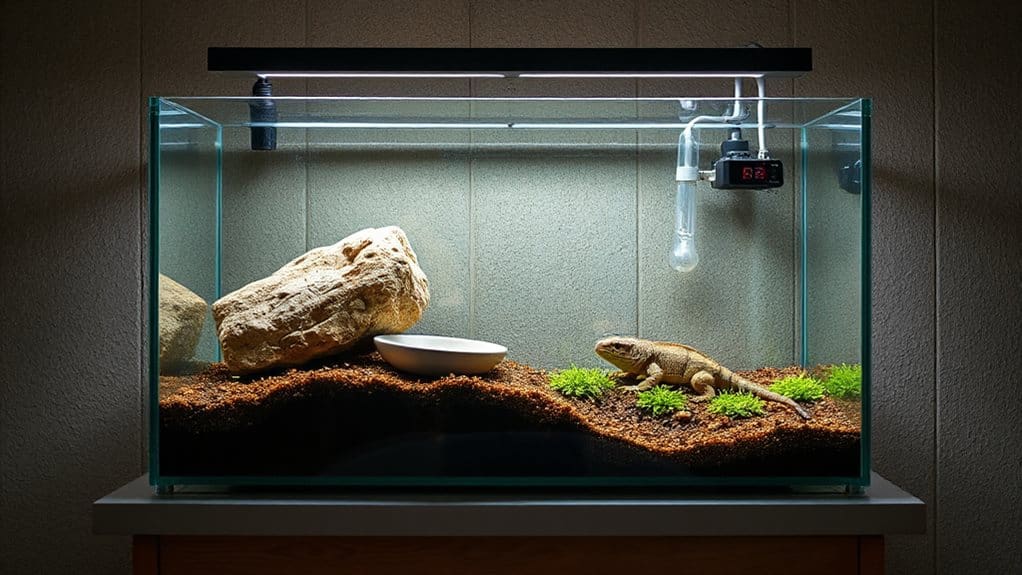
Hang an 80 W halogen over a basking platform for 95‑104 °F, add a thermostat‑controlled heat pad under the tank for 86‑90 °F, and use a ceramic emitter at night for 70‑78 °F.
Install a 22″ T5 HO 5.0 UVB tube 36″ above the bar, replace it yearly, and pair it with a 6000‑7000 K LED for day‑night rhythm.
Keep lights off at night, and always monitor with a reliable thermometer.
If you ever hear buzzing from outdoor outlets or see warm faceplates near your setup, treat it as a potential fire hazard and shut power off before troubleshooting.
How to Create a Bioactive or Live‑Plant Habitat Inside a 40‑Gallon Enclosure
Start by turning your 40‑gallon tank into a tiny rainforest expedition, because who doesn’t love a little jungle vibe in their living room?
Lay a waterproof foam base, spray three cans of waterfall foam, then pack a charcoal‑cypress‑sand mix, add a thin gravel layer, and plant pathos and spider plants two weeks early.
Scatter isopods, tuck sphagnum moss, and create cool‑humid gradients for a thriving, low‑maintenance habitat.
Lee Valley garden tools are a great choice for planting and maintenance thanks to their ergonomic handles and durable construction, which make setting up and caring for live‑plant enclosures easier and less strenuous.
Where to Place Hides, Water Bowls, and Feeding Stations for Comfort?
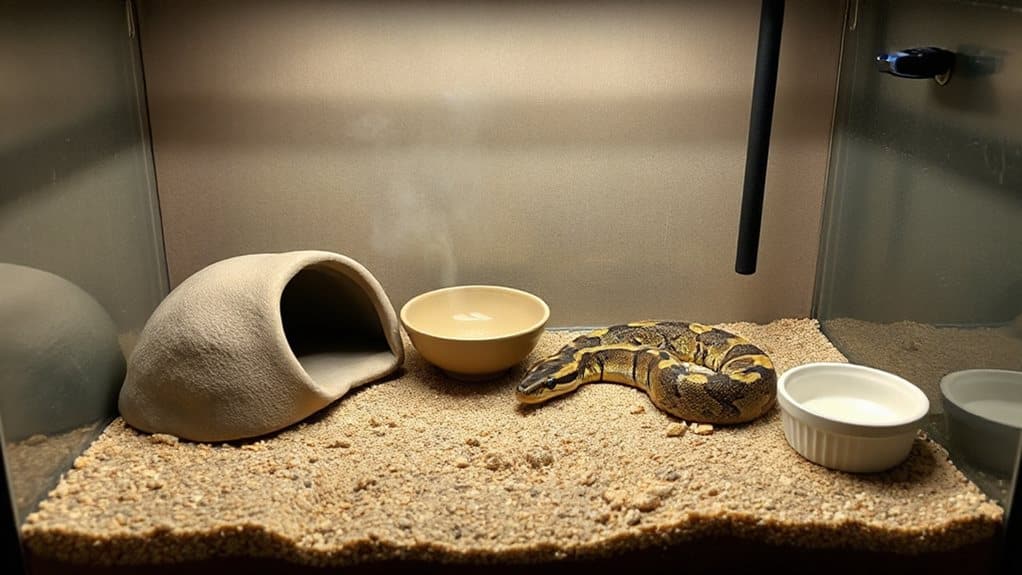
Ever wonder how to turn a simple 40‑gallon tank into a cozy campground for your ball python? Place a low, wide hide under the heat lamp for a warm burrow, and another on the cool side for night retreats.
Tuck a heavy ceramic bowl near the warm hide to increase humidity, but keep it away from the feeding zone.
Set a clear, open feeding spot opposite the hides, ensuring visual security and easy access while you serve your snake’s needs.
Remember to provide a constant source of fresh water to prevent dehydration and support normal behavior.
What Health Checks and Adjustments Keep Your Ball Python Thriving?
You’ll want to keep an eye on humidity levels, because when the air’s just right your snake’s skin will stay slick and its sheds will come off like a fresh‑cut banana, but too dry and you’ll see those dreaded stuck‑shed patches that make you feel like you’re on a desert camping trip without a water bottle;
do you check the shedding condition by gently feeling the old skin and watching for any rough spots, and if something looks off, bump up the misting or add a humidity hide to help the process?
When you offer a meal, watch how readily your ball python flicks its tongue and strikes—if it’s sluggish or refuses, it could be a sign of stress, illness, or a temperature issue, so adjust the basking spot or try a different prey size;
and finally, remember to record each health check in a log, because spotting patterns early is like having a trail map for a road‑trip journey, keeping you both on the right path and ready for the next exciting outing.
Humidity Monitoring
Usually the first thing you’ll notice when you’re checking the humidity in your ball‑python’s 40‑gallon tank is that the numbers can swing a lot, so you’ve got to keep a close eye on them to make sure your snake stays happy and healthy.
Use a digital hygrometer in the middle, add a second probe in the humid hide, log readings on a phone app, and tweak ventilation or a humidifier‑connected humidistat until it steadies at 50‑60 %.
Shedding Condition Checks
Most of the time you’ll spot the tell‑tale signs of a ball python’s shed before the snake even knows it’s about to happen—cloudy, milky eyes that look like a foggy lake, dull scales that ripple like a crumpled map, and a sudden obsession with the water dish or a favorite hide.
Check humidity, add a misted hide, keep substrate moist, and never yank a stuck piece—just enhance moisture and let nature do its camping‑trip magic.
Feeding Response Evaluation
Ever wonder why your ball python sometimes acts like a picky camper refusing to eat? Check strike time—under 12 seconds means comfort—keep humidity above 60 % and a 90‑95 °F bask spot, use long tongs for a “zombie dance,” and wait two weeks after regurgitation.
Weigh monthly, adjust feeding frequency, and note tail‑bump cues; these tweaks keep your snake thriving.
And Finally
Now you’ve got the perfect 40‑gallon setup, so your ball python can lounge like a king, roam a mini‑jungle, and stay just‑right on temperature and humidity—no more guessing games. Remember to check the heat gradient daily, swap out substrate when it gets soggy, and give your snake plenty of hides and fresh water. Keep an eye on shedding and appetite, and you’ll both enjoy countless chill sessions together, like a weekend camping trip with a scaly buddy!