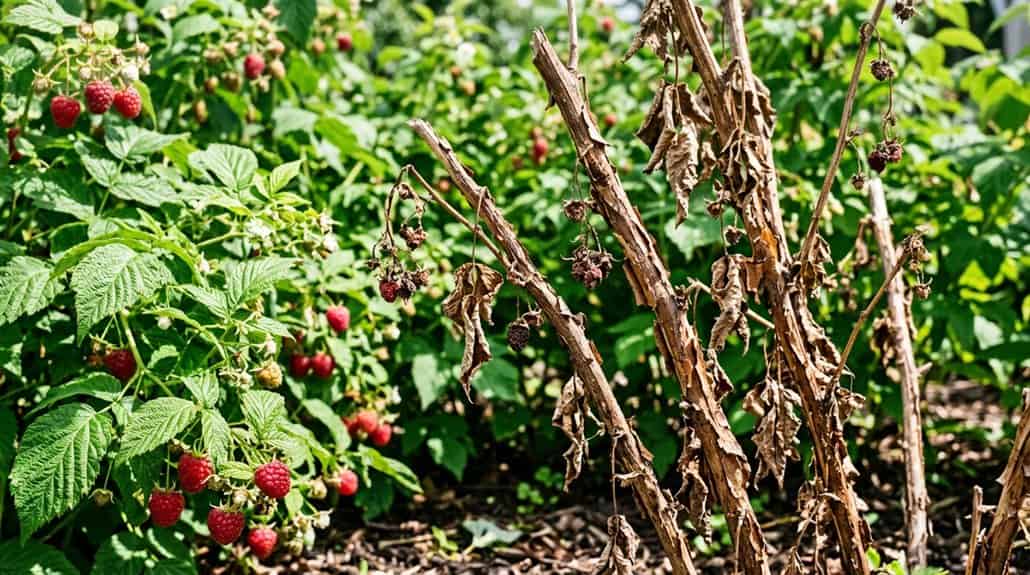
Why Raspberry Canes Turn Brown and Die (And How to Save Them)
When your raspberry canes turn brown and droopy, it’s usually not because they went camping without sunscreen—it’s often fungal diseases like cane blight, natural dieback after fruiting, heat waves, or even thirsty roots stressing out your plants! Don’t just watch; grab sharp pruners, snip away dead or sickly canes, and give your patch good air and smart watering. Trust me, I’ve saved a few brambly friends this way, and if you stick with me, you’ll conquer cane chaos, too.
TLDR
- Raspberry canes turn brown and die due to diseases like cane blight, fungal infections, or natural post-fruiting dieback.
- Environmental stresses such as drought, heat, or waterlogged soil can cause sudden browning and cane decline.
- Symptoms include reddish streaks, sunken spots, wilting, or canes that snap easily, requiring regular monitoring.
- Remove and dispose of diseased or dead canes promptly using clean tools to reduce disease spread.
- Improve plant spacing, airflow, and watering practices, and consider early fungicide use to prevent and manage cane diseases.
How to Identify Diseased or Dying Raspberry Canes
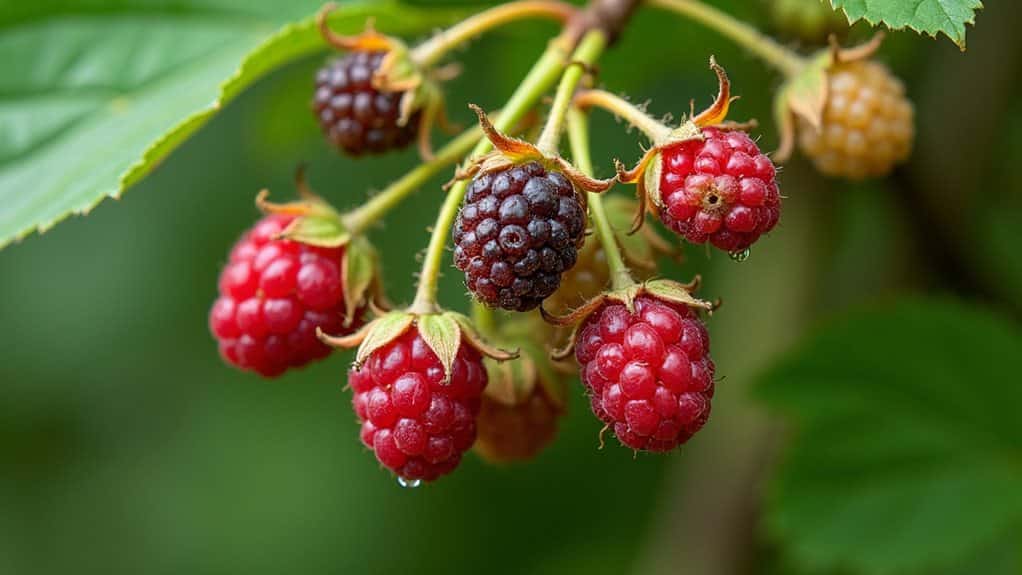
Even if you think your raspberry patch is as healthy as a group of campers around a campfire, it’s super important to know how to spot trouble before it ruins your berry-picking excursions!
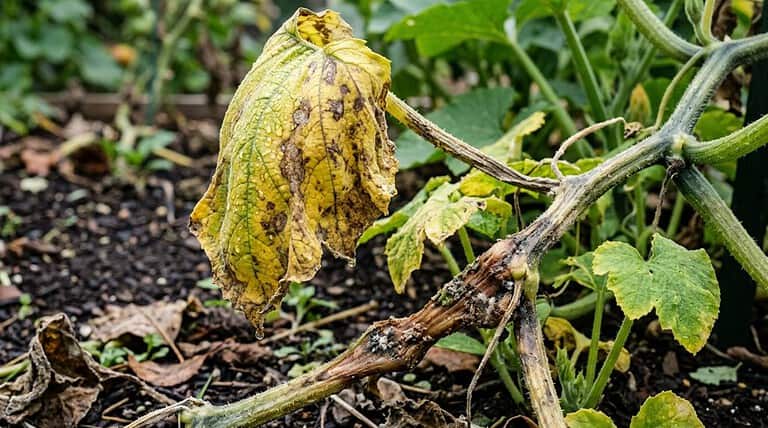
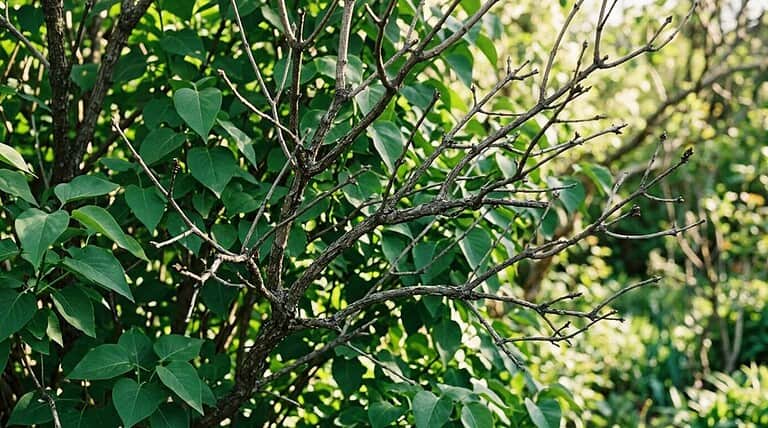
Look for diseased raspberry canes with reddish-brown streaks, purple margins, or sunken spots. If you spot cane blight, fungal diseases, cane dieback, or an infected cane that snaps easily—don’t wait, help your patch thrive!
Monitoring plant health regularly can help catch issues early and prevent the spread of disease.
Why Are My Raspberry Canes Turning Brown?
When you spot your raspberry canes turning brown, it’s easy to panic and wonder if your whole berry patch is about to stage a dramatic exit, but don’t toss your gardening gloves just yet! Sometimes, canes die back naturally after fruiting.
But cane diseases like blight or fire blight can infect your raspberry plants too. Watch for canes that look burnt, spotted, or unusually wilted—those are signs of trouble!
Healthy canes require proper water management to prevent stress and disease, so ensuring consistent moisture levels is crucial for their vitality.
Environmental Stresses That Harm Raspberry Canes
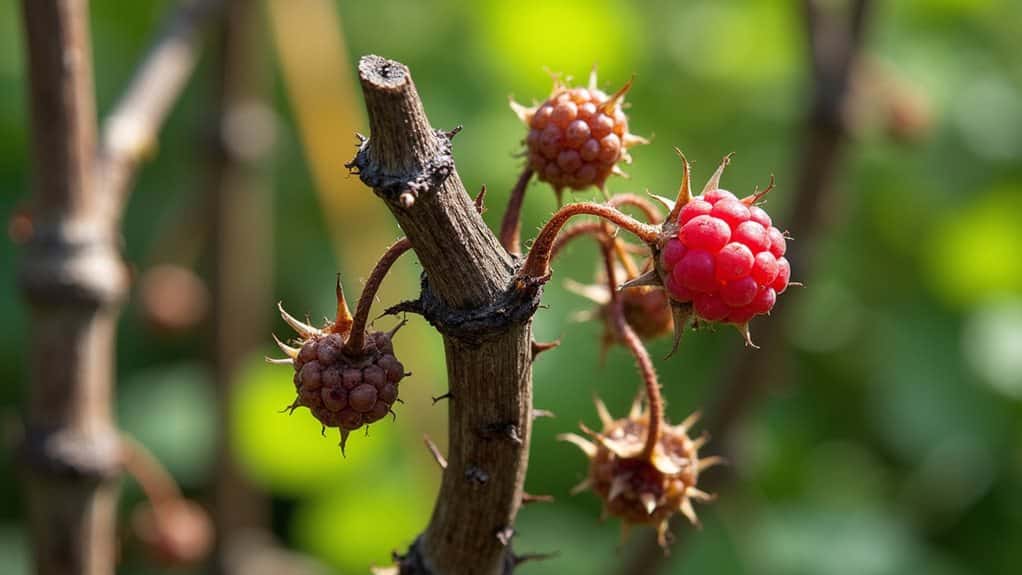
Of course, nasty diseases can knock your raspberries out, but the weather can be just as sneaky! Environmental stresses like drought and heat stress can turn those canes brown faster than you’d roast a marshmallow on a camping trip.
Sudden temperature swings, physical damage from critters, or soggy soil after heavy rain can totally stress your plants, leaving you wishing nature came with a “reset” button!
How to Prune and Save Raspberry Canes
If you’ve ever felt like your raspberry patch is turning into a scene from a plant horror movie, don’t panic—pruning is your secret weapon, and it’s way easier than packing for a camping trip!
Grab your clean, sharp tools and snip away those dead or diseased canes. Always clear out old plant material, and leave enough healthy primocanes so your berries flourish—think of it as prepping the patch for next season’s feast!
Remember to maintain proper plant spacing to promote good airflow and reduce disease risk, ensuring your raspberry canes stay healthy and productive.
How to Prevent Raspberry Cane Diseases
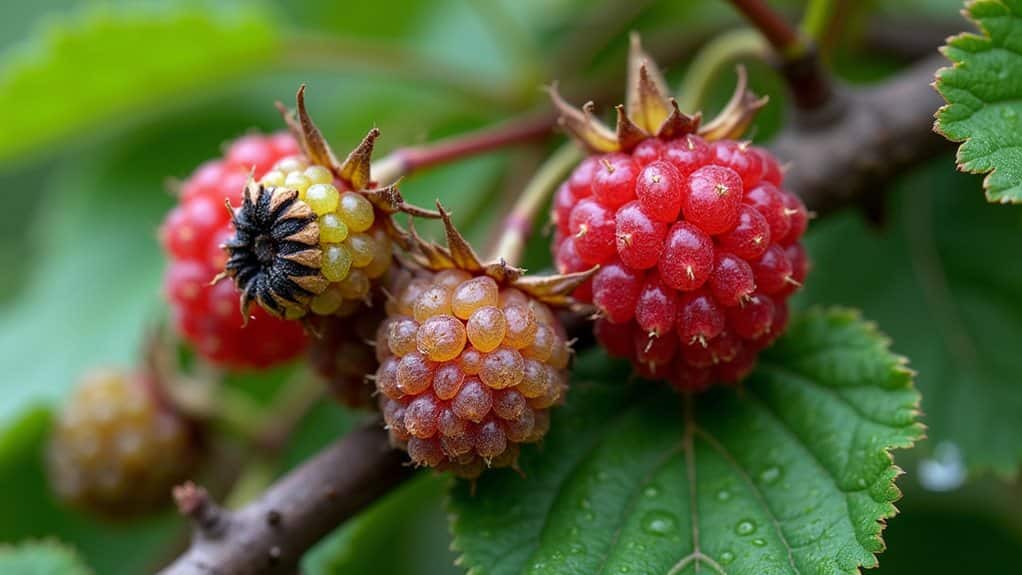
Imagine this: you’ve just finished pruning your raspberry patch, and everything’s looking as neat as a campsite after a rainstorm—now’s the perfect time to talk about keeping those canes healthy all season long! To dodge cane diseases like spur blight, space your plants for airflow, prune regularly, use smart watering practices, and zap fungal infections early with fungicides. Proper ventilation helps prevent excess humidity that fosters mold and disease. Trust me, healthy canes mean sweeter berries!
When to Remove and Replace Old Raspberry Canes
Once you spot those raspberry canes turning brown and looking as sad as a soggy sleeping bag, it’s your signal to jump into action! Prune and remove those old canes in late winter or early spring, because leaving them invites disease and pesky critters. Always replace them with strong primocanes—think of it like revitalizing your camping crew with new, healthy recruits for next season’s fruity escapade! Additionally, removing damaged or diseased canes reduces hydraulic resistance to water flow, helping your new canes establish better growth.
Overall
So, if your raspberry canes are acting like grumpy campers and turning brown, don’t panic! You’ve got the skills to spot diseases, prune like a pro, and even prevent problems before they start. Remember, plants need some TLC, just like you need snacks on a road trip. Get outside, check your raspberries, and show them some love—you’ll be surprised how quickly they’ll bounce back. Trust me, a healthy berry patch is way more fun than soggy marshmallows!