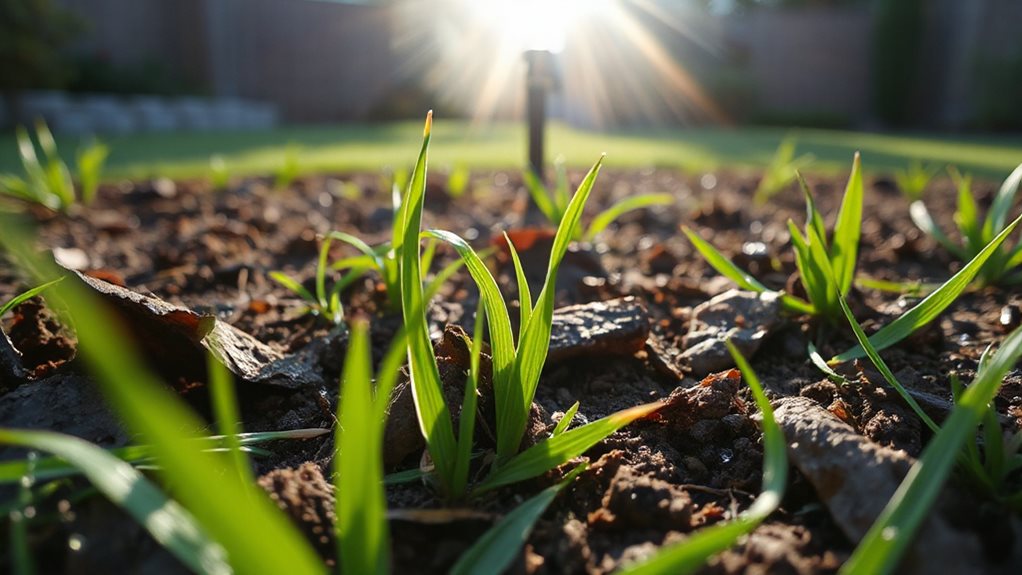
How to Revive a Lawn After a Drought
First, check your lawn’s stand density by counting live plants in a 5×5‑foot square; if it’s under 40 % you’ll need extra help. Give the soil a deep soak of about half‑to‑three‑quarters of an inch early each morning, using a low‑rate sprinkler so water reaches the roots, and repeat twice a week to train them. Raise your mower to three‑plus inches and never cut more than a third of the blade, then spread a thin compost layer to boost microbes. Choose drought‑tolerant grasses like tall fescue or buffalograss, overseed thin spots, and keep an eye out for wilting, bluish‑gray foliage, or footprints—those are early stress flags that demand quick deep watering. If you follow these steps, you’ll see thicker, greener turf, and the next tip will show you how to keep it thriving all season.
TLDR
- Deep‑soak the lawn early each morning, applying ½–¾ inch of water with low‑rate sprinklers or drip irrigation.
- Assess stand density using 5 × 5‑ft squares; overseed thin areas with tall fescue‑perennial ryegrass blends.
- Apply low‑nitrogen, root‑boost fertilizer after the last frost, water it in, and repeat every eight weeks.
- Maintain a mowing height of at least three inches, removing no more than one‑third of blade length per cut.
- Aerate annually and top‑dress with thin compost to improve soil moisture, microbial activity, and root depth.
Assess Drought Damage Before Reviving Your Drought‑Tolerant Lawn
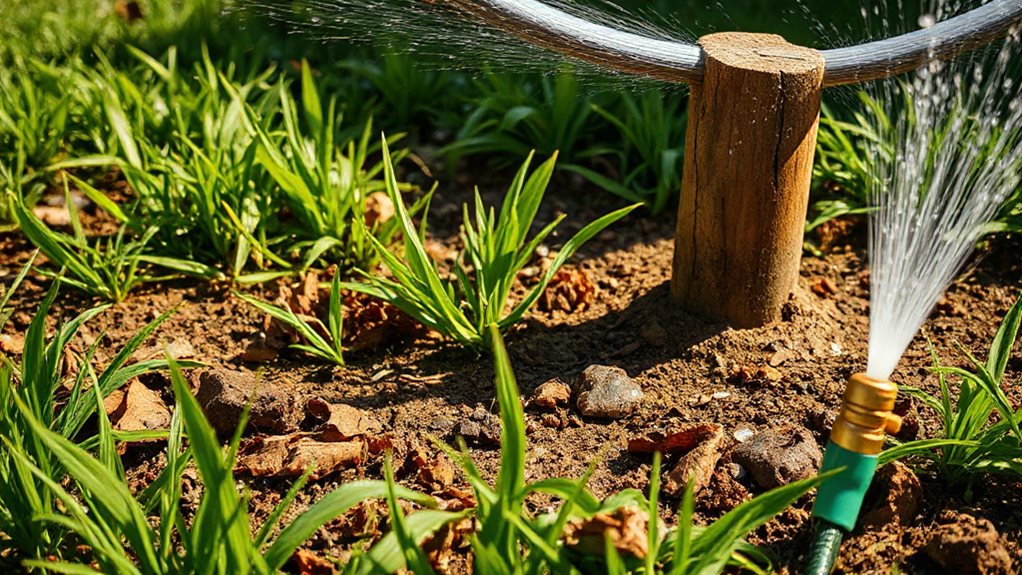
Ever wondered why your lawn looks like a sad, wilted campsite after a dry spell? You’ll spot wilting blades, blue‑purple patches, and crunchy grass that snaps, plus cracked soil that resists a screwdriver.
Count live plants in 5×5 squares, probe moisture, and note footprints or weed spikes; those clues tell you if your turf’s under 40%, 40‑70%, or thriving above 70% density. Each subunit measures 6 × 8 inches, allowing precise stand frequency assessment. Recent selective enforcement issues in some HOAs show the value of documenting conditions consistently when disputes arise.
Why Deep, Infrequent Watering Beats Light Sprinkles
Why does a single, deep soak feel like a mini‑adventure for your lawn, while a drizzle of light sprinkles seems more like a cautious hike? You’ll notice roots digging two inches deeper, chasing moisture like hikers seeking a hidden spring, which builds drought resilience.
Early‑morning deep watering cuts evaporation, saves water, and lets the grass recover faster—think of it as a quick, rewarding campfire after a long trek. Native shrubs like Pussy Willow and Abelia can bolster yard biodiversity and provide nearby resources for beneficial insects native shrubs.
Deep‑Water Your Drought‑Tolerant Lawn After Drought

So, when your lawn’s been surviving a drought and you finally get the chance to give it a proper “drink‑up,” you’ll want to treat it like a backpacking trip where the campsite is the soil and the water is your fuel. Water early, aim for half‑to‑three‑quarters inch per deep soak, use low‑rate sprinklers, check soil by pushing a spade, and repeat twice weekly—this trains roots, avoids evaporation, and keeps your lawn thriving for everyone. Be careful to monitor for thin growth afterward, since shallow roots and sparse blades signal the need for continued deep, infrequent watering.
Adjust Mowing Height to Encourage Deeper Roots
After you’ve given your lawn a good soak—think of it as refilling the water tank before a long hike—you’ll want to keep those roots happy by letting the grass stay a little taller. Aim for three‑plus inches, trimming no more than a third of each blade.
Taller cuts enhance leaf area, deepening roots that tap hidden moisture, so your lawn bounces back faster and needs less water.
Also consider annual aeration to improve soil air, water, and nutrient movement in the root zone.
Choose Drought‑Tolerant Grass for Your Lawn
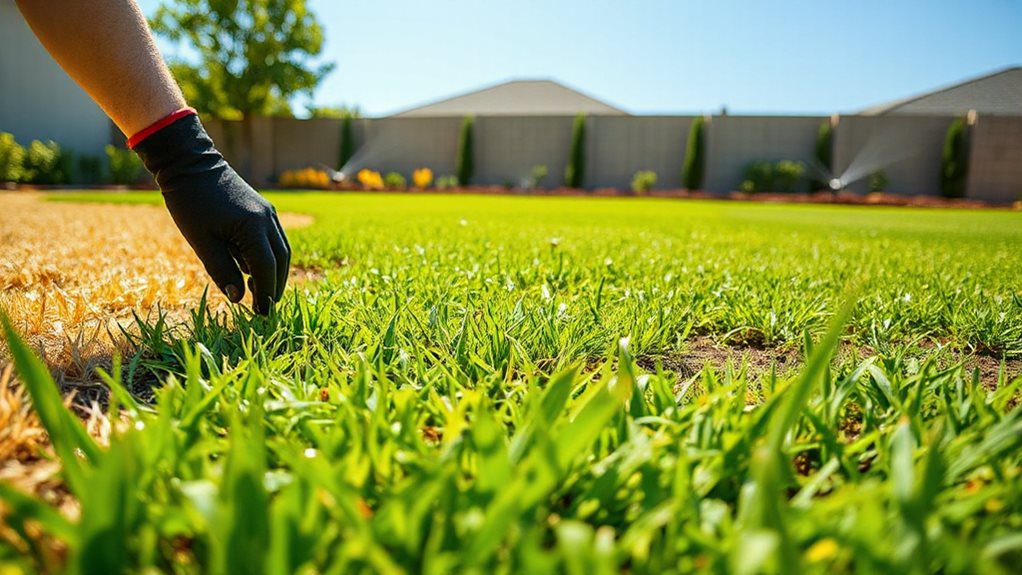
You’ll love how Tall Fescue’s deep roots keep the lawn green even when the rain takes a vacation, and you’ll be amazed at how little water Buffalograss needs once it’s settled, almost like a cactus that decided to grow a carpet.
Have you ever imagined a lawn that drinks just a sip and still looks like a summer adventure?
Try planting one of these drought‑tolerant heroes and watch your yard thrive while you brag about your low‑maintenance, water‑wise masterpiece.
Tall Fescue Benefits
Ever why why tall fescue feels like the superhero of lawns when the sun’s beating down? Its deep roots dig past 0.6 m, sipping water others other grasses even in scorching 30°C heat, so you keep a green carpet for kids and neighbors. You’ll love its 5°C early growth, late‑fall vigor, and 85% cover from cultivars like SR 8300—perfect for serving a thriving community yard.
Buffalograss Water Efficiency
Ever wondered why Buffalograss feels like the ultimate sidekick for a drought‑prone yard? You’ll love its deep roots that sip water slowly, cutting use by 50‑60% compared to Kentucky bluegrass, so you save gallons and dollars—think $42k‑$55k a year.
It thrives on 4‑6 hours sun, tolerates extreme temps, and still looks green, letting you serve neighbors with a low‑maintenance, water‑wise lawn.
Time Fertilizer Applications to Support Strong Roots
Now that the drought’s finally easing, you’ll want to hit the lawn with a low‑nitrogen, root‑boost formula right after the soil’s moisture rebounds, because those nutrients give the hidden roots the energy they need to grow deep and strong.
Have you ever tried timing a fertilizing session like you’d plan a camping trip—checking the weather, picking a cool morning, and making sure the ground’s damp but not soggy?
Grab a spreader, water it in thoroughly, and watch those seedlings bounce back faster than a campfire after a fresh stack of kindling.
Apply amendments and organic matter annually to improve soil structure and support deeper root growth with compost and organic matter.
Timing Post‑Drought Fertilizer
So, when the drought finally loosens its grip and the first green shoots start to peek through, you’ve got to time your fertilizer just right to give those roots a serious uplift. Apply after the last frost, when daytime temps hit the 60s and soil warms to mid‑50s, but wait two dry days before watering, then soak early morning for deep absorption, and repeat every eight weeks for lasting strength.
Low‑Nitrogen, Root‑Boost Formula
Kick‑start your lawn’s recovery by swapping the usual high‑nitrogen feed for a low‑nitrogen, root‑boost formula that works like a secret weapon for underground growth.
Use 15‑0‑7 or 5‑3‑0 to feed microbes, kelp cytokinins, and mycorrhizae; spray with a hose‑end sprayer every 4‑6 weeks, then water deeply for 20 minutes.
Your grass will grin, roots will thrive, and you’ll feel like a campsite‑ready hero.
Apply Organic Top‑Dressing for a Drought‑Tolerant Lawn

Ever wondered why a thin layer of compost can feel like a spa day for your lawn? You spread a few inches, then watch soil loosen, water soak deeper, and microbes throw a party—your grass drinks more, roots grow stronger, and thatch disappears like a bad campsite mess. It balances pH, feeds nutrients slowly, and cuts fertilizer bills, turning your yard into a resilient, green oasis.
Identify Early Drought‑Stress Signs and Treat Them Quickly?
You’ll notice the grass wilting and curling like a tired camper’s tent when the soil’s dry, so check the blades for that bluish‑gray hue and see if footprints linger for hours—those are the early warning flags. Have you tried sticking a screwdriver into the ground? If it resists past the surface, the moisture level’s low, and a quick deep‑watering session in the morning will revive those limp blades faster than a campfire revives a cold night. Don’t wait for brown patches to appear; act now, give the lawn a good soak, and you’ll keep it green and lively, just like a well‑planned trek.
Early Wilting Indicators
Ever wondered why your lawn looks like a faded camping postcard before the drought even hits its peak? You’ll spot blades curling inward, like tiny tents folding to keep cool, then browning tips that scream “I’m thirsty!”
Walk across it—footprints linger, bluish‑gray shadows stay.
Spotting these early wilting signs lets you water fast, saving the whole yard for future camp‑fire picnics.
Soil Moisture Monitoring
So can you visualize the lawn as a campsite where every blade is a tiny tent waiting for the next rainstorm? You grab an inexpensive moisture meter, stick it 5‑10 cm deep in several spots, and read real‑time data, noting stress signs twice daily. Irrigate when readings hit 30‑50 % depletion, record rainfall, and let smart sensors skip wasteful watering, keeping the “tents” happy.
Stop Weeds From Invading Your Drought‑Tolerant Lawn
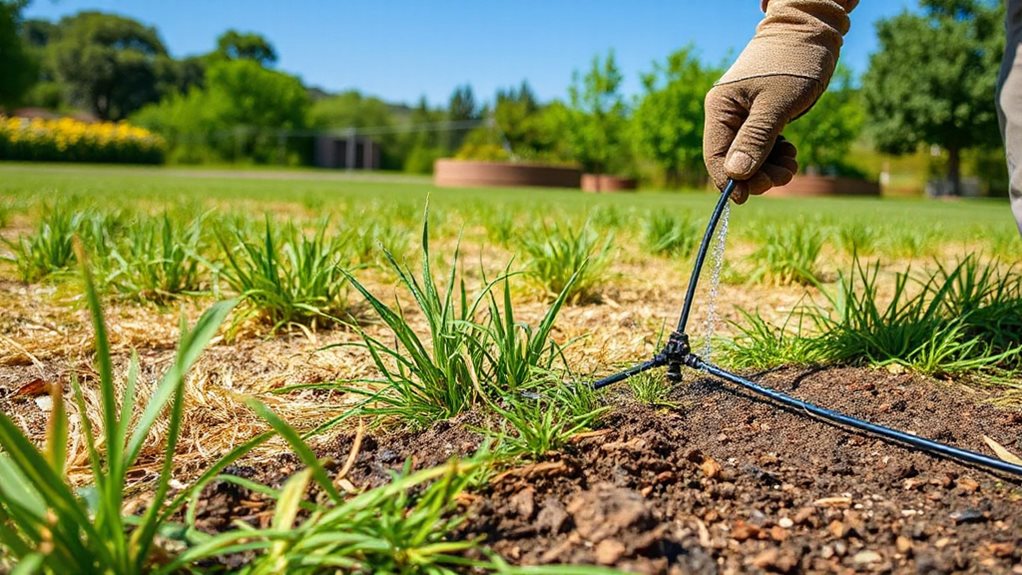
Ever wonder why your drought‑tolerant lawn suddenly looks like a wild garden? You can beat weeds by mowing higher, removing no more than a third of the blade, and mowing often so grass shades the soil; overseed thin spots with tall fescue‑perennial ryegrass blends, cover seeds with straw, and hand‑pull moist weeds after rain.
Use drip irrigation, apply organic mulch, and fertilize slowly to keep weeds at bay.
Follow a Post‑Recovery Maintenance Checklist for Drought Resilience
When the rain finally returns, you’ll want to keep that fresh‑out‑of‑the‑dry‑spell feeling alive, so grab your checklist and treat your lawn like a campsite you’re setting up for the season—think of each step as pitching a tent, lighting a fire, and making sure the gear’s ready for the next excursion. Water deeply each morning, aerate before fertilizing, leave clippings, mow high, and overseed drought‑tolerant species, all while smiling at your thriving, resilient lawn.
Overall
Now you’ve got the tools to bring your lawn back from a drought‑induced slump, so why not treat it like a weekend camping trip—pack the right gear, set up a solid base, and enjoy the scenery? Remember to water deep, mow high, and keep the weeds at bay, then watch those roots grow stronger than a campfire story. Got a question? Just plunge in, and your yard will thank you with lush, resilient grass faster than you can say “s’mores”!