Lavender Not Blooming? Here’s What You’re Doing Wrong
If your lavender’s just sitting there looking leafy and basically giving you the silent treatment instead of popping with flowers, you’re probably missing a key camping tip for plants—lavender loves tons of sun, well-drained “desert campsite” soil, and hates soggy feet or shade from trees and fences. Don’t drown it with too much water or load it up with fertilizer, and double-check you’ve got the right type for your climate. Wondering exactly which easy fixes make the biggest difference? Stick around!
TLDR
- Insufficient sunlight restricts blooming; ensure your lavender gets at least 6-8 hours of direct sun daily.
- Overwatering or poor drainage leads to root rot and prevents flowers; let soil dry between waterings and improve drainage if needed.
- Using too much fertilizer, especially nitrogen, encourages leafy growth instead of blooms; avoid overfeeding lavender.
- Planting the wrong lavender variety for your region hinders flowering; choose a type suited to your climate zone.
- Young plants or late frosts can delay blooms; be patient and protect plants from unexpected cold snaps.
Is It the Right Season for Lavender to Bloom?
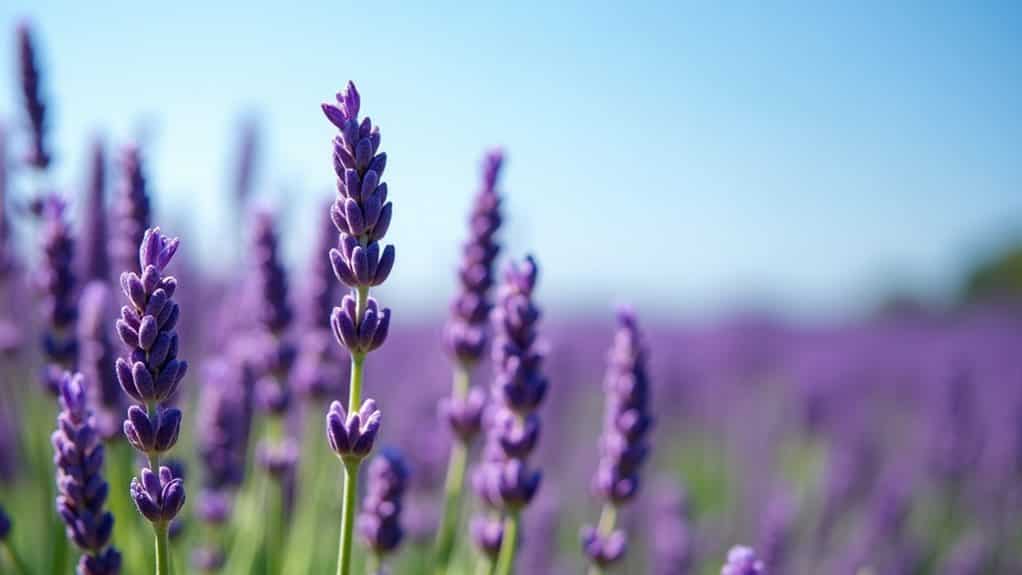
So, when exactly should you expect those gorgeous lavender blooms to pop? If you’re planning your garden for the joy of guests or campers, proper timing is key! Lavender’s seasonal bloom usually runs from June to August, though English lavender shows off a bit earlier. Watch out for late frosts or cold snaps—they can sneakily delay your lavender’s big show, making you wait just a bit longer! Ensuring your lavender is planted in the right soil conditions and pH levels can also promote timely blooming, so consider testing your soil’s pH range to optimize growth.
Will Young Lavender Bloom Yet?
Ever wonder why your young lavender plants aren’t bursting into bloom just yet, especially when you’re dreaming of snapping those perfect garden photos or impressing your camping buddies with a sea of purple? Honestly, young lavender needs patience—they rarely bloom until their second or third year! Proper watering, avoiding soggy soil, and selecting the right plant variety can make a big difference in encouraging blooms. Prune after flowering, pick the right variety for your climate, and avoid soggy soil. Trust me, your blooming moment will come—just give it time!
Is Your Lavender Getting Enough Sun?
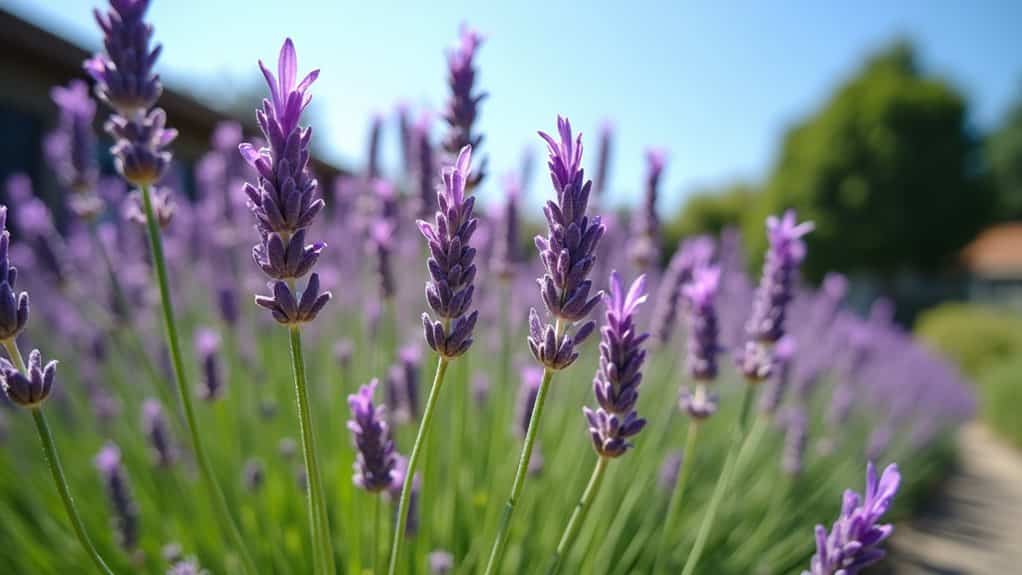
Have you ever noticed how much happier your lavender looks when it’s out sunbathing, soaking up at least 6 to 8 hours of sunlight each day—almost like it’s on its own little camping trip?
If your plant’s stuck behind a tree, fence, or even your neighbor’s monster-sized garden gnome, it’s probably missing out on the light it needs to bloom those gorgeous, fragrant flowers.
Check out where your lavender hangs out, and don’t be afraid to move it or trim back any leafy “sun blockers”—your plant will thank you with way more color and scent!
Ensuring your lavender gets enough sun is also important because incorrect planting conditions can lead to poor growth and fewer blooms.
Minimum Sunlight Requirements
Although lavender plants are pretty tough and can handle some rough conditions, when it comes to sunlight, they’re total sun-lovers and act a bit like campers racing to snag the sunniest spot for their tent.
If your lavender isn’t getting at least 6 to 8 hours of direct sunlight, it’s basically sulking in the shade—no wonder it won’t bloom! Make sure you’re giving it enough light every single day.
Positioning for Optimal Exposure
So, where you set up your lavender really makes all the difference—think of it like picking the absolute best campsite with a front-row seat to the sunrise!
If your lavender’s stuck in the shade, behind shrubs or trees, it’ll sulk and barely bloom. Give it sunlight galore—at least 6 to 8 hours daily.
Move pots or trim branches, and watch those blooms pop!
Is Your Lavender Getting Too Much Water?
If you’ve ever worried your lavender might be getting too much water, you’re definitely not alone—I’ve made that mistake more times than I care to admit!
Lavender’s basically the camper who hates soggy tents; it thrives on dry spells. Overwatering, especially if you’ve got poor soil, can cause root rot and zero blooms.
Does Your Soil Drain Well Enough for Lavender?
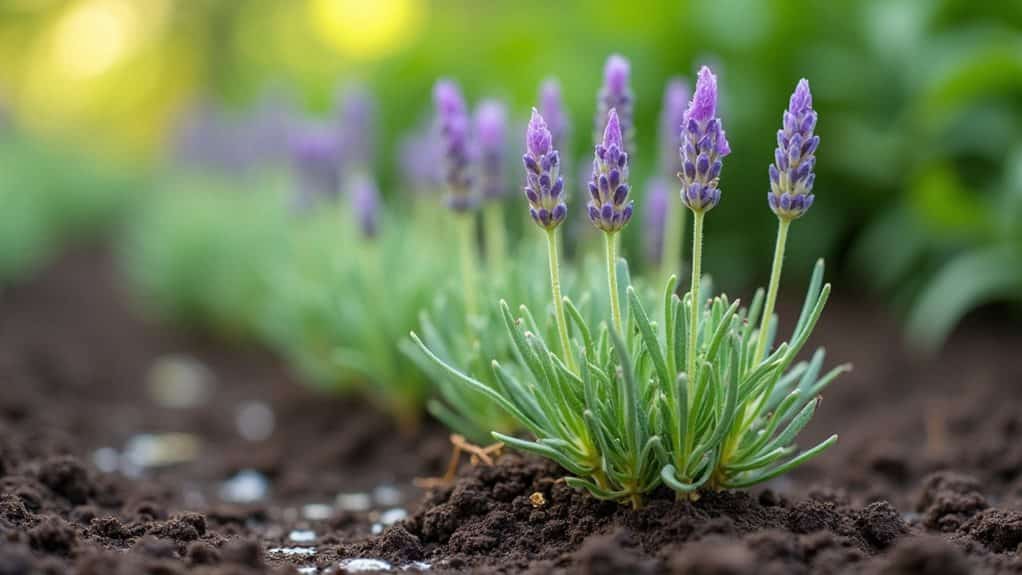
Whenever I think about planting lavender, I always envision it as a little adventurer that just hates wet feet—kind of like someone who goes camping and refuses to step in puddles!
If your native soil is heavy and soggy, lavender’s roots will struggle. Give them good drainage by mixing in sand or gravel, or try mounding or raised beds.
Your lavender will thank you with blooms!
Are You Over-Fertilizing Your Lavender?
Even though it might seem like giving your lavender a little extra plant food is just being a good “plant parent,” you might actually be doing the botanical version of overpacking for a camping trip—lugging around way more gear than you need, and ending up with a bunch of stuff you’ll never use! Over-fertilizing, especially with nitrogen, makes your lavender focus on leafy growth instead of those charming blooms you’re hoping to share.
To keep your lavender blooming beautifully, ensure you’re not overdoing the fertilizers and maintain proper soil conditions, including appropriate soil pH, which is crucial for healthy flowering.
Pruning Lavender for More Blooms
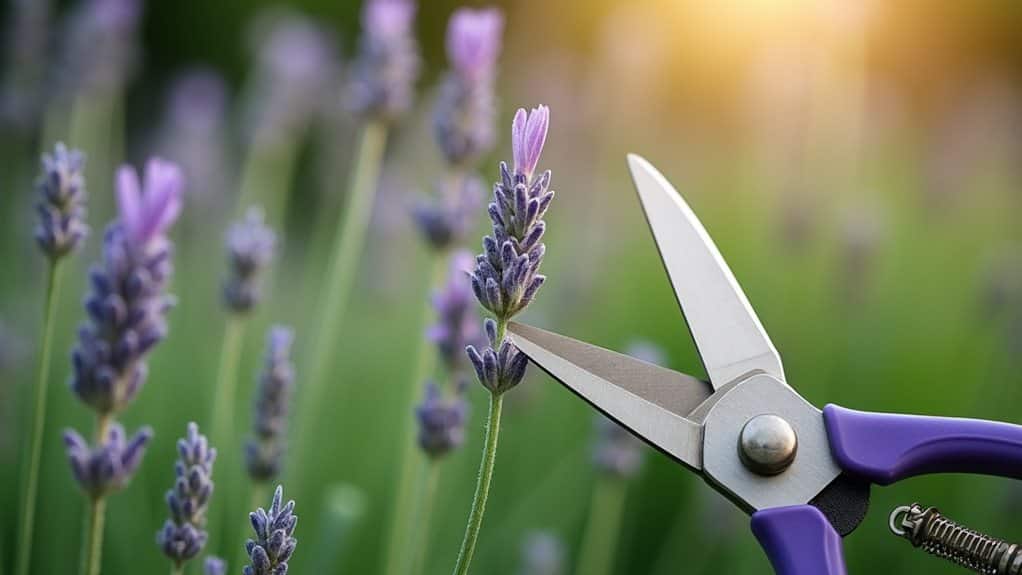
So, you’ve resisted the urge to shower your lavender with extra fertilizer—awesome choice!
Now, if you want to see your lavender flowering like crazy, it’s time to prune lavender right after it blooms.
Snip off about a third, focusing on old stems but never cutting into the tough woody parts.
Pruning keeps your plant bushy and full, just like a well-packed camping backpack—ready for exploration!
Is Your Lavender the Right Type for Your Region?
Before you start planning a lavender-filled camping trip in your backyard, let’s make sure your plant is actually the right kind for your area—trust me, I once tried to grow a Spanish lavender in chilly Michigan, and it looked about as happy as a popsicle in the desert!
Climate compatibility is everything, so check which varieties are recommended for your region, and don’t be shy about asking your local nursery for advice, because they know what thrives where you live better than any travel blogger knows the best hiking trails.
When you pick a lavender that’s bred for your climate and source it locally, you’re giving yourself—and your plant—the best shot at a summer full of blooms instead of a season of disappointment.
Climate Compatibility Matters Most
If you’ve ever tried growing lavender and felt like you were waiting for a magic show that just never happened—no purple blooms, just green leaves and disappointment—then it might be time to play detective and ask yourself if your lavender is actually the right type for your area.
Climate compatibility is key; after all, lavender’s native to the Mediterranean, so it needs just the right mix of sun, warmth, and dryness!
Regional Variety Recommendations
You’ve probably heard that lavender loves Mediterranean weather, but did you know there are actually different types of lavender, each with their own favorite kind of “vacation spot”? Picking the right lavender variety for your region selection is like choosing the best campsite—English lavender loves cooler zones, while Spanish lavender prefers sunbaked southern areas.
Don’t force a chilly camper into a tropical tent—match your variety to your climate!
Sourcing Locally Grown Plants
Although grabbing the prettiest lavender plant at a big-box store might feel like spotting a five-star campsite on a road trip, it actually pays off to look a little closer to home.
Locally grown lavender varieties are like expert trail guides—they know your region’s “terrain.” Check your USDA zone, ask local nurseries for advice, and pick plants that won’t freak out when summer heat or winter chills hit!
Overall
So, if your lavender’s just sitting there, looking all leafy and not blooming, don’t panic—it’s probably just missing a bit of sun, or maybe you’ve been too generous with the watering can (hey, we’ve all been there). Check your soil, trim those stems, and make sure your plant’s the right type for your area. Trust me, with a little patience and the right care, you’ll have gorgeous, fragrant blooms—perfect for summer picnics or just chilling in your backyard!