
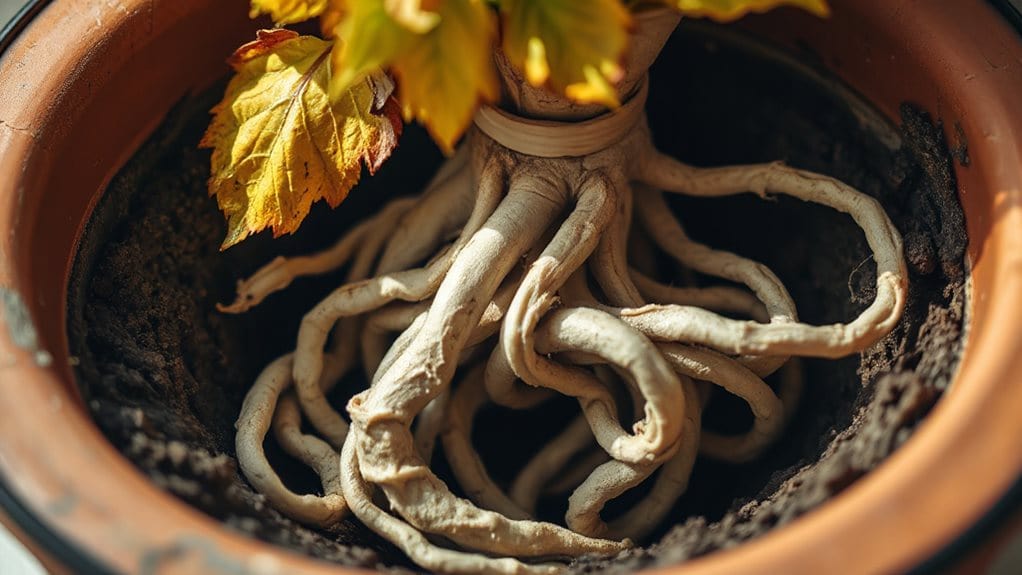
Root Bound Plant Symptoms You Shouldn’t Ignore
Is your plant drooping right after watering? That’s a red flag! If growth has slowed, leaves are yellowing from the bottom, or new ones look like tiny shriveled French fries, your green friend’s roots might be trapped in a tangled jungle. Watch for roots sneaking out the drainage holes or a pot that’s bulging like it’s holding back a breakout. When the soil dries fast and your plant feels sad and thin, it’s screaming for space—trust me, I’ve been there. You’ll love what happens next.
TLDR
- Roots emerging from drainage holes signal severe root binding and immediate need for repotting.
- Rapid wilting despite regular watering indicates roots can’t absorb moisture due to overcrowding.
- Stunted, small, or shriveled new leaves are early signs of root-bound stress and nutrient deficiency.
- Soil dries quickly and water runs straight through, showing reduced moisture retention from root compaction.
- Pot bulging or cracking occurs when roots exert outward pressure, confirming advanced root crowding.
Rapid Wilting Despite Regular Watering
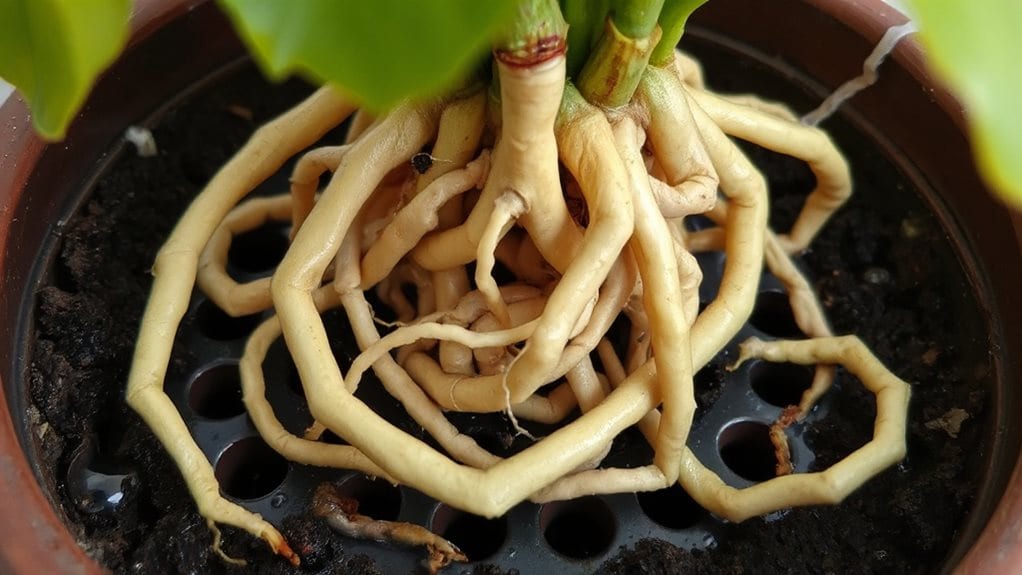
Even though you’re watering your plant like clockwork—maybe even more than your camping buddy remembers to refill the water jug on a road trip—you might still catch it drooping dramatically, like it’s auditioning for a sad plant reality show.
That’s because tightly packed roots can’t absorb water properly, no matter how much you give. Root health can decline when a plant becomes root bound, reducing water uptake and causing rapid wilting. Sound familiar? It’s not neglect—it’s a cry for more space.
Inadequate root function is the core reason your plant wilts despite regular watering.
Time to check the roots!
Sudden Drop in Growth Rate
While your plant might’ve once shot up like a tent pole on a breezy campsite, now it’s barely growing an inch—and that’s a red flag worth investigating.
You’re watering, feeding, and giving it sunshine, yet it’s stuck? No new branches, no height gain, even in summer? Sounds like it’s throwing a root tantrum.
Time to peek below—chances are, it’s root bound and begging for a bigger home. Choose a pot only one size larger than the current container to avoid excess moisture retention and promote healthy root spread, especially prioritizing horizontal space for the roots.
Yellowing Leaves Starting From the Bottom
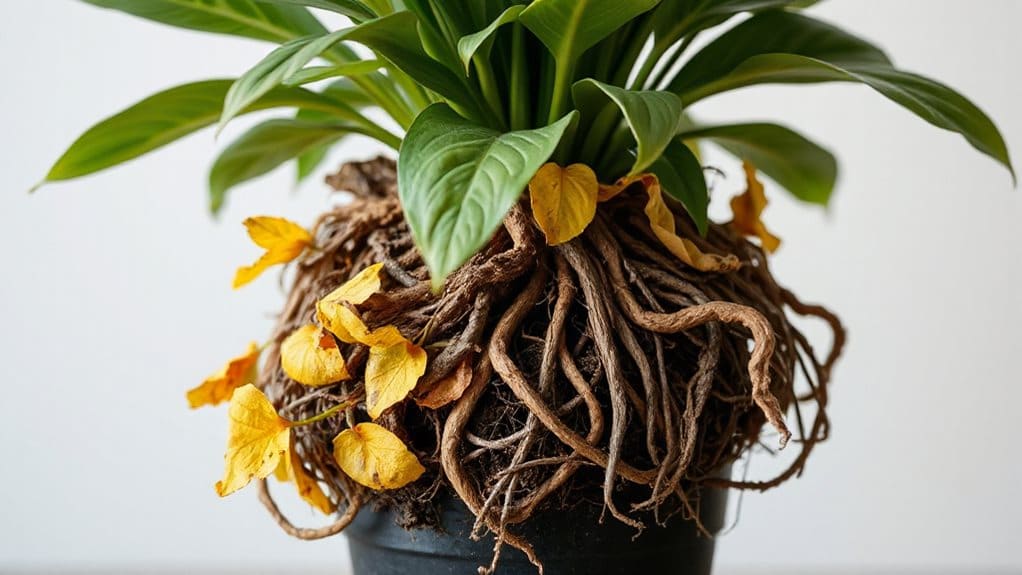
Sometimes, out of nowhere, you’ll notice your plant’s lower leaves turning yellow like fallen autumn leaves on a campsite trail—confusing, right? That’s your plant whispering, “Help, I’m rootbound!” Roots are packed tight, struggling to drink and eat, so older leaves yellow first while new growth starves.
You’ve seen it—rapidly drying soil, sad bottom leaves, stunted tops. Repot soon, and watch it bounce back happier than a tent in a breeze! Plants with compacted roots often show poor drainage that worsens yellowing and stress.
Roots Emerging From Drainage Holes
You’re out there tending to your leafy buddy, maybe after a long day of hiking or setting up camp under a sky full of stars, when—bam!—you flip the pot to check the drainage and spot roots poking out like curious little squirrels peeking through a forest log.
Cool, right? It means your plant’s thriving, stretching out like it’s ready for a bigger excursion—kind of like upgrading from a cozy tent to a spacious cabin.
Those roots are searching, exploring, doing their thing. But if they’re jamming the holes or tangling up, it’s time to repot—gently, like you’re helping a friend pack for a road trip.
Give it more room, fresh soil, and watch it grow even stronger.
Soil That Dries Out Too Quickly
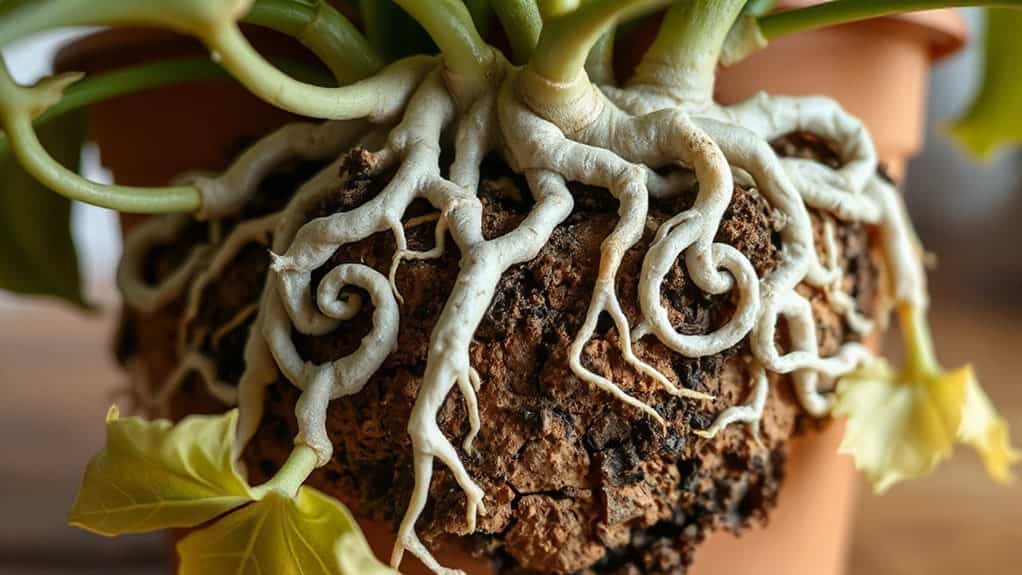
You water your plant and *poof*—the soil’s dry again by lunchtime, like it’s sucking up moisture faster than you can chug a lemonade after a hot hike.
When roots get all packed in there like campers crammed in a tent, they leave no room for soil to hold water, so everything dries out twice as fast.
Time to check if your plant’s rootbound—because no plant should need watering more than your backpacking buddy needs bug spray in the woods!
If the soil is compacted and draining poorly, consider refreshing it by removing old roots and adding compost or worm castings to restore moisture retention and nutrients.
Rapid Soil Drying
Ever poured water into your plant’s pot only to see it shoot straight out the bottom like it’s racing to finish a sprint? Yep, that’s rapid soil drying—roots have taken over, leaving no room to hold moisture. The soil gets hydrophobic, water runs off, and your poor plant’s parched.
Soak the pot, check for root tangles, and consider repotting—your green buddy will thank you!
Poor Water Retention
That runaway watering disaster you just saw—where every drop bolts for the drain like it’s late for a concert—isn’t just annoying, it’s a major red flag that your plant’s stuck in a moisture meltdown.
You’re not imagining things—your pot feels light, soil dries fast, and roots are hogging all the space, leaving no room for water to chill.
Sound familiar? Time to repot, friend!
Root Crowding Effects
While it might seem like your plant’s just thirsty all the time—like it’s been hiking under the hot sun without a water bottle in sight—there’s probably a bigger issue brewing beneath the surface: root crowding.
You water thoroughly, but the soil dries in days, right? That’s because packed roots hog all the space, leaving little room for moisture. Roots circle tightly, water zips through gaps, and your plant suffers—even after a soak.
It’s like trying to drink from a firehose while camping: messy, inefficient, and not satisfying!
Container Showing Signs of Distortion
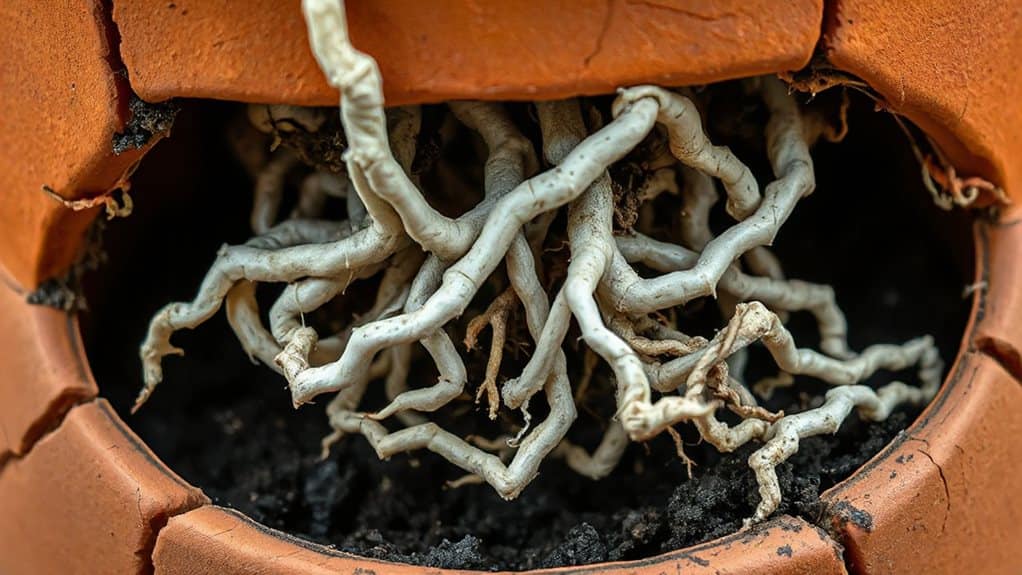
Whoa, ever pick up your plant and notice its pot’s looking like it’s trying to bust out like a sci-fi monster?
Cracks along the sides, bulging plastic, or roots sneaking out the bottom like they’re escaping jail—yeah, your plant’s screaming for more room, and it’s kind of hilarious (and sad) how dramatic it gets.
Time to give it a new home before it turns your cute pot into a modern art sculpture!
You can also repurpose an old basin as a spacious planter with proper drainage holes and soil mix to prevent future root-bound problems.
Cracked or Bulging Sides
Envision this: you’re watering your favorite houseplant, and *crack*—you hear a tiny snap coming from the pot like it’s trying to tell you something (spoiler: it is). Those bulging sides or hairline cracks? Your plant’s roots are throwing a full-blown breakout party, pushing outward like they’re escaping a tiny jail cell.
Help them out—repot soon, or things could get *messy*.
Pot Shape Distortion
Ever pressed your palm against the side of a plastic pot and felt it *push back* like it’s alive? That’s your plant screaming, “I’m root bound!”
Roots grow so thick they warp pots into ovals, bulge the base, or twist shapes unevenly—seriously, it’s like a plant ninja flex!
If your pot’s lopsided or wobbly, don’t wait; repot now, or your green buddy’s stuck in a tiny apartment with no room to stretch!
Roots Escaping Through Holes
Okay, so your pot’s looking a little lopsided, huh? That’s a dead giveaway roots are sneaking out the bottom, like tiny plant ninjas seeking freedom!
If you spot them poking through drainage holes, your green buddy’s screaming, “I need room!” Don’t wait—repot soon, or you’ll face droopy leaves and stunted growth. Be a plant hero: upgrade the pot, trim gently, and give that rootball some breathing room!
Dense, Circling Root Patterns
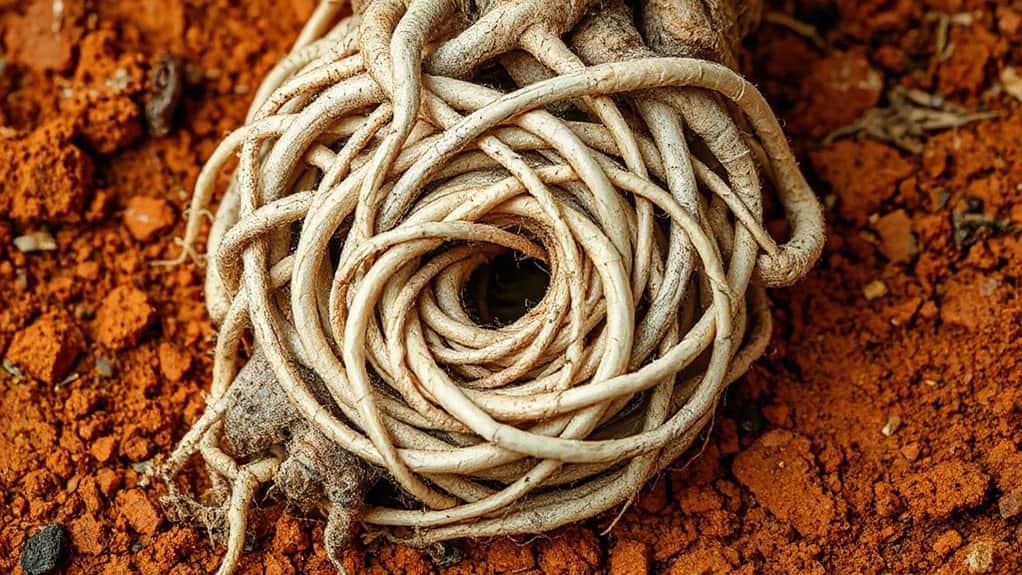
So imagine this: you’re out camping, excitedly setting up your tent near a young tree, when you notice something weird at its base—instead of roots fanning out like a cool underground starburst, they’re coiled tight like a snake that’s been spinning in circles way too long.
Yikes! Those tangled, circling roots can strangle the trunk, block water and nutrients, and make the tree wobbly in storms—definitely not ideal for your nature buddy!
Persistent Thirst and Increased Water Demand
Chances are, you’ve already noticed how thirsty your plant acts—like it’s been hiking under the hot sun with no water bottle in sight.
You water it, but two days later, it’s gasping again! That’s because packed roots leave little soil to hold moisture, so water zips right through.
Check the pot daily, lift it—lightweight? It’s begging for a drink.
Don’t let your green buddy dry out!
Stunted New Leaf Development
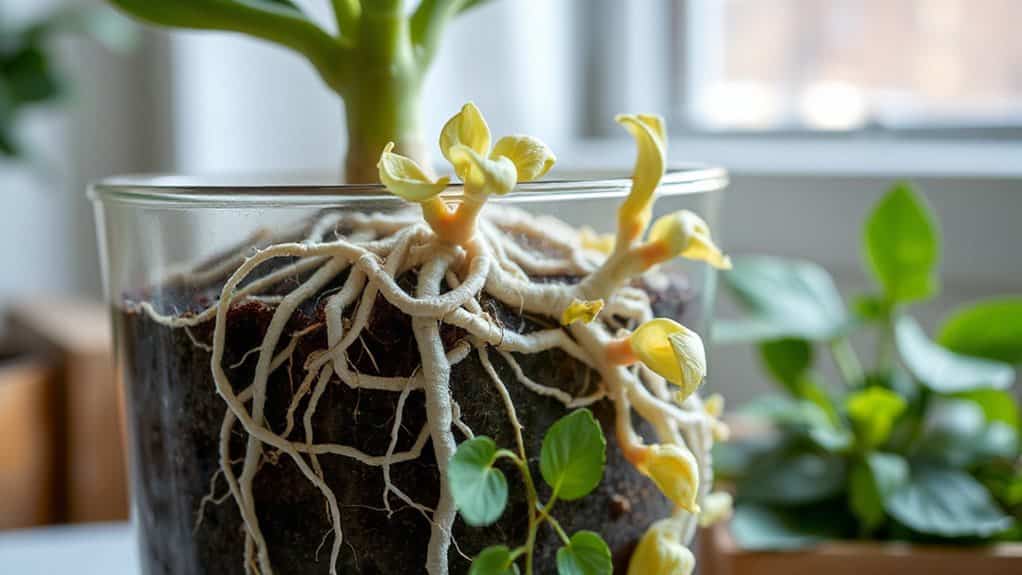
Watch closely the next time your plant pushes out a new leaf—because if it’s looking more like a tiny, sad shriveled-up French fry than a lush, vivid green flag of victory, your plant might be throwing you a silent SOS.
You’re not imagining it: cramped roots mean fewer nutrients, leading to stunted, curled, or smaller leaves.
Sound familiar? It’s like your plant’s stuck in a too-tight sleeping bag—time to upgrade its home and let those roots stretch out, buddy!
Loss of Plant Vigor and Fullness
You know that perky, lush look your plant used to rock—like it was ready to star in a jungle expedition movie?
Well, when roots get all tangled up like last year’s Christmas lights, your green buddy starts slacking: leaves lose their plumpness, the canopy gets thin, and suddenly it looks more like a sad campfire sidekick than a thriving camper.
Time to free those roots before your plant starts packing for a permanent vacation!
Declining Leaf Health
Okay, let’s talk about what’s really going on when your plant starts looking a little… sad. You’re watering it, talking to it—maybe even playing it music—but those leaves are turning yellow, curling, or dropping like it’s autumn in July! Sound familiar? That’s your plant waving a tiny distress flag.
Root-bound stress means poor nutrient uptake, so leaves lose their pep, much like you’d feel after skipping lunch on a camping trip—hangry and droopy!
Sparse Growth Patterns
So your plant’s not exactly *bursting* with energy these days—instead of lush, leafy layers, it’s looking more like a sad, spindly shrub that forgot to pack for the big expedition of life, huh?
Root binding cramps its style, literally! Tangled roots mean fewer nutrients, less water, and zero room to grow—no wonder it’s not thriving.
Repot it, and watch it bounce back like it just found a fresh campsite with endless sunshine and s’mores!
Difficulty Removing Plant From Pot
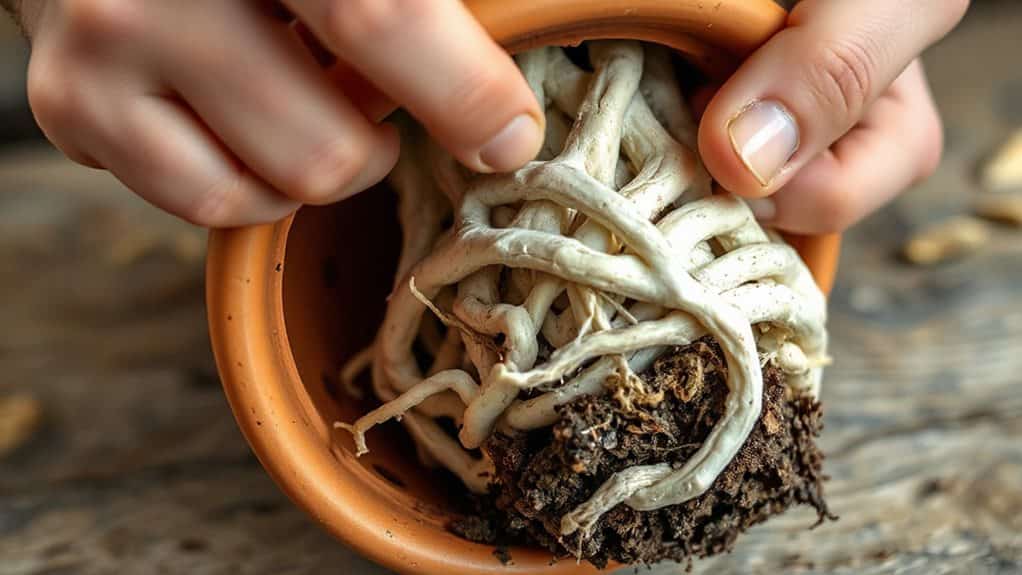
Ever tried tugging a plant out of its pot only to feel like you’re wrestling a tree root locked in a standoff? Yeah, that rock-hard root ball, zero soil falling off, and roots hugging the pot like best friends at a campfire? That’s a serious red flag.
Don’t panic—grab a sharp knife, make a few vertical cuts, slice the bottom, and gently tease those roots apart.
Root Mass Overwhelming the Soil
When your plant’s roots start throwing a full-on takeover party and kick the soil to the curb, you know you’ve got a serious case of root mass gone wild.
You’re basically looking at a root jungle with barely a speck of soil left—kind of like when your camping tent gets so packed, there’s no room for sleeping bags!
Repot soon, or your green buddy’s in for a rough ride.
Overall
So, you’ve spotted some sneaky signs your plant’s root-bound—no panic, just action! Think of it like upgrading from a bunk bed to a tent on a camping trip: everyone needs room to stretch. Pull that root ball free, give it fresh soil, and watch it bounce back happier than a marshmallow over a campfire. You’ve got this, plant hero—time to repot and rejoice!


