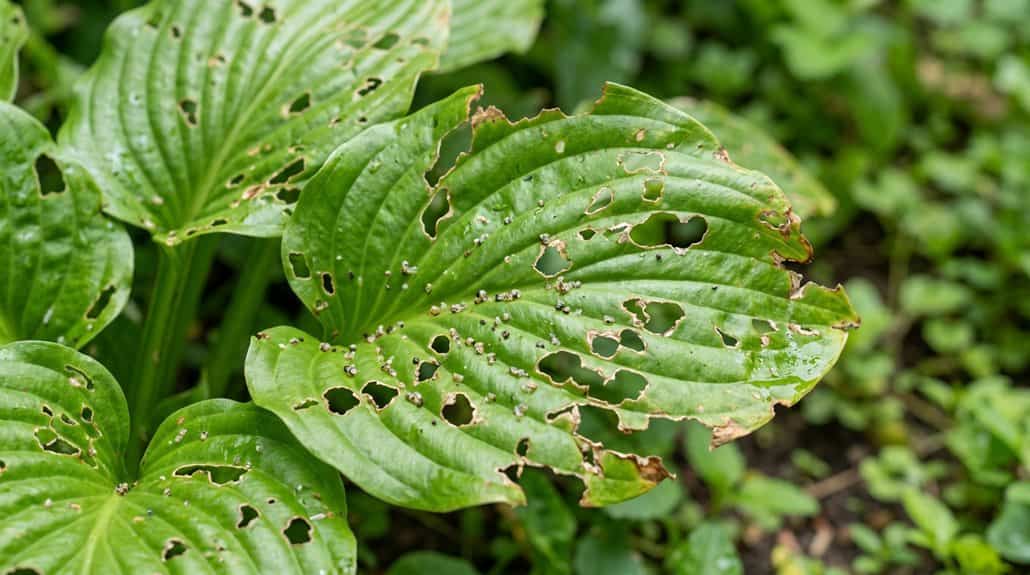
Why Hostas Get Holes in Their Leaves (And How to Stop It)
If your hostas look like someone’s hosted a midnight salad bar for slugs, snails, and curious critters, you’re not dreaming—these plant “campers” love to chomp holes in the leaves, leaving behind ragged bites or shiny slime trails, especially after rain or when the garden’s messy. To stop it, try copper tape, beer traps, or keep things tidy—like packing up your tent to keep out raccoons! Wondering exactly which pest is raiding your hosta campsite? Stick around for some detective work!
TLDR
- Holes in hosta leaves are most often caused by slugs, snails, insects, and wildlife feeding on the foliage.
- Slugs leave ragged holes and slime trails, while insects create tiny, perfect holes or notches in the leaves.
- Stressed or vulnerable hostas are more attractive to pests, especially after early planting or frost damage.
- Prevent holes by using beer traps, copper tape, crushed eggshells, and regular garden clean-up to deter pests.
- Remove damaged leaves with clean scissors and choose disease-resistant hosta varieties to maintain healthy plants.
What Causes Holes in Hosta Leaves?

Even if you’re new to gardening or just love hanging out in the backyard, you’ve probably noticed those annoying little holes popping up in your hosta leaves and wondered, “Who’s been snacking in my garden buffet?” Well, you’re not alone—hostas are like the potato chips of the plant world, and all sorts of critters can’t resist taking a bite!
Slugs, snails, and even deer love munching those leaves.
How to Identify Hosta Leaf Damage Patterns
Let’s play garden detective—you’ll want to look closely at how the holes and edges of your hosta leaves appear, because the shape and messiness can practically shout whether you’ve got a munching caterpillar, a sneaky slug, or even a midnight visit from a hungry animal (trust me, it’s like reading a crime scene after camping in the woods).
Don’t just check for holes; keep an eye out for telltale slime trails or empty snail shells, since those are the calling cards of slugs and snails, while perfectly round holes or chewed veins are more of an insect’s signature move.
If you spot weird patterns or extra clues, snap a photo or jot it down, because figuring out what’s eating your hostas is the first step to stopping them—just like packing the right bug spray before a trip! Additionally, understanding how early planting and frost risks can weaken plants helps in preventing damage from pests that target stressed or vulnerable foliage.
Recognizing Chewing Damage Types
Although you might think every hole in a hosta leaf looks pretty much the same, there’s actually an entire detective story happening on each plant if you know what clues to look for!
When you’re out camping or helping a neighbor, check leaf damage closely—big, ragged holes hint at hungry deer or grasshoppers, while tiny, neat punch-holes usually mean vine weevils.
Each pest leaves its own “signature” behind!
Spotting Slug and Snail Trails
Whenever you’re wandering through the garden with a flashlight, maybe after a long day of hiking or roasting marshmallows, spotting those weird shiny trails zigzagging across your hosta leaves feels a bit like finding a secret message from the garden’s sneakiest visitors.
Slugs and snails love to leave these silvery, winding trails, plus ragged holes in the leaves.
Check under leaves and around the base—slime equals culprit!
Differentiating Animal Versus Insect
Spotting those sparkly slug trails after a night of camping out in your backyard is pretty exciting, but then you get to play detective—was it bugs, bunnies, or maybe a sneaky deer munching on your hostas?
For awesome pest identification, look at the damage: insects make holes, while animals shred edges or leave stems bare. Check for slime, bug shells, or ragged bites—clues everywhere!
Is Your Hosta Damage From Pests or Disease?
Ever wonder if those holes in your hosta leaves mean you’ve got a pest problem or a plant disease on your hands, like your hostas are secretly hosting a garden camping trip for slugs and bugs? You’ll want to spot the difference between neat, little pest-made holes and the funky spots or fuzzy mold that usually come with disease, so grab a flashlight and check for slime trails, weird patterns, or any mystery munchers lurking nearby.
You can also look for nighttime garden activity, such as disturbed soil or tracks, which can help identify if pests like raccoons or skunks are involved. Trust me, once you know what to look for, it’s almost as fun as a backyard scavenger hunt—just without the marshmallows!
Spotting Pest Damage Patterns
Although it might feel like your hostas have just survived a wild camping trip with some very hungry critters, figuring out what’s munching on those beautiful leaves can actually be pretty fun—kind of like being a plant detective with a magnifying glass and a snack in hand!
Look for damage patterns: ragged holes and slime trails mean slugs, while bigger, uneven holes point to hungry deer or grasshoppers.
Identifying Disease Symptoms
Now, if you’ve ever felt like your hosta plants are hosting their own secret garden party—inviting everything from slugs to sneaky deer—sometimes the damage you spot isn’t actually from hungry pests at all!
Instead, watch for disease symptoms like yellow spots, funky mold patches, or leaves twisting like they’re prepping for a camping trip. Unlike pest holes, these weird patterns mean your hosta’s caught something—so inspect closely!
Spotting Slug and Snail Damage on Hostas

When you’re out on a little backyard exploration, checking out your hostas like you’re on a camping trip in the Amazon, spotting slug and snail damage can feel a bit like a detective hunt—just way slimier!
Look for ragged, uneven holes and shiny trails left behind by slugs. Check under the leaves at night, and remember, beer traps or crushed eggshells really help keep those sneaky slugs away.
Using a soil test kit can help you determine if your garden soil’s pH and nutrients are balanced, which can influence slug activity and plant health.
Recognizing Insect and Wildlife Trouble on Hostas
If you thought slugs and snails were the main culprits behind those mysterious holes, just wait until you meet the rest of the hosta-munching crew—it’s like finding out your backyard is hosting a secret wildlife sleepover!
Besides obvious slug trails, check for pest activity like vine weevil notches, cutworm chew marks, and wildlife browsing damage signs—think shredded leaves or nibbled edges—on your hosta plants. Regular inspection can help you spot pest activity early and take action before significant damage occurs.
What Do Different Leaf Holes Tell You?

Ever notice how some holes in your hostas look like they were made by a tiny, hungry artist, while others seem more like wild animal graffiti after a camping trip gone wrong? You can actually figure out who’s been munching on your plants by checking the size and shape of the holes, the timing of the damage, and little clues like slime trails or ragged edges—kind of like being a garden detective with a magnifying glass and a sense of humor.
A gas leak could cause irregular damage or unusual signs around your plants if pests or animals are attracted to the scent.
Let’s break down these telltale signs so you’ll know if your hostas are hosting a midnight snail party or a deer’s midnight snack attack!
Identifying Hole Size Patterns
Although it might seem like your hosta leaves have turned into Swiss cheese overnight, there’s actually a lot you can figure out just by looking closely at the holes! Spotting large, irregular holes? That’s a classic symptom of hungry grasshoppers—or maybe a deer on a midnight snack run.
Tiny, perfect circles or ragged holes, each pattern tells you which pest is camping out in your garden tonight!
Noticing Damage Timing Clues
When you’re out in the garden—maybe pretending you’re on a camping trip in the wilds of your own backyard—it’s easy to think all leaf holes are caused by the same sneaky culprit. But trust me, the timing of the damage can tell you a whole lot more than you might expect!
Notice if damage timing lines up with early summer storms or night-time slug parties.
Recognizing Pest-Specific Signs
So, you’ve figured out that the timing of those mysterious holes in your hosta leaves can give you some big hints, but let’s kick things up a notch—think of yourself as a leaf detective, out on a backyard quest with your trusty magnifying glass and a healthy dose of curiosity.
Large, wild holes? Probably deer or grasshoppers.
Slime trails and ragged holes? Classic slug pests!
Tiny, perfect holes? Vine weevils or snails—case closed!
Best Ways to Keep Slugs and Snails Off Hostas
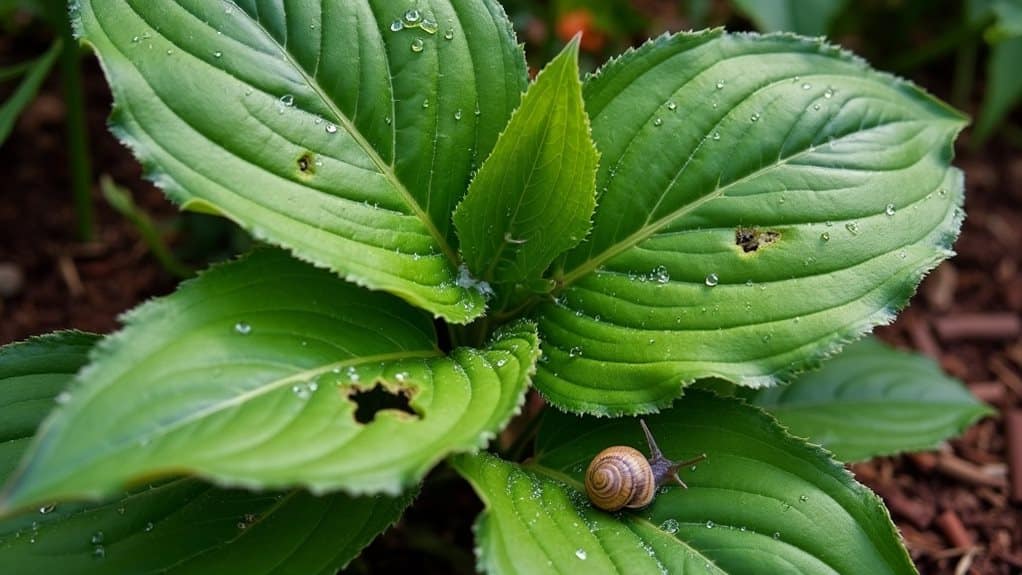
If you’ve ever come outside after a rainstorm, excited to check on your beautiful hostas, only to find them looking like someone used them for target practice, you’re definitely not alone—slugs and snails love hostas almost as much as we do!
Try setting out beer traps, using garlic spray, or wrapping copper tape around your plants.
Clean up debris too—slugs hate tidy campsites!
Hosta-Specific Solutions for Insect and Wildlife Pests
Although slugs and snails might be the most infamous culprits when it comes to holey hosta leaves, there’s a whole cast of other sneaky critters and bugs that treat your garden like their favorite campsite buffet! Earwigs and ants act like tiny campers, too, so try copper tape, diatomaceous earth, or crushed eggshells to block hosta pests. Additionally, incorporating disease-resistant varieties can help reduce damage and promote healthier foliage. Beer traps and fragrant herbs also help, especially against bigger wildlife visitors!
Smart Garden Habits to Prevent Hosta Leaf Holes

Whenever you’re trying to keep your hostas looking as lush as a campsite in the middle of a magical forest, it’s all about forming smart habits that turn your garden into a no-pest zone! Check your hostas often for sneaky pests.
Clear away debris like you’re tidying up after s’mores.
Use garlic spray or marigolds as natural shields, and set up copper tape to stop slugs in their slimy tracks.
Being mindful of potential bird droppings and fallen seeds can help prevent attracting unwanted pests or health risks to your plants and pets.
When and How to Remove Damaged Hosta Leaves
Once you spot those ragged, holey hosta leaves that look like they’ve survived a raccoon’s midnight snack, it’s time to jump into action—kind of like packing up a tent before the rain starts! Grab clean, sharp scissors, and snip damaged leaves right at the base.
Don’t pull healthy ones—hostas need their “solar panels.” Regularly removing damaged leaves keeps your plants healthy and ready for garden “camp!”
Overall
So, if you want your hostas to look as awesome as a campsite on a crisp morning, just keep an eye out for holes, figure out who’s munching your leaves—whether it’s a sneaky slug or a hungry rabbit—and take action fast! Don’t be afraid to get your hands dirty; your plants will thank you. Trust me, with a little care (and maybe a flashlight for slug patrol), your garden can be just as chill as your favorite spot in the woods!