10 Signs Your Water Heater Is About to Fail
You’ll spot a dying heater when cold bursts interrupt your shower, the water turns rusty or brown, and you hear loud pops or bangs like a campfire popping, plus puddles gather around the base, pressure drops, and the energy bill spikes; if the unit’s over 8‑12 years old, the T&P valve leaks, or the gas valve/electric element flickers, those are all red flags, and the sediment buildup can make the heater work harder and sputter; keep an eye on these signs and you’ll know when it’s time to fix or replace it before your next excursion.
TLDR
- Rusty or brown water, indicating a corroded anode rod or sediment corrosion.
- Sudden cold‑water bursts or lukewarm flow at multiple taps, often caused by sediment clogging or a failing heating element.
- Popping, banging, or rumbling noises from the tank, signifying sediment buildup and element strain.
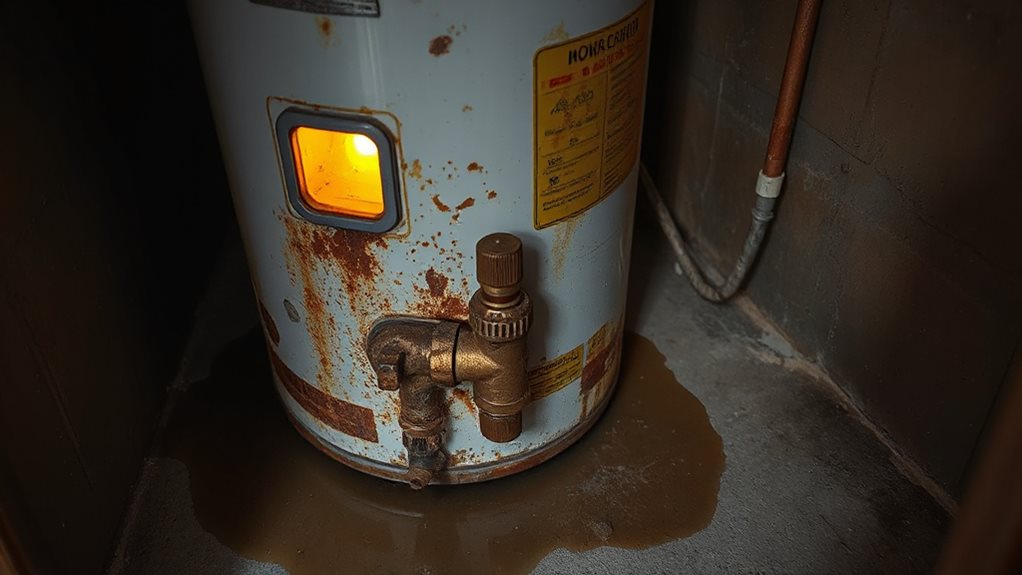
- Leaks around the T&P valve, drain valve, or tank base, suggesting corrosion or a cracked tank.
- Age over ten years combined with rising energy bills and frequent repairs, indicating reduced efficiency and imminent failure.
Why Is My Water Suddenly Cold? – Quick Diagnosis Tips
Ever wonder why your shower suddenly feels like a dip in an icy mountain stream? You might be dealing with sediment clogging the tank bottom, forcing the heater to work harder and sputter cold bursts, or a failing heating element that’s short‑circuting. Proper maintenance like flushing the tank can prevent sediment buildup and extend the unit’s life tank flushing.
Check hot‑water pressure, feel for lukewarm flow at multiple taps, and if the unit’s over ten years old, call a pro before the next “cold‑water” adventure. Aging components can cause sudden temperature drops.
What Causes Rusty or Discolored Hot Water? – Check Corrosion & Anode Rod
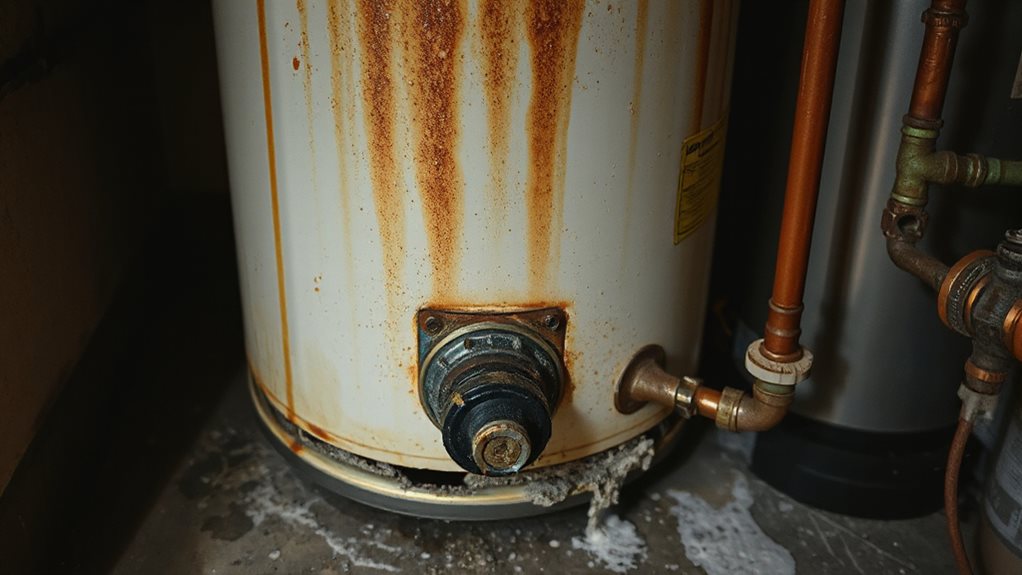
You’ll notice the water turning rusty or brown when the anode rod’s corroded, because the rod that’s supposed to protect the tank starts spilling iron into your shower, and that sediment‑laden water can look like a swamp‑y brew after a long hike.
Have you ever wondered why the color changes after a hard‑water rinse? Just swap out the old rod, scrub out the sediment, and you’ll be back to crystal‑clear streams for your next camping-adventure. Replacing the anode rod and performing regular maintenance can prevent corrosion and extend the tank’s life, especially when you follow proper sanitation practices for tools and parts.
Corroded Anode Rod
Why does your hot water sometimes look like a rusty river after a camping trip? You’ve probably noticed a corroded anode rod, the sacrificial hero that lures minerals away from the steel tank. When hard or softened water eats it up, it fizzles, releasing brown water and funky smells. Check it every couple years; replace it before the tank itself rots, and keep those showers safe for everyone.
Sediment‑Induced Water Color
Ever wondered why your hot water sometimes looks like it’s been filtered through a rusted river after a weekend camping trip? Sediment—calcium, magnesium, dirt, and rust—settles at the tank bottom, forming a thick insulating layer that overheats the heating element, so rust particles hitch a ride to your faucet. Flush the tank, lower the temperature, and you’ll keep the water clear and your guests happy.
How to Stop Popping and Banging Noises? – Flush Sediment Properly
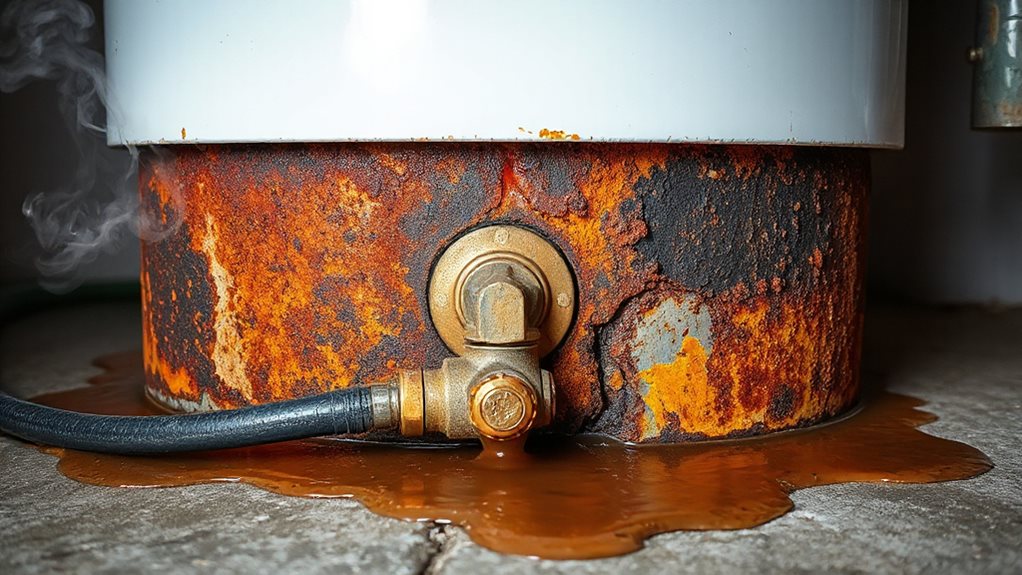
You’ll want to turn off the power or gas right away so you don’t get zapped while you’re tinkering with the heater, then grab a garden hose and hook it up to the drain valve, letting the water rush out and carry the gunk with it; once the tank’s empty, open the cold‑water inlet for about ten minutes while the hose keeps flowing, which shakes loose the sediment that’s causing those annoying pops and bangs, and before you know it you’ll have a quiet heater that’s ready for your next camping trip adventure. Regularly inspect and keep the surrounding area dry to prevent moisture damage that can worsen heater issues.
Turn Off Power First
Even before you think about tackling that noisy, popping water heater, you’ve got to flip the switch—literally. You’ll shut off the breaker for electric units, or set a gas thermostat to pilot and turn off the gas, preventing damage while the water level drops.
Double‑check the breaker’s off, wear gloves, and open a hot faucet to relieve pressure before you start draining.
Use a Garden Hose
So, ready to turn that noisy, popping heater into a whisper‑quiet companion for your next camping trip? Grab a garden hose, screw it onto the drain valve with a flathead, then pop the pressure‑release valve to let the water flow safely into a bucket, watching sediment tumble out.
Keep the hose steady, seal any leaks, and you’ll see the tank clear out faster than a campfire marshmallow roast.
Flush for Ten Minutes
When you let the water heater run for a full ten minutes of continuous flushing, the stubborn sediment that’s been causing those annoying pops and bangs finally gets a chance to loosen up and ride out of the tank, and trust me, watching that milky water turn crystal‑clear is almost as satisfying as spotting a perfect sunrise on a campsite.
Turn off power, close the cold inlet, attach a hose, open the drain, and alternate short bursts of cold water to stir up grit. After each cycle, check clarity, repeat until water runs clear, then seal, refill, and restore heat—your family will thank you for quieter showers.
What to Do When Water Puddles Appear Around the Heater? – Locate & Contain Leaks
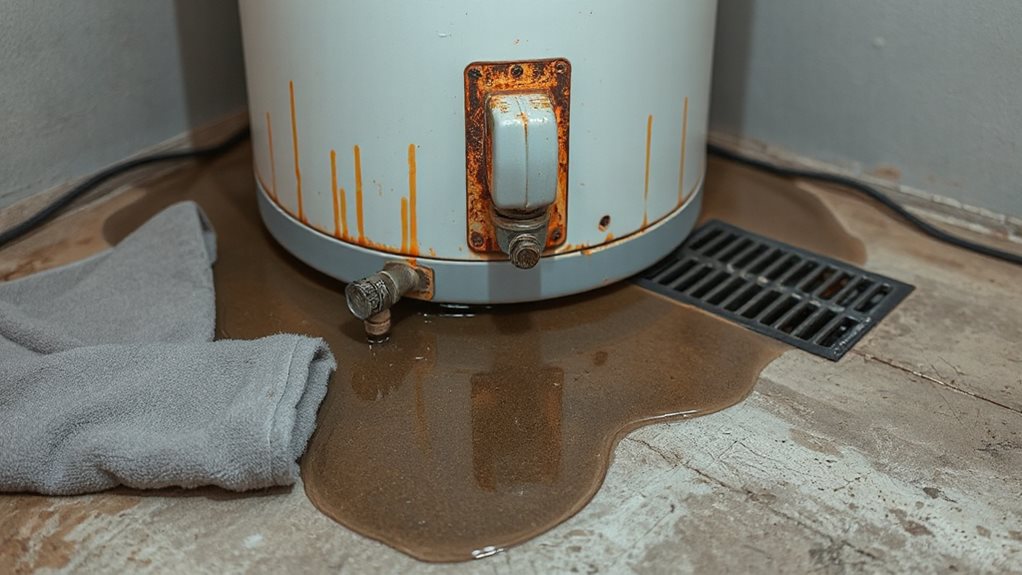
Where do those mysterious puddles around your water heater come from, and how can you stop them before they turn your bathroom into a mini‑lake? First, shut off gas or electricity, then the water supply, and wear gloves. Check the T&P valve, drain valve, and pipe connections for leaks, tighten any loose fittings, and place a bucket or drip pan underneath while you wipe dry and monitor. If corrosion or a cracked tank shows, call a professional. Improving overall soil health through practices like aeration helps lawns resist clover, reducing the chance that fertilization runoff will corrode outdoor tank fittings.
Why Does My Hot‑Water Pressure Drop? – Sediment’s Impact on Flow
After you’ve tackled those sneaky puddles, you might notice the hot‑water pressure dropping like a deflated balloon during a camping trip—yeah, that’s the sediment talking.
Tiny mineral sand builds up at the tank’s base, clogs the outlet, and eats away at heat transfer, so water sputters out weakly while cold flow stays strong.
Flush often, install filters, and keep your tank happy for the next excursion.
Illegal fireworks can cause fires, injuries, and property damage, so be aware of fireworks dangers and take precautions.
How to Test for Bacterial Smell or Taste in Hot Water? – Safety Steps
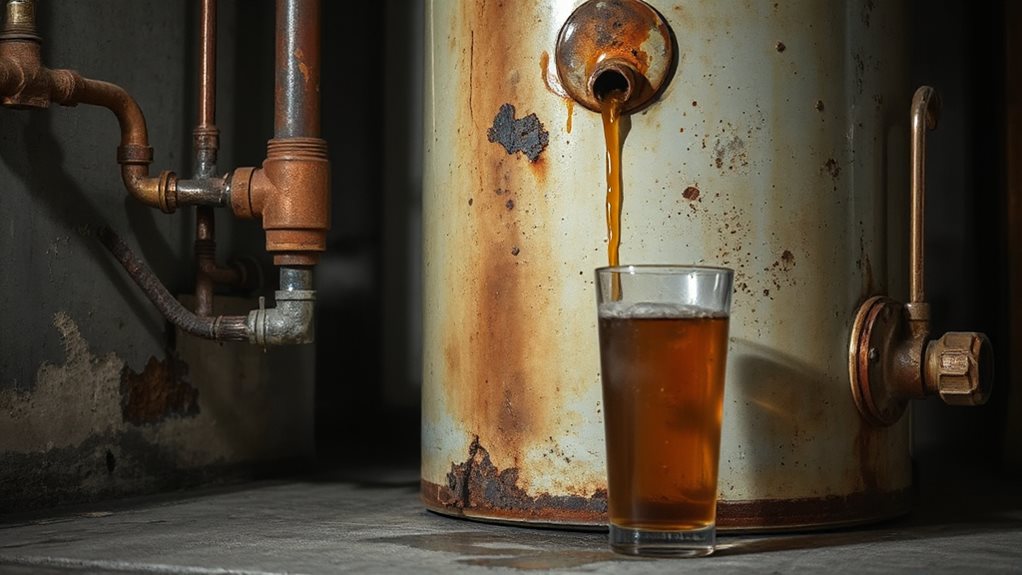
Ever wondered why your hot water sometimes smells like a busted egg just before you head out on a camping excursion? Run the tap after hours of stagnation, compare hot to cold, and sniff for that sulfur whiff; if only hot water stinks, bacteria are likely in the heater.
Sample from the pressure‑relief valve, look for black slime, and, if brave, taste a tiny sip for a salty, eggy note.
Why Are My Energy Bills Rising? – Detect Hidden Heater Inefficiencies
Why are your energy bills suddenly looking like a mountain you can’t climb before a weekend camping trip? You probably have a water heater that’s losing efficiency—sediment, old insulation, or standby losses can cut performance 15‑20 %. Check the Energy Factor, compare it to newer tankless or heat‑pump models, and replace or service the unit to slash those hidden costs.
When Do Repair Costs Exceed Replacement Value? – Calculate the Break‑Even Point
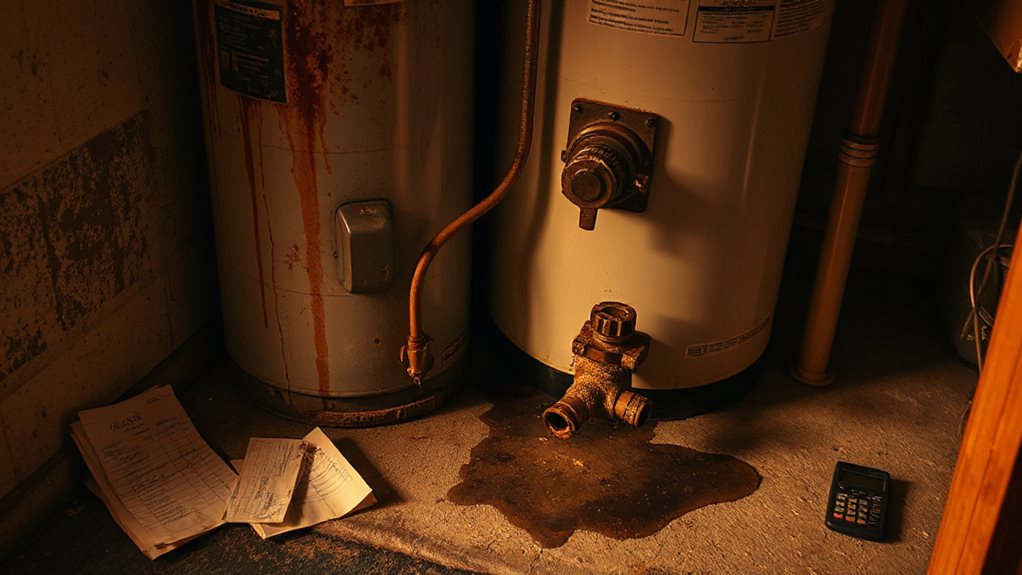
You’ll know you’ve crossed the repair‑cost threshold when a single fix or the sum of a few fixes hits about half the price of a brand‑new heater, and that’s a clear sign you should start comparing depreciation versus replacement; have you ever added up $800 in repairs on a 10‑year‑old tank and realized a fresh unit would cost you only $1,800, saving you money and headaches?
Think about the long‑term cost comparison: a modern, energy‑efficient model can slash your bills by 15‑20 % each year, so the pay‑back period may be just a few seasons, especially if you’re already spending $500‑$800 annually on patches.
Repair Cost Threshold
A quick glance at your water‑heater bill can tell you whether you’re staring at a repair that’s worth fixing or a ticket that screams “replace me now,” and trust me, you’ll feel a lot more confident when you know the exact break‑even point.
If a single fix tops half the price of a new unit, or yearly repairs creep past $800, you’re in replacement territory—so calculate, compare, and decide before the next camping trip gets a cold shower.
Depreciation vs. Replacement
Ever wonder when that nagging repair bill actually outshines the price of a brand‑new water heater? If a fix tops $800 on a $1,800 unit, or you’ve spent $500‑$800 yearly for years, it’s time to replace. Think of it like swapping a leaky tent for a sturdy new one—more efficient, cheaper to run, and you’ll feel better serving everyone at home.
Lifespan Cost Comparison
Ever wonder how many repair bills you can stack up before it makes more sense to buy a brand‑new water heater instead of patching the old one?
If a $800 fix on a $1,800 unit hits the 50% rule, you’re already over the break‑even line; add $100‑$200 yearly energy savings from a new model, and after a few $500‑$800 repairs, replacement becomes the smarter, budget‑friendly choice for your family’s comfort.
What Age‑Related Signs Signal a Heater’s End‑of‑Life? – 8‑12 Year Benchmark
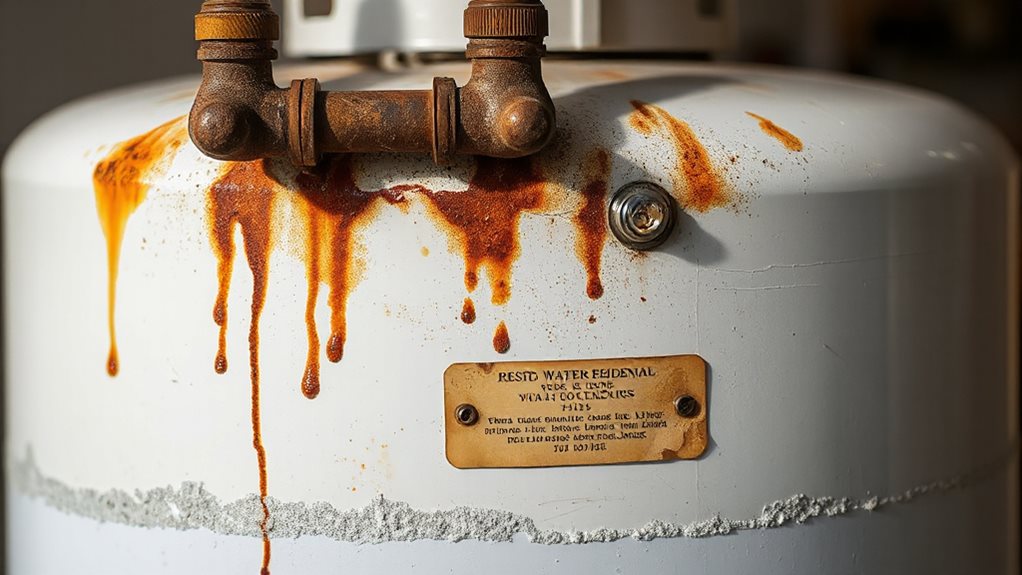
So, you’ve been showering, doing dishes, and maybe even heating up a quick cup of cocoa after a day of camping, and suddenly your water heater starts acting like a grumpy old camper who’s had one too many marshmallows?
If your tank’s hit ten years, watch for rusty water, cold bursts, puddles by the base, and spiking bills—these age‑related clues scream “time for a replacement” before a full‑blown failure ruins your next excursion.
Gas Valve or Electrical Element Failure – Safety Risks & Quick Fixes
What happens when your water heater’s gas valve or electric element decides to throw a tantrum right in the middle of a camping trip? You’ll see red flashes or no light, hear silent clicks, and lose hot water, so check codes, reset the knob, test the igniter, and replace a thermocouple or valve fast. Drain regularly, avoid “hot” lockout, and verify gas supply before testing.
Overall
If you spot any of those red‑flags—cold showers, rusty water, banging noises, leaks, low pressure, soaring bills, or a heater that’s hit the 8‑12‑year mark—don’t wait. Grab a wrench, check the anode, flush the tank, and call a pro before the whole thing quits on you. Trust me, fixing it now saves you a soggy disaster later, and you’ll keep the hot water flowing for those epic camping trips and backyard BBQs. Stay ahead, stay warm!