Why Is One Side of My Lawn Greener Than the Other?
You’re probably seeing greener grass on one side because the soil there’s looser, drains better, and gets just the right amount of water and fertilizer, while the other side is compacted, holds excess moisture, and misses nutrients like nitrogen and iron, making it look pale or yellow‑green. Uneven irrigation can leave shallow roots that turn light‑green, and weeds or mixed grass species add contrast, too. Fixing compaction, aerating, and adjusting watering and feeding will even things out, and if you keep going you’ll discover exactly how.
TLDR
- Soil compaction varies across the lawn, restricting nutrient diffusion and causing pale or yellow‑green patches where roots struggle.
- Uneven drainage creates low spots that retain water, promoting rapid, bright‑green growth, while higher areas stay drier and less vibrant.
- Irrigation distribution is inconsistent, leading to over‑watered light‑green zones and under‑watered yellow zones due to shallow root development.
- Fertilizer is applied unevenly, resulting in over‑fertilized darker patches and under‑fertilized pale areas where nutrients are insufficient.
- Mixed grass species or weeds grow in clumps with differing color, intensifying the visual contrast between greener and duller sections.
Why Does Uneven Lawn Color H Because Soil Texture & Nutrients?
Ever wonder why one side of your lawn looks like it just came back from a summer camping trip while the other side stays stuck in a dull, over‑cast forest?
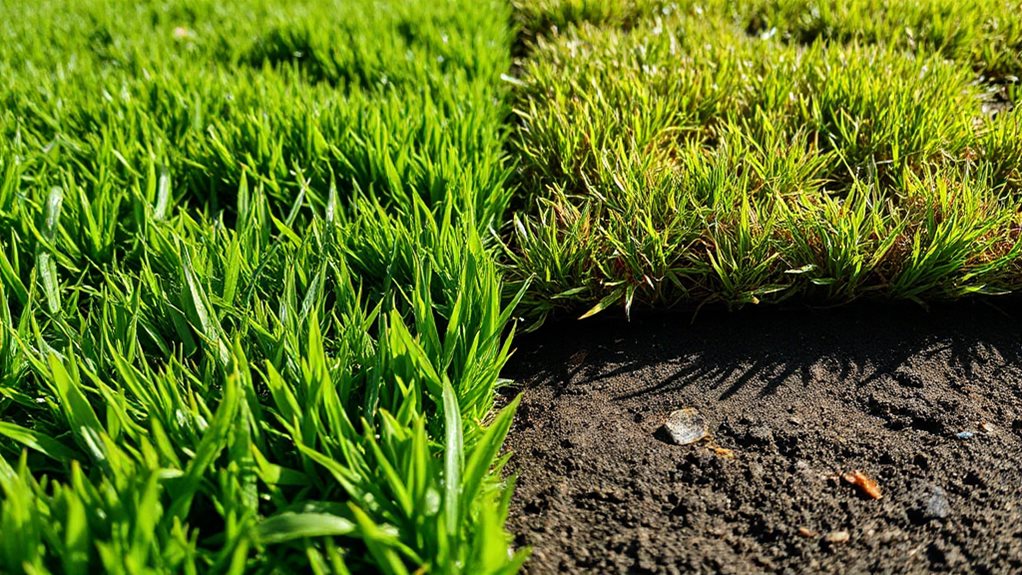
You’re seeing soil texture and nutrients at work: compacted spots lock out nitrogen, potassium, and iron, turning grass pale, yellow‑green, or speckled with brown edges; loose, airy soil lets roots breathe, absorb nutrients, and stay lively, so the lawn feels like a well‑fed campsite versus a rough‑ing one. Heat stress can also cause the greener side to appear duller, as high temperatures reduce chlorophyll production and trigger protective color changes. Soil compaction reduces aeration and water infiltration, which harms roots and limits nutrient uptake, so aerating or improving drainage can help restore color to stressed areas and encourage healthier growth soil aeration.
How Do Drainage Problems Create Bright‑Green Hot Spots?
Why do some parts of your lawn look like a neon‑green campsite while the rest stays drab? When water pools in low spots, compacted soil or cracked sewer lines dump nutrient‑rich runoff, turning those patches into vivid, over‑fed grass. You’ll see soggy patches, foul smells, and bright green “hot spots” that scream drainage failure—so fix grading, aerate, and redirect flow to calm the over‑enthusiastic lawn campers. In many disputes over property issues, homeowners should remember that proper written notice and due process are important when enforcement or remediation involves a homeowners association.
What Impact Does Uneven Irrigation Have on Lawn Color?
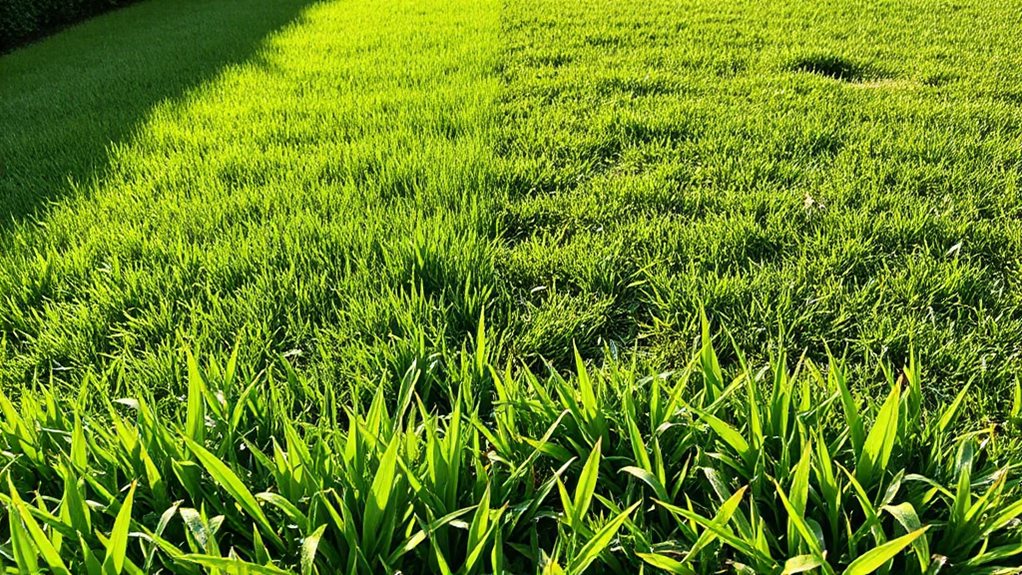
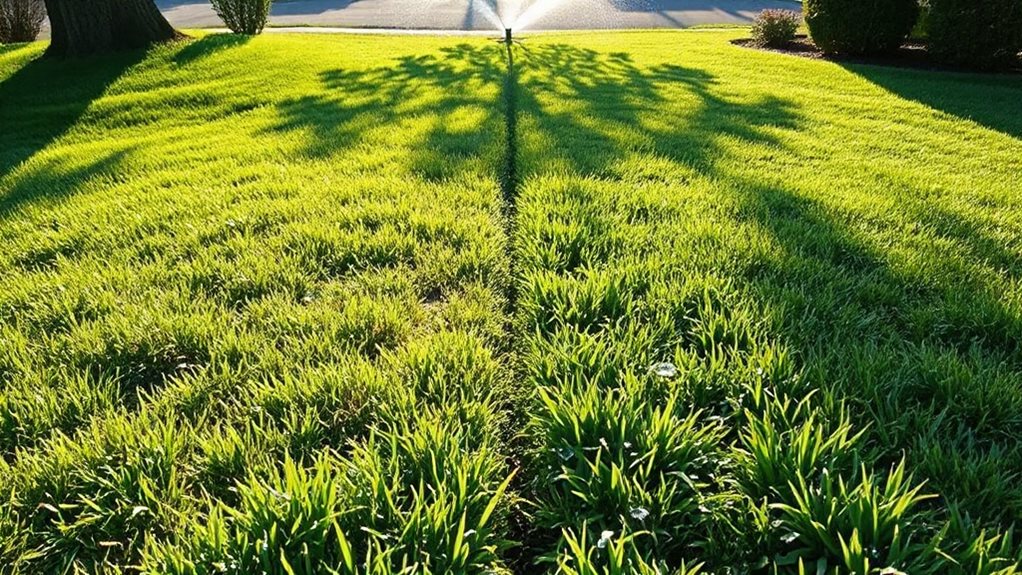
So, why does your lawn look like a patchwork quilt of colors instead of a smooth, emerald carpet? Uneven irrigation creates shallow roots, so overwatered spots stay light‑green while dry zones fade to yellow, and mismatched sprinkler heads leave gaps that look like sun‑burned patches.
Slopes runoff water, low spots soak it, and bad programming makes some areas soggy, others thirsty, turning your lawn into a colorful map of irrigation mishaps. Improving drainage and adjusting irrigation schedules helps balance moisture and prevent runoff from washing nutrients away.
How Do Fertilizer Distribution Errors Cause Light‑vs‑Dark Green Patches?
Ever wondered why some parts of your lawn look like they’ve been sunbathing while others stay tucked under a shade of deep green?
When you rush the spreader or miss a turn, fertilizer piles up, scorching grass into brown streaks, while the missed spots stay pale, creating patchy light‑dark greens.
Light‑water those hot spots, criss‑cross with half‑amounts, and you’ll even out the color, keeping every blade happy.
Standing water nearby can also create mosquito havens that benefit from stagnant water and increase yard maintenance needs.
What Effects Do Compacted Soil and Thatch Have on Nutrient Flow?
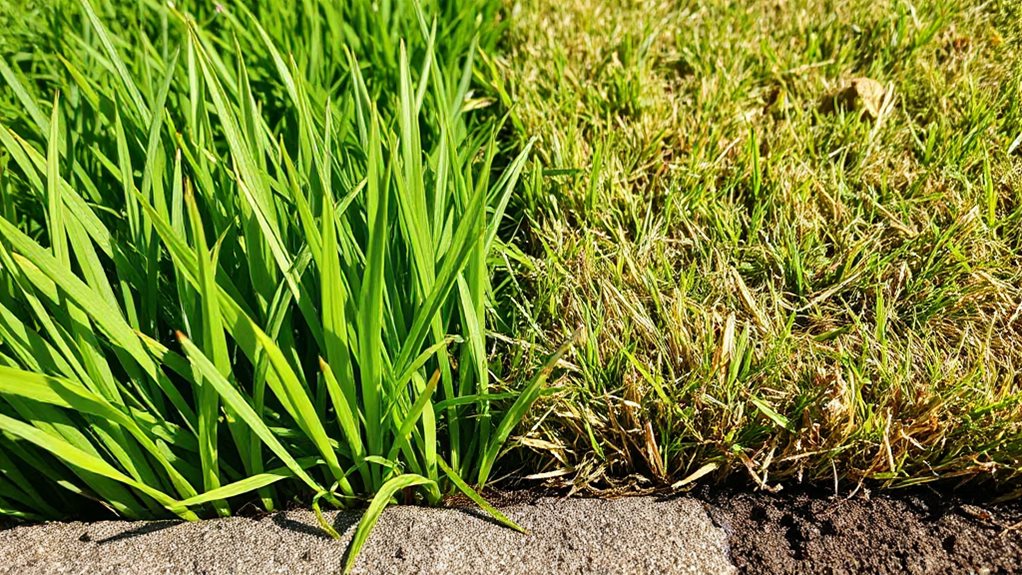
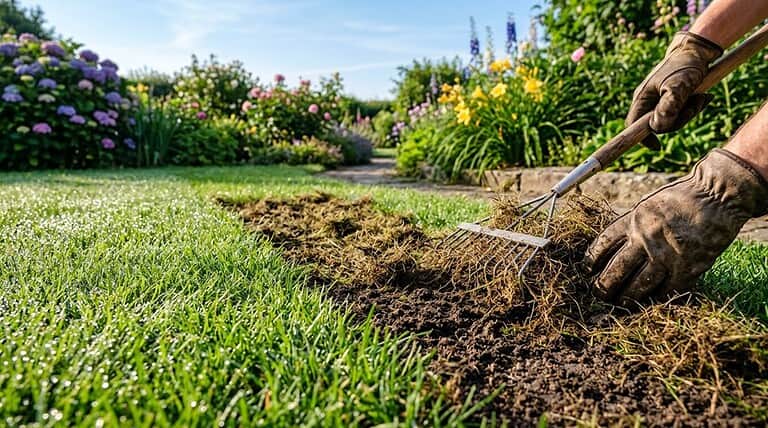
You’ll notice that compacted soil and thick thatch act like a roadblock for roots, forcing them to stay near the surface and making nutrient absorption a real headache, won’t it? When the ground’s squeezed tight, water and oxygen can’t slip through, so the nutrients you feed your lawn get stuck in the upper layers, leaving the deeper roots starving and the grass looking a bit pale. Improving soil structure through core aeration and adding organic matter encourages roots to grow deeper, which helps restore nutrient flow and moisture access.
Root Penetration Limitation
Ever wonder why the grass under your feet feels like a soggy marsh while the other side stays lush and springy?
When soil compacts, roots can’t push past a few inches, so they stay shallow, missing deep water and nutrients; thatch adds a spongy barrier that blocks fertilizer from reaching roots. Aerate, loosen, and you’ll see deeper roots thriving, just like a campsite with fresh air.
Nutrient Absorption Obstruction
A handful of compacted soil and that thick thatch blanket can turn your lawn into a nutrient traffic jam, and you’ll feel the difference the moment you step onto the soggy side versus the springy side.
Compaction squeezes pore space, slowing nitrate and ammonium diffusion, while thatch blocks water and nutrients, creating shallow roots, anaerobic pockets, and a nutrient backlog that starves the grass, making you wish you’d packed better gear for this lawn‑camping excursion.
Which Weeds and Mixed Grass Varieties Mimic Uneven Lawn Color?
You’ll notice that pesky grassy weeds like nutsedge, crabgrass, and goosegrass pop up in clumps, flashing lighter or neon‑green shades that clash with your main turf, especially when you’ve mixed in annual bluegrass or Bermuda that stay pale in the sun; have you ever wondered why those bright patches appear after a rainstorm or a quick reseed, and how they’re actually shouting about moisture or nutrient imbalances? Take a look at the dark‑green crew—Kentucky bluegrass, perennial ryegrass, tall fescue—standing side by side with those light‑green invaders, and you’ll see a vivid contrast that can make any lawn feel like a patchwork quilt. So, grab your garden gloves, check the soil pH, and start mapping out which species are the true culprits behind that uneven color, because once you spot the pattern, you’ll be ready to tackle it with a mix of smart watering, targeted herbicide, and maybe a little humor about the “wildlife” you’ve unintentionally invited.
Green Weeds
Why does one side of your lawn look like a fresh‑cut field while the other turns into a patchy, almost alien scenery?
You’ll spot annual bluegrass bright green clumps that die in summer, crabgrass clumps with light‑green “crab legs,” yellow nutsedge’s yellow‑green blades, creeping goosegrass with bluish‑green leaves, and foxtail’s fuzzy, pink‑centered spikes, each stealing nutrients and making the lawn look uneven.
Mixed Grass Species
Ever wonder why your lawn looks like a patchwork quilt of green, almost as if a mischievous crew of weeds and mixed grasses decided to throw a color‑coding party? You’ll see annual bluegrass brightening early, while Kentucky bluegrass stays deep‑green; fescue blends shade‑tolerant but light‑hued, and rough bluegrass browns fast.
Mixing species creates tangled roots, uneven heights, and those quirky color patches you notice.
Color‑Mimicking Varieties
Ever wondered why a single lawn can look like a patchwork of neon signs and muted earth tones? You’ll see Annual Bluegrass popping bright green, Nutsedge’s triangular stems and yellow flowers, Tall Fescue’s coarse, drought‑tolerant clumps, Dallisgrass’s broad flat blades, and Creeping Bentgrass’s vibrant mats—all mimicking uneven color, so you can spot, “travel‑ready” patches and help neighbors achieve uniform, happy lawns.
Step‑by‑Step Checklist to Diagnose and Fix Uneven Lawn Color
Ever wondered why one side of your lawn looks like it just came back from a summer camping trip while the other side feels like it’s stuck in a rainy swamp? First, walk the yard, note soggy spots, then test soil texture and pH, check irrigation heads for leaks, observe fertilizer streaks, and finally treat drainage or disease with aeration, proper watering, and balanced nutrients.
Overall
Now that you’ve spotted the green‑and‑not‑so‑green patches, you’re ready to tackle them like a backyard wanderer—check the soil, fix drainage, balance watering, spread fertilizer evenly, and give compacted spots a good aeration. Remember, a little weed‑pulling and mixing grass varieties can smooth things out too. With these steps, your lawn will look as lively and uniform as a sunrise over a campsite, and you’ll feel like a true lawn‑hero. Happy fixing!