
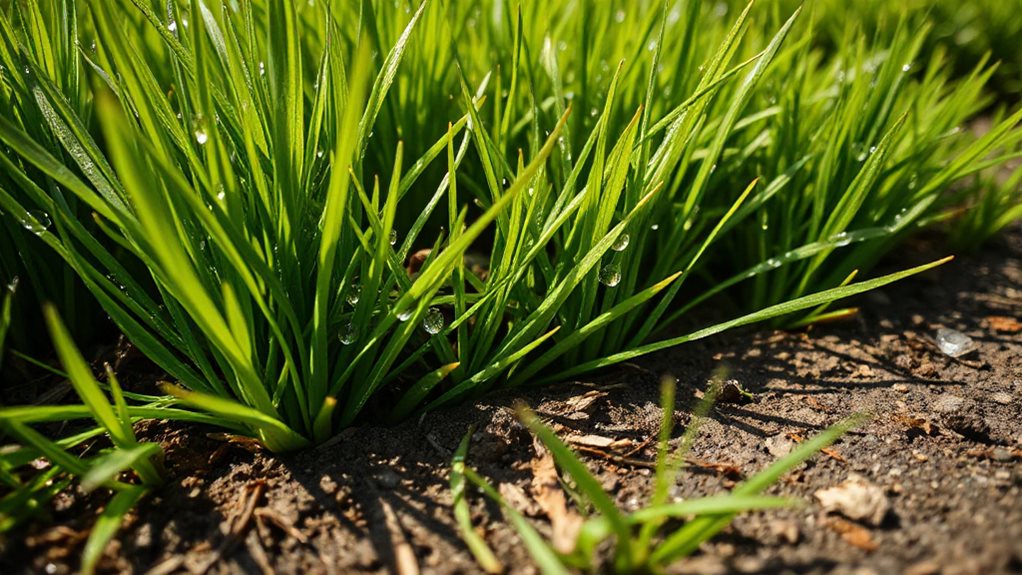
Why Does Grass Grow in Clumps?
You see grass huddling in clumps because some species, like tall fescue, naturally grow in dense bunches, and compacted, sandy, or nutrient‑poor soil forces roots to stay tight, while excess water and a thick thatch blanket choke oxygen and push shoots together—think of it as a campsite where tents crowd around a fire. Over‑watering, poor drainage, and pH imbalances also create “campsites” of soggy, shallow‑rooted turf. If you keep going, you’ll discover how to break up those clumps and restore a smooth lawn.
TLDR
- Certain grass species (e.g., tall fescue, Zoysia) naturally grow in dense bunches due to their genetic growth habit.
- Compact or sandy soils limit root expansion, causing grass to develop tight, isolated clumps.
- Excessive thatch accumulation blocks water and oxygen, leading to shallow roots and uneven, clumpy growth.
- Poor drainage or uneven water distribution creates wet pockets and dry spots, fostering patchy, clumped turf.
- Inadequate pH or nutrient imbalances restrict root development, resulting in irregular, clumped grass patterns.
How to Diagnose and Fix Clumpy Grass Quickly
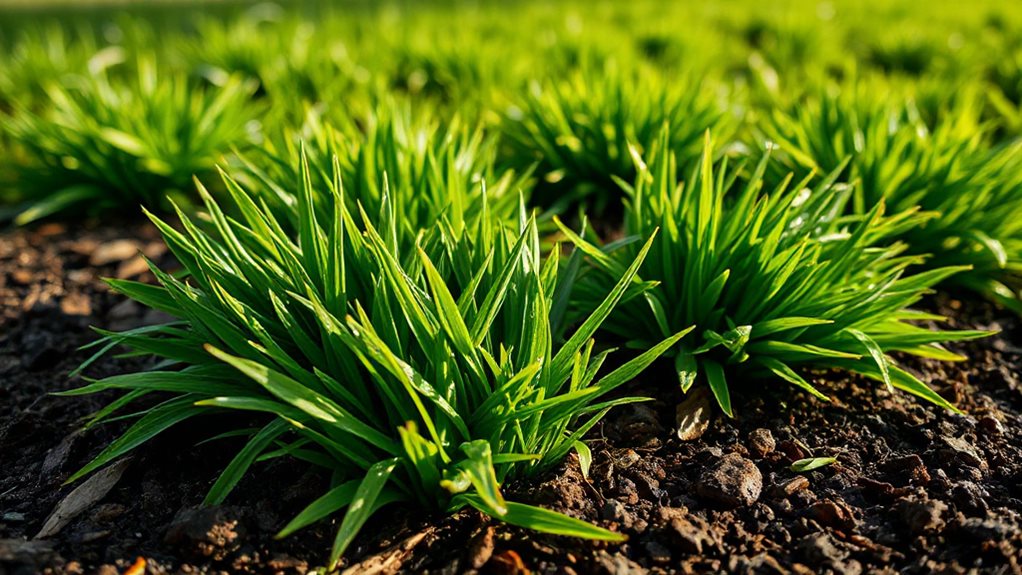
Ever wondered why your lawn looks like a patchwork quilt instead of a smooth carpet? You can diagnose it by testing soil pH (6.0‑7.0 is perfect), checking watering patterns, and inspecting mowing habits—no wet cuts or ultra‑low settings. Look for sandy spots, compaction, or worm castings, then aerate, lime acidic soil, power‑rake, overseed, and top‑dress. Keep watering deep, mow right, and fertilize seasonally for a uniform, happy lawn. Clumping can also be caused by poor soil compaction. Consider using aeration annually to relieve compaction and improve root growth.
Why Grass Forms Clumps (Clumpy Grass) in the First Place?
You’ll notice that some grasses, like tall fescue, just love to grow in tight bunches, and that’s because their genetics make them a “bunch‑type” that naturally forms clumps, especially when the soil is sandy or compacted; have you ever walked on a lawn that felt like a crunchy trail after a rainstorm?
When the ground is packed tight, air, water, and nutrients can’t reach every root evenly, so the grass shoots up in patches, creating those stubborn clumps you see, and it’s funny how a bit of soil compaction can turn a smooth lawn into a mini‑obstacle course.
Try loosening the soil with a core aerator or mixing in some sand, and you’ll see the grass spread out more evenly—just like spreading out a campfire blanket for a comfy night under the stars.
Annual core aeration paired with compost can help break up compacted clay and improve drainage over time.
Grass Type Characteristics
Why do some grasses just love to huddle together in tight, bunched‑up colonies? You’ll notice tall fescue and Zoysia forming bunch‑type clumps from a central crown, while bermudagrass spreads via runners yet still gathers into dense, dark‑green patches when you skip mowing.
Cool‑season types like rough bluegrass and perennial ryegrass clump in shade or under stress, and ornamental varieties such as muhly need full sun and periodic division to stay friendly.
Soil Compaction Effects
Ever notice how a lawn suddenly looks like a bunch of tiny islands, each patch huddling together as if they’re camping under a tiny canopy? You’ll see compacted soil squeezing roots shallow, choking oxygen, and slowing water, so grass clumps form as roots crowd the surface, thirsty and hungry for nutrients. It’s like a campsite where tents are packed tight—everything’s cramped, and the weeds get the upper hand.
How Different Grass Species Influence Clumpy Grass Patterns
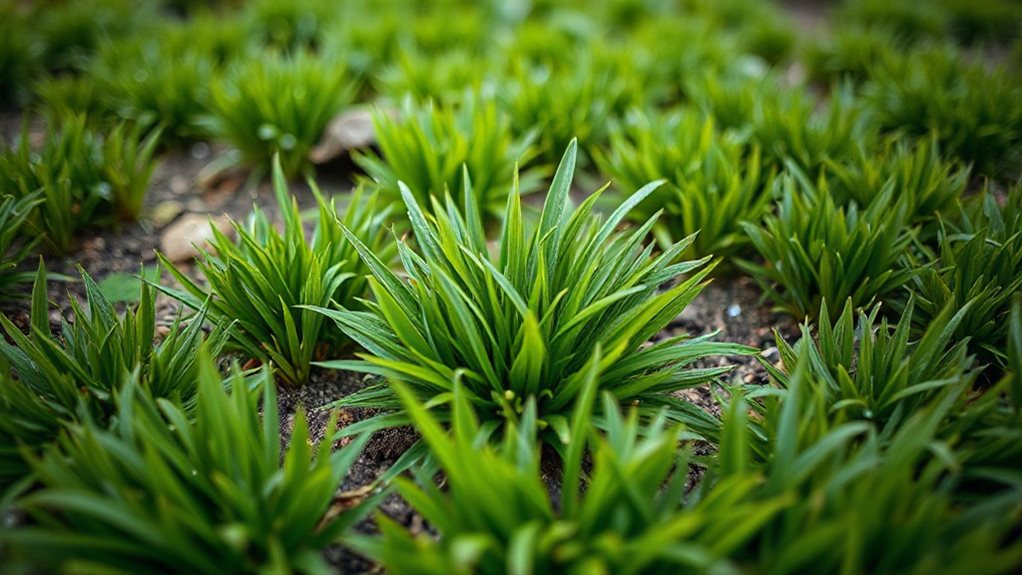
Ever wondered why your backyard sometimes looks like a patchwork quilt of grass clumps instead of a smooth carpet? You’ll notice tall fescue’s thick, coarse blades forming dense bunches, while fine fescue stays tighter, lacking sprawling stems.
Rough bluegrass spreads in shade, Zoysia creates bold clumps when thirsty, and each species’ root depth, growth habit, and shade tolerance shape those quirky patterns you see. Pavement edges often encourage lush growth due to concentrated runoff and nutrients, which can create prominent edge growth near sidewalks and driveways.
How Soil Texture and Compaction Cause Clumpy Grass
After exploring how different grass species paint the lawn with their unique growth habits, let’s shift gears and look at the ground beneath their roots—because the texture of your soil and the way it gets compacted are the hidden forces that turn a smooth carpet into a patchwork of clumps.
Sandy soil drains fast, starving roots, while clay packs tight, blocking air and water; compacted spots choke nutrients, forcing isolated patches.
Add compost, aerate, and you’ll see a lush, even carpet instead of clumpy islands.
Predators and other disturbances — like nearby compaction from heavy traffic or equipment — can exacerbate these clumping issues by repeatedly stressing the same areas.
How Over‑watering and Poor Drainage Produce Clumpy Grass
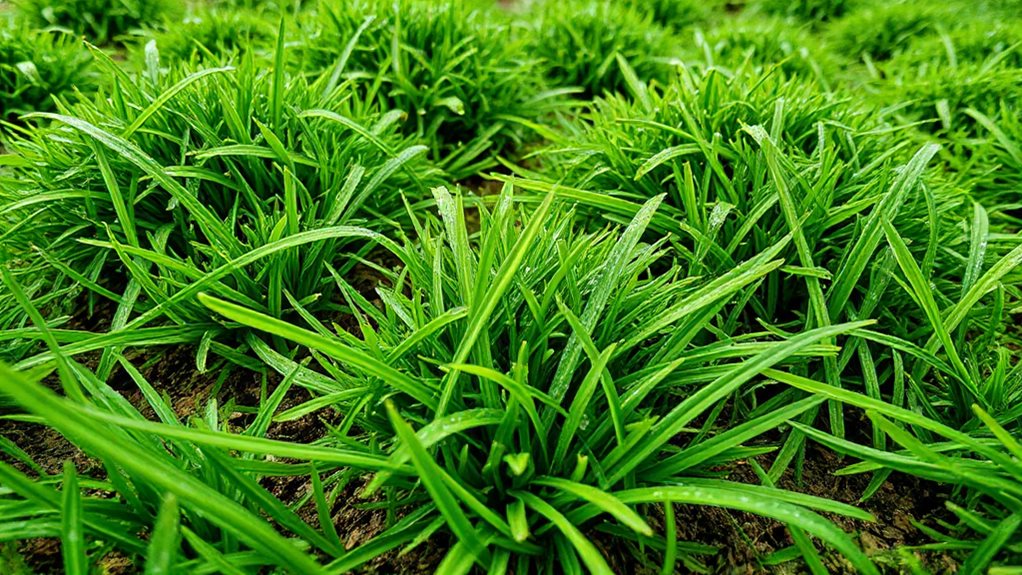
Why does a lawn suddenly turn into a patchwork of soggy islands? When you over‑water and the soil can’t drain, oxygen disappears, roots drown, and shallow roots sprout, making grass limp and clumpy; fungi thrive, turning patches into mushroom‑filled marshes, while weeds like crabgrass pop up, stealing nutrients. The thatch thickens, water pools, and you end up with a soggy, uneven carpet that needs proper drainage. Runoff from excessive irrigation also wastes water and indicates the soil is saturated, often requiring reduced watering and improved drainage to restore lawn health and prevent nutrient loss runoff.
How pH Imbalances Cause Clumpy Grass
You’ll notice that when the soil’s pH veers too low or too high, the nutrients you think are ready for the grass get locked away, so the lawn ends up with those annoying clumps instead of a smooth carpet. Have you ever tried to plant a campfire‑style grill on a patch that’s missing iron and manganese because of alkaline soil? Grab a pH test kit, add lime or sulfur as needed, and watch the roots spread out happily—no more “clumpy” camping spots on your backyard lawn!
Nutrient Availability Disruption
Ever wonder why your lawn sometimes looks like a patchwork quilt of green and yellow clumps instead of a smooth carpet?
When pH veers too high, iron, manganese, and phosphorus lock out, turning new blades yellow and stunted; when it drops too low, phosphorus, calcium, and magnesium vanish, causing pale spots and weak growth. Those nutrient gaps make fertilizer flop, so you see patchy, clumpy turf.
Root Development Hindrance
When the nutrient‑lockout you just read about keeps your lawn looking like a patchwork quilt, the next thing to blame is the roots themselves—those hidden investigators that decide whether grass spreads smoothly or ends up in clumps. High orH turns roots into stubby, branched clusters, while low pH leaches aluminum, making them short and discolored; both stunt penetration, limit micronutrients, and leave patchy, clumpy growth.
How to Spot Weeds and Pests That Cause Clumpy Grass
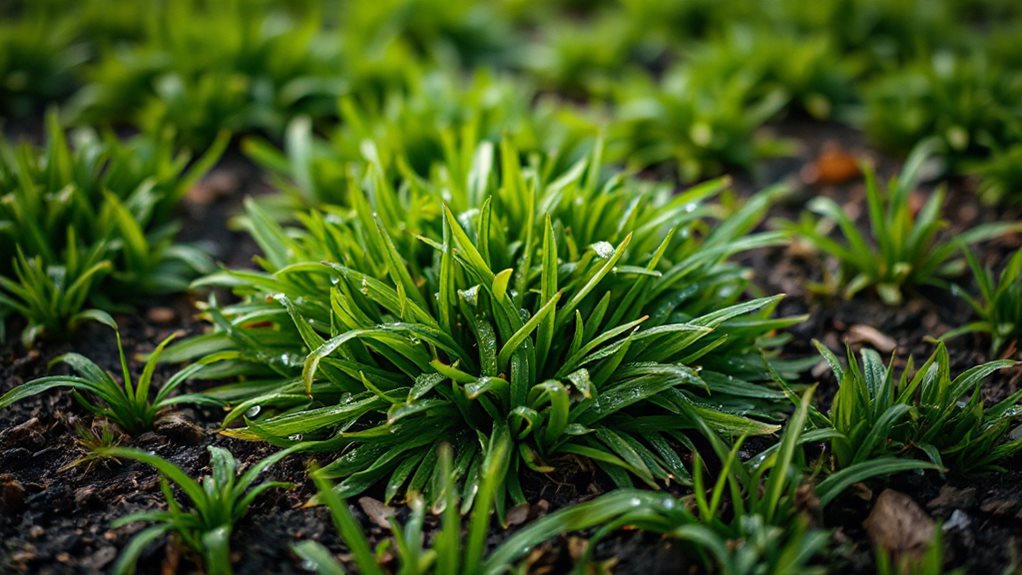
Ever wondered why your lawn sometimes looks like a patchwork quilt of weird clumps? You’ll spot crabgrass by its flat, low‑growing mats and bright green hue, while nutsedge shows three‑leaf clusters from a triangular base and stiff blades.
Look for goosegrass’s silver stems, bentgrass’s stolon spreads, and notice compacted or over‑watered spots where these invaders love to camp, then act fast.
How Mowing Height and Frequency Affect Clumpy Grass
You’ve already learned how to spot the sneaky weeds and pests that turn a smooth lawn into a patchwork quilt, so now let’s talk about the mower’s magic wand—its height and how often you swing it.
Keep cuts under one‑third each pass, mow twice weekly in hot growth, raise the deck a bit in summer, and stay sharp—your lawn will stay lush, not clumpy.
How Thatch Build‑up Leads to Clumpy Grass
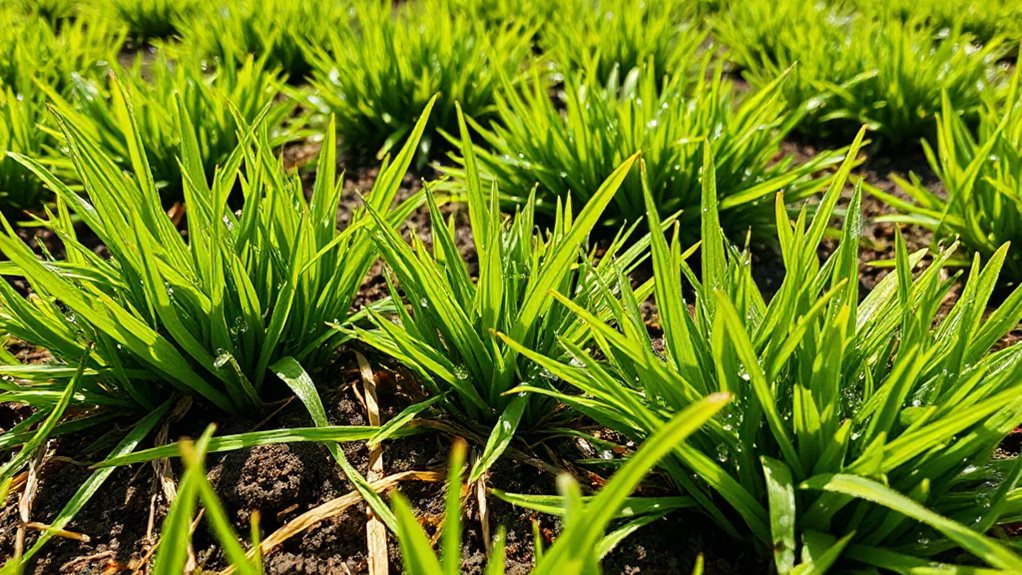
You’ll notice that a thick layer of thatch acts like a soggy blanket, trapping water and forcing it to puddle instead of soaking evenly into the soil, which makes the grass‑ like a patchwork of tiny islands.
When that blanket blocks oxygen, the roots get starved, so they grow shallow and spindly, and the whole lawn ends up looking clumpy, almost like a campsite where tents are huddled together.
Try loosening the thatch with a rake or aerator, and you’ll see the water flow freely and the roots breathe again—your lawn will thank you, and you’ll feel like you’ve just set up a perfect campsite right in your backyard.
Thackle Accumulation
Why does thatch pile up and turn your lawn into a bumpy excursion playground? You see, when dead stems, roots, and rhizomes outpace microbes, a thick, woody carpet forms—especially under Kentucky bluegrass or ryegrass.
Over‑fertilizing, excess water, and compacted soil choke the microbes, so roots stay shallow, shoots crowd, and you end up with uneven, clumpy grass that feels like a camping trail.
Water Flow Disruption
After you’ve seen how thatch piles up like a soggy blanket, the next thing to notice is how it messes with water flow, turning a smooth lawn into a patchwork of soggy and dry “campsites.” Imagine pouring a bucket of water onto a packed‑down campsite: the liquid runs over the rocky ground, splashing into low spots while the higher areas stay bone‑dry. This uneven drainage forces water into pockets, starving other zones, so grass thrives only where moisture can percolate, creating isolated clumps that look like tiny, soggy tents.
Root Oxygen Deprivation
Ever wonder why your lawn sometimes feels like a campsite where the tents are all squished together?
That thick thatch acts like a soggy tarp, choking root oxygen, so roots turn shallow, ferment, and die, leaving only patchy, clumped grass.
Dethatch, aerate, and water wisely—think of it as giving each root a fresh campsite tent, clear air, and a comfy spot to thrive.
How to Aerate and Core‑seed to Fix Clumpy Grass
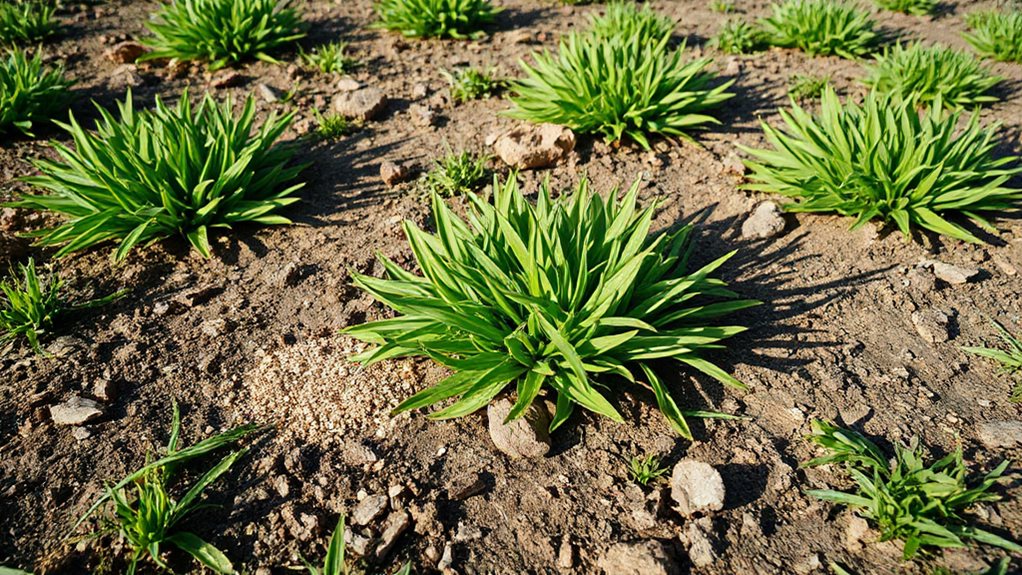
Ever wondered why your lawn looks like a patchwork quilt of clumps and bare spots? Grab a core aerator, pull those tiny plugs, then sprinkle seed straight into the holes—like planting treasure in a campsite. Water lightly, keep kids off for a week, and let the cores decompose, feeding roots. Soon the grass will spread evenly, turning clumps into a smooth, lively carpet.
Choosing the Right Fertilizer Schedule for Clumpy Grass
Now that you’ve got those tiny plugs out and the seed tucked into the holes like hidden treasure, it’s time to think about feeding the new sprouts so they don’t turn into a patchwork of clumps again. For cool‑season grass, aim for a slow‑release nitrogen boost in spring (≈1 lb/1,000 sq ft) and a stronger fall feed, while warm‑season lawns thrive on four 32‑lb applications from Easter through early October, spacing each about eight weeks apart. Split each dose, half soluble, half slow‑release, to keep nutrients steady and avoid leaching.
Long‑Term Maintenance Routine to Stop Clumpy Grass
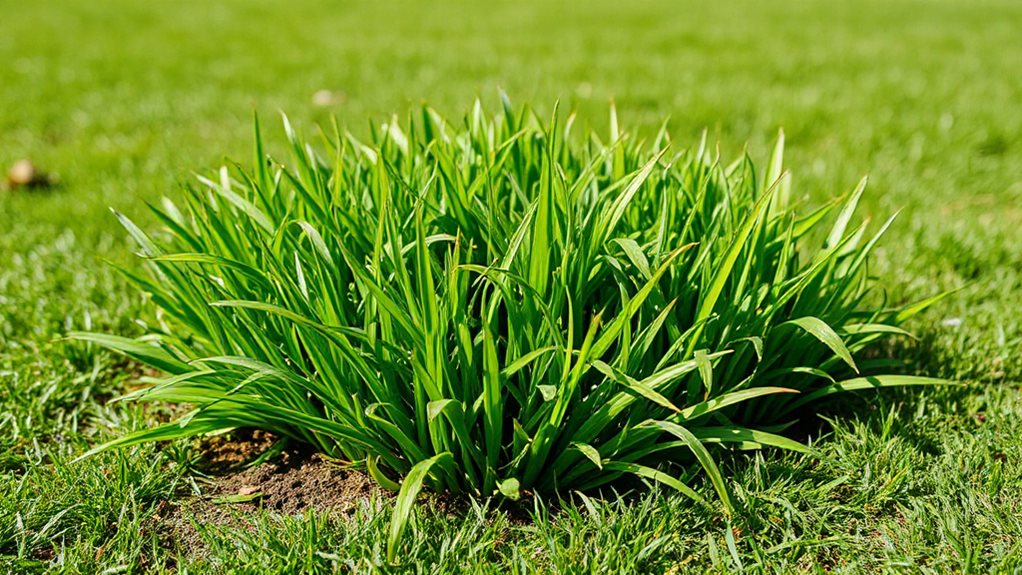
When you keep a regular routine of mowing, aerating, and overseeding, your lawn will stay smooth and happy—no more surprise clumps popping up like hidden campfire pits.
Mow dry grass, follow the one‑third rule, sharpen blades quarterly, rotate patterns, aerate yearly, test soil, water deep, overseed after weeds, and clear leaves each fall; these steps keep turf uniform, healthy, and ready for your next journey.
Overall
Now you’ve got the scoop on why grass decides to huddle up and how to break it apart, so grab your aerator, toss a little fertilizer, and give those clumps a fresh start—think of it as a backyard excursion before rivals a camping trip, where you’re the trail guide for your lawn. Ready to see a smooth, lively carpet under your feet? Let’s get digging, seed‑spreading, and enjoy the green view, because a healthy yard is the best campsite you can set up right at home!


