Can You Plant Grass Seed in the Shade?
You can definitely plant grass seed in the shade, but you’ll need at least four hours of dappled sunlight each day—think of it like a campsite that still gets a bit of sunshine between the trees. Choose shade‑tolerant varieties such as fine fescue, tall fescue, or St. Augustine, and keep the soil moist without turning it into a swampy mess by watering lightly a few times a day, especially in the morning or evening. Lightly rake the seed, add a thin straw mulch, and avoid burying it too deep, then watch those little green pioneers push through; stick around and you’ll discover even more tricks for thriving shade lawns.
TLDR
- Grass can be seeded in shade if it receives at least four hours of direct or dappled sunlight daily.
- Choose shade‑tolerant species such as fine fescues, tall fescue, St. Augustine, or Centipedegrass for better establishment.
- Prepare soil by testing pH, improving drainage, and lightly aerating; avoid deep tilling that creates soggy conditions.
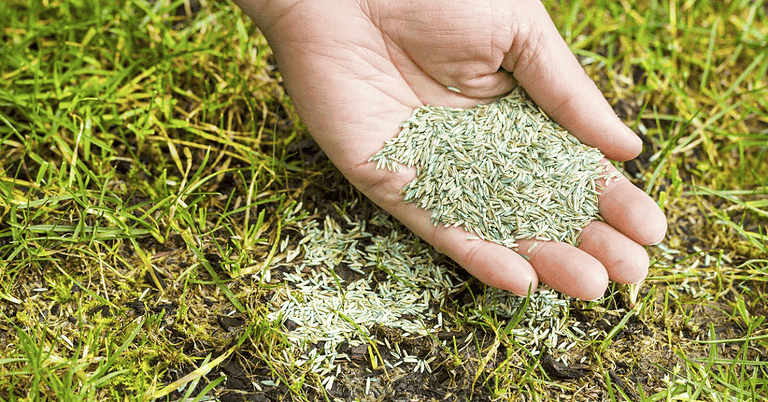
- Seed at 2.5–3 lb per 1,000 sq ft for new lawns (or half that for overseeding) and lightly rake to ensure good seed‑soil contact.
- Water lightly 10–15 minutes twice or three times daily during germination, then reduce frequency as roots develop, keeping soil moist but not waterlogged.
Shade‑Growth Basics: The 4‑Hour Rule
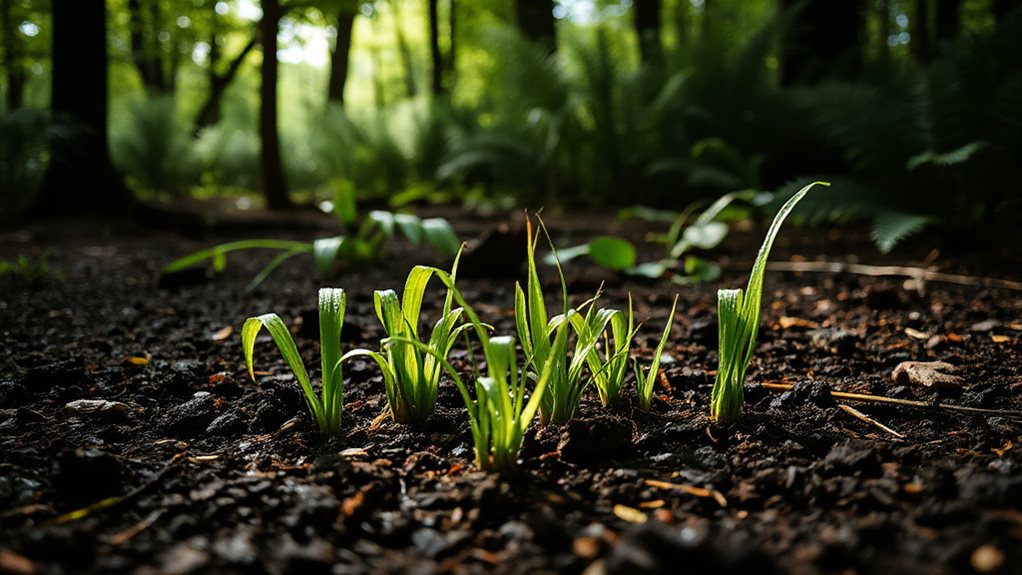
Ever wondered why your backyard lawn sometimes looks like a sad, wilted carpet instead of a lush green rug? You need at least four hours of sun, even if it’s dappled, to keep grass alive; less than that, the turf will quit.
Trim trees, raise mower height, and water wisely—think of it like camping, where you balance shade and light for a perfect night under the stars. Deciduous canopy greatly influences grass‑growing success. Improving soil drainage and airflow can help shaded turf stay healthier by reducing issues like mold or salt buildup that stress grass roots and blades. soil drainage
Shade‑Level Grass Species Guide
Thinking about turning that dim backyard corner into a thriving lawn? You’ll love fine fescues—red, chewings, hard, creeping red, and sheep—each thrives in shade, spreads fine roots, and stays low‑maintenance, perfect for helping neighbors. Tall fescue adds depth, Rough Bluegrass handles damp, cool spots, while St. Augustine, Zoysiagrass, and Centipedegrass give warm‑season shade resilience, making every shady patch a friendly, lush retreat. A 3000 sq ft house is often considered large by U.S. standards, so larger yards can accommodate multiple shade‑tolerant species and varied lawn zones.
Cool‑Season Shade Mix Ratios for Shade‑Tolerant Grass
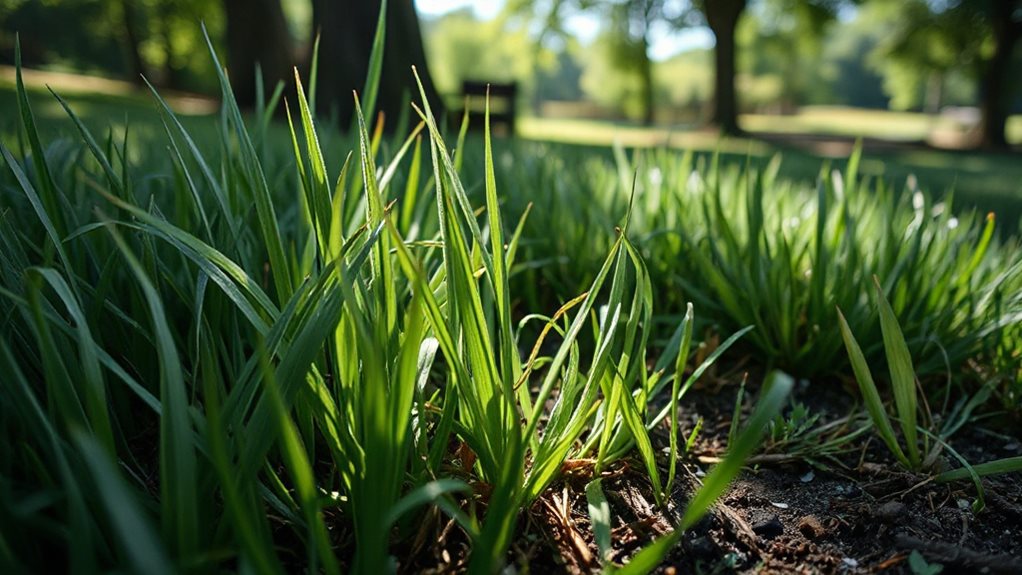
Fine‑fescues dominate the shade‑level guide, but now let’s get into the nitty‑gritty of how much of each seed you actually toss onto the soil. For a new lawn, blend 70% fine fescue, 20% Manhattan 7 GLR rye, and 10% Bewitched Kentucky blue at then spread 2.5–3 lb per 1,000 sq ft. Overseed existing turf at half that rate, aiming for 1.25–1.5 lb per 1,000 sq ft. Spud wrenches are designed explicitly with a spike and wrench end to help align bolt holes and work in tight spaces.
Warm‑Season Shade Options for Shade‑Tolerant Grass
You’ll find that St. Augustinegrass really loves a shady spot, thriving with just four hours of sun and even handling hot summer days under a canopy, so it’s a top pick for warm‑season lawns that aren’t drenched in light. Have you tried centipedegrass yet? It can make do with about six hours of partial sun, especially the Oaklawn and Tennessee Hardy cultivars, though it’s a bit more picky than Augustine or Zoysiagrass. Give these grasses a go, and you’ll see how a little shade can still give you a lush, green yard without turning it into a jungle gym for weeds. Always follow proper safety and storage practices for outdoor gas equipment, including turning off and disconnecting tanks after use to prevent gas leaks.
St. Augustinegrass Shade Tolerance
If you’ve ever tried to grow a lawn under a canopy of trees, you’ll quickly discover that St. Augustinegrass is the champion of shade‑tolerant warm‑season grasses, thriving with just 4‑5 hours of direct sun and still looking lush when a tree’s dappled light filters down. You’ll love its dense, blue‑green carpet that chokes weeds, its salt‑tolerance for coastal sites, and cultivars like Palmetto, Seville, or Cobalt that stay vibrant even under 60 % shade, though you must watch for chinch bugs, keep mowing at 3.5‑4 inches, and water 1‑1.5 inches weekly.
Centipedegrass Light Shade Suitability
Ever wondered whether centipedegrass can survive under a leafy canopy without turning into a sad, patchy mess? You’ll find it tolerates light shade if it still catches six hours of sun, especially the TifBlair cultivar, which stays greener under pine needles.
Plant in low‑maintenance zones, water deeply, avoid heavy traffic, and you’ll enjoy a medium‑textured, resilient lawn that still feels like a camp‑fire‑bright adventure.
Best Seeding Times for Shade‑Tolerant Grass
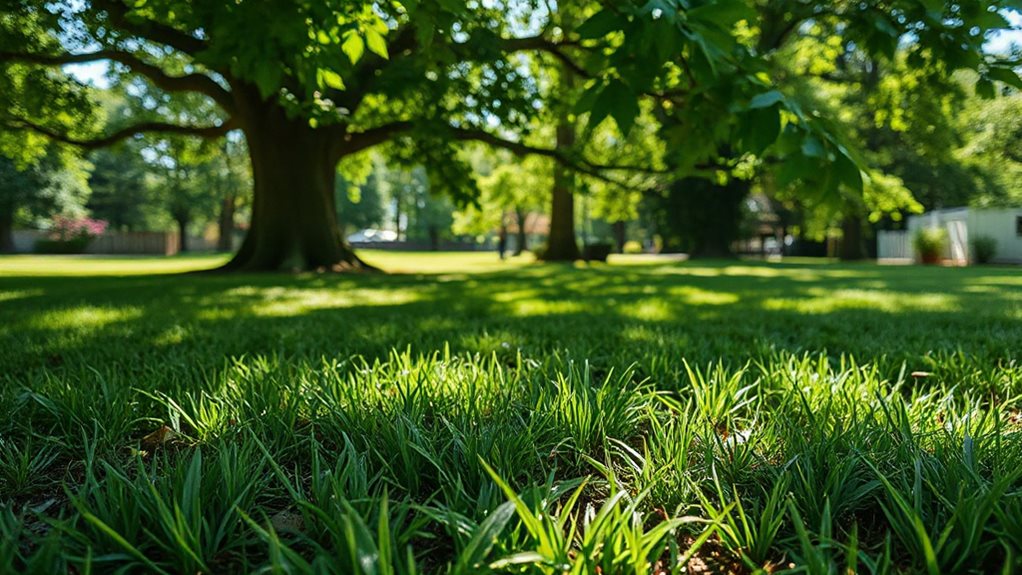
When’s the perfect moment to toss shade‑tolerant seed into the soil? You’ll hit the sweet spot in early fall—August through September—when soil sits at 50‑60°F and evenings stay cool, giving fine fescues a head start before frost.
Spring works too, 55‑75°F, but fall cuts weed competition.
Aim for 4‑5 hours partial sun, water gently, and avoid mowing for two weeks. Happy planting!
Cold soils below 50°F can stunt root growth and delay germination, increasing the risk of frost damage.
Prep Tree‑Base Soil for Shade
You’ll start by testing the soil around the tree base—grab a kit, check the pH, and see if nutrients are low, because a too‑acidic shade spot invites moss and weeds, and a quick lime tweak can save the day.
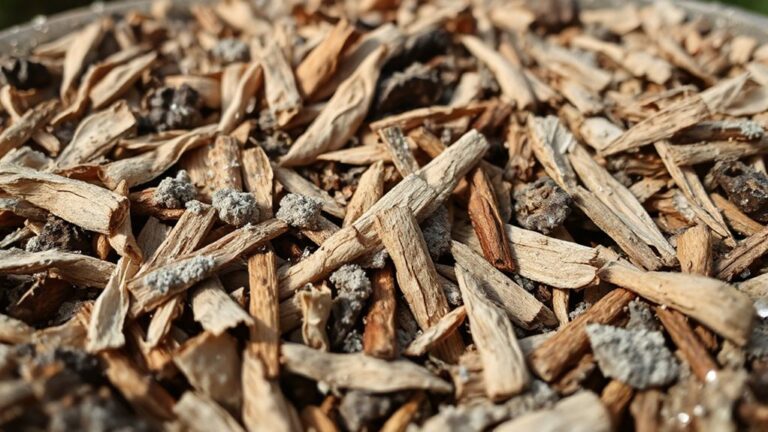
Next, spread a 3‑5‑inch layer of wood mulch or pine straw, extending it to the drip line, which keeps moisture steady, blocks weeds, and makes the area look like a cozy campsite for seedlings.
Finally, give the soil a gentle aeration or light dethatching instead of deep tilling, then water the newly prepped spots twice a day for twenty minutes each time until the seeds sprout—think of it as setting up a tent for your future green carpet.
Soil Testing
So, ever wondered why the grass under that big oak never looks as green as the lawn out in the sun? You’ll need to test the soil, checking pH and drainage, because acidic, soggy ground invites moss and starves grass of nutrients. Grab a kit, sample under the canopy, compare results to 6.3‑7.0, then lime or aerate accordingly—your shade lawn will thank you.
Mulch Management
Ever wondered why a tidy donut of mulch around a shade‑tree trunk looks like a tiny campsite for roots?
You pull weeds, rake old layers, then spread 2‑4 inches of wood chips or pine bark, leaving a 1‑2‑inch gap around the trunk to keep it dry.
Extend the ring two feet out, fluff it often, and enjoy healthier, moisture‑rich soil.
Shade‑Friendly Seeding Techniques
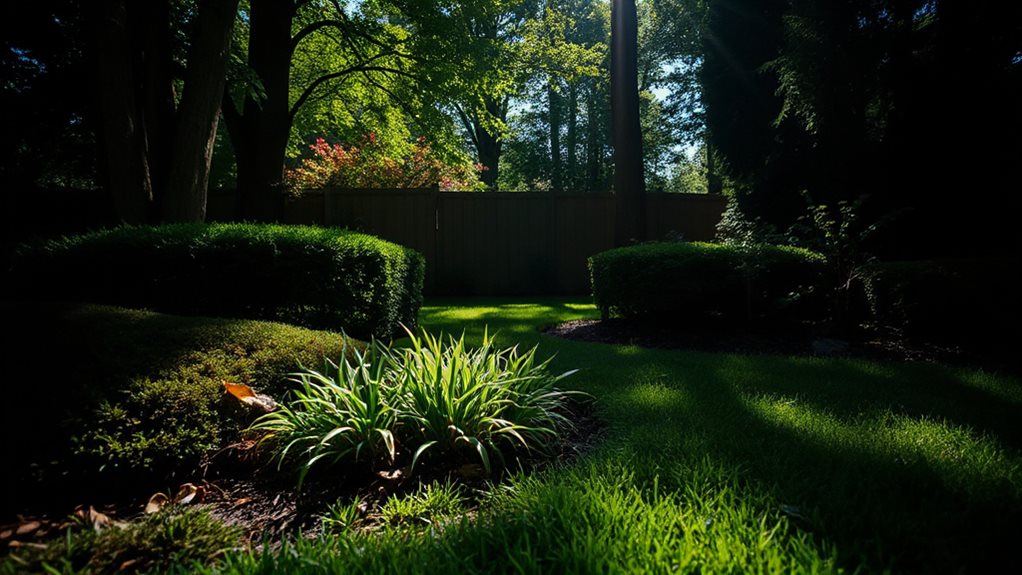
Ever wondered how to turn a shady backyard into a lush lawn without feeling like you’re wrestling a jungle? First, rake out dead grass, till 6‑8 inches deep, and mix compost for texture.
Then, spread fine fescue or tall fescue with a drop spreader in two half‑rate passes, lightly press seed into soil, and top with a thin layer of quality topsoil before applying starter fertilizer.
Watering Shade‑Planted Seed Without Over‑Saturating
You’ll want the soil to stay just damp enough—think a sponge that’s been wrung out, not a puddle—so the seed can sprout without drowning, and you can check this by feeling the top inch or two or using a moisture meter. Have you tried timing your waterings for early morning or late afternoon, when the shade keeps the ground from evaporating too fast, and using a light mist or a gentle oscillating nozzle to avoid creating waterlogged spots? Remember, a quick 5‑minute sprinkle a few times a day does the trick, and if you notice any soggy patches, cut back the next session and let the soil breathe a bit before you give it another drink.
Moistent Moisture Levels
Because shade slows evaporation, you’ll find that a little water goes a long way when you’re trying to keep grass seed happy under a tree.
Check the top 1.5 inches daily, aim for a light, consistent dampness, and water twice a day for ten minutes each—just enough to wet the soil without drowning it.
Adjust if rain arrives, and remember trees sip a lot, so keep an eye on competition.
Avoiding Waterlogged Soil
So, how do you keep shade‑planted grass seed from turning into a soggy swamp without drowning it in water? Light mist twice daily, using an oscillating nozzle, keeps the top two inches damp but not drenched; check with a screwdriver.
Mulch with thin straw or peat to hold moisture, and let the soil dry between sessions, preventing puddles and disease.
Timing Waterings for Germination
After keeping the soil from turning into a soggy swamp, the next step is figuring out when and how often to water those shade‑planted seeds so they stay happy but don’t drown.
Water lightly 10‑15 minutes, twice or three times daily, preferably mornings and evenings; skip peak sun hours.
In deep shade, cut the volume, watch for puddles, and let the soil dry a bit between sprays to keep microbes at bay.
Post‑Germination Care Essentials
Ever wondered how to keep those tiny grass sprouts thriving once they break through the soil? Water them light, often—three to four short bursts a day—until roots find moisture, then stretch the watering time while cutting frequency. Sprinkle slow‑release starter fertilizer at the recommended rate, and when the second leaf appears, give a gentle trim. Mulch lightly if wind threatens, and keep a close eye on soil temperature, aiming for at least 55 °F. This routine fuels strong, healthy growth.
Shade‑Planting Mistakes & Quick Fixes
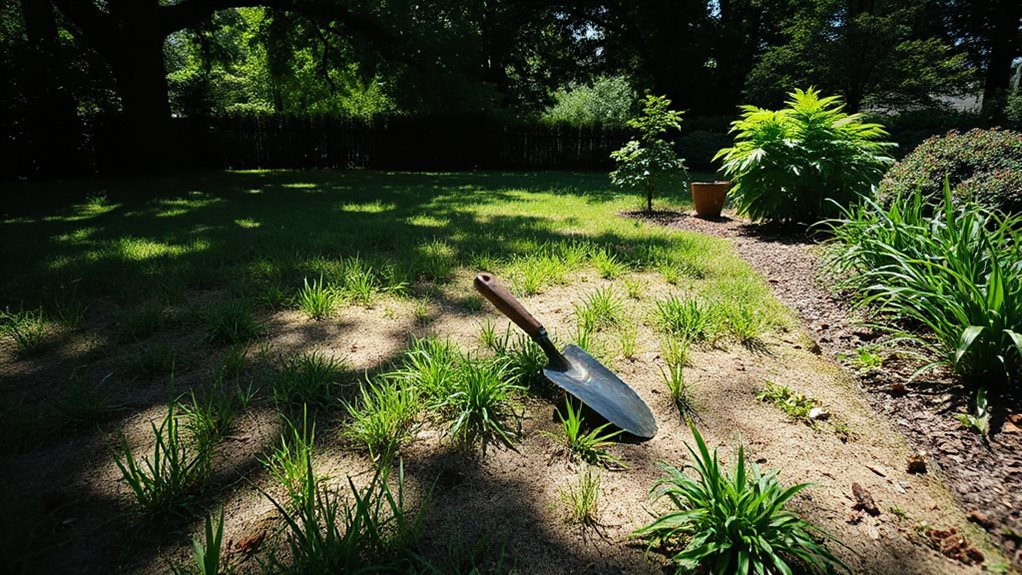
Ever wondered why your shade‑planting project sometimes feels like a camping trip gone sideways? You might be burying seeds too deep, smothering them with thick mulch, or picking the wrong grass for shady spots—think fine fescues, not warm‑season varieties. Light‑rake the seed, use a thin straw layer, water gently each day, and scarify the soil; then watch those green “campers” sprout happily.
Choosing Ground Cover Over Turf in Heavy Shade
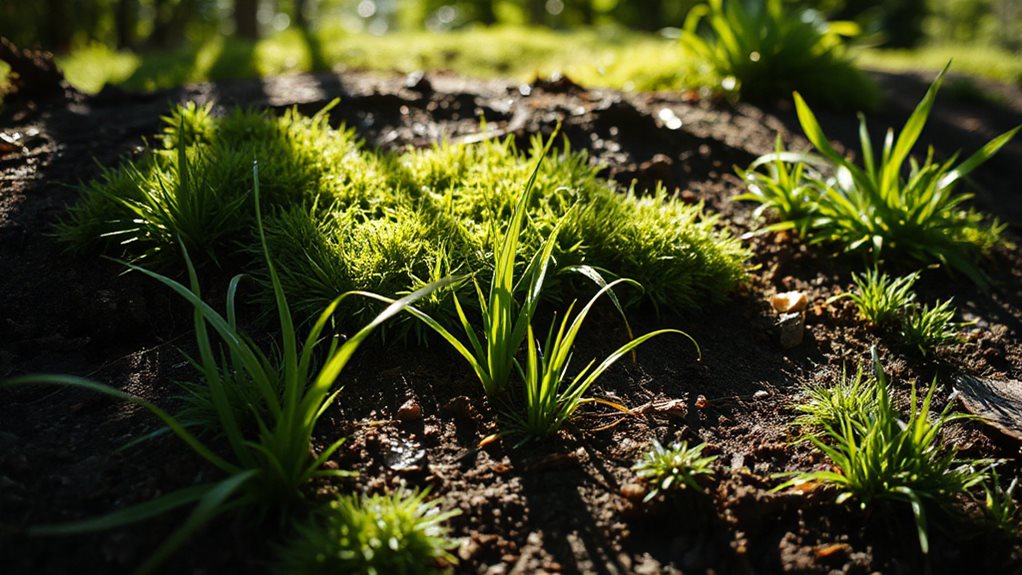
Why settle for a limp, patchy lawn when you could turn that dark, tree‑shrouded corner into a thriving mini‑ecosystem? You’ll ditch mowing, fertilizer, and water‑wasting turf for sheet moss, spotted deadnettle, or hardy plumbago, which hold soil, suppress weeds, and stay green year‑round.
Plant locally, thin as needed, and enjoy low‑maintenance, erosion‑proof ground that feels like a cool campsite under the canopy.
Overall
Now you’ve got the low‑down on shade‑loving grass, so grab those seeds, pick the right mix, and give them a gentle soak—just enough to keep them happy, not drowned. Remember, timing’s key: aim for early spring or fall, and watch the seedlings push through the dim light. If you slip up, a quick fix is a light mulch and a bit more water. Happy planting, and enjoy the cool, leafy carpet you’ll create under those trees!