How to Fix Soggy Areas in Your Lawn
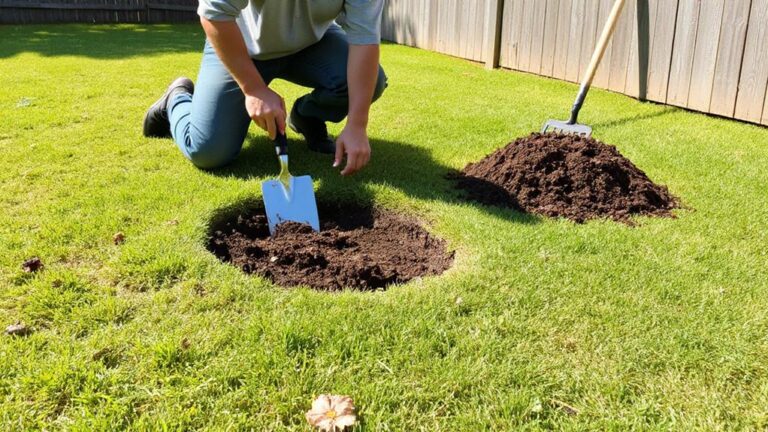
First, dig a small test hole to see if compacted clay, a thick thatch layer, or a leaky sprinkler is causing the soggy spots, then aerate with a core aerator (spike isn’t enough) to open deep channels, sprinkle horticultural sand and compost into the holes, and overseed with cool‑season grass while watering lightly; after that, consider a shallow trench with landscape fabric, slotted pipe, pea gravel, or a French drain if water still pools, and keep a 2 % slope away from the house—keep reading for the next steps.
TLDR
- Identify the cause of soggy spots (compacted soil, thatch, leaks, poor grading) by inspecting soil texture, sprinkler heads, and surface slope.
- Perform core aeration (or spike for quick fix) in fall or spring to create drainage channels, especially in heavy clay.
- Top‑dress aerated areas with a mix of horticultural sand and compost to improve infiltration and soil structure.
- Overseed with appropriate cool‑season grass seed, keep soil moist, and monitor moisture levels before installing drains.
- Install a French drain or shallow trench with landscape fabric, slotted pipe, and pea gravel, ensuring a 1‑inch‑per‑10‑feet slope away from the house.
Diagnose Soggy Spots and Improve Lawn Drainage
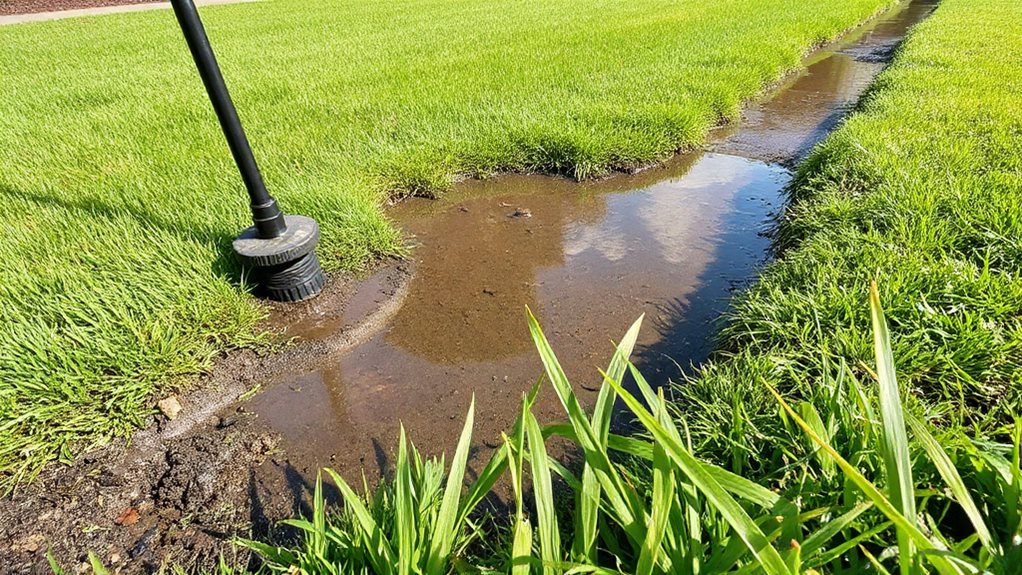
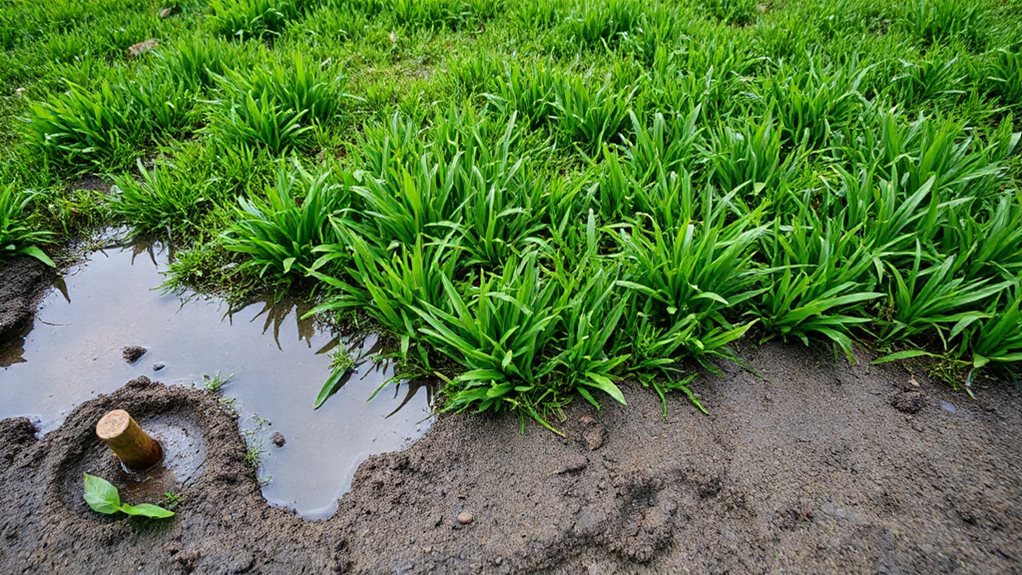
Ever noticed those soggy patches that turn your lawn into a mini swamp after a light rain, and wondered why the water just won’t drain? You’ll spot compacted soil when foot traffic squashes air pockets, or a thick thatch layer acting like a sponge. Check sprinkler heads for leaks, then dig a small test hole—if roots look rotten or soil feels like a mud pie, you’ve nailed the cause. Poor grading often directs water toward low‑lying spots, worsening the soggy condition. Birds may also be less likely to visit wet lawns if standing water attracts predators or reduces foraging opportunities, so consider improving drainage to support a healthier yard and native plants.
Choose the Right Aeration Method for Compacted or Clay Soil
How do you tackle those stubborn, water‑logged patches that feel like a mud‑filled pothole on a hiking trail? If your lawn’s clay feels like a packed backpack, choose core aeration—pulling out plugs with a Classen Airator gives lasting relief, letting nutrients, water, and air roam freely. Spike aeration works for quick fixes, but plugs refill fast, so for heavy clay, core wins every time. Edge zones often green up sooner thanks to radiant heat from adjacent pavement, which can warm soil and improve early spring growth.
Aerate Your Lawn Step‑by‑Step for Better Drainage
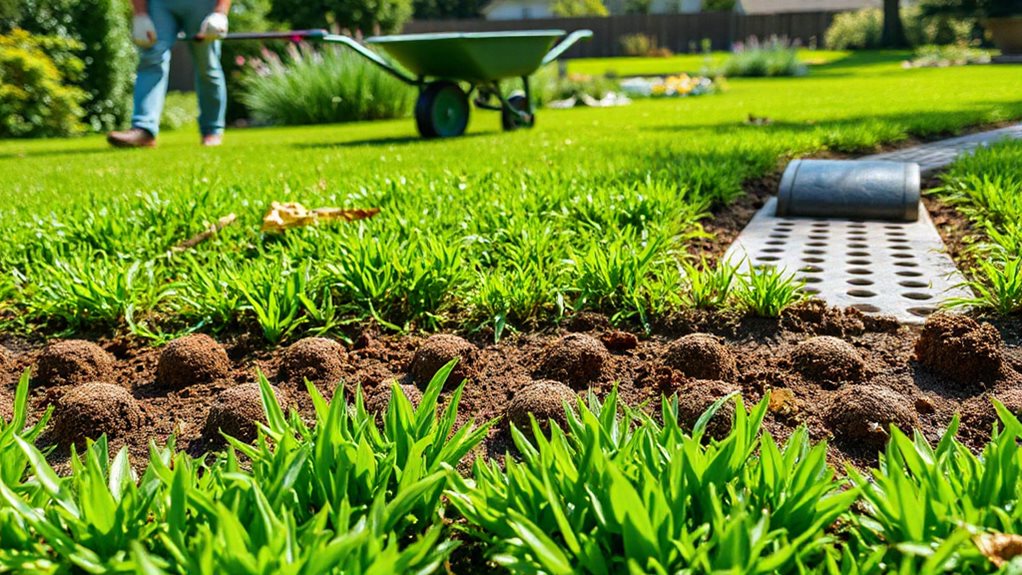
You’ll want to pick a core aerator that pulls out those soil plugs, because it gives the deepest channels for water to escape, and you should schedule the job for fall or spring when the grass is buzzing with growth—summer heat and winter dormancy are a no‑go.
Have you ever tried the electric version that drags cylinders of soil out while you watch the plugs pile up like tiny Lego bricks?
Once you’ve got the right tool and timing, just roll the machine across the lawn, overlapping each pass by about half, and you’ll see the drainage improve faster than you can set up a campsite tent!
Improving soil structure with core aeration and added organic matter helps roots penetrate deeper and reduces soggy patches.
Choose the Right Aerator
So, imagine this: you’re standing in a backyard that feels more like a soggy marsh than a carpet of green, and you’re wondering which aerator will actually rescue your lawn from turning into a swamp. If your soil’s clay‑heavy, grab a core aerator—its plugs break up compaction and add organic matter; for sandy, lightly compacted lawns, a spike or slicing tool works fine, offering quick, low‑effort holes that let water drain. Choose size‑appropriate gear, rent if needed, and match the tool to your lawn’s needs.
Timing for Maximum Effect
Ever wondered why some lawns bounce back after a rainstorm while others stay soggy for days? You should aerate in late spring or early summer for warm grasses, and early fall for cool ones, because that’s when they’re actively growing and can heal fast.
Water first, mow short, then punch holes, and follow up with fertilizer and overseeding for lasting drainage.
Top‑Dress With Sand, Compost, or Soil to Boost Infiltration
You’ll want to start with horticultural sand because its uniform grit works wonders on heavy clay, letting water slip through like a well‑lubricated trail, and you’ll notice the difference instantly—have you ever watched sand sift through a sieve?
Then, sprinkle in compost a little at a time, letting the microbes mingle with the sand so the soil stays fluffy and the grass gets a nutrient uplift, kind of like adding marshmallows to your campfire s’mores for extra texture.
Finally, mix the two together right before you spread it, because the combo creates a breathable, water‑loving blanket that turns soggy spots into a playground for healthy turf—trust me, it’s as satisfying as finding a hidden waterfall on a hike.
Mulching over grass around trees can help reduce competition and lock in moisture when done correctly, so consider adding a layer of organic mulch around tree bases rather than piling it against trunks.
Choose Horticultural Sand
Ever wonder why your lawn feels like a soggy swamp after a rainstorm? Grab coarse, sharp horticultural sand—no salts, no junk—because it loosens compacted clay, enhances aeration, and lets roots breathe.
Aerate first, then rake a quarter‑inch layer into the holes, mixing with topsoil if you like. This simple top‑dress keeps foot traffic happy and water draining, just like a well‑packed campsite.
Incorporate Compost Gradually
A handful of compost, spread thinly over your soggy lawn, works like a magic carpet that slowly rolls into the soil, enhancing infiltration while you’re still busy planning your next camping trip. You’ll notice the soil loosening, microbes partying, and nutrients leaking in, so the grass drinks smarter, not harder.
Apply a thin layer twice yearly, and watch the soggy spots vanish—just like a campsite cleanup after a rainstorm.
Overseed to Develop a Deeper, Water‑Absorbing Root System
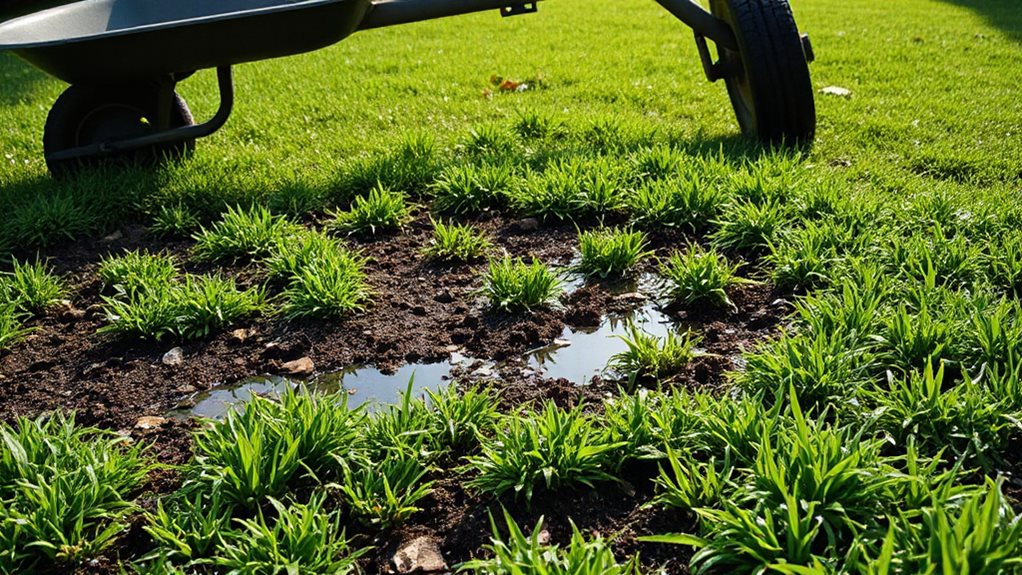
When you overseed a soggy lawn, you’re basically giving it a fresh set of “boots” that dig deeper and drink up water like a thirsty camper at a lake—think of the new seedlings as tiny, enthusiastic explorers that intertwine with the old grass, forming a dense, interconnected root network that holds the soil together and creates pathways for water to flow through instead of pooling on the surface.
Mow short, rake, then spread cool‑season seed in fall or spring; water lightly, keep soil moist, and watch those roots dive down, soaking up excess moisture while you enjoy a drier, greener yard for everyone. Proper overseeding combined with core aeration helps roots penetrate compacted soil so water drains more effectively.
Decide if a Drain Is Needed After Overseeding
You’ll want to check how wet the soil stays after you’ve overseeded, because persistent dampness often means a drain could save your new seedlings from drowning; have you measured the moisture levels with a simple probe or just felt the soggy spots with your hands?
If the water lingers for days, plan the drainage installation before the next rain, timing it so the soil dries enough for the drain to work without washing away the seed, and remember that a quick aeration or a shallow trench can sometimes do the trick without a full‑blown system.
I’ve tried both approaches—one time I installed a French drain and felt like a campsite water‑management guru, another time I just added a handful of compost and watched the grass thrive, so experiment and see what fits your lawn’s vibe!
Assess Soil Moisture Levels
Even if your lawn feels like a soggy marsh after overseeding, you can quickly decide whether a drain is actually needed by checking the soil’s moisture levels with a few simple, hands‑on tests. Grab walnut‑sized samples, crumble them, and feel the ball’s cohesiveness—if it sticks together, moisture’s high. Push a screwdriver in; it should slide with a little resistance. Try a probe to see how deep water sits, and note any persistent soggy spots beyond six inches. This tells you if drainage’s required.
Plan Drainage Installation Timing
You’ve just checked the soil’s moisture and now you know whether the soggy spots are a temporary hiccup or a sign that something bigger is brewing—so let’s talk timing for any drainage work you might need after overseeding.
Generally, wait four to six weeks, letting seedlings build roots, then install drains; early aeration helps, and heavy clay may demand sooner action, but avoid trenching during the first two‑to‑four weeks.
Install French Drains or Dry Wells for Reliable Lawn Drainage
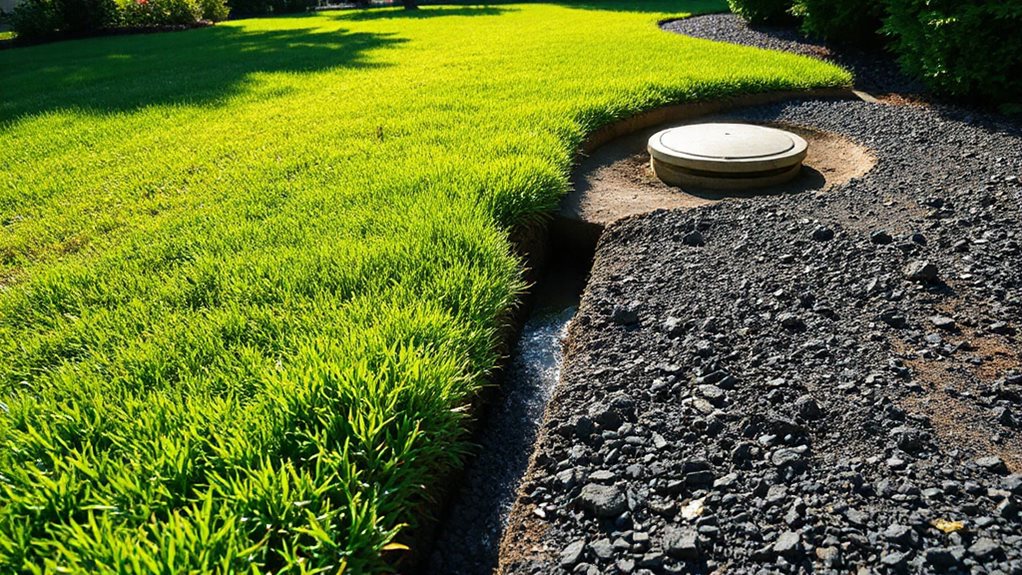
Ever wondered why your backyard turns into a swamp after a rainstorm, even though you’ve got a pretty decent lawn?
You can fix it by digging a 5‑inch‑wide, 20‑inch‑deep trench at the low spot, laying landscape fabric, then a slotted pipe with holes down, covering it with pea gravel, and backfilling with topsoil before sod.
Check zoning, keep a 1‑in‑per‑10‑ft slope, and your lawn will stay dry.
Create Soakaways, Ditches, or Rain Gardens to Divert Water
After you’ve got that French drain humming, you can take the next step and give your yard a few extra tricks—soakaways, ditches, and rain gardens—to keep water from turning your lawn into a mini‑lake.
Dig a gravel‑filled pit five meters from the house, line a shallow basin with sand‑rich soil, plant native wet‑tolerant shrubs, and let runoff disappear like a camp‑trip snack, all while protecting neighbors and the planet.
Apply Permeable Paving and Mulch to Improve Lawn Drainage on Hard Surfaces
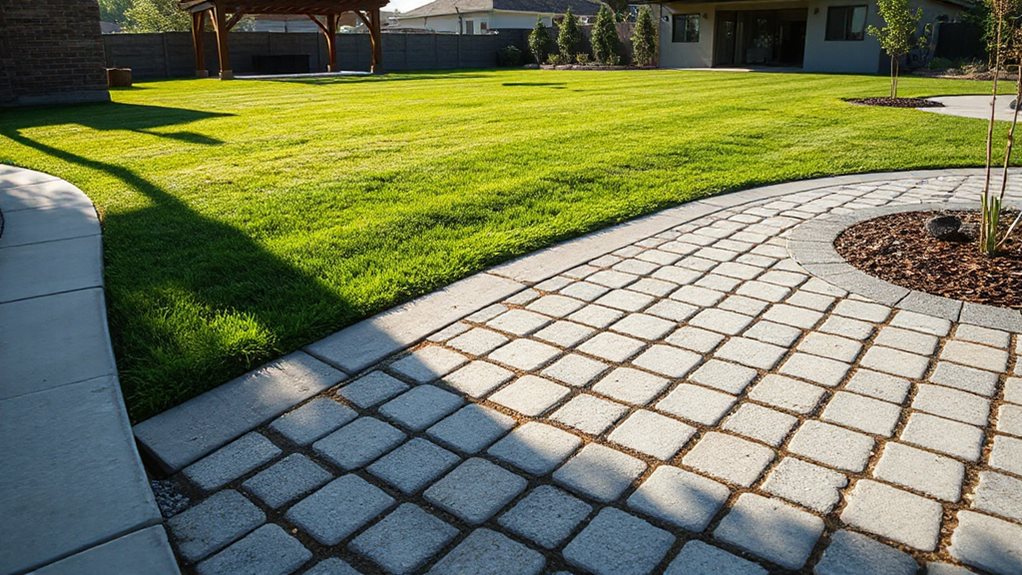
Ever wonder how a simple patio upgrade can turn a soggy backyard into a dry, camp‑ready oasis? You can replace a concrete slab with perforated pavers, stack stone sub‑base, then spread gravel or mulch joints—water slips through, filters, and recharges soil, keeping lawns dry. Install grid pavers, use sand infill, and watch runoff vanish like magic, protecting neighbors’ gardens too.
Regrade Low‑Lying Zones to Slope Away From Your Home for Drainage
If you’ve just swapped out that soggy concrete slab for perforated pavers and watched the water disappear like magic, the next step is to tackle those low‑lying spots that still pull water toward your house—because even the best patio can’t fix a yard that’s basically a shallow pool.
You’ll spray‑paint contours, dig out turf, pile soil to raise low zones, compact, test with a hose, then reseed, ensuring a 2% slope away from the foundation.
Seasonal Lawn Care Schedule to Maintain Long‑Term Drainage
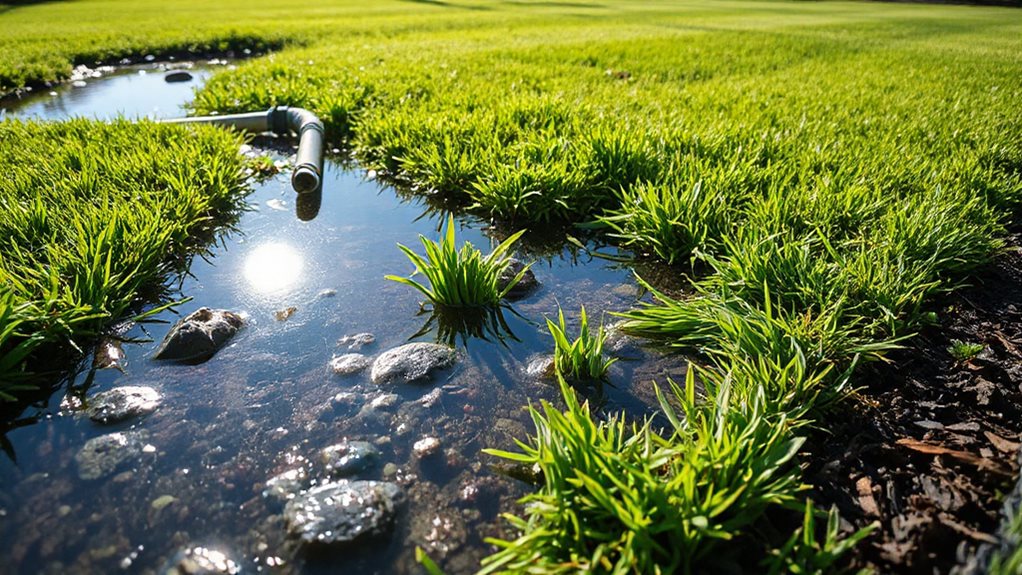
When you map out your lawn’s yearly routine, think of it like planning a road trip that keeps your yard from turning into a swampy pit stop—each season brings a new set of checkpoints, and you’ll want to hit them all so the drainage stays smooth and the grass stays happy.
In winter, check irrigation, clear debris, and avoid traffic; spring, test soil, aerate, and overseed; summer, water deeply early, raise mower height, and use wetting agents; fall, cut back watering, control weeds, apply potassium, and dethatch. Adjust based on climate, monitor pests, and keep an eye on moisture depth for lasting drainage.
Overall
Now you’ve got the tools to banish soggy spots for keep your lawn laughing all summer, so why not give those drainage tricks a whirl? Try aerating, sand‑top‑dressing, and maybe a rain garden—watch the water disappear like a magician’s trick. Trust me, when you see the grass stay dry, you’ll feel like a backyard explorer who just discovered a secret trail. Keep it simple, stay consistent, and enjoy a lawn that’s as dry as a desert oasis after a good rain‑shower adventure.