Why Do Plant Leaves Turn Translucent?
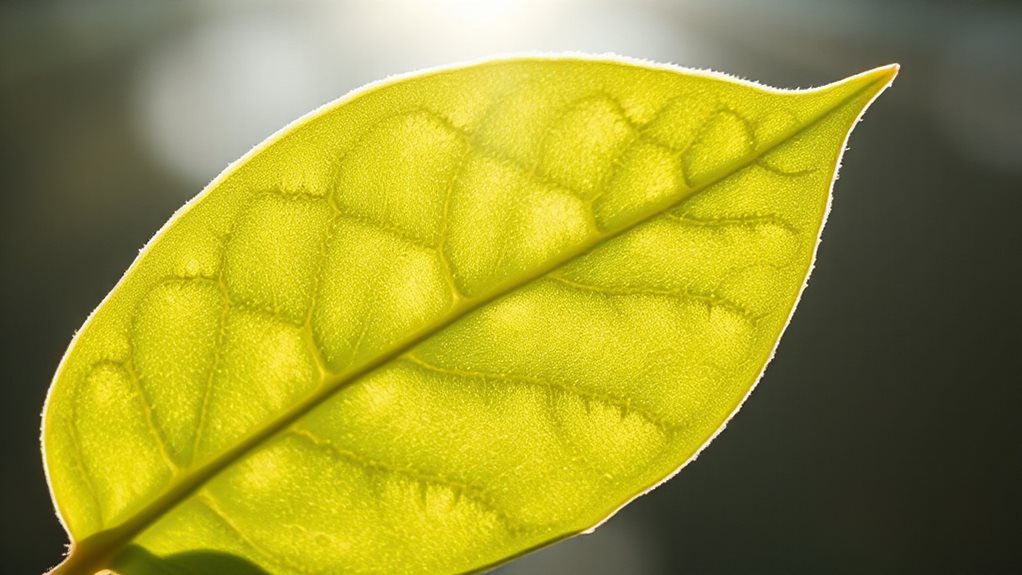
You’re probably wondering why your plant’s leaves look like frosted glass, and it’s usually a mix of water‑related stress, light shocks, drafts, or nutrient gaps that make the cells lose their usual green opacity. Overwatering can cause cells to burst, creating translucent spots that look like tiny bubbles, while excess humidity can produce edema blisters that merge into water‑soaked patches. A sudden move to bright sunlight can overwhelm the leaf’s D1 protein, turning it pale but still supple, and chilly drafts near windows can thin the edges, making them look glassy. Nutrient imbalances or dry soil can also starve the leaves, giving them a glass‑like sheen. If you keep an eye on watering, light, and temperature, you’ll spot the culprit fast—and the next section will show you exactly how to fix it.
TLDR
- Overwatering causes cells to burst, creating translucent or glassy patches, especially after guttation droplets.
- Edema, a water‑soaked disorder, forms tiny blisters that merge into translucent spots when excess moisture overwhelms leaf tissue.
- Sudden exposure to intense light can shock leaves, breaking down chlorophyll and making them appear pale and translucent.
- Cold drafts or low temperatures damage leaf edges, producing thin, transparent margins that may curl or yellow.
- Nutrient deficiencies, especially nitrogen or micronutrients, and overly dry soil can thin leaf cells, leading to a translucent, glass‑like appearance.
Identify Overwatering as the Cause of Transparent Leaf Spots
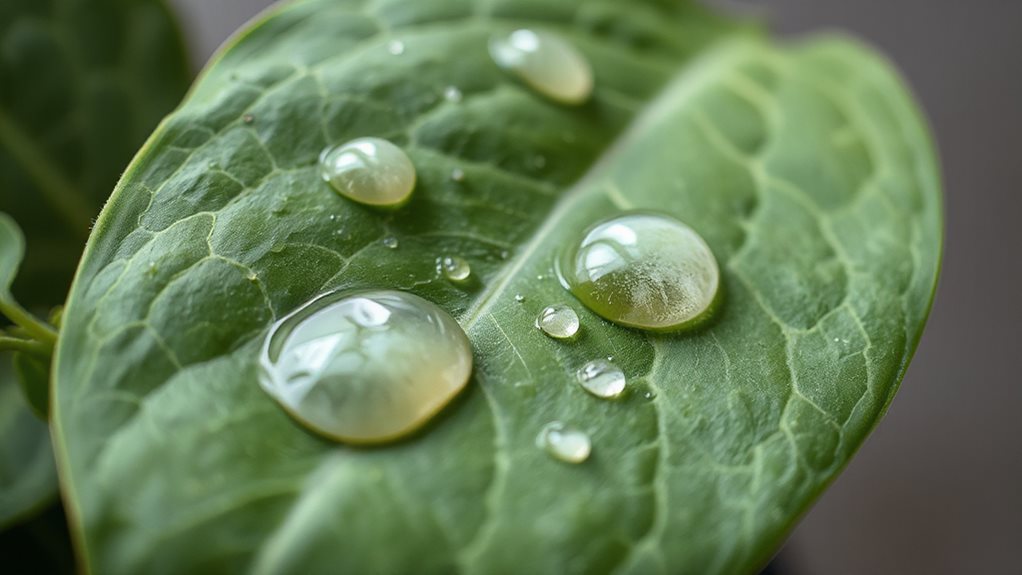
Ever wonder why your plant’s leaves look like frosted windows after a big watering? You’re probably overwatering, which forces cells to burst and turn translucent, especially after nightly guttation droplets. Consider repotting into well-draining soil to improve root oxygen and prevent recurrence.
Reduced airflow can also contribute to this condition.
Check for yellowing from the base, mushy stems, and wilting despite soggy soil.
Trim the bad parts, let the soil dry, and give your plant a breather—like a camp‑fire pause.
Spot Edema‑Related Bumps That Mimic Transparent Leaves
Curious how those little, glassy bumps on your plant’s leaves can masquerade as the frosted‑window effect you’ve seen after an over‑watering binge? You’ll notice tiny, translucent blisters—especially on Stromanthe, Peperomia, Monstera—forming where excess water bursts cells, then merging into water‑soaked patches that look like fogged glass.
Adjust moisture, humidity, and ventilation, and those “transparent” spots fade, keeping your garden happy and healthy. Improving soil health through proper fertilization and aeration can also reduce stress that makes plants more prone to edema.
Detect Light‑Shock Transparency From Sudden Brightness
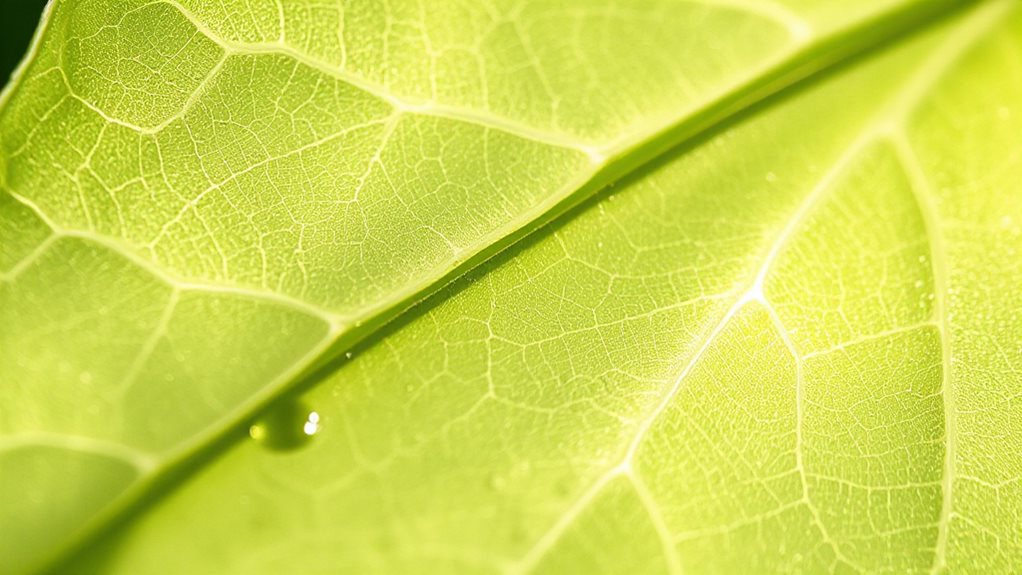
So, you’ve just moved your fern from a dim corner to a sun‑splashed windowsill, and now its leaves look like frosted glass—what’s going on? You’re seeing light‑shock transparency: sudden high light overwhelms the D1 protein, chlorophyll breaks down, and soft, flexible leaves turn pale but stay supple. Check if they stay soft—if yes, they’ll recover with reduced exposure; if crispy, they’re dead.
Recognize Cold Drafts That Thin Transparent Leaf Spots
Why do some leaves suddenly look like frosted windows after a chilly breeze rolls through the room? You’ll spot thin, transparent patches on the leaf’s edge, especially near windows where drafts sneak in, and you might feel the air moving, notice yellowing or curling, and see dark tips crisping.
Check placement, feel the draft, and act fast—protect those delicate leaves before permanent loss.
Trace Nutrient & Water Issues That Produce Transparent Leaves
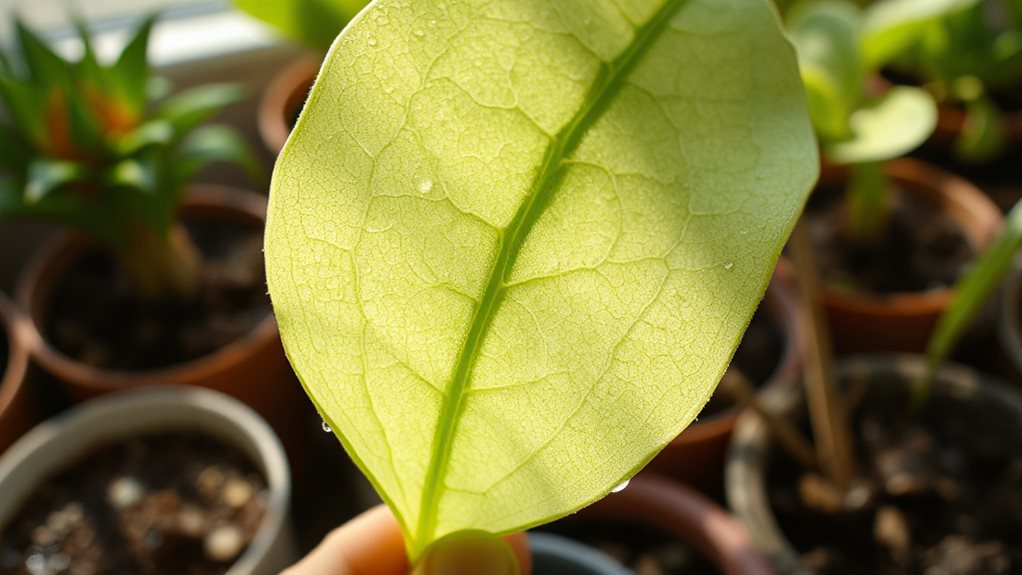
After you’ve spotted those frosty‑looking edges from a chilly draft, the next thing to hunt down is what’s happening inside the plant’s water and nutrient system, because the same ghostly translucency can also scream “I’m thirsty or I’m starving!” – you’ll notice the leaves turning soft, pale, and almost see through when the roots are drowning in waterlogged soil, which blocks oxygen and rots the roots, or when they’re bone‑dry and the cells collapse from dehydration, and the culprit could even be a sneaky nitrogen shortage that makes older leaves yellow, thin, and curl inward as the plant shunts the precious nutrient to fresh growth, while micronutrient gaps or a buildup of fluoride and salts from tap water can leave the foliage looking faded and glassy, so grab a moisture meter, check your watering schedule, and give those spider plants the right balance of water and nutrients before they turn into translucent windows forever. Monitor recovery week by week to ensure proper watering, light, and patience during the plant’s adjustment period, especially for larger plants.
Diagnose Pests & Root Rot That Imitate Transparent Spots
You’ll notice spider mite damage first as tiny, glittery spots that look like the leaf is wearing a sequined jacket, and you can spot them by checking the undersides where they love to hide; have you ever felt like a detective on a camping trek, hunting for clues in the mud?
When root rot sets in, the plant’s veins turn watery and translucent, almost as if the leaf is a translucent tent canvas sagging from too much rain—so test the soil moisture and give the roots a gentle squeeze to see if they feel mushy.
And if you spot concentric rings or sunken lesions that seem to glow through the leaf, that’s a fungal infection trying to pull a fast one, which reminds me of the time I mistook a mushroom for a campfire marshmallow!
Ensure beds have well-draining soil and compost mixed in to help prevent waterlogging and root diseases.
Spider Mite Damage
Ever noticed those ghostly, almost see‑through patches on your plant’s leaves and wondered if they’re just a funky lighting trick? You’re probably looking at spider mites, those tiny yellow specklers that puncture cells, leaving stippled, bronzed, translucent spots, especially on undersides.
Check for fine silk webs, tap foliage over white paper, then spray soap‑water or neem oil, re‑applying every few days to protect your garden companions.
Root Rot Indicators
The soil’s soggy secret can turn your plant’s leaves into wilted, droopy messes, even when you’ve been watering like a pro, and that’s a classic sign that something’s wrong beneath the surface—root rot, to be exact. You’ll see wilting despite moisture, yellow‑brown tips, mushy blackened stems, and a musty rot stinking soil; roots feel stringy, soft, or smell like rotten veggies, so trim the rot, repot fresh media, and save your green friends.
Fungal Infection Signs
Ever wondered why some leaves look like tiny, glassy windows, as if a mischievous sprite just sprayed them with clear jelly?
When fungal infection strikes, you’ll see brown or black spots with concentric rings, sometimes edged in yellow or reddish‑brown, and bright yellow‑orange patches that powdery spores if you rub them.
Look for white‑gray edges, bird‑eye necrosis, and those tell‑tale black dots that separate fungus from insects, then act fast to protect your garden companions.
Apply Quick Fixes to Restore Leaf Opacity
You can jump‑start your plant’s recovery by tweaking the watering schedule—water only when the top inch of soil feels dry, and let excess drain out so the roots stay happy and not soggy. Have you tried moving the pot to a brighter spot with steady indirect light? A little extra sunshine, like a sunny campfire evening, often revives chlorophyll and makes those translucent leaves turn opaque again. Planting aromatic herbs like rosemary nearby can also help deter sap-sucking pests that weaken leaves.
Adjust Watering Schedule
Ever wondered why your plant’s leaves look like frosted windows instead of radiant green? Check soil moisture first—finger 1‑2 inches deep, or use a meter, then water only when the top feels dry. Cut back watering by a few days to a week, keep pots draining, and let the soil dry fully before the next soak; you’ll see opacity return fast.
Improve Light Conditions
What if you could turn those frosted‑window leaves back into lively, glossy panels just by tweaking the light they soak up? Place them where bright, indirect light streams in—sheer curtains filter harsh sun, preventing burn while enhancing photosynthesis. Clean dust with a soft, cloth, then let airflow dry leaves quickly, mimicking post‑rain breezes. This simple light makeover revives opacity, letting you serve thriving, radiant plants.
Overall
Now you’ve got the scoop on why leaves turn translucent—overwatering, edema bumps, sudden light shock, chilly drafts, nutrient imbalances, pests, and root rot are all culprits, so next time you spot a ghostly leaf, check those factors first. Got a plant that looks like a frosted window? Adjust its water, protect it from harsh sun, warm up the room, and give it a nutrient boost; you’ll see those transparent spots disappear faster than you can say “campfire marshmallows.” Happy planting!