Fescue vs Kentucky Bluegrass: Which Grass Wins?
Honestly, picking between fescue and Kentucky bluegrass is like choosing between a rugged hiking buddy and a snazzy travel companion—both have their perks! If you’re after a lush, silky lawn that bounces back fast from backyard soccer or camping tents, bluegrass is your show-off. But if you want tough turf that handles shade, high traffic, and isn’t thirsty when summer strikes, you’ll love fescue’s no-fuss attitude. Stick around, because each grass has some surprises you’ll want to know about!
TLDR
- Tall fescue offers superior drought and heat tolerance, making it ideal for low-maintenance and water-restricted lawns.
- Kentucky bluegrass creates a dense, lush, carpet-like turf with fast self-repair via rhizomes.
- Fescue thrives in shade and high-traffic areas, while bluegrass prefers full sun and less wear.
- Bluegrass needs more frequent watering and maintenance, but recovers from damage faster than fescue.
- For the best results, many lawns blend both grasses to balance beauty, durability, and environmental adaptability.
Fescue vs. Kentucky Bluegrass: Key Differences

Although you might think all grass is pretty much the same, there’s actually a big showdown going on between fescue and Kentucky bluegrass—and trust me, you’ll want to know the difference, especially if you’re dreaming of the perfect campsite lawn or a backyard that’s both tough and comfy!
Kentucky bluegrass spreads fast via rhizomes, creating dense, self-repairing turf, but it’s thirstier and struggles with heat stress.
Fescue, especially turf-type tall fescue, nails drought tolerance, thrives in shade, and cuts your water requirement—perfect for serving outdoorsy friends!
Additionally, water pressure in your irrigation system can impact how well your grass stays healthy and hydrated, making proper watering practices essential.
Appearance and Texture: What to Expect
When you’re picking a lawn for your backyard campouts or soccer games, you’ll notice Kentucky bluegrass shows off with thin, soft blades and a rich green color.
While fescue brings thicker, tougher blades that look ready for any escapade. Have you ever run your hand across bluegrass in the cool spring air and felt that silky, carpet-like texture? Or maybe noticed how fescue stands tall and rugged, even after a rowdy tent setup?
Let’s check out the differences in blade width, color, and how each grass changes with the seasons, so you know exactly what to expect when you’re planning your next backyard camping trip!
Blade Width And Color
If you’ve ever flopped down on a grassy field during a camping trip and wondered why some lawns feel soft as a hotel pillow while others feel more like a rugged picnic blanket, you’re definitely not alone!
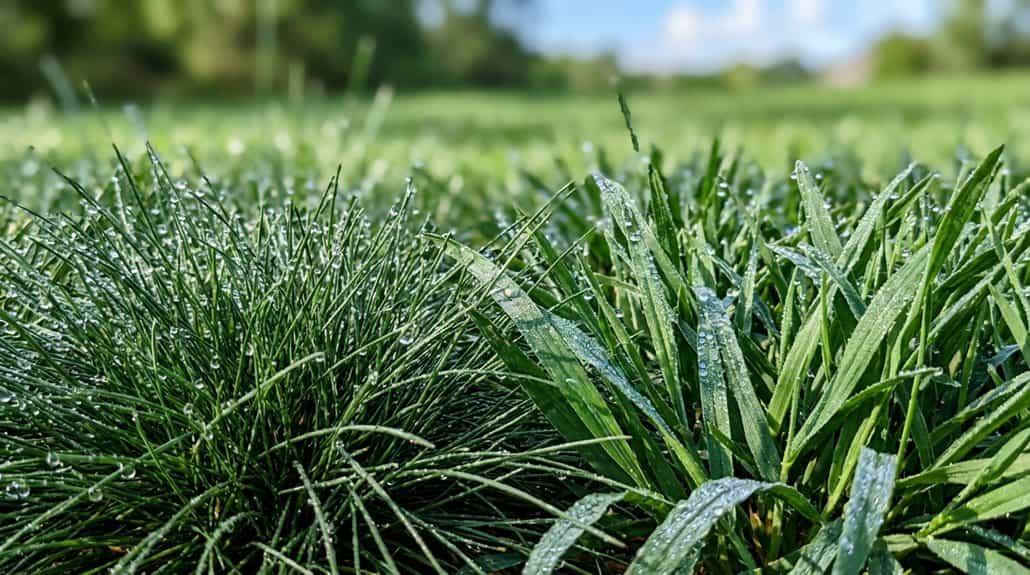
Kentucky bluegrass has narrow blades, a fine texture, and a deep green hue—think “lawn aesthetics goals.”
Tall fescue, with its broader blade width and coarser texture, brings a sturdier, more decorative vibe.
Growth Habit Differences
Let’s talk about what you’ll actually see and feel under your feet, because the way fescue and Kentucky bluegrass grow is kind of like comparing a shaggy camping blanket to a perfectly woven picnic mat.
Kentucky bluegrass loves spreading with underground stems called rhizomes, so it creates a uniform turf and fills in damaged areas.
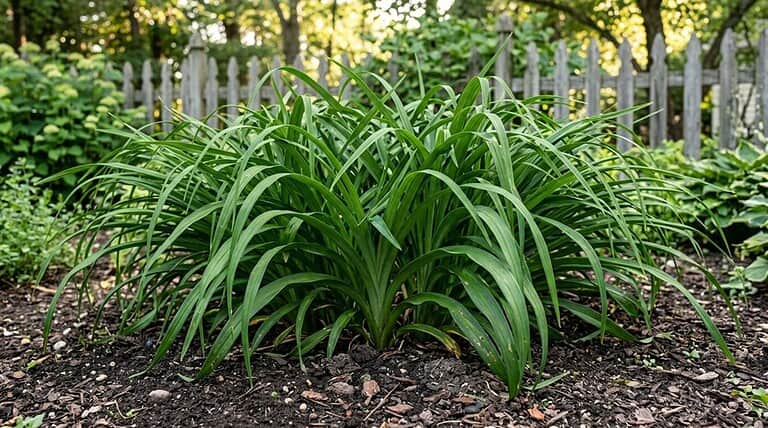
Fescue’s bunch grass growth habit means clumping, and bare spots need overseeding.
Seasonal Visual Appeal
Although you mightn’t think too much about grass until you sprawl out for a picnic or pitch your tent, the way your lawn looks and feels throughout the year can totally change your outdoor expeditions.
Kentucky bluegrass keeps things lush and lively in spring and fall, showing off that deep green color and fine texture.
While fescue’s coarser blades or fine fescues’ soft appearance offer their own seasonal visual appeal.
Which Grass Handles Heat and Drought Better?
When the sun is blazing and rain seems like a distant memory, you might wonder which grass will survive your summer camping excursions without turning into a crispy brown carpet—well, let me tell you, not all grasses are created equal when it comes to handling heat and drought!
If you want drought survival, tall fescue’s deep roots, drought resistance, and heat tolerance totally outshine Kentucky bluegrass’s shallow roots and poor water retention.
Additionally, understanding how to properly shut off propane tanks after grilling can ensure safety and conserve resources during your outdoor activities.
Maintenance Needs: Water, Mowing, and Repair

If you’re the kind of person who’d rather be out camping or planning your next road trip than stuck at home mowing the lawn, you’ll definitely want to know how much work each grass actually takes—because nobody wants a yard that’s needier than a hungry squirrel.
Let’s talk about how often you’ll be watering, when you’ll need to mow, and whether your grass can heal itself after a wild game of backyard soccer (or if you’ll be out there patching up bald spots like a lawn doctor).
Trust me, understanding these differences can save you tons of time, water, and maybe even a little frustration—so let’s check out which grass is the better expedition buddy!
Watering Frequency and Efficiency
Let’s plunge into one of the biggest differences between fescue and Kentucky bluegrass—how much water they guzzle down, especially if you dream of spending your weekends camping instead of dragging hoses across your lawn!
Fescue’s deep roots and drought tolerance mean less watering and greater water efficiency.
While bluegrass’s shallow roots demand more irrigation.
With fescue, you’ll enjoy water savings, easier turf maintenance, and a more drought-resistant yard!
Mowing Demands Compared
Although both fescue and Kentucky bluegrass give you that classic, lush-lawn look, they’re pretty different when it comes to how much time you’ll spend behind a mower—or, hopefully, out on a camping trip instead!
Tall fescue is a low-maintenance grass with lower mowing demands, thanks to its slow growth and higher mowing height.
Kentucky bluegrass needs more frequent mowing, making lawn maintenance tougher for busy turf management heroes like you.
Self-Repair Capabilities
Whenever you’re dreaming about escaping to the mountains or planning a weekend camping trip, the last thing you want is to worry about ugly bare patches popping up all over your lawn. Kentucky bluegrass is your buddy here—it uses its rhizome system for self-repair and natural repair, quickly filling in bare spots.
Turf-type tall fescue can’t, so you’ll be patching and overseeding for any lawn repair or damage recovery.
Sun, Shade & Traffic Performance

If you’ve ever tried to pick the perfect lawn for your backyard camping escapades or epic summer games, you know the amount of sun, shade, and foot traffic your grass gets can make all the difference! Tall fescue’s shade tolerance, wear resistance, and drought tolerance make it a champion in high traffic and sun exposure, while Kentucky bluegrass shines in sunny spots but struggles in shade areas. Additionally, considering the ornamental trees in your landscape can enhance both the aesthetic appeal and ecological benefits of your yard. Choose wisely!
Should You Mix Fescue and Bluegrass?
Ever wondered if mixing fescue and Kentucky bluegrass could be the secret recipe for your dream lawn—the kind that’s perfect for pitching a tent or playing marathon games of tag without worrying about bald patches? Including a variety of grasses can promote natural pest control, reducing the likelihood of fly infestations and other unwanted visitors on your lawn.
How to Choose the Best Grass for Your Lawn

Picking the best grass for your lawn isn’t just about grabbing the first bag of seeds you see at the store—there’s actually a bit of strategy (and even a little science) behind it. Especially if you want a yard that’ll handle family campouts, summer water balloon battles, or just look awesome all year round.
Think about drought tolerance, shade, water needs, wear resistance, turf performance, and mixture blending—your lawn choice matters! Incorporating ground cover plants that suit your specific slope and soil conditions can also enhance stability and reduce maintenance.
Overall
So, after digging into fescue and Kentucky bluegrass, you’ve probably realized there’s no one-size-fits-all answer, just like picking the best campsite—some folks love shade, others want sun! If you hate mowing but love summer camping trips, maybe fescue’s your pal. But if you dream of lush, soccer-worthy fields, Kentucky bluegrass is tough to beat. Don’t be afraid to mix them, experiment, and see what works for your yard—trust me, your lawn escapades are just beginning!