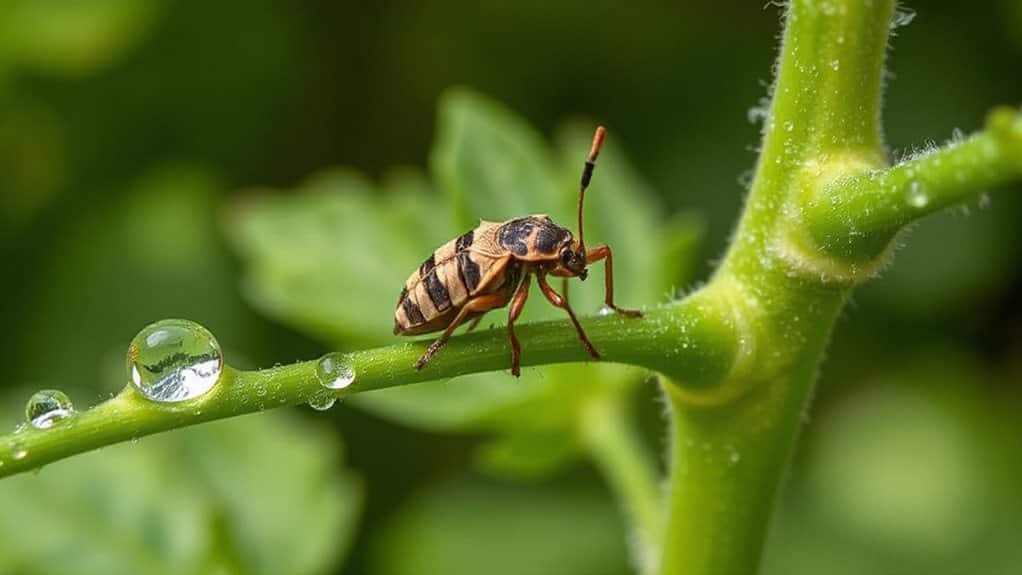
Beneficial Insects Mistaken for Pests in Home Gardens
You might be shooing away tiny spotted ladybugs or slim green lacewings without realizing they’re your garden’s secret weapon, right? Those cute critters are chomping through aphids and whiteflies like campfire marshmallows! Even creepy-looking assassin bugs and barely-visible predatory mites are hard at work, keeping pests in check—no chemicals needed. Think twice before squishing something weird; it might actually be your tomatoes’ best friend. Stick around, and you’ll find out which “creepy crawlies” are really undercover heroes.
TLDR
- Ladybugs are often mistaken for pests due to their bright coloring, but they protect plants by eating aphids.
- Green lacewing larvae look like tiny alligators but are beneficial predators of aphids and whiteflies.
- Predatory mites resemble pest mites but control thrips and fungus gnats without harming plants.
- Assassin bugs are confused with harmful insects but actually reduce pest populations using venomous bites.
- Parasitic wasps look like typical stinging wasps but are harmless and kill garden pests from within.
Ladybugs: Nature’s Tiny, Spotted Pest Controllers
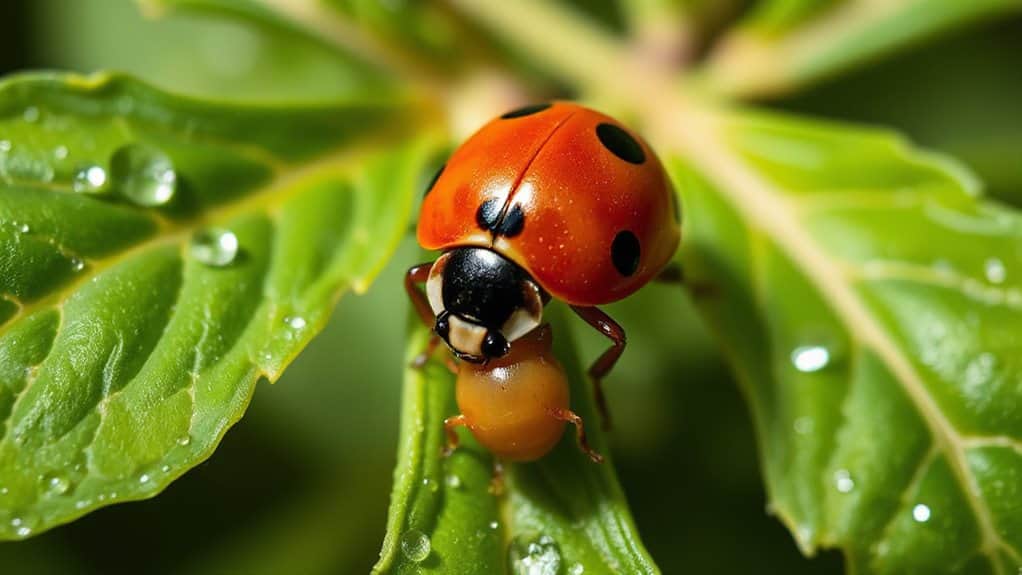
You’ve probably seen them—those cheerful, round little beetles with bright red shells and polka dots, like nature’s own painted marbles—ladybugs are basically the superheroes of your garden, and honestly, they’re kind of hard *not* to love.
They scarf down aphids like popcorn, protect your plants, and even help pollinate—plus, they’re hilarious when they play dead! Just release them at dusk, skip the pesticides, and boom: you’ve got tiny, spotted bodyguards working 24/7. Planting clustered, native flowering plants in sunny spots also helps sustain ladybug populations by providing nectar and pollen as supplemental food sources for adults and larvae, especially when aphid numbers are low native plants.
They’re even more effective when you plant flowers like alyssum and fennel, which provide food and shelter to help them stick around—making your garden a welcoming home for these helpers through pollinating flowers.
Green Lacewings: Larvae That Devour Aphids and Whiteflies
While ladybugs might steal the spotlight with their cute red shells and polka-dot flair, there’s another unsung garden hero lurking in the leaves—green lacewings, the stealthy, slender ninjas of pest control.
You’ll love how their larvae chow down on aphids and whiteflies, slurping them up like tiny green vacuum cleaners.
Just add flowering plants, keep things moist, and boom—nature’s pest patrol is on duty!
Predatory insects like ladybugs and hoverflies also support integrated pest control when you reduce pesticide use.
Predatory Mites: Microscopic Allies Against Thrips and Gnats
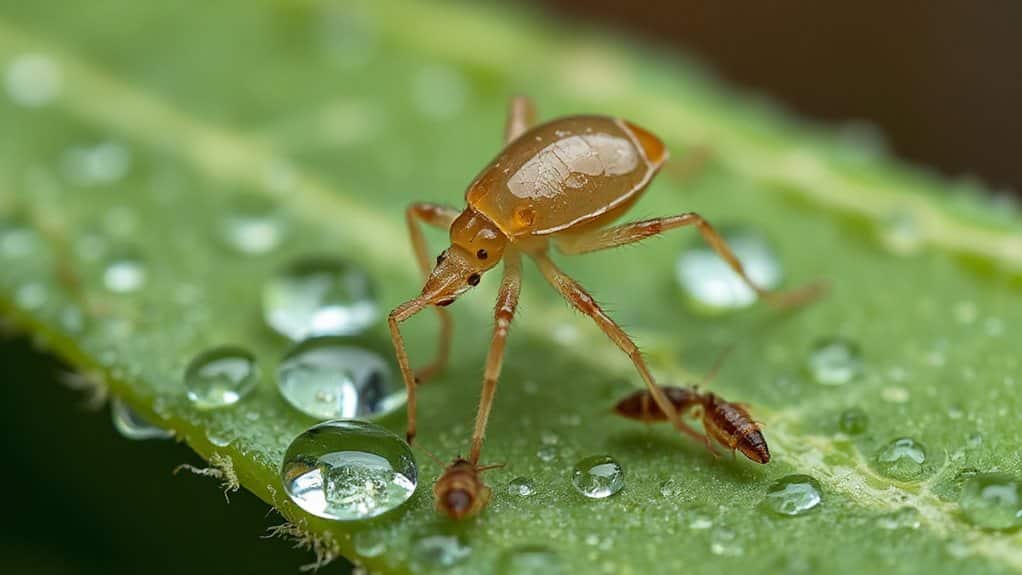
Honestly, you’d be amazed at how much tiny drama unfolds in your garden’s soil and leafy corners—especially when it comes to the barely-visible showdowns between pests and their pint-sized predators.
You’ve got mites like *Swirskii* and *Cucumeris* feasting on thrips and gnats, thriving in humidity, and turning your plants into fortress zones—no chemicals needed, just smart, sneaky teamwork beneath the leaves. Many gardeners support these allies by maintaining soil health and avoiding harsh chemicals that harm beneficial populations.
Assassin Bugs: The Garden’s Stealthy Ambush Predators
Out in your garden, while those tiny mites are doing their quiet cleanup work on thrips and gnats, there’s another hunter on the prowl—way bigger, way bolder, and way more dramatic.
You’ve probably seen assassin bugs stalking plants like tiny ninjas, all skinny legs and sneaky moves. They grab pests with raptorial front legs, inject venom (ouch—don’t poke them!), then slurp out the insides.
Gross? Maybe. Effective? Absolutely.
These camouflaged killers love aphids, stink bugs, and caterpillars—saving your tomatoes without harming bees.
Spot one? Give a nod, then back away slowly.
You can spot their activity during regular inspections by checking plant foliage and undersides for predators and prey inspection focus.
Parasitic Wasps and Other Underrated Beneficial Insects
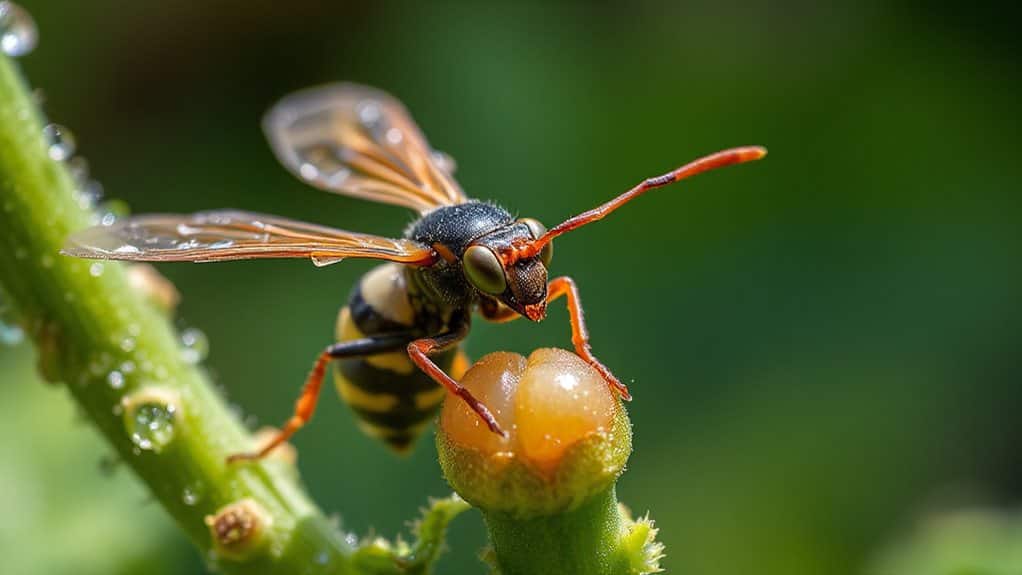
If you’ve ever worried about aphids turning your prized kale into an all-you-can-eat buffet, let me introduce you to one of nature’s sneakiest superheroes: parasitic wasps. They’re tiny, harmless to you, and *obsessed* with hunting pests.
Imagine this: they lay eggs inside aphids or caterpillars, and the larvae munch pests from within—like nature’s own little horror movie. You’ll love how they protect your garden silently, without chemicals, and keep things in balance.
Just plant dill or daisies, and they’ll stick around, working overtime so you don’t have to. Dragonflies also help control pests by eating many mosquitoes and other flying insects, and their nymphs eat mosquito larvae in water.
Overall
So, next time you spot a spotted bug or a wiggly green thing in your garden, don’t squash it—get curious! You might just be eye-to-eye with a tiny superhero saving your plants. I once almost sprayed my ladybugs, yikes! Turns out, they’re like nature’s pest patrol. Think of them as your garden’s camp counselors—keeping chaos under control. Protect these cool bugs, and they’ll keep your veggies happy, safe, and snack-ready. Win-win!