What to Do if Grass Seed Washes Away After Rain
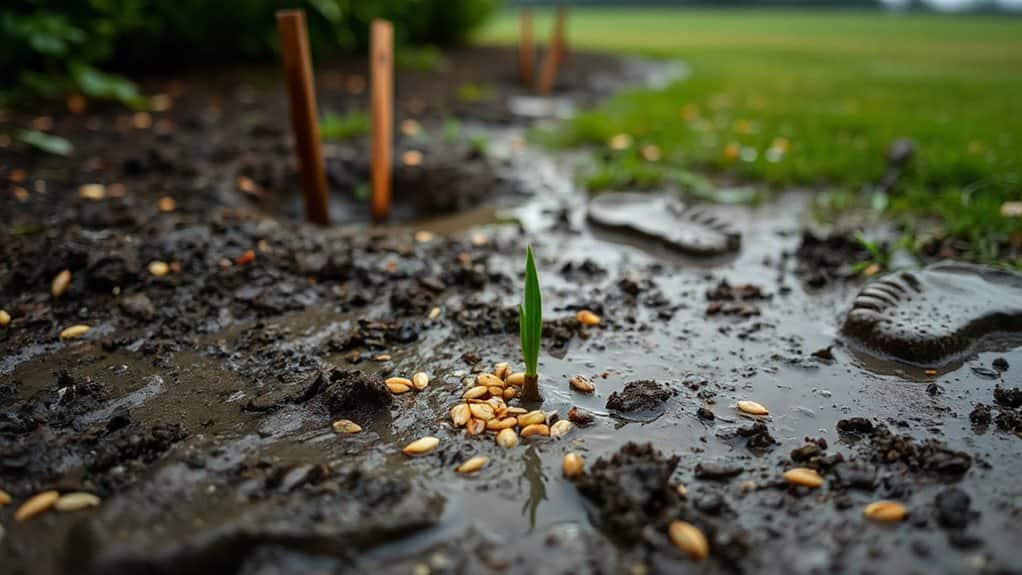
First, spot the bare patches where the rain ripped the seed away, then grab a rake and gently work the seed back into the top half‑inch of soil—don’t bury it deeper than a quarter inch, or it’ll drown. Lightly water the area, and toss a thin layer of straw or compost on top so the seedlings stay put and the rain can’t wash them again. If you’re on a slope, consider a tacky hydro‑seeding mix or an erosion‑blanket for extra grip; and don’t forget to aerate compacted spots and set up a simple drainage ditch to keep future storms from stealing your lawn. Keep an eye on the sprouts, and you’ll soon see a green carpet—more tips await if you stick around.
TLDR
- Rake washed‑out seed back into the top half‑inch of soil, using a light cross‑pattern sweep.
- Lightly water the area after reseeding to keep the soil moist but not soggy.
- Cover the reseeded spot with a thin (≈¼‑inch) layer of straw or compost mulch to protect seeds from further runoff.
- Apply a tackifier or erosion‑control blanket on slopes to hold seed in place during rain.
- Improve drainage and soil structure long‑term by aerating, adding compost or sand, and installing French drains or swales.
Identify the Exact Spot and Cause of Grass Seed Washout
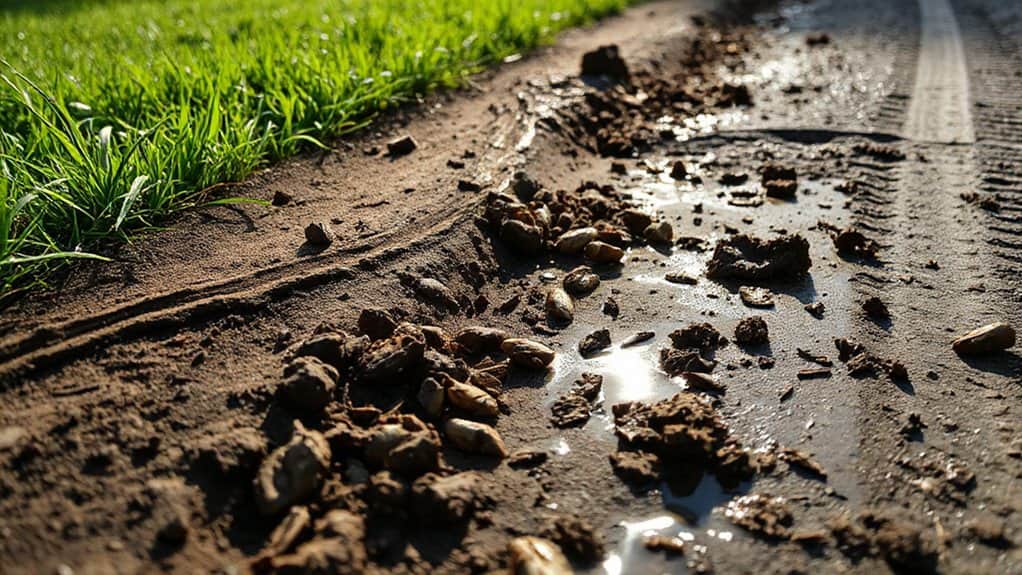
Ever wonder why your freshly spread grass seed seems to vanish after a rainstorm? You’ll spot the exact washout area by looking for bare patches where soil’s exposed, piles of seed following water flow, and muddy deposits in depressions; check if hard clay or compacted ground prevented absorption, and note how slopes funnel seed downhill—these clues pinpoint cause and location. Additionally, heavy watering can loosen the topsoil before the seed has a chance to anchor. Also inspect for nearby soil crusting from minerals or salt buildup that can impede seed-to-soil contact and germination.
Rake and Redistribute Washed‑Out Grass Seed for Soil Contact
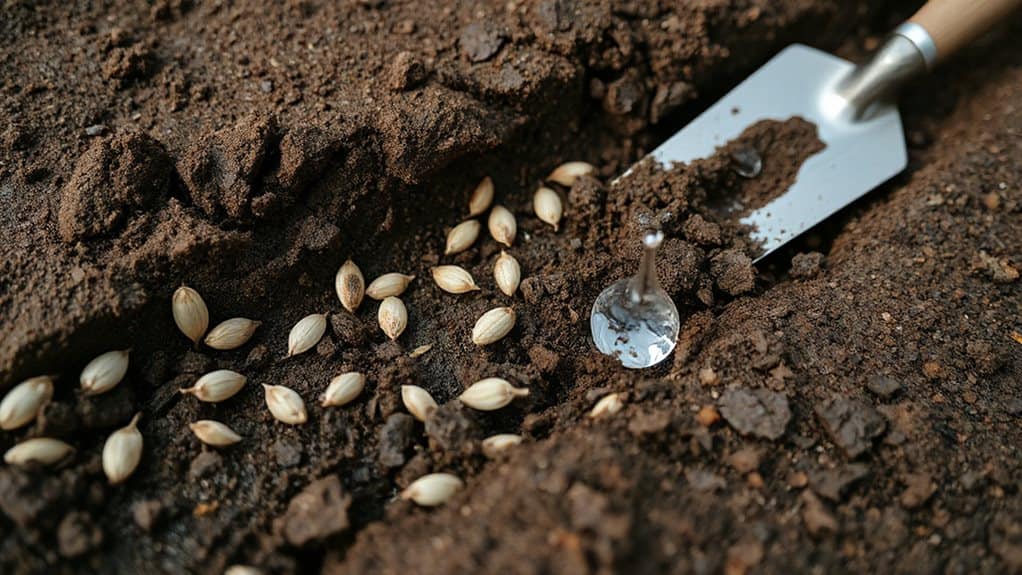
You’ll want to grab a light rake and gently work the washed‑out seed back into the top half‑inch of soil, because that little pressure creates the perfect seed‑to‑soil contact, just like the way I press my tent stakes into soft ground when camping.
Have you tried sprinkling a thin layer of mulch or compost over the raked seed? It acts like a cozy blanket, sealing the seeds in and keeping rain from whisking them away again—plus it makes the whole lawn look as tidy as a campsite after a night under the stars.
Rake Gently for Contact
Why let those rain‑swept seeds just sit on the grass when you can coax them into the soil with a gentle rake? Grab a leaf or ground‑cover rake, apply light pressure, and drag it across the lawn, knocking seeds off blades and into the loosened top inch of soil; use a cross‑pattern sweep, avoid burying deeper than ¼ inch, and watch germination thrive.
Seal Seed With Light Mulch
So, what’s the easiest way to keep those waywashed‑out seeds from disappearing into the rain‑soded abyss? Lightly spread a ¼‑inch compost or straw mulch after you rake and redistribute the seeds, making sure you see some seed tops, then water daily.
Use one bale straw per 1,000 sq ft or a BigYellowBag for larger areas, and enjoy watching the seedlings thrive.
Cover Washed‑Out Seed With a Thin Layer of Topsoil or Compost
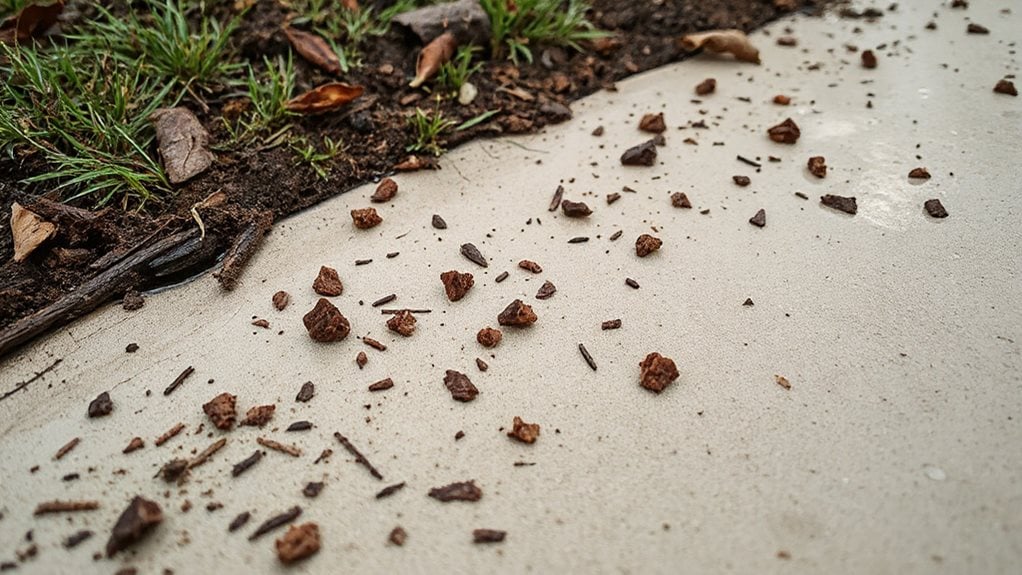
Ever wonder how a tiny blanket of soil can turn a washed‑out seed patch into a thriving lawn? You’ll want a 1/8‑1/4‑inch layer of topsoil or compost—just enough to hug the seed, lock in moisture, and feed it with slow‑release nutrients. Spread it evenly, rake lightly, and watch the seedlings push through, protected from wind, rain, and hungry birds. For best results, ensure the soil layer allows good drainage and air circulation to prevent waterlogging and promote healthy growth for the seedlings, which can be aided by proper drainage holes.
Apply Mulch, Tackifiers, or Erosion‑Control Blankets to Hold Seed
You’ll want to pick a mulch that matches your site—straw works great on flat lawns while wood chips hold up better on a hill, and you can spread it thick enough to cover at least 85 % of the ground without smothering the seedlings.
Have you tried mixing a tackifier into a hydroseeding slurry? It’s a game‑changer on steep slopes, letting the seed‑mulch blend cling together so rain can’t wash it away, and you’ll feel like a camping‑trip pro watching the soil stay put.
Finally, if the terrain is seriously rugged, lay down an erosion‑control blanket; it’s like a cozy blanket for the seed, keeping it safe until the roots grab hold, and you’ll get a kick out of seeing the green carpet grow under your own “campfire” of patience.
For added protection in low-light, compact spaces consider using full-spectrum grow lights to help seedlings establish under limited natural sun.
Choose the Right Mulch
Ever wondered why a simple layer of straw or a fancy erosion‑control blanket can make the difference between a thriving lawn and a soggy mess after a rainstorm? Pick straw for gentle slopes, pine straw for cheap, woven mats, hardwood shreds for moisture and weed control, or an erosion blanket when the grade exceeds 2:1. Each option locks seed in place, keeps water where it should be, and lets you help neighbors grow greener yards without a single wash‑out.
Apply Tackifier Effectively
After you’ve tucked the seed under a cozy blanket of straw or mulch, the next step is to lock everything in place with a tackifier—think of it as the super‑glue that keeps your lawn from doing a disappearing act when the rain shows up.
Spread a dry organic tackifier evenly, water lightly to activate, and if you’re on a slope, mix peat moss for extra grip, ensuring seeds, mulch, and soil cling together like a camp‑fire crew.
Repair Drainage and Loosen Compacted Soil to Prevent Future Washout
When rain decides to turn your lawn into a mini‑river, the first thing you’ve got to tackle is the drainage—because a soggy, compacted mess won’t just wash away your seed, it’ll also soak up all the fun of your backyard camp‑out. Install a French drain with a 1% slope, line it with fabric, add gravel, then backfill with topsoil; aerate compacted spots with a garden fork, mix in compost or sand, and create shallow swales or dry creek beds to guide water away, keeping future washouts at bay. Incorporate native, drought-tolerant plants to stabilize soils and support beneficial insects like bees and butterflies, forming part of local pollinator habitat.
Choose Rain‑Tolerant Seed Mixes and Starter Fertilizers for Slopes
So, which seed mix should you pick when your hillside looks like a water‑slide after a storm? Try tall fescue blends for dense roots that grip soil, or buffalo grass if you love low‑maintenance, sun‑loving turf; high‑mountain native mix thrives up to 9,000 ft, and low‑grow mix adds crested wheatgrass for deep erosion control. Pair any choice with OptiGrowth starter fertilizer to boost germination and quick rooting on slopes. Consider testing your soil pH and drainage first to ensure the chosen mix and amendments will perform well on the slope, especially in local microclimates.
Implement Preventive Steps Before the Next Forecasted Rain
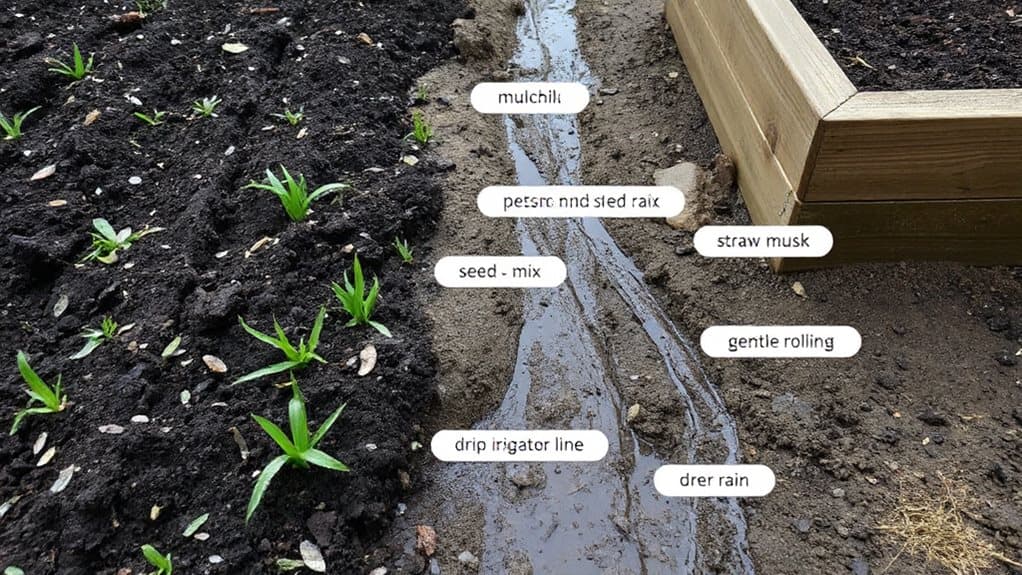
You’ve just picked the perfect mix—tall fescue, buffalo, or that high‑mountain blend—and now you’re ready to make sure it actually sticks around until the next rain hits. Loosen the top inch of soil with a steel rake, level the lawn to guide water away, press seed in with a roller, then sprinkle a thin straw blanket for protection and excitement.
Monitor Seedlings and Reseed Thin Spots Once the Soil Dries
After the rain finally quits and the soil dries enough to feel gritty under your shoes, it’s time to play detective and spot those thin‑filled patches that got washed away.
You’ll check the topsoil for dryness, flag sparse spots, then lightly broadcast seed, rake it into the top ⅛ inch, press it, and mist daily until seedlings grin, just like camp‑fire stories coming alive.
Overall
Now that you’ve got the seed back in place, a little extra mulch and a gentle watering schedule will keep it from slipping away again, so why not treat it like a mini‑campground—set up a cozy “tent” of compost, check the “weather forecast” before the next rain, and watch those green sprouts pop up like enthusiastic hikers reaching a summit, because with a bit of care, your lawn will be the ultimate outdoor excursion spot!