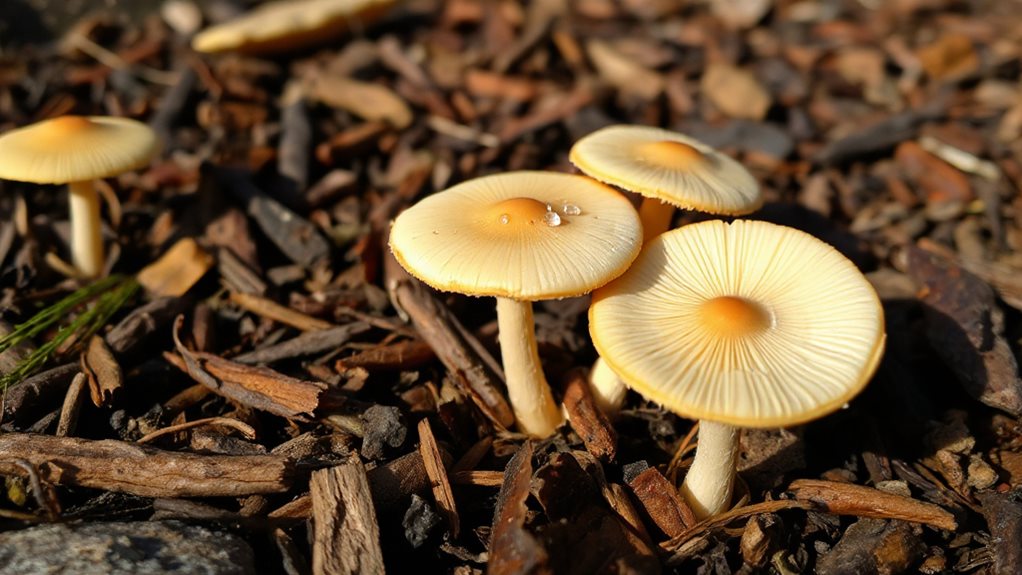
Why Are Mushrooms Growing in My Mulch Beds?
You’re seeing mushrooms because your mulch is basically a five‑star campsite for mycelium: the shredded wood, bark and fresh hardwood give it rich cellulose and nitrogen, while the damp, shaded, 4‑inch‑deep layer creates cool, humid, low‑oxygen spots that spores love to sprout. Fine particles act like tiny camp trails, letting mycelium spread and bacteria feast too, so the whole crew thrives. If you keep the mulch thinner, improve airflow, and avoid excess moisture, you’ll still have healthy soil—plus a few more secrets to discover.
TLDR
- Mulch provides abundant organic material and nitrogen, creating an ideal food source for fungal mycelium.
- High moisture (≥35% soil moisture) and shade keep the mulch humid, promoting spore germination and growth.
- Thick (≈4 in) mulch limits airflow, creating cool, low‑oxygen pockets where mushrooms thrive.
- Common garden mushrooms such as field, oyster, and Leucocoprinus species naturally colonize nutrient‑rich mulch.
- Reducing mulch depth to 2–3 inches, improving drainage, and occasional raking disrupt fungal habitats and limit growth.
Why Do Mushrooms Pop Up in My Mulch?
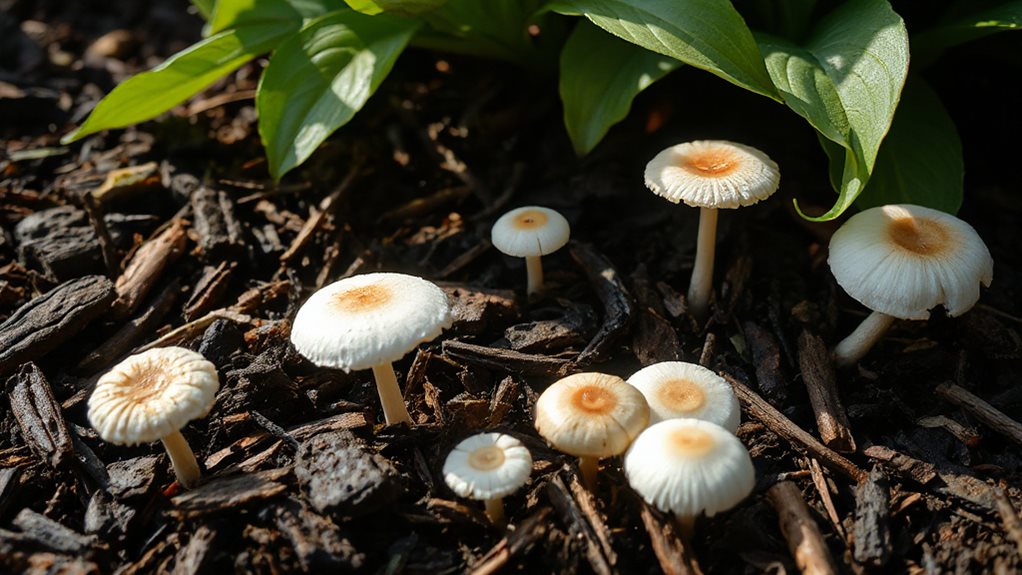
Ever wonder why mushrooms suddenly pop up in your mulch beds like surprise campfire snacks? You’re seeing fungi thriving because shredded wood, bark, and fresh hardwood provide rich cellulose and nitrogen, letting mycelium spread like a secret camp trail; the fine particles enhance spores, and the organic matter feeds both fungi and the bacteria they love. Keep mulch thin, aerate, and you’ll still serve a thriving garden. Avoid black mulch because it can heat roots and impact plant health. Regular aeration and adding organic matter can also improve soil structure and reduce moisture that favors fungal growth, especially in compacted clay.
How Moisture, Shade, and Depth Cause Mushrooms in Mulch?
So, why do moisture, shade, and depth team up like a mischievous camping crew to spawn mushrooms in your mulch? You keep mulch damp, over‑35% water, then shade it, so humidity stays high; add a deep 4‑inch layer, and air stalls, creating cool, dark, low‑oxygen spots where mycelium thrives.
Trim branches, rake, and water wisely to keep those fungal campers at bay. Edge soils often stay looser and retain runoff moisture, which can further support mushroom growth in mulch beds through soil looseness.
Which Mushrooms Appear in Garden Mulch and Why?
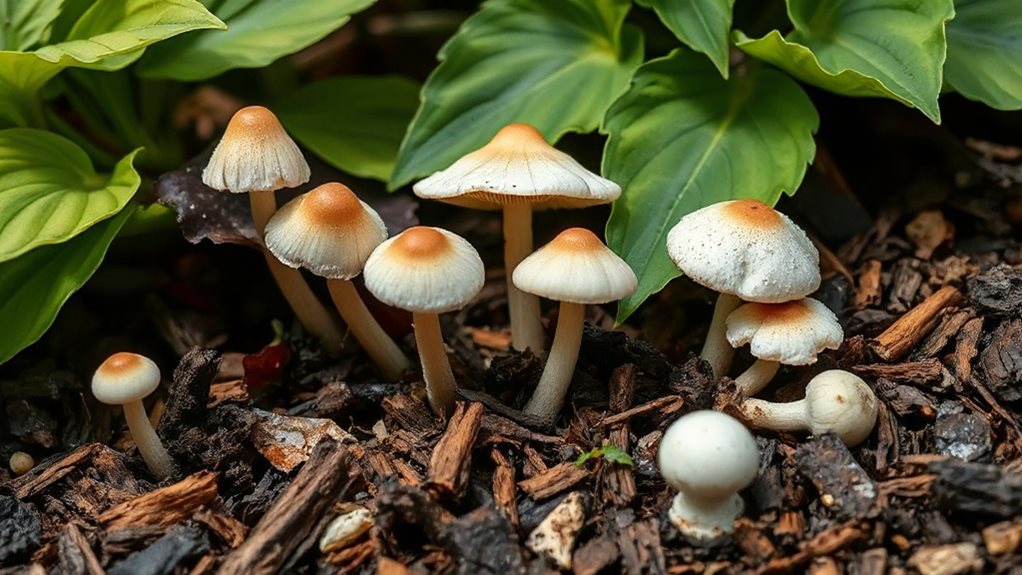
What makes a garden mulch bed feel like a secret mushroom campsite? You’ll find white‑capped field mushrooms, grayish oyster clusters, bright yellow Leucocoprinus birnbaumii, and green‑spored Chlorophyllum molybdites because the mulch’s moisture, shade, and organic debris invite them.
Shaggy ink caps pop up, and sometimes stinkhorns burst, all thriving on decaying wood and nutrients, turning your garden into a tiny, tasty journey. Many gardeners also find that mulch’s retained moisture and organic matter mimic conditions that favor fungal growth, especially when using moisture‑retentive or wood‑based mulches.
How to Prevent Mushrooms in Mulch While Protecting Soil?
Can you imagine your garden mulch turning into a mushroom‑filled campsite, complete with tiny tents and spore‑sprinkled trails? Keep mulch thin—2‑3 inches—so air circulates, swap bark for pine needles or screened compost, water only when dry, rake monthly to break up dark pockets, and add a dash of nitrogen fertilizer; these steps stop fungi while nurturing healthy soil for your neighbors. Native plantings in nearby beds can bolster ecosystem health and support pollinators by providing continuous blooms that benefit local biodiversity.
Eco‑Friendly Ways to Control Mushrooms in Mulch
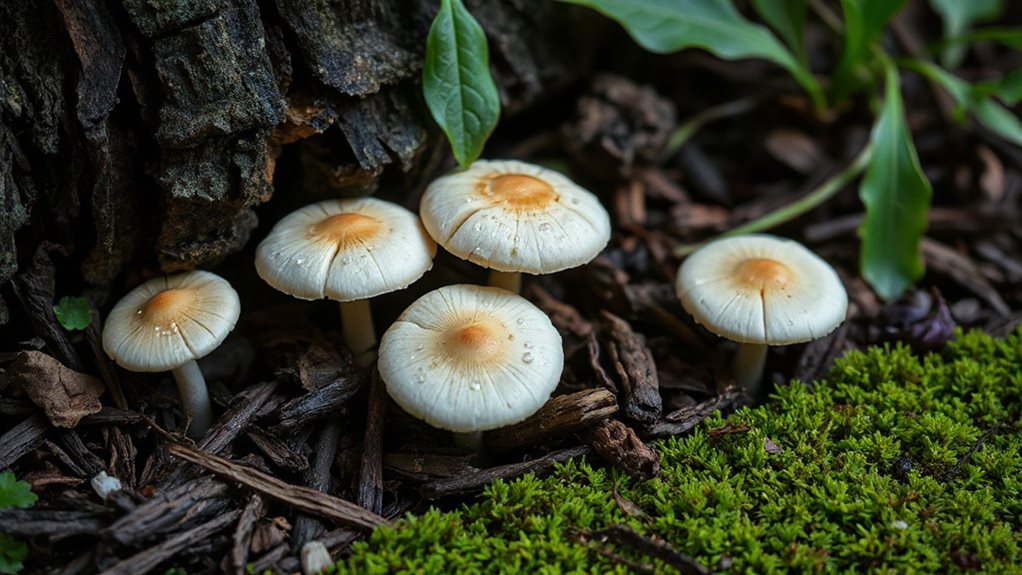
Ever wondered why your mulch sometimes looks like a tiny forest campsite, complete with mushroom “tents” sprouting overnight?
You can rake and turn it weekly, hand‑remove caps and bag them, and switch to drip irrigation so the surface stays dry.
Mix in mushroom compost at a 4:10 ratio, spray a baking‑soda solution, and compost any infected piles—these eco‑friendly tricks keep fungi at bay while you help the garden thrive.
Improve drainage and remove compacted organic layers to reduce the moisture retention that fuels fungal growth.
Overall
So, next time you spot a mushroom in your mulch, just remember it’s nature’s way of saying, “Hey, I’m busy breaking down that organic stuff!” You can keep the garden tidy by turning the mulch, letting it dry a bit, and maybe adding a little sand for extra drainage—no need to banish every fungus, because they’re actually helping your soil. And if you ever camp out under the stars, you’ll see the same magic happen in forests—pretty cool, right? Enjoy the excursion!