Why Rose Bushes Get Black Spot Disease (And How to Treat It)
Your rose bushes get black spot disease when sneaky fungal spores jump onto leaves during wet weather—kind of like uninvited campers pitching tents all over your garden, leaving ugly black spots, yellow leaves, and general chaos. It spreads with rain, dew, and even your watering can, but don’t panic; you can fight back with pruning, cleaning up fallen leaves, and using fungicides like neem oil or sulfur. Stick with me, and you’ll uncover even more tricks to keep your roses healthy!
TLDR
- Black spot disease is caused by a fungal infection that thrives in humid conditions and spreads easily through water splashes.
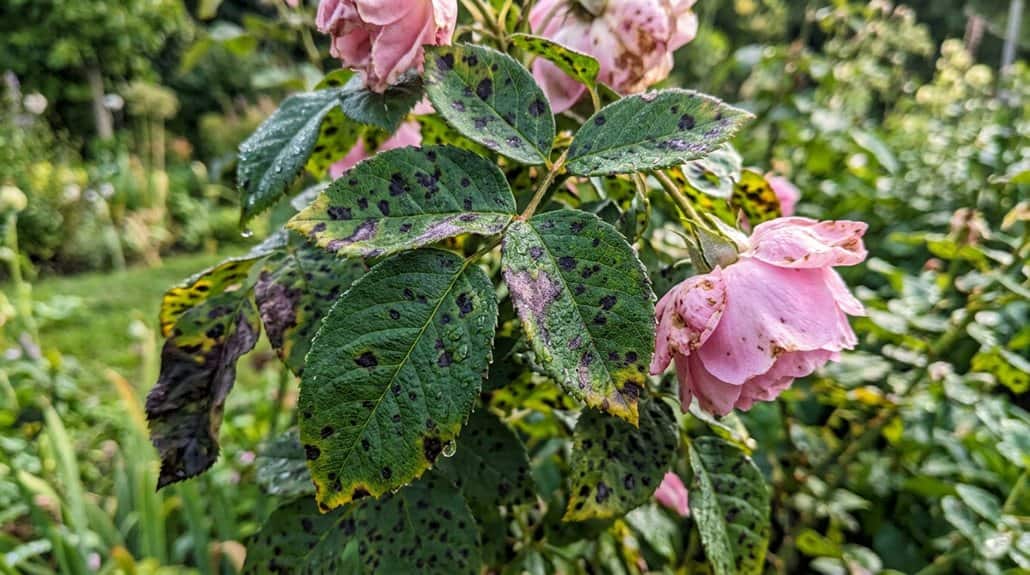
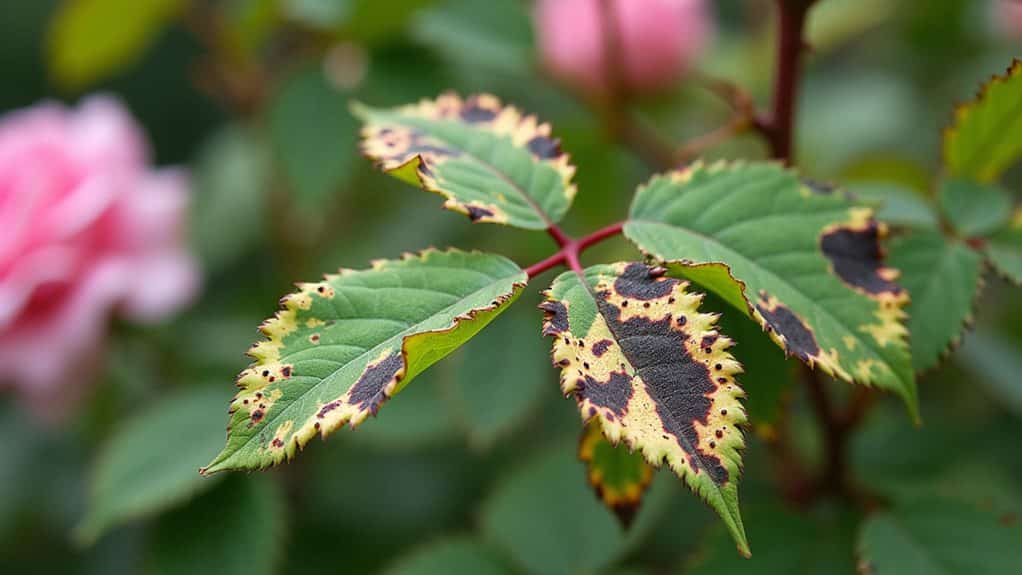
- Infected rose leaves develop purple-black spots, turn yellow, and often drop prematurely, weakening the plant.
- The fungus overwinters in fallen leaves and plant debris, re-infecting roses each season if not properly cleaned up.
- Treat black spot by removing infected leaves, using fungicides like neem oil or sulfur, and improving air circulation through proper pruning.
- Prevent future outbreaks by choosing resistant rose varieties, maintaining tool hygiene, and regularly applying preventive fungicide sprays in early spring.
How Can You Tell If Your Roses Have Black Spot?
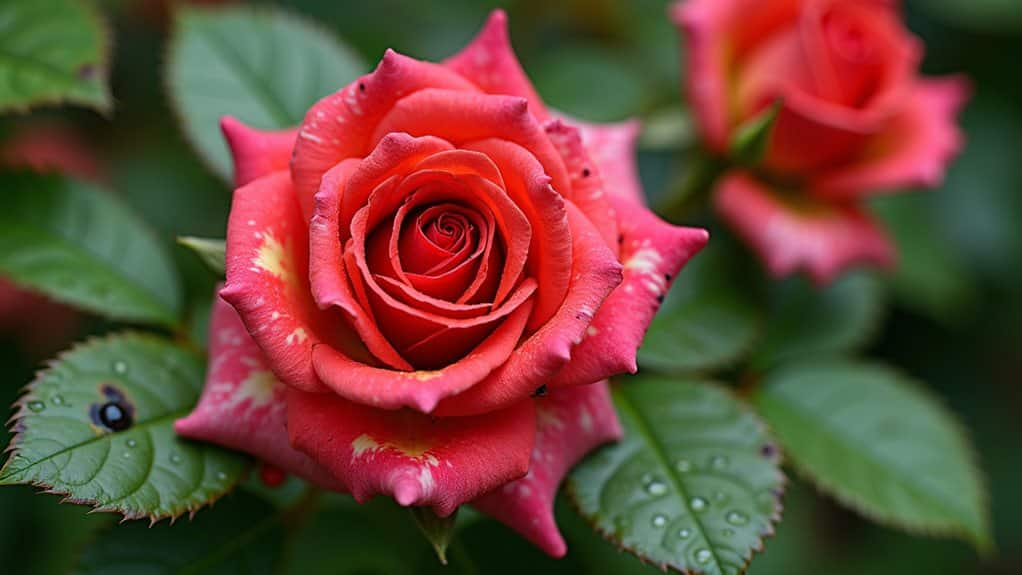
Even if you’re just strolling through your garden on a sunny afternoon, it’s pretty easy to spot when your roses are feeling under the weather, especially if you know what to look for—trust me, black spot disease isn’t exactly shy! Keep an eye out for black spot symptoms like purple-black spots on leaves, yellowing, black spot lesions, infected leaves, and that telltale leaf fall—classic signs of this pesky fungal disease. Regular soil testing kits can help you monitor soil conditions that may influence disease development, ensuring a healthier environment for your roses.
What Damage Does Black Spot Cause to Roses?
Spotting those dark blotches and yellow leaves is only the beginning—black spot doesn’t just make roses look a bit sad, it can actually wreak all sorts of havoc on your plants! Infected leaves turn yellow and drop off, leaving your rose bush looking like it went camping without a tent. Those pesky fungal black spots on leaves and stem lesions make your plant become weak, making disease damage even worse. High humidity and poor airflow can promote the spread of black spot, further weakening your roses.
How Does Black Spot Spread in Your Garden?
How does black spot manage to hitchhike its way all around your garden, turning your beautiful rose bush into a campsite for fungus? Well, black spot spores love to travel by water—think rain, dew, or even a splash from your watering can! Infected leaves and old plant debris provide overwintering spots, letting fungal spores wake up and continue their disease spread journey every season. Environmental stress such as excess moisture and poor air circulation can further promote the spread of black spot in your garden.
How Do You Treat Black Spot on Roses?
So, you want to know how to fight off black spot and keep your roses looking awesome, maybe even ready for a garden camping trip with your friends? Well, you’ll need to use some powerful fungicides like sulfur or neem oil (trust me, those fungi don’t stand a chance).
But you should also roll up your sleeves for some hands-on work like pruning, cleaning up leaves, and keeping your tools tidy—kind of like prepping your tent before a big journey! Proper surface preparation ensures your treatment adheres better and works more effectively.
Ready to learn the best tricks for both spraying and scrubbing your way to healthier roses?
Effective Fungicide Application
Even though black spot can make your rose bushes look like they’ve spent the weekend camping in a swamp, you’ve got some awesome tools to fight back—fungicides! Grab those fungicide sprays with sulfur or neem oil, and kick off your preventive treatment in early spring.
Spray thoroughly, especially under leaves, follow the exact dosage and timing, and rotate products to outsmart resistant strains. Your roses will thank you!
Non-Chemical Control Methods
Sure, fungicides are like your rose garden’s superhero cape, but there’s a lot you can do without reaching for a spray bottle every time black spot pops up. Try removing infected leaves, pruning to improve air circulation (think of your bushes needing to “breathe”), raking leaves, and destroying plant debris.
Don’t forget proper watering—avoid leaf moisture. Even organic fungicides like neem oil help naturally!
How Can You Prevent Black Spot From Returning?
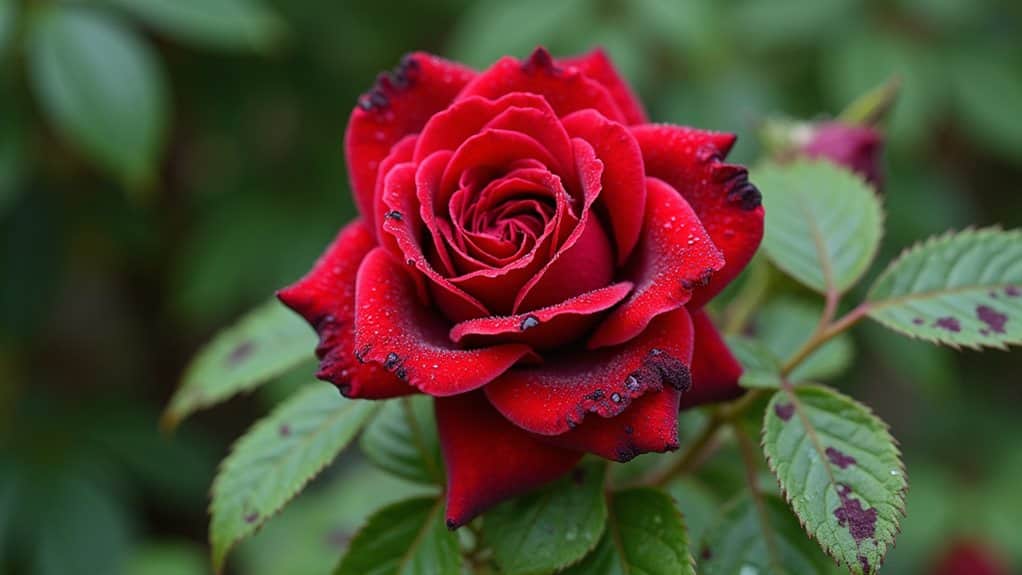
Although black spot can be a stubborn guest in your garden, you’ve got plenty of tricks up your sleeve to keep it from crashing the party year after year! To prevent black spot return, always remove infected leaves, prune dense growth for proper air circulation, and sterilize pruning tools. Pick resistant rose varieties, practice good garden hygiene, and—like packing for a camping trip—never skip your preventive fungicide sprays! Additionally, maintaining proper mulch conditions, such as keeping mulch dry and well-ventilated, helps reduce the humidity that fosters black spot development.
What Else Can You Do to Keep Roses Healthy?
When you want your roses to stand tall and thrive like the stars of your backyard camping trip, it’s all about giving them the right environment and a little extra TLC!
Make sure you plant them in full sun, space them out for great air circulation, practice proper pruning, fertilize roses regularly, and use smart watering practices.
These rose growing tips enhance disease resistance, healthy foliage, and overall plant health.
Overall
So, there you have it—black spot might seem like the evil villain in your rose garden, but you’ve totally got the power to defeat it! Just remember to check your leaves often, clean up any mess, and don’t let water sit around like it’s camping out for the weekend. If you stay alert and keep your roses happy, you’ll have beautiful blooms all season long. Trust me, your roses will thank you—and so will your nose!