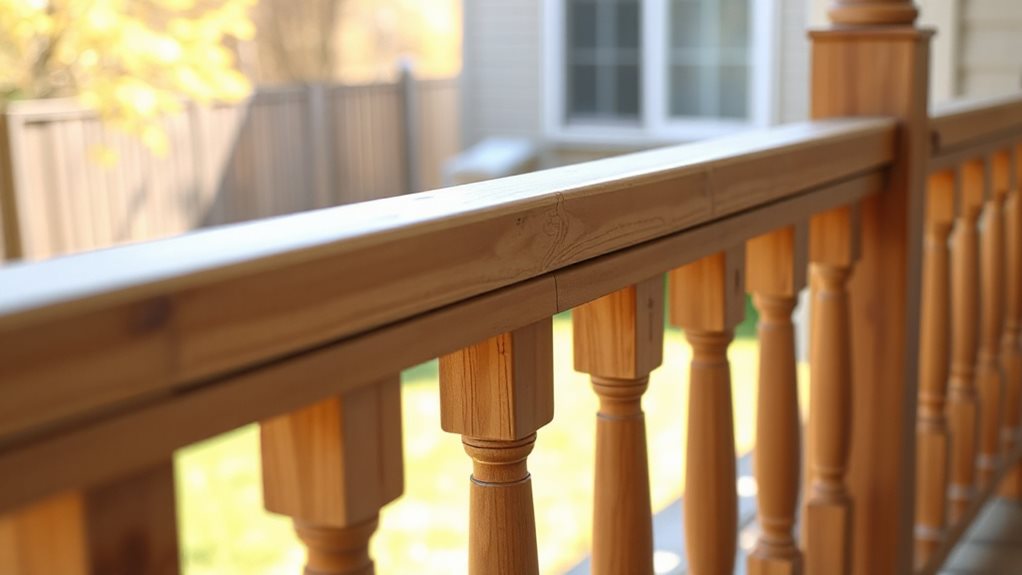
Deck Railing Height: What the Building Code Requires
You’ll need at least a 36‑inch railing on any residential deck, measured straight up from the finished deck surface to the top rail, but if you’re in California or Washington the rule jumps to 42 inches (and commercial decks follow that higher bar). Every baluster gap must be tight enough that a 4‑inch sphere can’t slip through, so keep openings under four inches. Measure with a level and tape, check the sphere test, and double‑check local codes—your next journey will be safer, and the details keep coming if you keep going.
TLDR
- Guardrails are required when a deck, porch, balcony, or landing is more than 30 inches above the adjacent floor.
- Minimum railing height is 36 inches in most jurisdictions; California, Washington, and commercial decks often require 42 inches.
- Measure vertically from the finished deck surface (or stair nosing) to the top of the rail, ignoring any sweep space.
- Baluster or panel openings must be no larger than 4 inches; a 4‑inch sphere test confirms compliance.
- All guardrails and handrails must resist a 200‑pound load and be inspected or approved by the local building department.
What Height Does the Code Actually Require for Your Deck?
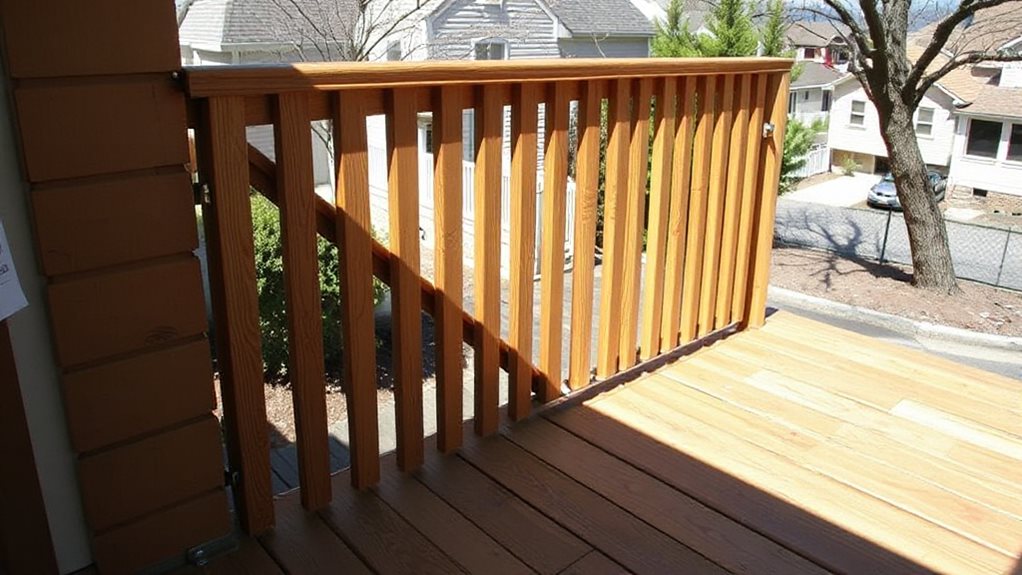
Ever wonder exactly how tall your deck railing has to be before you can safely host a backyard campout? The International Residential Code says 36 inches minimum if your deck sits more than 30 inches above ground, but California, Washington, and many local jurisdictions bump that up to 42 inches for extra safety. If you’re building a commercial or multifamily deck, you’ll need 42 inches too, so double‑check your city’s rules before you start. Guard height must be measured vertically from the adjacent walking surface.
How to Measure Deck Railing Height Correctly
So, how do you actually make sure your deck railing meets the code without turning it into a math‑class nightmare? Grab a level, tape measure, and measure vertically from the deck floor to the top rail between posts, ignoring any sweep space. For stairs, measure from the nosing line. Verify a 4‑inch sphere can’t slip through, then double‑check after installation. If a homeowner association issues a dispute over your railing height, consider filing a written appeal and gathering photos and governing‑document references to support your case appeal process.
When Deck Railing Height Is Mandatory (Grade & Open‑Sided Surfaces)
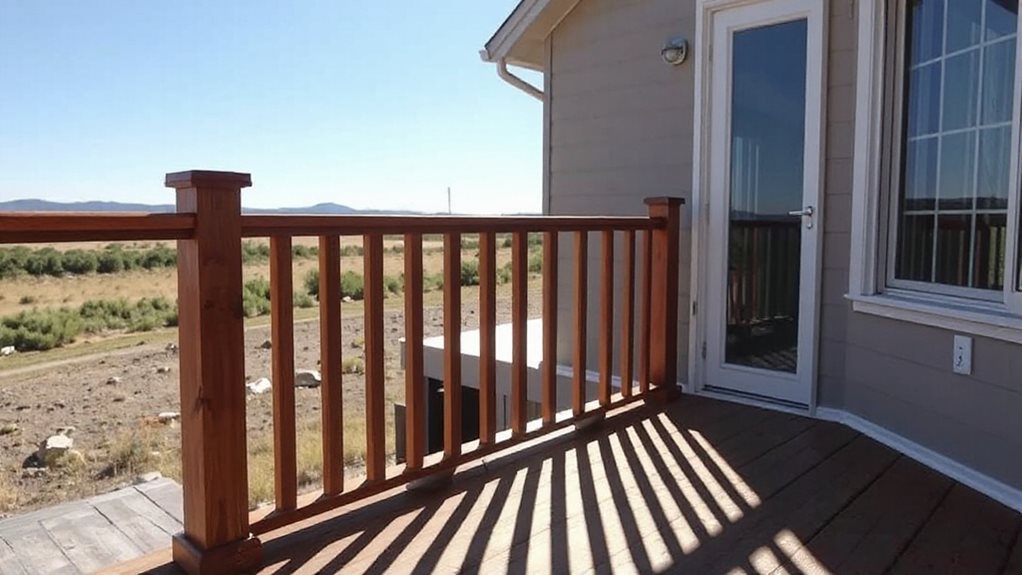
You’ve got your tape measure and level ready, so let’s jump from figuring out exactly how tall a railing should be to understanding when you *actually* need one at all. If your deck or porch sits more than 30 inches above the ground, guardrails become mandatory—residential or commercial. Commercial projects jump to 42 inches, and states like California and Washington enforce that height too. Open‑sided walkways, balconies, and landings over the 30‑inch threshold also require railings, with balusters spaced no wider than four inches. Check local codes before you build. Recording an easement can protect shared access and clarify responsibilities for any shared driveway that affects access to the deck or porch.
Stair Guard vs. Handrail: Required Heights for Deck Stairs
Ever wondered why the guard on your deck stairs looks a bit taller than the handrail on your porch? The guard must be at least 34 inches from the nosing, while the handrail can sit between 34 and 38 inches, often a couple inches lower for comfort. Both must hold a 200‑pound load, and posts can’t be spaced over 8 feet apart, ensuring safety for everyone climbing up for a campsite excursion. Buzzing or arcing from nearby outdoor outlets can pose an additional fire risk, so always inspect electrical connections and address any arcing hazards promptly.
State‑Specific Minimum Heights – California, Washington, and Others
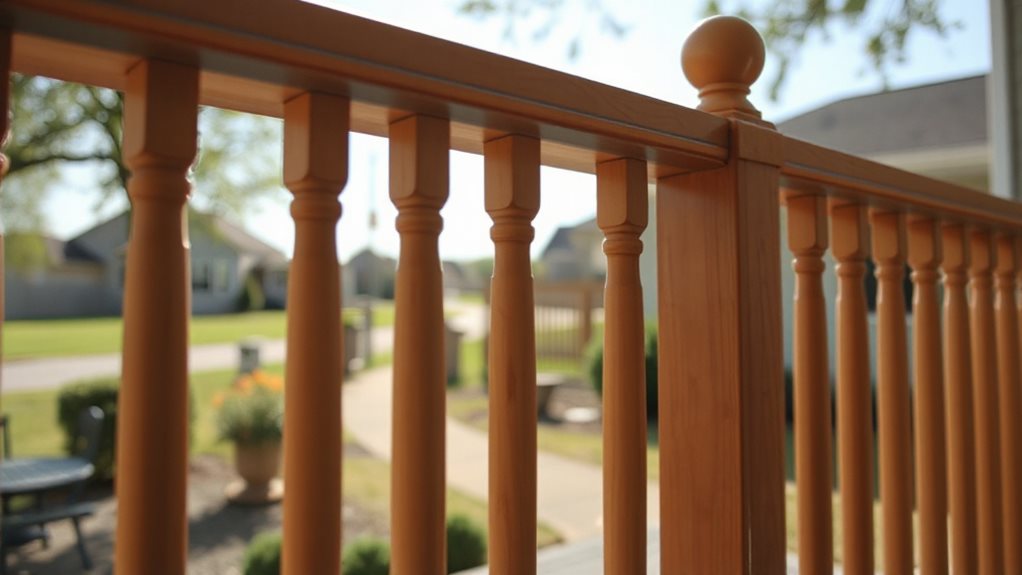
Wondering why the railing height rules jump from 36 inches in most places to 42 inches in California and Washington?
You’ll find those states demand 42‑inch guardrails for any deck over 30 inches because they’ve added safety layers beyond the IRC.
Other states usually stick with 36 inches, though some cities raise the bar.
Always double‑check local codes before you start building, and remember: a taller rail can keep your friends safe on a camping‑style deck excursion.
Residential vs. Commercial Deck Railing Height Standards
You’ll notice that a backyard deck at your house only needs a 36‑inch rail when it’s at least 30 inches above the ground, but a café patio or a condo balcony must sport a 42‑inch rail no matter how low it sits, so you’ve got to check whether you’re dealing with a residential or a commercial project. Have you ever wondered why the code forces that extra height on commercial spaces? Think of it like packing a bigger tent for a camping trip—more protection, a bit more effort, but the peace of mind (and fewer “oops” moments) is totally worth it. Fences and nearby structures can also create a microclimate that affects how people use and perceive outdoor spaces.
Residential Minimum Height
So, what’s the deal with railing heights on a residential deck versus a commercial one? You’ll need at least 36 inches of guard rail if your deck sits more than 30 inches above the ground, measured from the deck surface to the top. That rule keeps kids from climbing over, and many places—like California or Washington—push it up to 42 inches, so double‑check local codes before you install anything.
Commercial Height Requirements
Ever wondered why a rooftop bar’s railing feels taller than the one on your grandma’s backyard deck?
You’ll find commercial decks must meet a 42‑inch minimum, measured from the deck surface to the cap, because more foot traffic and liability demand extra safety. This applies to restaurants, museums, condos, and any balcony on a third floor or higher, so check local codes before building.
How the 200‑lb Lateral Load Test Works for Railings
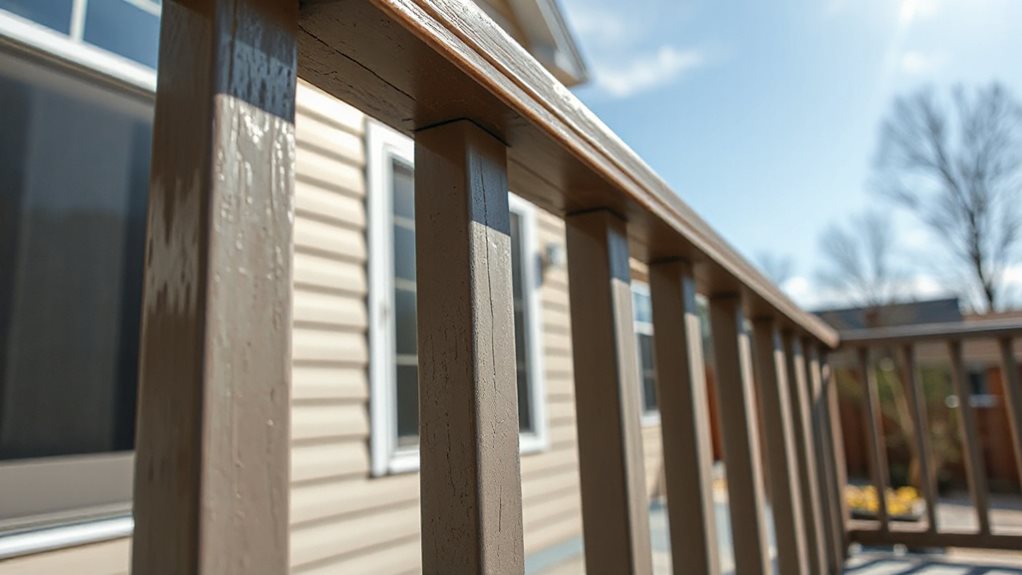
Ever wondered how a simple 200‑lb push can decide whether your deck railing stays solid or flops like a wobbly tent pole?
You lean into the top rail at mid‑span, press a 200‑lb weight horizontally, and watch for any twist or wobble; the rail must hold without moving more than about an inch, mimicking a falling adult or a dropped suitcase on a camping trip.
Baluster Gap Limits: Keeping Openings Under 4 Inches
You’ll measure every baluster gap with a ruler or a 4‑inch sphere, because the code says nothing wider than that can slip through, and you’ll love how satisfying it feels to see the numbers stay under the limit.
Have you ever tried fitting a basketball through a railing? No? Good—so keep those openings under 4 inches, double‑check with a sphere test, and you’ll be sure your deck meets safety compliance while still looking sleek.
Bermuda’s rapid above‑ground stolon spread can make it fast‑spreading and aggressive in sunny areas, so manage mixed turf carefully to prevent takeover.
Baluster Gap Measurement
So, how do you make sure those balusters keep a 4‑inch sphere from slipping through, just like you’d want a campsite gate to stay shut against a wandering raccoon?
Measure center‑to‑center spacing, add baluster width, then divide rail length by that unit.
Use a 4‑inch‑spaced elastic strip, mark, and place each baluster left of a dot, ensuring every gap stays under four inches.
Maximum Opening Size
Ever wondered why the code insists on a 4‑inch “sphere test” for every railing gap? You’ll keep any opening under that limit, so a child’s head or a curious pet can’t slip through, and you’ll feel confident when you guide families on deck‑side journeys.
Safety Compliance Verification
When you’re checking a deck’s baluster gaps, think of it like a quick “sphere‑sneak‑test” before a camping trip—if a 4‑inch ball can’t slip through, you’ve got a safe spot for kids and pets, and you won’t have to worry about a head getting stuck while you’re roasting marshmallows.
Measure each opening, divide rail length by on‑center spacing, and confirm every gap stays under four inches; the 4‑inch sphere test guarantees compliance, keeping everyone safe and happy.
Bottom‑Rail Clearance: Preventing a 4‑Inch Sphere Passage
Ever wondered why a tiny 4‑inch sphere can make or break your deck’s safety? You’ll keep that sphere out by setting the bottom rail about four inches above the decking, so any child’s toy or debris can’t slip through, and by ensuring the gap under stairs stays under four inches, which blocks a six‑inch sphere too. This simple clearance protects everyone, especially your camping crew, while meeting IRC rules.
Code‑Compliant Infill Materials and Gap‑Filling Options
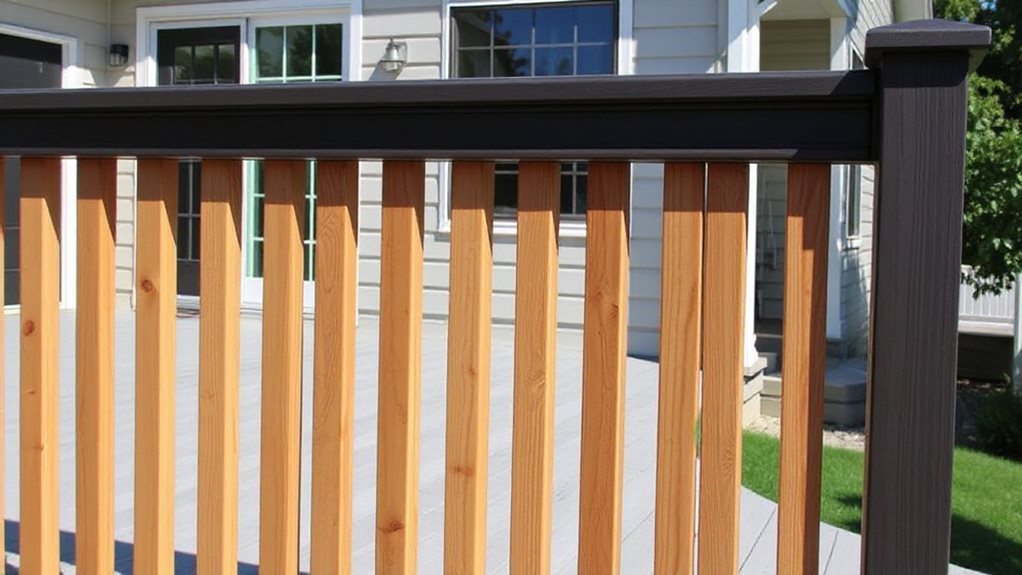
You’ll find that metal baluster fill options give you a sturdy, rust‑proof look while still meeting the 4‑inch sphere rule, and they’re perfect for those DIY projects where you want a “tough‑as‑nails” vibe.
Have you ever considered glass panel infill solutions? They let light flood through, keep the deck feeling airy, and—when you pick the right tempered or safety‑glazed type—still pass the load tests and fire‑rating codes.
Try mixing a sleek metal grid with a clear glass panel for a modern, code‑compliant deck that feels like a campsite under the stars, and don’t forget to double‑check your local amendments before you start cutting!
Metal Baluster Fill Options
So, which metal baluster infill should you pick to stay on the right side of the code while still looking cool? Choose cable for a sleek view‑preserving look, mesh for an industrial vibe, or rod rail for solid horizontal flair; each meets the 4‑inch sphere rule and bears the 50‑lb load.
Powder‑coated aluminum resists rust, so you won’t waste time fixing it—perfect when you’re busy helping neighbors set up camp.
Glass Panel Infill Solutions
Wondering how to keep your deck’s view crystal‑clear while staying on the right side of the code? You can choose framed or frameless glass panels that meet the 4‑inch gap rule, resist 50 lb horizontal loads, and stand at least 36 in tall, so safety stays solid while scenery stays open. Pre‑assembled kits simplify installation, and manufacturers often double‑test strength, giving you peace of mind and a sleek, low‑maintenance look.
Typical Deck Railing Code Violations & How to Fix Them
Ever wondered why a deck that looks perfect in the photos suddenly fails inspection? You might’ve 36‑inch railings that shrink after decking, gaps wider than four inches, or wobbly posts that can’t hold a 200‑lb push;
fix it by re‑measuring from the finished surface, using a 4‑inch sphere for balusters, tightening connections with brackets, and swapping missing or rotted rails, then you’ll pass and keep everyone safe.
How to Verify Deck Railing Height Compliance With Local Authorities
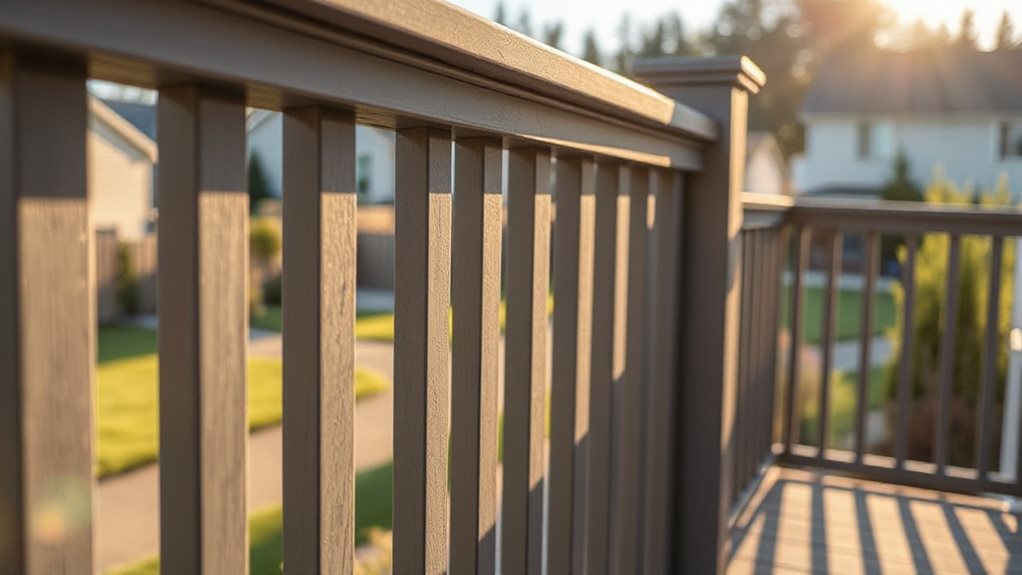
After fixing those wobbly posts and tightening the brackets, the next step is making sure the railings actually meet the height rules your city or county enforces, because a perfectly built deck can still get sent back to the lumberyard if the measurements are off. Call the building department, grab the local code, measure from the deck floor to the top rail, upload the plan, and schedule an inspection to confirm you’ve hit the 36‑inch (or higher) requirement before you start camping on your new perch.
Overall
Now that you’ve nailed the exact height, measured every gap, and double‑checked the local code, you’re ready to enjoy your deck without fearing a fine or a tumble. Remember, a sturdy railing isn’t just a rule—it’s your safety net for late‑night stargazing and sunrise coffee runs. So grab your tools, fix any violations, and celebrate with a camp‑fire on the balcony—because a code‑compliant deck is the best ticket to exploration!