Can Too Much Mulch Kill Plants?
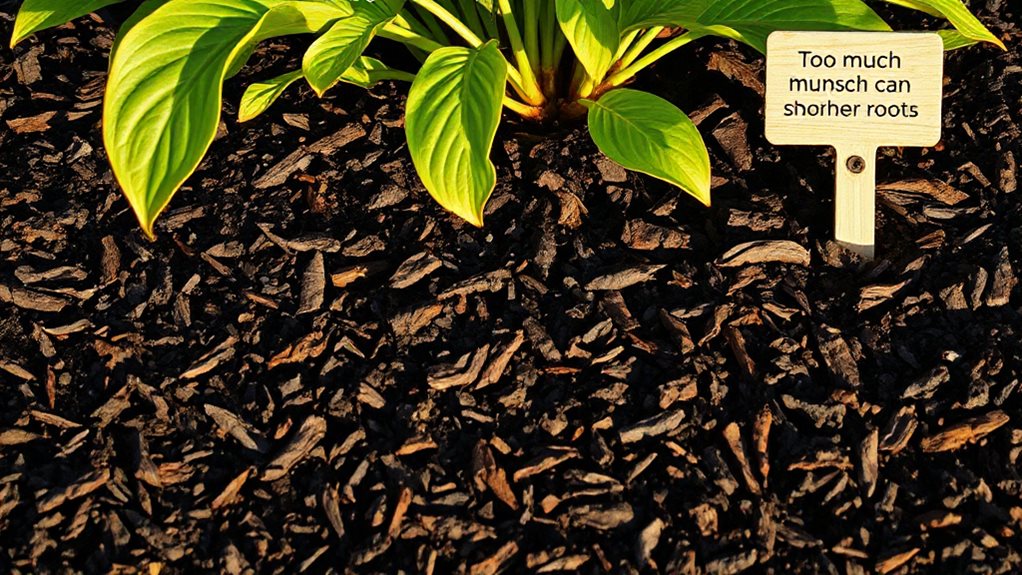
Yes, too much mulch can actually kill your plants because it smothers the soil, cutting off the oxygen roots need to breathe, and when you pile it against a trunk it keeps the bark damp, inviting rot and pests, plus wet mulch creates a perfect breeding ground for nasty fungi like Phytophthora. Fresh wood chips also steal nitrogen, making the soil acidic and nutrient‑poor, while the heat trapped under a thick layer can scorch shallow roots. Keep mulch to about two inches and leave a gap around trunks, and you’ll avoid these problems—there’s a lot more to explore if you keep going!
TLDR
- Excessive mulch (>6 inches) blocks soil pores, reducing oxygen for root respiration and causing root suffocation.
- Mulch piled against tree trunks keeps bark damp, fostering rot, bark scorching, and pest/fungal attacks.
- Wet, thick mulch creates low‑oxygen conditions where pathogens like Phytophthora thrive, leading to root‑rot diseases.
- Fresh wood mulch triggers microbial nitrogen tie‑up and releases organic acids, lowering soil pH and depriving plants of nitrogen.
- Dense mulch acts as a mini‑greenhouse, retaining heat and moisture that stress shallow roots and attract pests and rodents.
Why Over‑Mulching Reduces Soil Oxygen & Hurts Roots
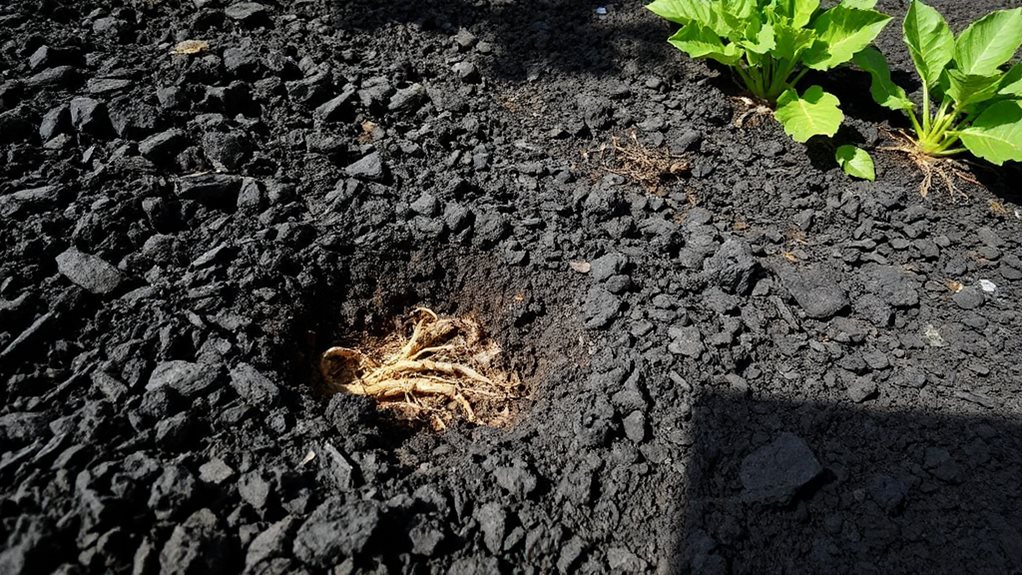
Ever wonder why a thick blanket of mulch can actually suffocate a plant’s roots? You’ll see that when you pile more than six inches, water fills the pores, squeezing out oxygen that roots need for respiration, especially after rainy springs. Dense, shaded areas and poor drainage can worsen the problem by prolonging moisture and creating stagnant water that reduces soil oxygen.
Imagine roots as hikers needing fresh air; they suffocate, die, and the whole plant weakens, so keep mulch light and breathable. Over‑mulching can also lead to oxygen deprivation in the root zone, further stressing the plant.
Why Mulch Against Trunks Damages Inner Bark
Why does piling mulch right up against a tree’s trunk feel like wrapping a soggy blanket around a campfire? You’ll see bark staying damp, gases trapped, and phloem suffocating, so nutrients can’t travel, and the trunk weakens.
Heat from wet mulch can scorch inner bark, while rodents and fungi love the cozy, moist hideaway.
Keep mulch a few inches away to protect the tree’s lifeline.
Fertilizer can also promote weed germination that competes with trees for water and nutrients.
Why Wet Mulch Promotes Root‑Rot Diseases
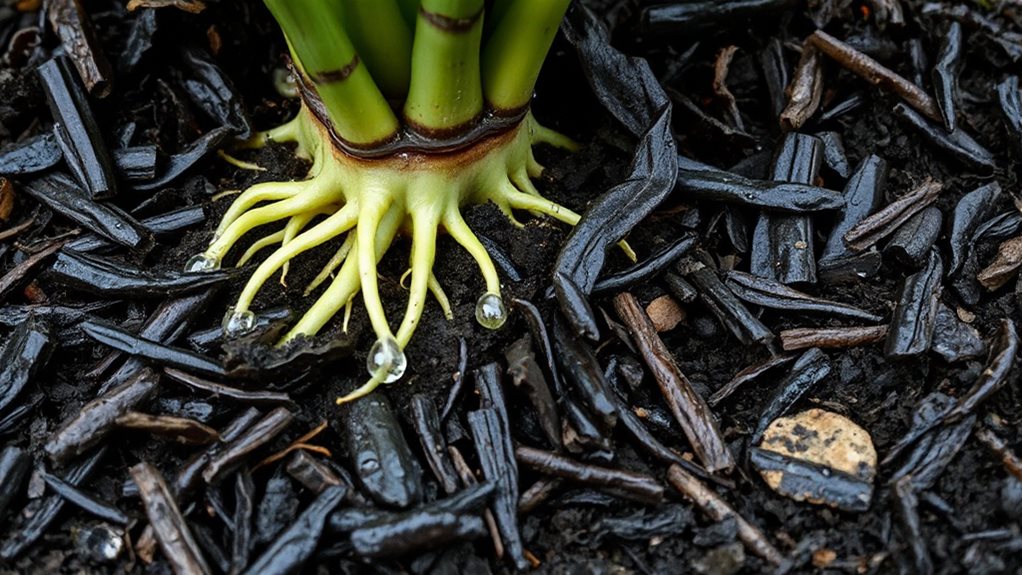
When you pile wet mulch right up against a plant’s base, it’s like setting up a soggy campsite right on the fire pit—everything stays damp, the air gets choked, and the “campfire” (the roots) can’t breathe.
Pathogens such as *Phytophthora* and *Pythium* love the water‑logged, oxygen‑starved zone, turning roots mushy and causing wilting, yellow leaves, and blackish stems.
Keep mulch thin, avoid stem piles, and let soil dry to protect your garden friends.
Purple shrubs can provide a drier backdrop in beds when planted with proper spacing to improve air circulation and reduce mulch‑related disease risk; consider using well‑draining soil and leaving a clear mulch-free zone at stems.
How Excess Mulch Causes Nitrogen Tie‑Up & Acidic Soil
So, what happens when you pile a mountain of fresh wood chips right on the garden floor? Microbes feast on the carbon, gulping nitrogen to build proteins, so your plants starve while the top two inches turn nitrogen‑poor.
The decomposition spews organic acids, dropping pH, especially under thick, hydrophobic layers. Add a nitrogen‑rich compost base, fertilize lightly, and keep mulch shallow to avoid the tie‑up and acidity. Building codes often require the use of corrosion-resistant connectors to ensure long-term structural durability in outdoor installations.
How Over‑Mulching Creates Pest Habitat & Heat Stress
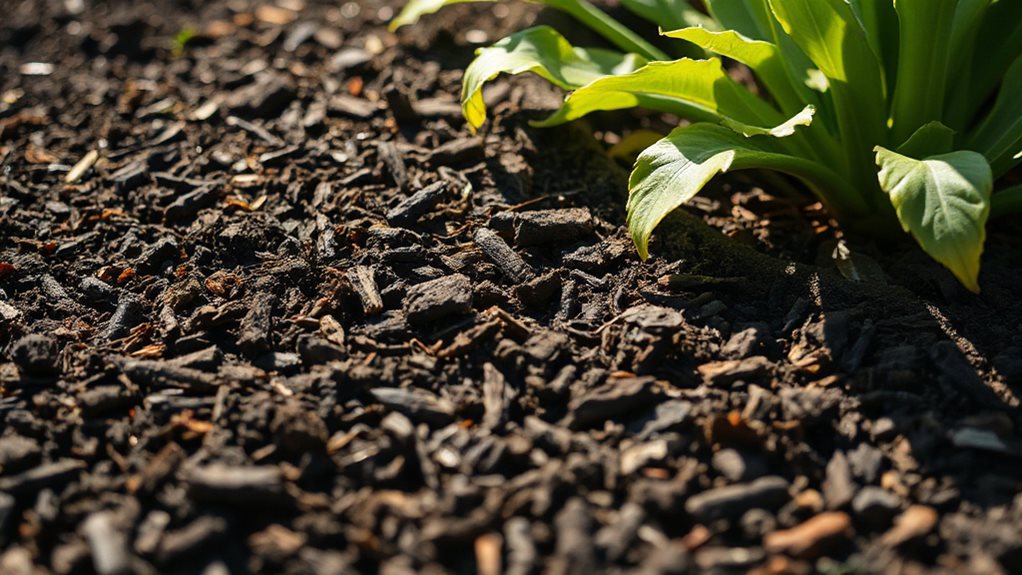
You’ve probably noticed how a thick blanket of mulch can turn your garden into a cozy bug hotel, giving pests a perfect, damp shelter where they multiply faster than mosquitoes at a summer camp.
When the sun beats down, that same mulch heats up like a campfire, and the extra warmth combined with trapped moisture creates a mini‑greenhouse that fuels insects and even makes the soil feel like a sauna for roots.
Repeated moisture and heat can also encourage pests and rot by creating conditions similar to a pest habitat in which insects and fungi thrive.
Pest Shelter Creation
Ever wonder why a backyard that looks like a cozy campsite can suddenly turn into a critter‑filled jungle? You pile thick mulch and it traps moisture, turning the spot into a perfect breeding lounge for insects, rodents, and even termites.
Those wood chips become food, the deep layers hide critters, and the dampness invites mice to nest nearby—so keep it shallow, around two inches, to stop the unwanted shelter party.
Heat Accumulation in Mulch
Ever wonder why a thick carpet of mulch can feel like a sizzling summer road trip for your garden? When you pile on three inches of bark on a hot day, it traps sunshine, turning soil into a sauna that scorches shallow roots, especially if the mulch came from warm pavement or compost that’s buzzing with microbes; the result is yellowed grass, stressed veggies, and a garden that feels like a campfire without the marshmallows.
Moisture‑Driven Insect Proliferation
When the mulch turns your garden into a hot, soggy campground, it’s not just the heat that’s a problem—those damp, insulated layers become a five‑for for insects, kind of like setting up a tent right in the middle of a bug‑infested swamp.
You’ll see beetles and borers thriving in soggy bark, spreading disease, while your trees gasp for oxygen, so trim mulch, keep trunks dry, and protect your garden friends.
How to Diagnose Over‑Mulching Damage
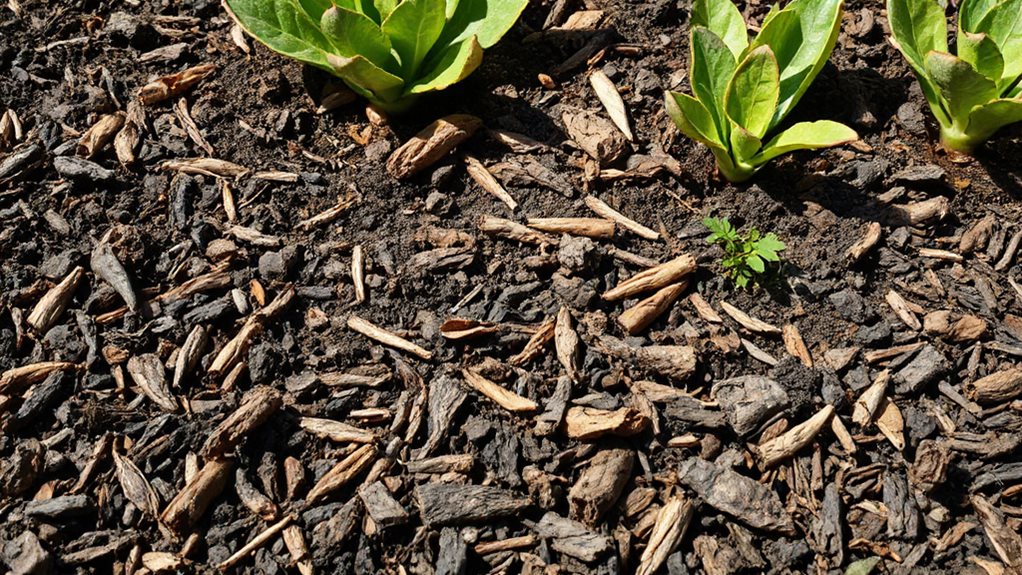
If you’ve ever set up a backyard campsite and piled on a mountain of mulch like you’re building a cozy tent floor, you might be surprised to find that too much of that “soft bedding” can actually choke your plants.
Look for yellowing leaves, tiny new growth, soggy soil, and dead branches; check oxygen levels, sniff for sour mulch, and remember that wilting often mimics drought, so act fast before the damage becomes permanent.
How to Apply Mulch Safely and Prevent Damage
You’ll want to spread the mulch to a solid 2‑4 inch blanket—any less and the weeds will keep crashing the party, any more and you risk suffocating the roots, especially if the soil drains poorly. Keep the pile at least three inches away from trunks or stems, because those little air pockets are the secret sauce that stops rot and lets the tree breathe, just like a campfire needs space from the tent. So grab a rake, measure carefully, and give your garden the same thoughtful setup you’d use for a perfect campsite—just swap the tent for soil and the marshmallows for nutrients!
Mulch Thickness
Ever wonder why a perfectly‑packed campsite feels so cozy, yet a garden buried under a mountain of mulch can look like a soggy disaster? You’ll want 2‑3 inches for most beds, 3‑4 inches for trees, and just 1‑2 inches for veggies. Check depth often, replenish when it drops, and never pile over three inches—otherwise roots drown, and your garden’s camping‑trip ends in a soggy mess.
Trunk Clearance Distance
A thick blanket of mulch can feel like a cozy campsite, but if it smothers the tree trunk it turns the whole spot into a soggy, disease‑loving mess—so you’ve got to keep a clear “donut” around the base. Pull mulch back three to six inches, shape a donut, then spread a ring three to six feet wide. Water away from the trunk, check yearly, and enjoy healthier trees.
Overall
So, remember, a little mulch is like a cozy blanket for your garden, but too much turns it into a sauna that chokes roots, invites rot, and even throws a party for pests—think of it as overpacking a backpack for a hike: you’ll end up sweaty, cramped, and missing the trail. Keep the layer thin, check the moisture, and give your plants room to breathe, and you’ll enjoy thriving greens just as much as you love a perfect campsite under the stars.