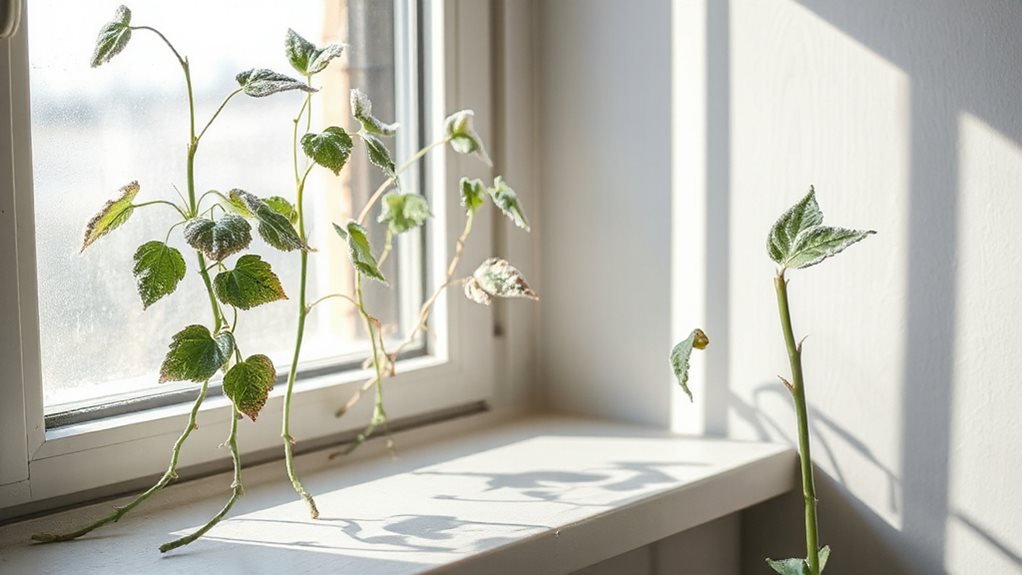
Why Do Houseplants Grow Slowly in Winter?
Winter slows your houseplants because the days are short and dim, so only 20‑30 % of the light they love actually reaches them, cutting photosynthesis and sugar production, which makes leaves turn pale and stems skinny; the heater’s hot spots blast localized heat that fries leaf edges and outpaces root water uptake, while the dry indoor air saps tropical vigor, and you often overwater because cooler, dimmer conditions need less moisture, leading to soggy soil and root rot—if you keep going, you’ll discover how to fix each of these issues.
TLDR
- Limited winter light reduces photosynthesis, slowing growth and causing paler, smaller leaves.
- Cooler temperatures and dimmer light lower water and nutrient uptake, leading to reduced vigor.
- Heater‑induced heat stress creates rapid transpiration, wilting, and leaf edge browning.
- Overwatering in cooler, low‑light conditions causes root rot and mushy roots, further hindering growth.
- Dry indoor air lowers humidity, especially for tropical plants, resulting in droopy foliage and stunted development.
Winter Light Shortage: Why It Slows House‑Plant Growth
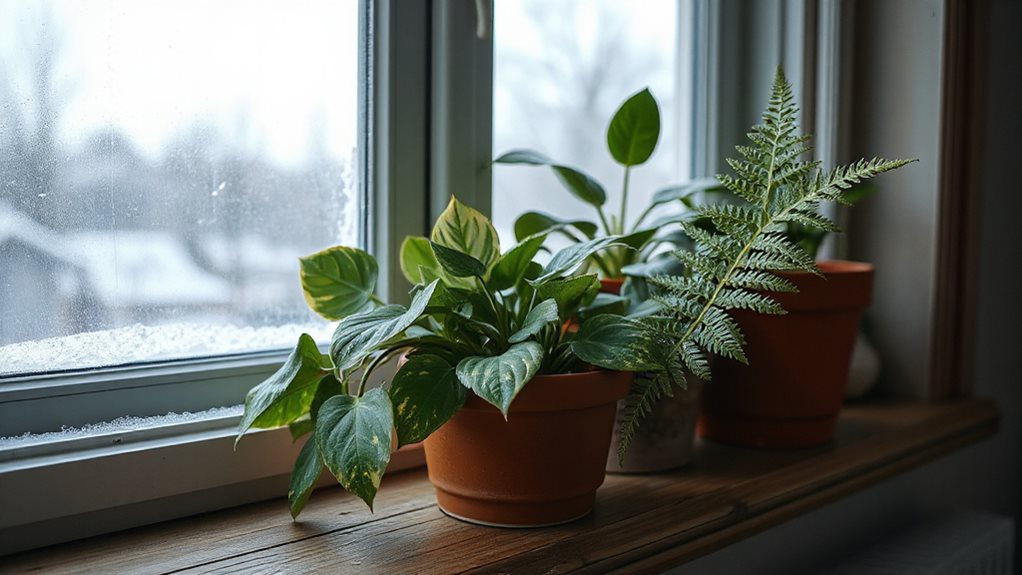
Ever wonder why your leafy companions seem to snooze when the days get short? You’re basically sending them into a low‑light campsite: photosynthesis drops, sugar production stalls, and chlorophyll fades, so they turn pale and stretch like tired hikers.
With only 20‑30% of the light they love, stems get skinny, leaves shrink, and growth pauses—just like a camper huddling under a dim lantern. Reduced photosynthetic energy leads to slower overall growth and smaller new leaves. Dutch ovens are excellent at retaining heat, which helps maintain stable temperatures for plants in cooler rooms and reduces stress from temperature swings, especially when placed on or near warm surfaces like oven tops or stoves with even heat distribution.
Winter Houseplant Care: How Heat Spots From Heaters Stress Your Plants
When the heater’s blast hits your favorite fern, it’s like setting up a campfire right next to a sleeping bag—everything gets too hot, too fast, and the plant starts to panic; you’ll see brown, crispy edges, wilting despite watering, and stunted growth because transpiration outruns root uptake.
Keep plants three‑to‑five feet from radiators, use humidity trays, and monitor room temperature below 75°F to protect those leafy campers. Increasing humidity and avoiding prolonged heat stress also help maintain healthy growth because many plants suffer when soil moisture and air humidity are low.
Winter Houseplant Care: The Overwatering Trap When Soil Stays Wet
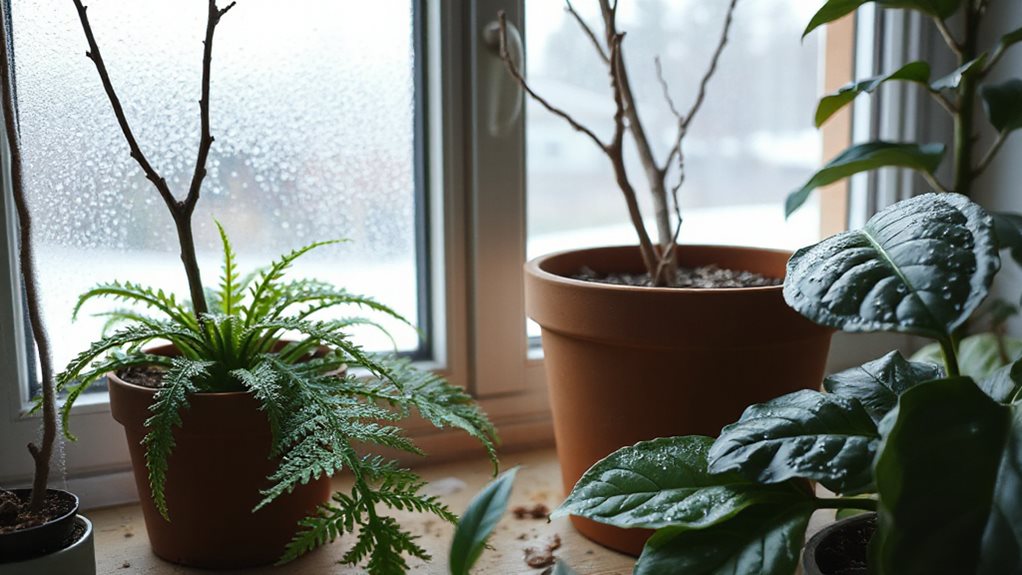
Why do we keep pouring water on our houseplants even though the soil stays soggy all winter? You’re likely using summer schedules, forgetting that cooler temps and dimmer light shrink water needs, while heating dries the top layer fast but leaves the bottom wet.
Check the top inch, feel like a wrung‑out dishcloth, then wait—overwatering leads to rot, mushy roots, and sad, droopy leaves. UV light loss in winter also slows plant growth, reducing water uptake and increasing the risk of root rot.
Winter Houseplant Care: Raising Humidity for Tropical Houseplants
So, you’re probably noticing that your tropical houseplants look a little droopy this winter, and you’re wondering why the air feels as dry as a desert trail after a long hike.
Increase humidity by clustering thirsty plants, using pebble trays, and placing a tabletop humidifier nearby; mist lightly, but avoid soggy leaves.
Think of it as creating a cozy campsite for your green friends, keeping them happy and thriving.
Choose plants with lower water loss and avoid placing them near heating vents to reduce stress, as many tropical species do better when kept away from dry air sources.
Dormancy vs. Real Problems – How to Tell If Your Plant Is Resting and When to Intervene
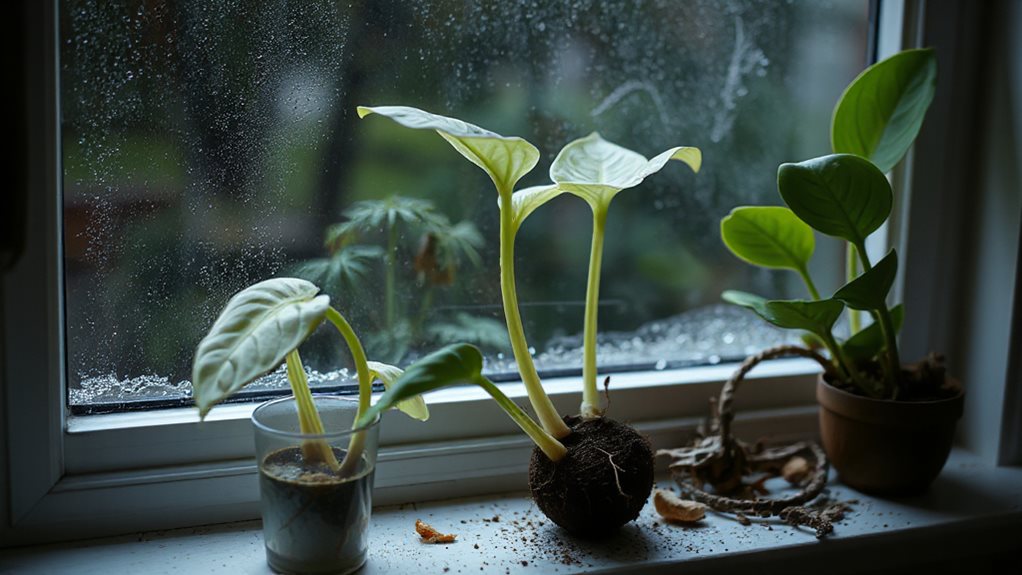
Ever notice your tropical buddy suddenly looking like it’s taking a nap in the middle of a chilly night, and you’re left wondering if it’s just a lazy winter or a real emergency?
Check roots: firm, pale, elastic means dormancy; mushy, dark, stinky signals trouble.
Bend stems—flexible is resting, brittle is dead.
If leaves yellow fast, drop patchy, or stems feel floppy, intervene now, otherwise let nature’s winter pause unfold.
Also check soil moisture and drainage—overwatering can mimic dormancy signs, so allow the top two inches to dry before watering and consider repotting into well-draining soil if the pot is soggy.
Overall
So, winter isn’t a monster—just a chill‑induced snooze button for your leafy friends, and you can still keep the vibe alive by tweaking light, heat, water, and humidity; think of it like prepping for a camping trip, packing the right gear to stay comfy under a starry sky. If you notice droopy leaves, ask yourself: “Is it really dormancy or a hidden stress?” Then act—move the plant, adjust watering, boost moisture, and watch it perk up, because even in the cold, a little care can turn a sluggish season into a thriving adventure.