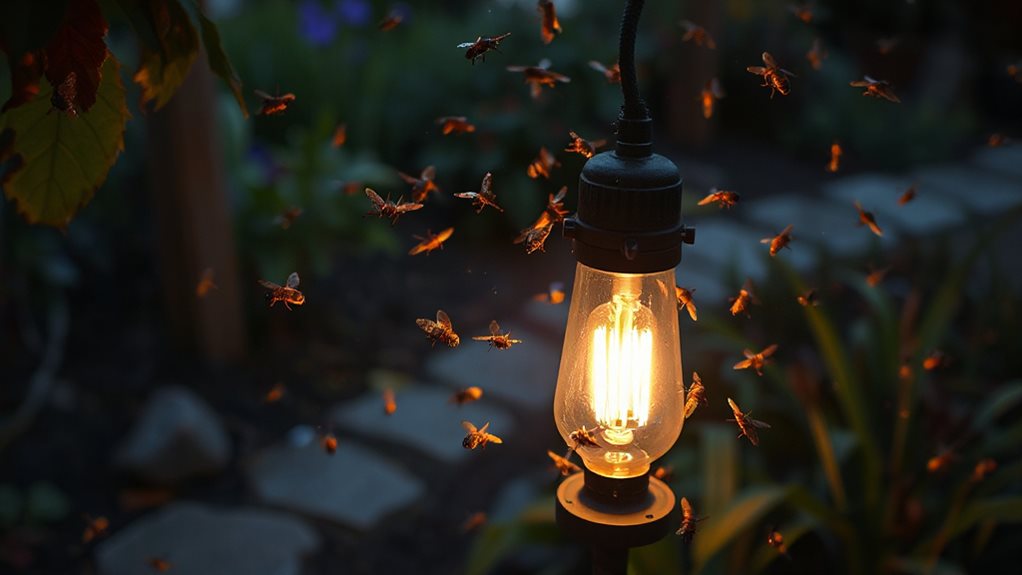
Why Do Flies Gather Around Outdoor Lights?
You see flies buzzing around porch lights because their eyes are hard‑wired to chase bright, UV‑rich spots that mimic the sun’s glare, so when you flip the switch they think they’ve found a shortcut home; the UV wavelengths (365‑400 nm) trigger a dorsal light‑response reflex that makes them tilt upward, orbit, and even flip upside‑down, turning a simple lamp into a dizzying dance floor. Their navigation system, built for moon and star cues, gets hijacked, causing endless circling that looks like a tiny, frantic party—keep reading and you’ll discover how to break the spell.
TLDR
- Flies are phototactic, naturally moving toward bright light sources for navigation and orientation.
- UV and near‑UV wavelengths (365‑400 nm) strongly attract flies because many species can see this spectrum.
- Light disturbs their visual cues, causing disorientation, orbiting, and stalled flight near the brightest hemisphere.
- Intermittent flashing interrupts their flight patterns, trapping them in repetitive loops and preventing escape.
- Concentrating flies around lights keeps them away from occupied outdoor areas, reducing nuisance and disease transmission.
Why the Dorsal Light‑Response Reflex Draws Flies to Lights
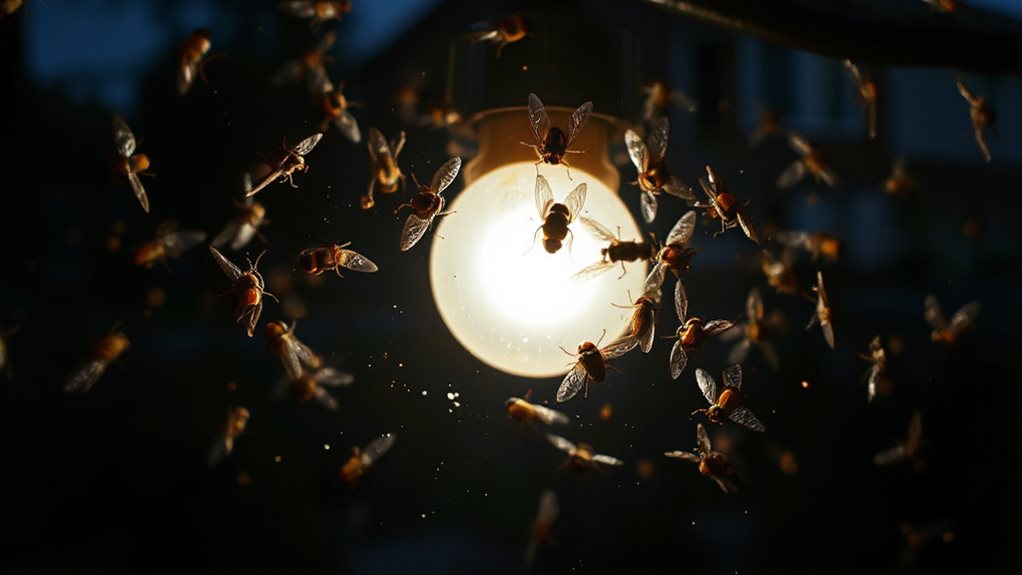
Ever wondered why a simple porch light turns a night‑time camping trip into a buzzing dance floor for flies? You’ll love how their dorsal‑light response reflex makes them tilt their backs toward any bright spot, using the glow for 3‑D orientation just like the moon guides them. When you switch on a lamp, that ancient instinct backfires, trapping them in looping spirals—so you can help by dimming upward lights and giving nature a break. Researchers found that insects “tilt their backs toward the light source rather than flying straight toward it” dorsal light response. Many gardeners also notice increased insect activity near lamps because artificial lights can attract and concentrate nocturnal insects in one area.
UV Wavelengths That Make Outdoor Lights Irresistible to Flies
When you flick on that porch light after a day of hiking, the flies don’t just see a bright spot—they see a UV party invitation, because their eyes are hard‑wired to chase wavelengths in the UV‑A band, especially the sweet spot between 350 nm and 370 nm.
You’ll notice 365 nm LEDs sparkle like tiny suns, and 395 nm fills gaps, making traps irresistible, while flickering at 100 Hz adds extra buzz, drawing even more curious females to your campsite. Plants exposed to sudden intense light can suffer rapid leaf scorch in conditions of high heat and dry wind, showing how abrupt changes in light intensity can cause immediate biological stress.
Moon‑and‑Star Navigation and the Spiral‑Around‑Light Effect
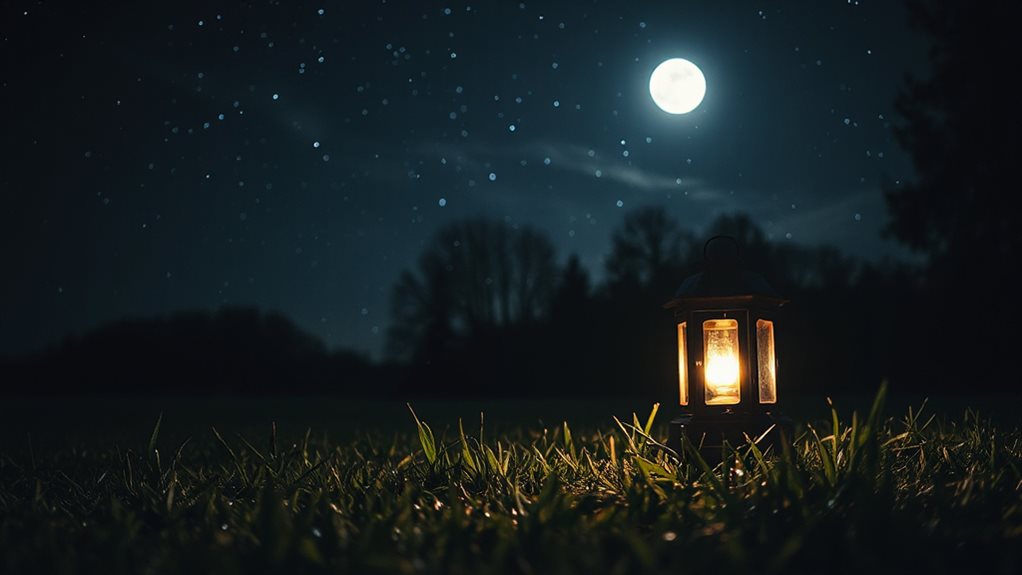
So, why do insects act like tiny, buzzing GPS units when you set up a campfire under a star‑filled sky? You’ll see them keep a steady angle to moonlight or starlight, then—when a nearby lamp shines—switch to a Fibonacci‑spiral dance, spiraling inward as if chasing a distant star that’s suddenly within reach, a quirky, ancient navigation glitch. Heavy rain and runoff can similarly concentrate at lawn edges, washing away soil and showing how focused flows reshape landscapes, which is why installing proper drainage and vegetation helps prevent edge erosion.
Fly Species Most Attracted to Porch and Street Lamps
You’ll notice that house flies, those urban attractors, swarm porch lights the way tourists crowd a festival, and you’ll be amazed at how moths join the party with their nighttime phototaxis, buzzing around like tiny lantern‑hunters.
Have you ever watched beetles and wasps dart toward street lamps, their light‑sensitive eyes turning every bulb into a personal GPS that leads them straight to the action?
Next time you set up a campfire or a backyard BBQ, remember that these critters are just as eager for a glow‑up as you are, so keep an eye on the buzzing crowd and enjoy the quirky, luminous spectacle.
Kale prefers slightly alkaline soil and is hardy to freezing temperatures, often becoming sweeter after cold exposure, so consider its needs when planning winter planting and protection with snow protection.
House Flies – Urban Attractors
Ever wonder why a porch light turns into a buzzing fly disco at dusk? You’ll find house flies drawn to UV‑A glow because their compound eyes love ultraviolet, and the light helps them locate food and warmth.
When artificial lamps confuse their dorsal‑light response, they stumble, crash, and linger—perfect for you to set floor traps and guide them away from guests.
Moths – Nighttime Phototaxis
Ever wonder why a porch light turns into a moth‑filled disco at dusk? You’ll see them spiraling because positive phototaxis makes their backs face the glow, while slow pupillary response blinds them, and artificial LEDs—especially cool‑spectrum—outshine moon cues.
Reduce intensity to 10 lux and you’ll cut movement 85%, helping protect those nocturnal pollinators you love.
Beetles & Wasps – Light‑Sensitive Species
Why do beetles and wasps swarm around porch and street lamps like it’s a midnight party? You’ll notice scarab beetles drawn to the 395 nm UV‑blue glow, because they navigate by light cues and get confused by LEDs, while wasps chase the same glow to hunt insects, heat, and UV—so your camping trip’s lantern becomes a buzzing banquet for these light‑sensitive critters.
Busting Myths About Fly Light Attraction (Heat, Sunlight Streaks, Pheromones)
When you set up a campfire or a lantern on a warm summer night and notice a swarm of flies buzzing around the light, you might think it’s just the heat or that the bugs are mistaking the glow for a sun‑lit clearing—well, those ideas are actually myths that’ve been busted by recent research.
Heat isn’t the lure; LEDs stay cool yet still attract flies.
Sunlight‑streak escape theory fails—flies don’t chase moonlight.
Real cause: the dorsal light response, keeping light on their backs, plus UV/blue wavelength attraction.
Proper airflow and dry conditions also influence insect behavior, so keeping areas well‑ventilated can reduce attractants like decaying organic matter and standing moisture near lights ventilated skirting.
How Light Angle and Fixture Design Affect Fly Clustering
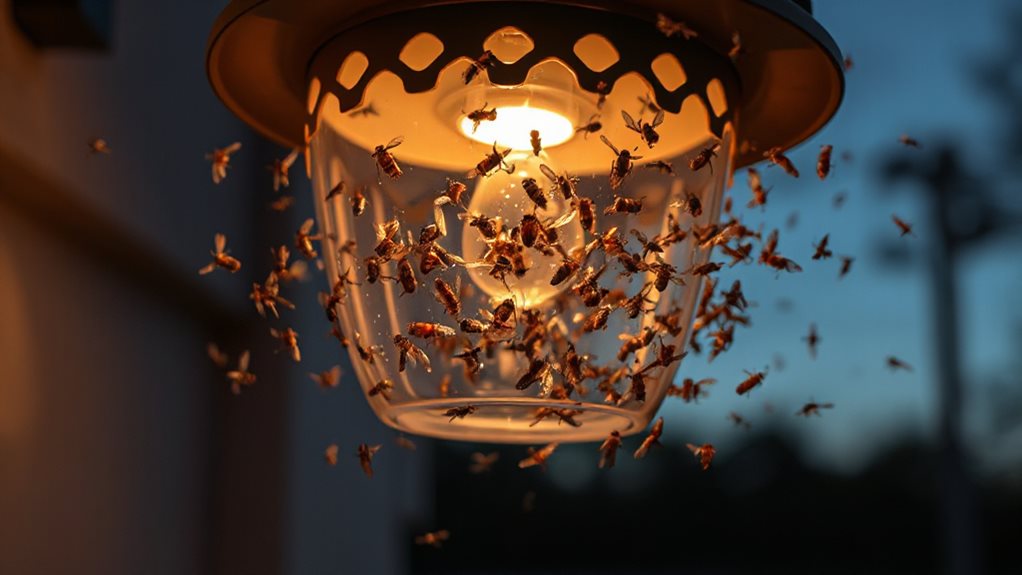
So, why does a lantern tilted just a few degrees send a swarm of flies spiraling around it while a straight‑up lamp barely gets a buzz?
When you angle a fixture, its light hits flies at dorsal height, prompting orbiting and stalling; shielding hides the source, cutting spill and making the beam invisible from afar.
Custom LED designs lower luminance, so flies lose interest, while unshielded, high‑positioned bulbs act like lighthouses, drawing crowds.
Adjust angles and add shields, and you’ll see fewer buzz‑makers clustering around your campsite lights.
Three Easy Ways to Keep Flies Away From Porch Lights
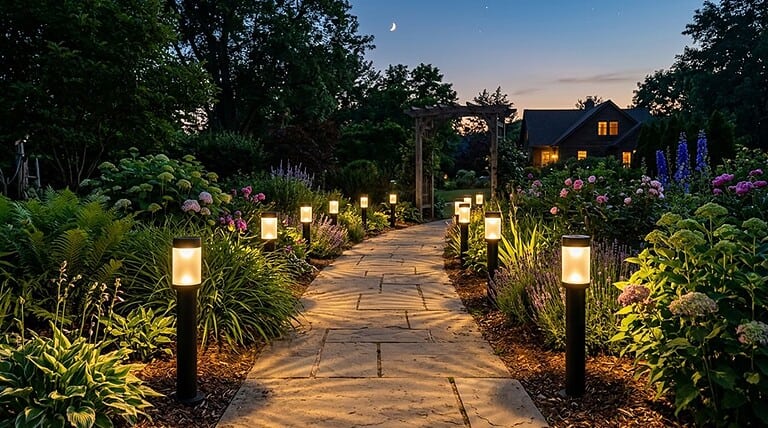
You’ll notice that swapping to warm‑colored LED fixtures instantly cuts down the fly traffic, because the amber glow mimics sunset and doesn’t scream “bug buffet!”—have you ever tried a downward‑facing shield?
It’s like giving the insects a ceiling that says “no entry,” and the light stays bright for you while the bugs stay grounded.
Finally, why not add a motion‑activated UV trap that only lights up when someone walks by, turning the porch into a fly‑free zone and giving you a cool, high‑tech vibe that feels straight out of a camping excursion?
Use Warm‑Colored LED Fixtures
Ever wondered why those porch lights sometimes look like a bug‑magnet buffet? Swap them for warm‑colored LED fixtures—yellow or orange LEDs are practically invisible to flies, mosquitoes, and moths, so they’ll just zip past.
Choose a 2200K or amber‑tinted bulb, fit it into any socket, and watch the bug count plummet while you enjoy camp‑fire vibes without the buzzing interruptions.
Add Downward‑Facing Light Shields
Ever wonder why a simple shield can turn a porch light from a bug‑magnet into a calm campsite? You’ll love slapping a full‑cutoff shield on the fixture, because it forces the glow straight down, so flies barely see it from afar.
Angle the beam low, seal any gaps, and keep the shield clean—then your outdoor evenings stay bright, bug‑free, and ready for family gatherings.
Install Motion‑Activated UV Traps
After you’ve slapped a full‑cutoff shield on your porch light and the flies finally stopped buzzing like a summer rave, the next trick is to set up a motion‑activated UV trap that only lights up when something moves—think of it as a ninja‑style bug bouncer.
Mount it where flies wander, use 365‑400 nm LEDs, and let intermittent flashes snag them before they reach your guests, keeping evenings safe and pest‑free.
What 3‑D Motion‑Capture Tells Us About How Flies Buzz Around Lights
A scene to envision: you’re setting up a campsite under a star‑filled sky, the night’s calm broken only by the soft hum of a lantern, and suddenly a swarm of flies starts buzzing in wild circles around the light.
3‑D motion capture shows they tilt dorsally, orbit, stall, even flip upside‑down, because the light’s brightest hemisphere hijacks their flight control, turning curiosity into a dizzying, trapped dance.
Overall
Now you’ve seen why flies can’t resist a porch light—those UV beams, the ancient navigation reflex, and the way a fixture’s angle creates a buzzing vortex. Next time you’re camping or heading out on a night hike, remember a simple trick: swap to amber bulbs, add a shield, or keep the light low, and you’ll dodge the fly‑swarm fiesta. Give it a try and watch the night stay bug‑free!