Why Does My Backyard Stay Wet After Rain?
Your backyard stays wet because water’s got nowhere to go—if the yard slopes toward the house, even a tiny six‑inch drop over ten feet pushes rain right onto the foundation, and any low spots become puddle magnets; clay soil packs tight, so foot traffic compacts it into a hard crust that blocks infiltration, while clogged gutters or short downspouts dump water right onto the lawn instead of away, and on coastal plains a high water table keeps the ground saturated longer, especially after snowmelt or humid summer days—keep scrolling and you’ll discover how to fix it.
TLDR
- Inadequate yard grading creates a flat or reversed slope, causing water to pool near the foundation instead of draining away.
- Heavy clay soil and compaction reduce porosity, limiting infiltration and keeping the ground saturated longer.
- Clogged or improperly extended downspouts and mis‑placed splash blocks direct runoff onto the yard rather than away from the house.
- High water tables, especially in coastal plains, and seasonal factors like snowmelt keep the soil saturated after rain.
- Lack of additional drainage solutions (e.g., French drains, swales, gravel trenches) prevents rapid water removal from the yard.
Why Your Yard’s Slope Traps Water in a Wet Backyard
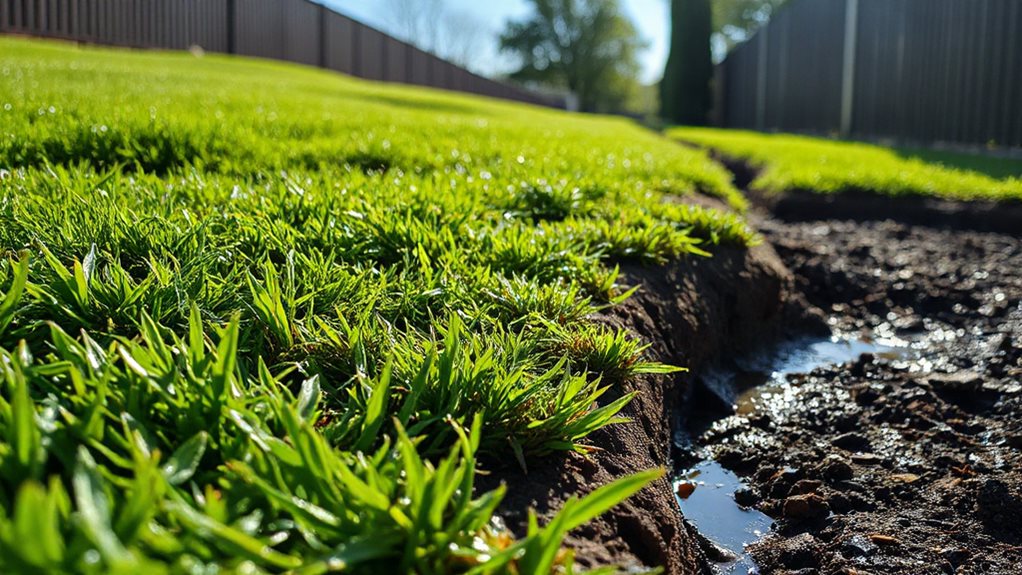
Ever wonder why your backyard feels like a soggy swamp after a good rainstorm? You’ve probably got a slope that’s too gentle or even reversed, so water hangs out instead of sprinting away. Think of it like a campsite where the trail dips into a puddle—your yard’s grading should drop six inches over ten feet, otherwise the foundation gets soggy, cracks, and you’re stuck fixing leaks instead of hiking. Adding soil to create a proper slope can direct water away from the foundation and prevent pooling.
How Clay and Compaction Slow Yard Drainage
When rain hits a yard built on clay, it’s like watching a backpack explode with water‑filled balloons—everything swells, then refuses to let the excess out, and you end up with a soggy mess that sticks around longer than a campfire after a night hike.
Clay’s tiny particles pack tightly, water saturation squeezes air out, and compaction from foot traffic creates a hard crust, so water runs off instead of soaking, leaving puddles and stressed plants. Improving porosity through aeration and adding organic matter helps water infiltrate and drains yards faster.
Poor Grading and Low Spots That Keep a Wet Backyard Puddles
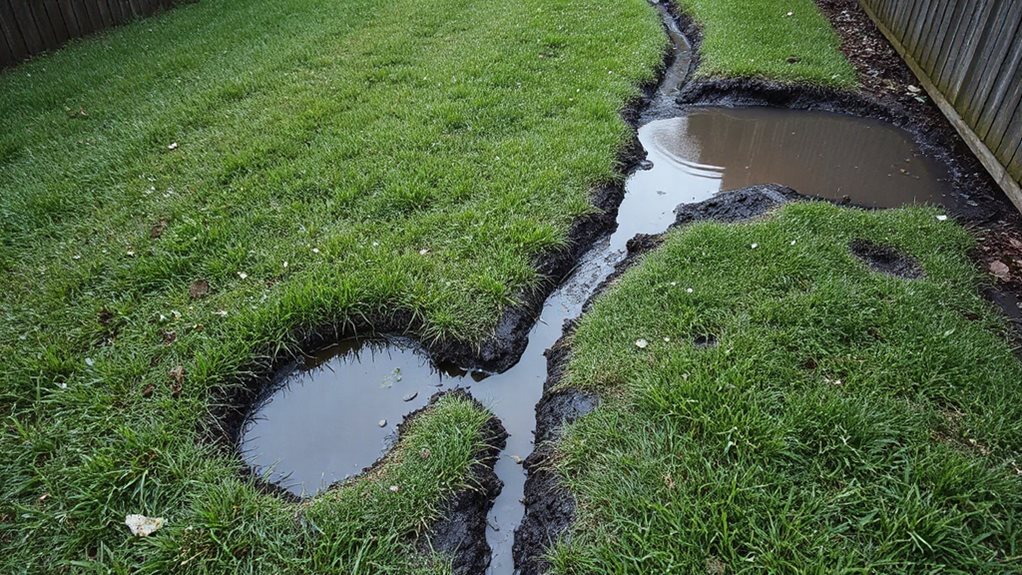
So, why does your backyard turn into a soggy campsite after a rainstorm? Poor grading sends water sloping toward your house, while low spots trap it like mini lakes, breeding mosquitoes and eroding soil. You’ll see puddles linger, foundations soak, and lawns turn patchy. Fix the slope—at least an inch per foot—and fill depressions with gravel or a drain, and watch the soggy mess disappear. Adding organic matter like compost can improve drainage over time.
Downspout & Gutter Issues That Wet a Backyard
You’ll notice that when your gutters get clogged, the water just gushes over the sides and lands right in your yard, turning a simple rain shower into a mini‑lake; have you ever tried to catch that overflow with a bucket and ended up soaked yourself?
Make sure every downspout has a long enough extension—think at least 6‑8 feet—so the water sprays far from the foundation, otherwise you’ll see soggy patches and even cracked soil around the house.
And don’t forget to place splash blocks correctly, because a misplaced one can bounce water right back toward the foundation, turning a tidy drainage system into a soggy mess that even a seasoned camper would find frustrating.
Older or damaged components like rusted or cracked gutters should be replaced promptly to avoid chronic wetness and related damage to your home’s drainage system.
Clogged Gutters Direct Water
Ever wondered why a single clogged gutter can turn your backyard into a soggy swamp after a light rain? When debris blocks the trough, water overflows instantly, dumping 15 gallons per minute onto the foundation, saturating soil, creating hydrostatic pressure that cracks concrete, erodes topsoil, and drowns plants. Fix the blockage fast, or you’ll spend $7,500‑$30,000 on repairs.
Short Downspout Extensions Needed
Why does a short downspout extension turn a tidy yard into a soggy mess after a light rain? You’ll see water splashing right at the foundation, pooling, and eroding soil like a mini‑river. Extend it four to six feet, spread the flow, protect garden beds, and keep basements dry. Think of it as giving rain a proper campsite, away from your home’s foundation.
Improper Splash Block Placement
Ever wonder why a tiny splash block can turn your backyard into a soggy campsite after a light rain? If you point the open end away from the house, water streams straight toward the foundation, pooling, breeding mosquitoes, and even cracking walls. Tilt it at least one inch per foot, align the back behind the downspout, and keep it flush—then you’ll channel runoff cleanly, protect the foundation, and keep the campsite dry.
High Water‑Table Impact on Coastal‑Plain Yards
You’re probably noticing that the water table in coastal‑plain yards can rise like a tide, and when it does, the soil stays soggy long after the rain stops, making your backyard feel like a permanent splash‑zone. Have you ever wondered why the ground seems to “hold on” to water even when the sky clears, or is it because the high water table caps the soil’s ability to drain, especially during high tides? Try checking the depth of your local water table and compare it to your yard’s topography—if it’s perched just a few inches below the surface, you’ll see why every rain feels like a mini‑flood party, and you’ll get a chance to experiment with drainage tricks that can turn that soggy mess into a drier, more usable space. Many heat‑loving vegetables, such as sweet potatoes, prefer well‑drained soils and can struggle when yards remain persistently wet.
Rising Water Table
Ever wondered why your backyard feels like a soggy marsh after a brief shower?
The rising water table, driven by sea‑level rise, pushes salty groundwater inland, especially on flat coastal plains, so your soil stays saturated long after rain stops.
Ditches near tide lines let creek water seep in, raising the water table, which then blocks drainage, saturates fields, and even troubles septic systems.
Coastal Soil Saturation
When the water table rises on a flat coastal plain, the soil in your backyard can turn into a soggy sponge that holds onto rain long after the clouds clear, and that happens because salty groundwater—pushed inland by sea‑level rise and storm surges—sits just a few inches beneath the surface, spreading its high‑sodium mix through the sand and clay layers. You’ll notice slower drainage as sodium disperses clay, crusts form, and water stays trapped, making your yard feel like a marsh after a hike or campsite cleanup.
Seasonal & Weather Factors That Extend Wet Backyard Wetness
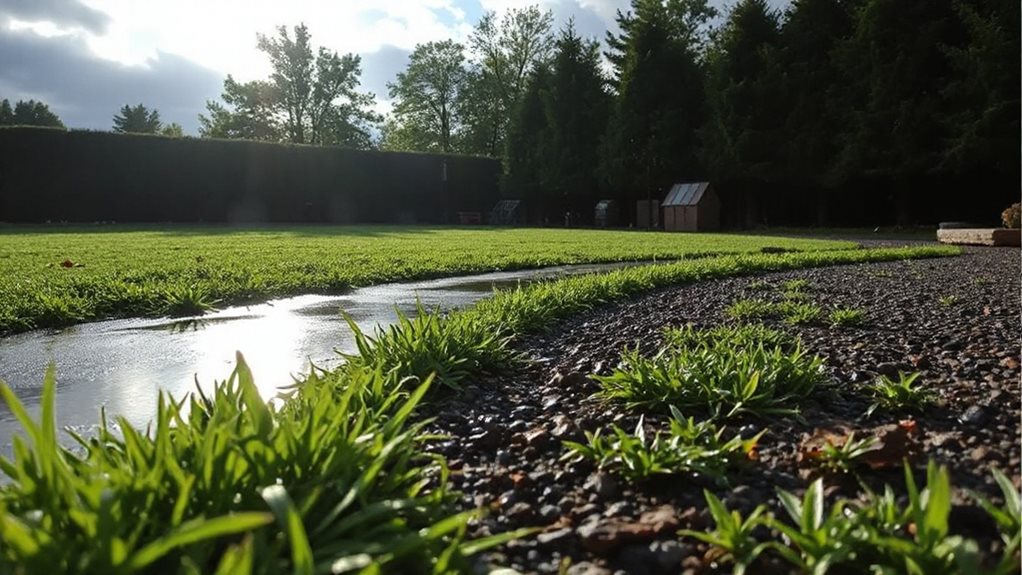
So, why does your backyard cling to that soggy feeling long after the clouds clear? Spring snowmelt lifts groundwater, while rain saturates soil and winter’s frozen ground blocks infiltration, so puddles linger.
Summer humidity and clay trap moisture, and strong winds dry spots unevenly.
Fall’s cooling leaves and reduced evaporation keep dampness, and winter’s stack effect circulates damp air upward, extending wetness.
Poor drainage and soil contact can make problem areas stay wet longer, especially where water stagnation or trapped moisture prevents drying.
Simple Tests to Find the Main Wetness Source
After we’ve talked about how seasons and weather tricks keep the backyard soggy, it’s time to roll up our sleeves and actually find out where the water’s hiding.
You can dig a shallow pit, squeeze the soil, and feel if it’s crumbly or sticky; push a screwdriver or bamboo stick a few inches—wetness makes it cling.
Try a cheap handheld moisture meter, aim for a mid‑range reading, and compare spots.
Repeat after rain to pinpoint the soggy source.
Quick Fixes & Long‑Term Drainage Solutions
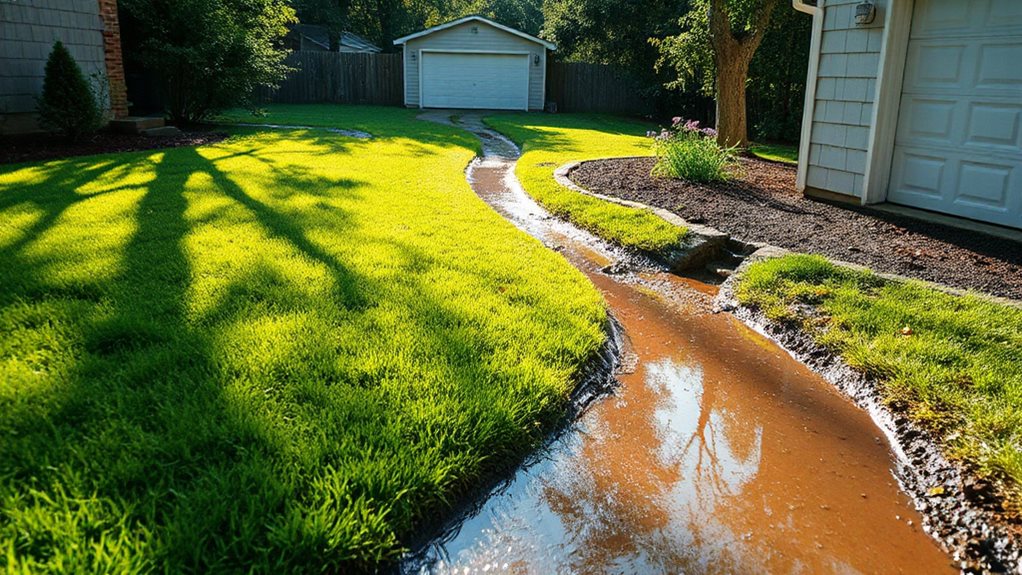
Ever wonder why your backyard feels like a soggy swamp after a storm, even though you’ve tried everything from shoveling to praying?
You can extend downspouts ten to fifteen feet, install surface drains or swales for quick diversion, and add gravel trenches for tiny yards; for lasting relief, consider French drains, rain gardens, or dry wells, budgeting $2‑$7 k, and watch water disappear like a camp‑fire ember.
Overall
Now that you’ve spotted the slope, soil, and gutters causing the soggy mess, you can tackle it head‑on: level the low spots, add sand or gravel to improve drainage, and redirect downspouts away from the yard. Think of it like prepping a campsite—clear the ground, set up a proper tent spot, and keep the rain out of your sleeping bag. With a few tweaks, your backyard will stay dry, and you’ll finally enjoy a mud‑free lawn for picnics and backyard excursions.