Why Do Ants Appear After Heavy Rain?
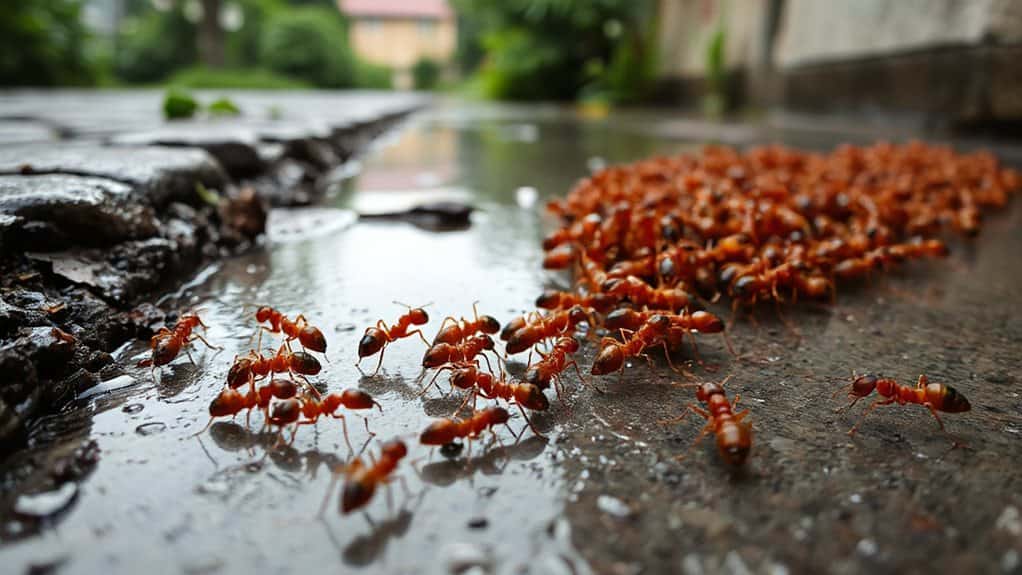
When the sky opens up, the tunnels under your yard turn into a rushing river, so the ants pack up, build tiny rafts or scramble up soil and wood, and end up on the porch looking for dry ground—think of it as an impromptu camping trip. The porch acts like a safe campsite, with raised boards and overhangs that keep them dry, and the crumbs and pet food there become an all‑you‑can‑eat buffet. Once the water recedes, the rafts break apart, the ants spill inside, and you see them marching through kitchens and bathrooms; keep reading and you’ll uncover how to stop them.
TLDR
- Flooded underground nests force ants to evacuate, forming rafts that drift toward higher ground and entry points.
- Rafts and moisture‑laden ants seek dry refuges such as porches, walls, and building gaps.
- Heavy rain creates new cracks and washes away barrier treatments, opening pathways into homes.
- Moisture‑loving species emerge from leaky pipes and damp voids, increasing indoor foraging activity.
- Post‑rain humidity spikes trigger heightened foraging and colony movement, making ants more visible.
How Flooded Tunnels Cause Ant Infestations After Rain?
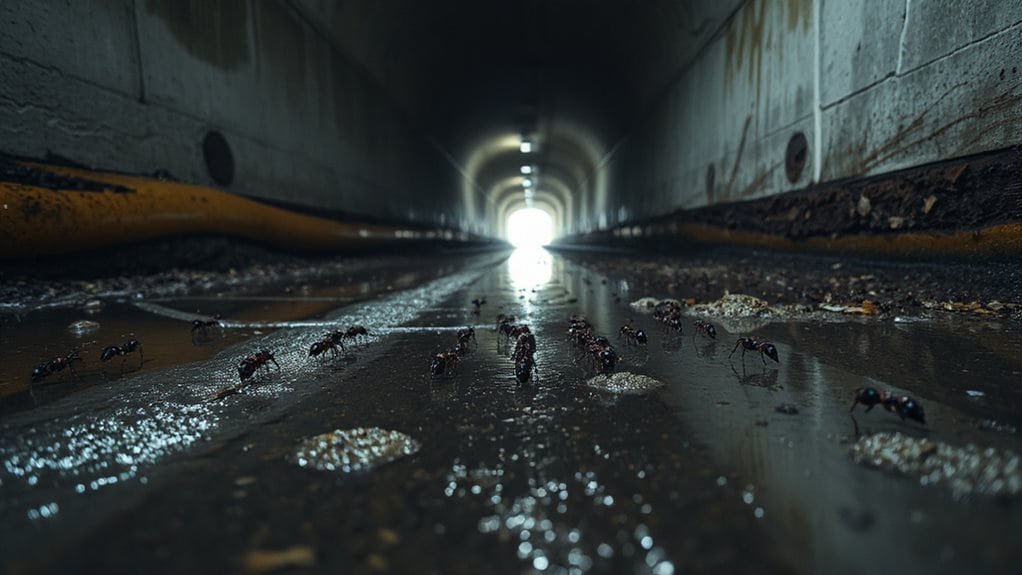
Ever wondered why after a downpour you suddenly see ants marching out of the ground like tiny explorers on a post‑rain escapade?
When tunnels flood, workers seal entrances, then the water forces them upward, forming rafts and air bubbles, so they emerge seeking dry chambers. Elevated soil and structures like raised beds can similarly alter where ants relocate during flooding.
You’ll notice them invading homes, because their survival plan turns your porch into a temporary campsite for the colony. Elevated chambers help them avoid flooding by moving to higher ground within the nest.
Why Do Colonies Move Onto Your Porch When Underground Nests Flood?
When the rain turns your backyard into a swamp, the ants in your colony start packing up their queen and brood, hitching a ride on a floating raft that drifts toward the highest point they can find—your porch, which becomes a perfect dry refuge.
Have you ever watched a wave of workers march in a single file, following the scent trail left by the first few explorers, and wondered why they all seem to know exactly where to go?
Try leaving a little sugary snack on the porch and watch them set up camp, because they’re basically tiny, enthusiastic campers looking for a safe spot to regroup before they rebuild their underground home.
Their movement is often triggered when their flooded nests are compromised, and they seek higher, drier ground to protect the colony and maintain nest integrity.
Flood‑Induced Nest Relocation
So, why do you suddenly find a parade of ants marching across your porch after a downpour? Flooded underground nests force workers to launch alarm runs, ferrying queen, eggs, and larvae to higher ground, often building tiny levees first.
When water rises, they craft rafts, ride the current, and seek dry soil—your porch becomes a convenient campsite, a safe haven for their rescued colony.
Porch as Dry Refuge
Why do ants treat your porch like a five‑star campsite after a downpour? You’ll notice they climb onto the raised, dry wood because flood‑water blocks their underground doors, and the overhang shields them from rain while keeping the wood just damp enough for hydration.
Food crumbs, dead insects, and pet bowls become a smorgasbord, and the safe, elevated spot lets them regroup before marching back home.
Trail‑Following Worker Waves
Ever notice how, after a downpour, a line of ants streams across your porch like a tiny, organized caravan heading for a campsite? Rain washes away their scent maps, so workers grab edges, cracks, and baseboards, forming dense, marching waves that ferry queen and brood to dry refuge. You’ll see them reinforce trails, scout new routes, and humorously “camp” on your steps, all driven by survival instincts.
Why Fire‑Ant Rafts End Up Inside Homes?
You’ll notice that after a heavy rain, the flood‑driven ant rafts ride the water straight toward the lowest opening they can find, and your garage door or cracked window becomes an accidental landing strip.
When the raft bumps into a fence or a wall, the ants scramble up the vertical surface, then tumble through gaps and onto your floor, because their paddle‑shaped mats can’t resist the pull of gravity any longer.
Humming or buzzing from nearby equipment can attract or disorient the ants, especially when their raft breaks up near structures with regulators or vibrating surfaces.
Flood‑Driven Raft Migration
Ever wondered why a rain‑soaked fire‑ant raft can end up marching straight through your living room?
You’ll see that after weeks afloat, the raft drifts downstream, elongating to cut drag, then lands where water pools near your doors.
The queen and larvae sit safely in the center while workers shield them, and once the water recedes, the colony spills out, exploring new grounds—sometimes right inside your home.
Home Entry Pathways
After weeks of drifting like a tiny, soggy raft, the fire‑ant colony finally reaches the edge of your property, and that’s when the real journey begins: slipping through the tiniest cracks to set up camp inside your house. You’ll see them squeeze through door‑frame gaps, weep holes, and foundation cracks, then climb walls, utility penetrations, and even pets, seeking dry refuge. Once inside, they rebuild nests fast, turning your floorboards and wall voids into bustling camps while you’re busy serving others.
Raft Disassembly Triggers
Ever wonder why those tiny fire‑ant rafts suddenly “hit the road” and end up camping inside your house? When flood waters recede, the raft’s balance tips—small groups under ten ants flail legs, bounce off each other, and lose cohesion, while capillary forces weaken on dry land. Oxygen‑hungry workers swap spots, heat or light hits, and the raft bursts apart, letting ants wander indoors.
How Moisture‑Loving Ants Invade Bathrooms and Basements?
Why do those tiny, citrus‑scented ants suddenly pop up in your bathroom or basement after a rainstorm? You’ll notice them marching from leaky pipes, damp wall voids, or a soggy crawl space, because they love moisture like campers love a fresh trail.
Their yellow‑to‑brown bodies, elbowed antennae, and citrus scent guide you to hidden leaks, while their mud tubes and sawdust trails tell a story of a thriving, water‑hungry colony waiting to be rescued. These ants are often drawn to areas with trapped moisture that mimic their natural nesting environments.
What Rain‑Induced Barrier Erosion Lets Ants Slip Through Doors and Windows?
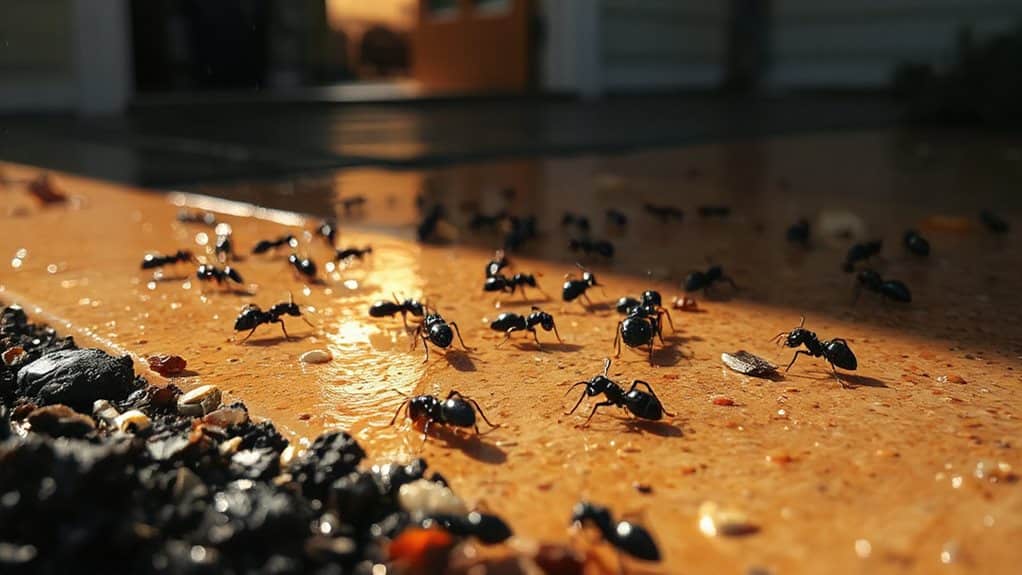
When a sudden downpour drenches the yard, the water doesn’t just soak the grass—it starts chewing away at the tiny defenses that keep ants out of your house, turning your door and window into a slick, open‑season highway for those citrus‑scented invaders.
Saturated soil erodes under thresholds, swelling wood loosens seals, and runoff carves channels through mulch, exposing tunnels that slip straight through cracks, letting ants march in like ardent campers on a rainy trail. Increased surface runoff also washes away soil and organic matter, creating persistent wet spots that encourage ant movement and nest relocation to drier areas near structures, a process linked to runoff and saturation.
How Does Post‑Rain Humidity Change Ant Foraging Behavior?
After the rain drains away, the air stays thick with moisture, and that sudden humidity spike is like a neon sign for ants, telling them it’s safe to head out again.
You’ll notice them scurrying faster because their antennae sense the dampness, which stops desiccation and triggers colony alarms, so they flood the ground, especially where dew points rise, increasing foraging excitement.
Why Does Food Scarcity After Storms Drive Ants to Kitchens and Pantries?
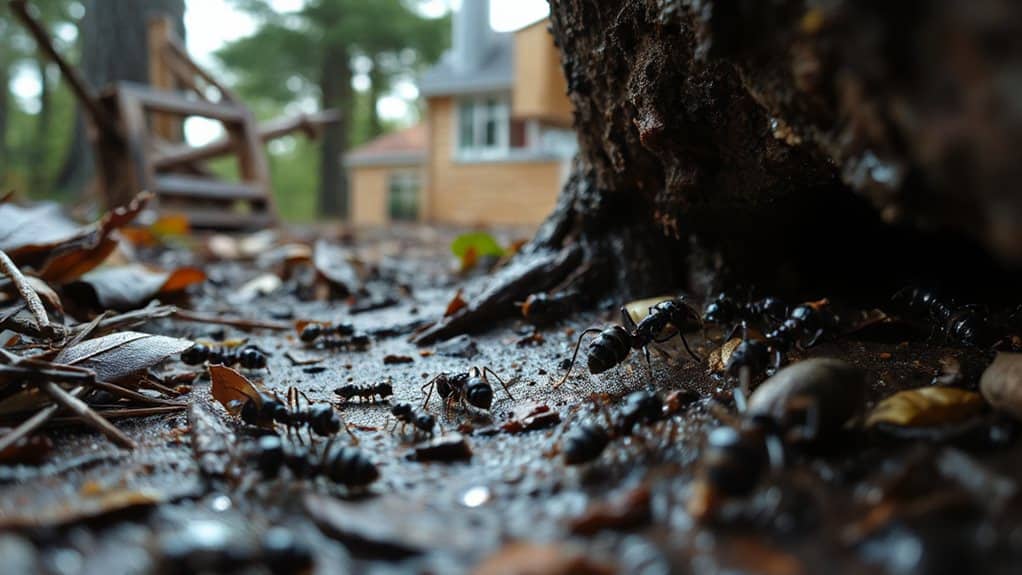
Ever notice how, right after a storm, your kitchen suddenly looks like an ant‑sized buffet? Rain wipes out garden crumbs and insects, so colonies scramble indoors, drawn to sugar, crumbs, pet food, and greasy pans.
Your pantry’s cereal and open containers become easy targets, and even a tiny spill on the counter can lure a whole for.
Seal food, wipe surfaces, and keep trash tight to outsmart their hungry trek.
How Do Washed‑Away Pest Sprays Affect Ant Infestations?
What happens when a sudden downpour washes away the ant spray you just applied? You’ll see the pesticide lose its grip, because rainfast formulas need 15‑30 minutes to dry, so heavy rain can dilute or rinse it off; but granules actually soak in, making trails stickier for ants.
What Seasonal Patterns Predict the Highest Indoor Ant Traffic?
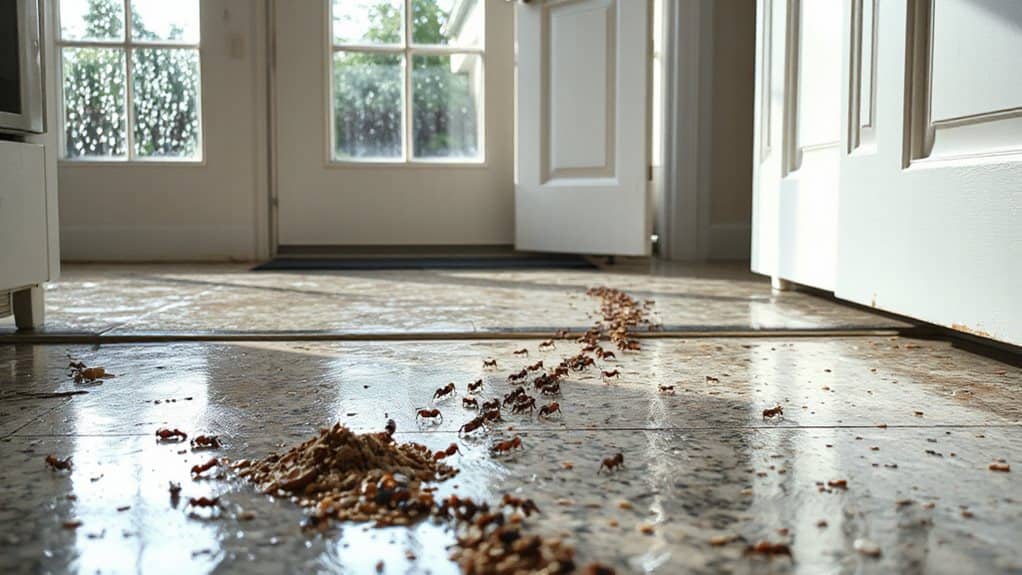
When the rain washes away that fresh‑sprayed barrier, the ants don’t just disappear—they start scouting for a new gateway, and that’s exactly why the seasons matter so much for indoor traffic. You’ll see spring swarms near windows, summer bursts by leaky pipes, fall invasions when temps dip below 60°F, and winter trails in heated walls; degree‑day heat, moisture hotspots, and indoor microclimates all predict peak traffic.
Which Colony‑Adaptation Tricks Cause Post‑Downpour Ant Sightings?
So, why do you suddenly spot ants marching across your kitchen floor after a heavy downpour? Their nests flood, so they flee upward, forming rafts that drift into homes, then scatter when the water recedes. They also sense humidity spikes, scramble to stash food, and protect brood, turning bathrooms and basements into temporary camps—explaining those post‑rain ant parades.
What Quick Steps Prevent Rain‑Induced Ant Infestations?
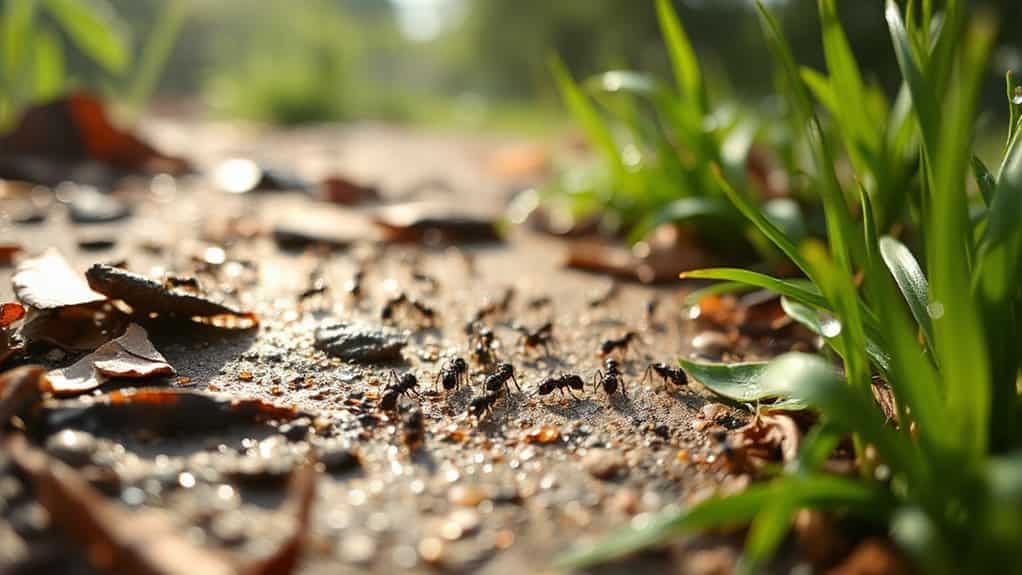
Ever wondered why a sudden downpour can turn your kitchen into an ant highway? You can block them fast by sealing cracks, using airtight food containers, and wiping crumbs right after meals; install a basement dehumidifier, clear gutters, and fix leaky faucets, then set liquid bait stations along trails before dusk, and you’ll keep ant traffic away, even after rain.
How to Reinforce Sealants and Entry Points for Long‑Term Ant Control?
You’ll want to check your caulking every few months, especially after a rainstorm, because even the toughest silicone can crack when the house swells from moisture, and catching those tiny gaps early stops ants from slipping in like secret agents. Pick a weather‑resistant caulk—100% silicone or a high‑quality polyurethane foam—that won’t melt or mildew when you’re out camping under the stars, and remember to smooth it in with a steady hand so the seal looks as solid as a mountain trail.
And if you ever spot a new crack, don’t wait—grab a tube, seal it fast, and you’ll feel as victorious as finding a hidden waterfall on a hike!
Sealant Inspection Frequency
Ever wondered why a quick walk around your house after a rainstorm feels like a treasure hunt for tiny ant highways? You should check sealed spots quarterly, then monthly in kitchens and foundations, especially in spring when ants march. Keep a log of repairs, note any cracks, and schedule professional inspections yearly. Enhance your ant‑defense by staying ahead of wear and moisture.
Weather‑Resistant Caulking Selection
So, which caulk should you grab when you’re sealing those sneaky ant highways that pop up after a storm? Grab silicone for unpainted vents, flashing, and windows because it tolerates ±50% movement, endures –60°F to 400°F, and resists mold. Choose hybrid MS for paintable siding, offering flexibility and low odor. Use polyurethane on structural joints where paintability matters. All bond without primer, last decades, and keep ants out.
Overall
So, next time a downpour turns your backyard into a swamp, remember the ants are just trying to stay dry—like you after a rain‑soaked hike. Their tunnels flood, their rafts form, and they march onto porches, into bathrooms, and even crawl through tiny cracks you never noticed. By sealing gaps, keeping things tidy, and checking for moisture, you’ll outsmart those little travelers and keep your home ant‑free, all while enjoying the next expedition without unwanted hitchhikers.