
How Insects Overwinter in Gardens
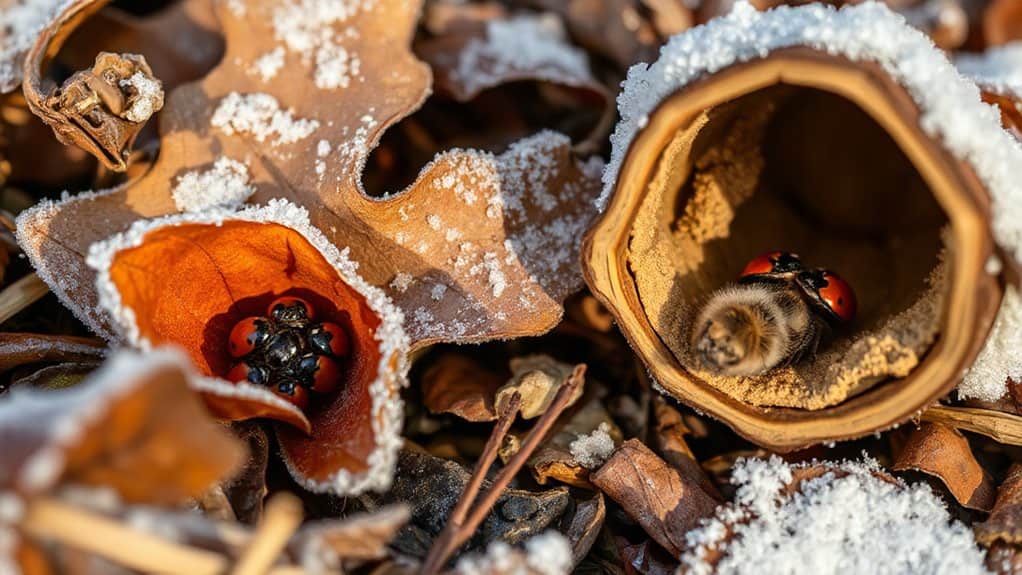
You’d be amazed how your garden bugs tough it out all winter—some pack natural antifreeze like tiny survival kits, while others snuggle into leaf litter or burrow deep like mini campers dodging frost! They freeze *on purpose*—but only outside their cells—thanks to special proteins and sugars. Many slip into diapause, a cool insect hibernation, or change color to soak up sun. A few, like monarchs, jet south dramatically! Want to know where exactly they’re hiding and how they pull it off?
TLDR
- Many garden insects survive winter by entering diapause, a developmental pause that boosts cold tolerance and synchronizes emergence with spring resources.
- Insects seek insulated microhabitats like soil, leaf litter, dead plant stems, and mulch to avoid freezing temperatures and predators.
- Freeze-tolerant species use antifreeze molecules and ice-binding proteins to control ice formation and prevent cellular damage during subzero conditions.
- Some insects, like monarch butterflies, migrate long distances to escape harsh winter, while others rely on wind dispersal in spring.
- Excessive garden cleanup, tilling, and pesticide use can destroy overwintering sites, reducing beneficial insect populations in the next season.
How Do Insects Survive Freezing Temperatures?
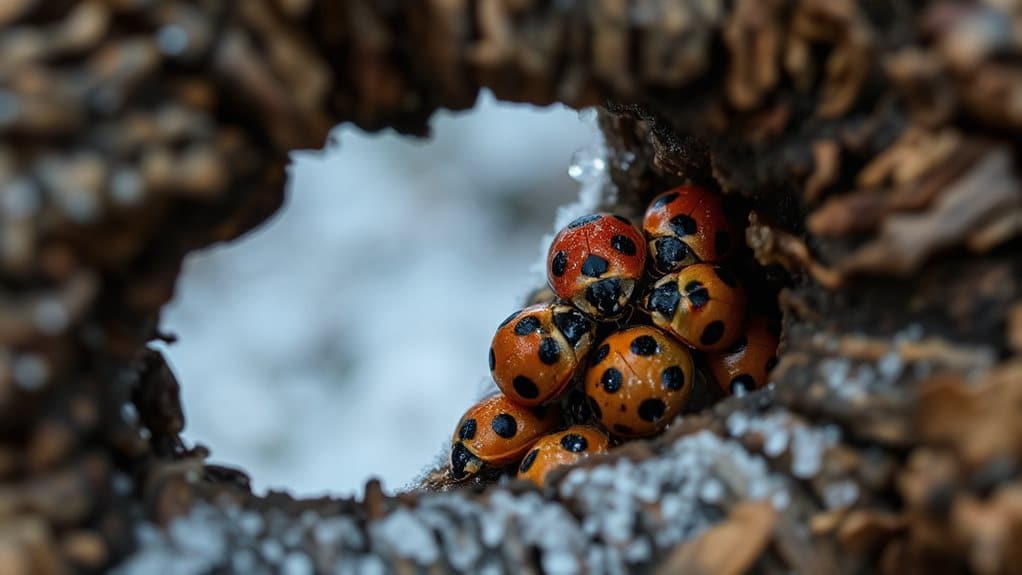
While you’re snug in your sleeping bag during a winter camping trip, wondering if your toes will ever warm up again, a whole army of tiny voyagers—bugs—is already deep in their own frosty survival challenge right beneath the snow.
They let ice form outside their cells, use special proteins to control freezing, and pack natural antifreeze—like trehalose—to stay safe. Cool, right? You’d freeze solid, but they’ve totally got this! Many insects also seek out insulated microhabitats such as leaf litter and soil to improve overwintering success.
Some species can even survive ice forming in their bodies thanks to their ability to be freeze-tolerant.
Where Do Garden Insects Hide During Winter?
You’d be amazed where bugs set up camp when winter rolls around—kind of like finding a cozy tent spot in the woods, but way less Instagrammable.
While you’re bundling up, countless garden insects are already snug underground, curled up in leaf litter, or tucked into cracks in the soil like they’ve got their own tiny survival guides.
Many species also rely on nearby native plants and structural features like dead stems or brush piles to provide shelter and winter habitat.
Underground Hideouts
When the frost starts creeping across your garden like a ninja in slow motion, you might think all the bugs have vanished—but guess what? They’re just bunking underground!
Colorado potato beetles dig down 5 to 10 inches, while bumble bees cozy up in loose soil beneath tall grass.
Slugs snuggle under mulch, hawkmoths pupate deep down, and vine weevils hibernate like tiny campers in nature’s basement—warm, hidden, and totally ready to surprise you next spring!
Plant Debris Refuge
Hunkering down under a cozy blanket of fallen leaves and leftover plant scraps? You’re giving insects a five-star winter resort!
Squash bugs, thrips, and lady beetles snuggle into debris like campers under sleeping bags.
Lacewings hide in hollow stems—nature’s bunk beds—while solitary bees wait patiently in dead stalks.
Skip fall cleanup, and you’ll help them survive, like leaving snacks and shelter for hikers.
Soil Surface Survival
While your garden looks quiet and asleep under that winter coat, there’s a whole underground escapade happening just beneath your boots—kind of like finding out your backyard is secretly a bug bunker!
You’ve got grubs and pupae snuggled in the soil, some protected by snow’s cozy blanket, others risking it all near the surface.
Break that crust, expose them to the cold, and boom—you’re helping knock down next season’s pests.
Think of it like turning their sleeping bags into ice cubes!
What Is Diapause: and How Does It Help Bugs Survive?
Think of diapause like nature’s ultimate survival hack—kind of like packing your warmest jacket, extra snacks, and a good headlamp before heading into the wild, except bugs do it from the inside out.
They pause development, stash energy, and toughen up to survive winter’s chill. Pretty cool, right? You’d freeze without prep—so why wouldn’t bugs? They’re just smart, tiny campers! Predatory insects like ladybugs may exploit diapause to synchronize their life cycles with prey availability, helping them survive winter and emerge ready to feed in spring ladybugs.
How Do Color Changes Help Insects Overwinter?
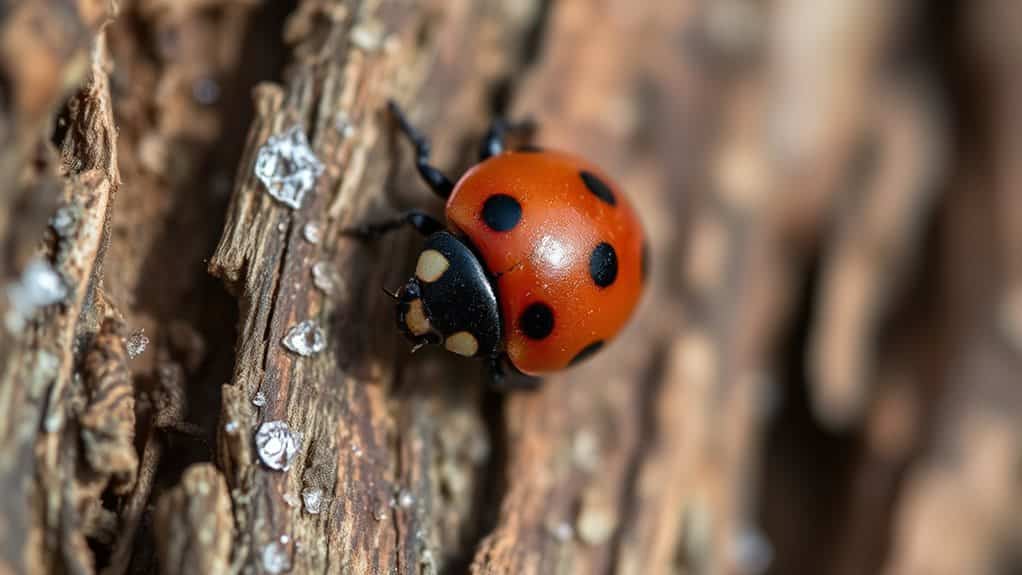
You’ve already seen how bugs pull off their winter survival stunt with diapause—like hitting the pause button on life to tough out the cold—but there’s another slick trick up their tiny sleeves: changing colors!
Ever notice how some insects get darker in winter? That’s no accident. They’re soaking up sunshine like tiny solar panels, staying warm and hidden.
Darker hues absorb heat, perfect for chilly nights, and help them vanish against bark or soil—smart, right?
Think of it as nature’s winter coat and camouflage combo, all rolled into one. Pretty cool how they adapt, huh?
Many insects also time their color and shelter choices to match seasonal bloom patterns that affect available habitats and food.
Do Some Insects Avoid Winter by Migrating?
You’ve probably seen monarch butterflies flitting through your garden in summer, but did you know they’re basically nature’s tiny campers, packing up and flying thousands of miles to Mexico when it gets cold? Instead of shivering through winter, these little explorers ride air currents south—talk about a road trip without a car! And get this: the butterflies that head south aren’t the same ones that come back, so it’s kind of like your great-grandma went camping, and her great-grandkids are the ones who find the way home. Dragonflies also help gardens by eating pests like mosquitoes and flies, reducing nuisance insects both as adults and in their nymph stage.
Monarch Butterflies’ Long Journey
While you’re probably bundling up and cursing the first frost, millions of monarch butterflies are doing the exact opposite—kicking off one of the most jaw-dropping road trips in the insect world.
They’re flying up to 3,000 miles south, using sun angles and thermals like nature’s GPS, camping out in Mexican forests or California groves—talk about serious travel goals!
Windborne Spores From The South
Think of the sky as a busy insect superhighway, and guess what? You’re not just seeing bugs—they’re hitching rides on wind currents like tiny sky campers!
Aphids and hoverflies float hundreds of kilometers, using southerly spring winds to reach gardens. They’re not escaping winter, they’re chasing growing seasons, bringing genes and sometimes pests. Pretty wild, right? Pack binoculars next time—you might spot nature’s ultimate road trip!
What Threatens Overwintering Insects?
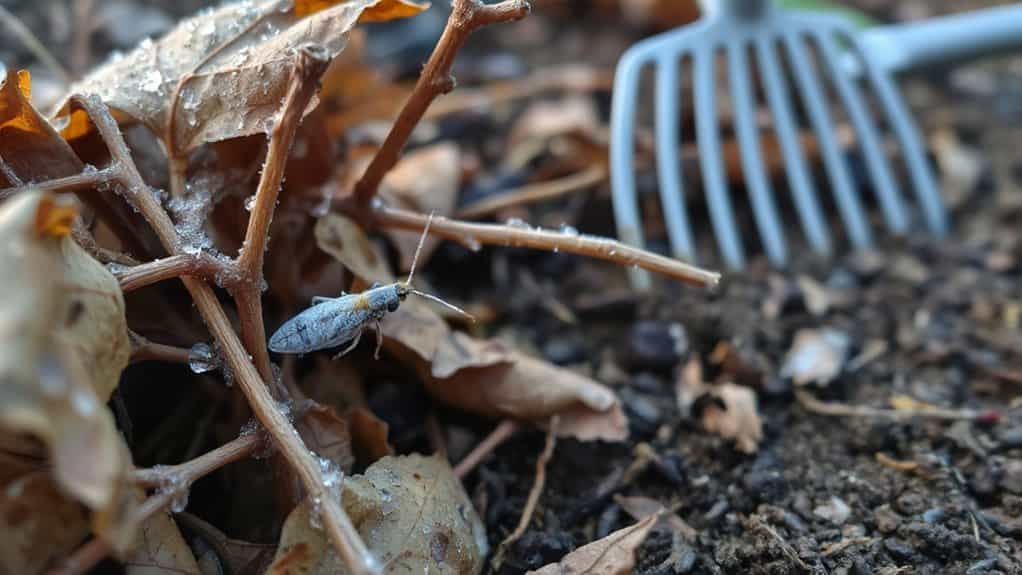
Even though your garden might look quiet and sleepy under a blanket of fallen leaves, it’s actually buzzing—well, *almost* buzzing—with hidden insect drama happening just beneath your notice. Pesticides, invasive pests like spotted lanternflies, and over-enthusiastic raking can wreck overwintering bugs’ cozy homes.
Storms, hungry birds, and even your well-meaning clean-up can disrupt their survival—so ease up a bit, let some leaves linger, and be a backyard hero for sleepy insects!
How Do Weather and Habitat Affect Insect Survival?
You mightn’t realize it, but that frosty garden of yours is basically running a winter survival reality show—complete with tiny contestants, extreme conditions, and some seriously clever strategies to beat the cold.
Snow cover? Think of it as a cozy blanket keeping pests warm, while dry, bare soil leaves them exposed to freezing temps. Moist soil buffers cold like a good sleeping bag, and mild winters? They’re basically a free pass for bugs to throw a spring block party.
Overall
So, you’ve seen how bugs tough it out all winter—freezing solid, hiding under bark, even migrating like tiny explorers! Who knew insects were such survival pros? Next time you’re camping in the cold, remember: that sleepy beetle under the log’s basically doing the same thing you are—just way more efficiently. No tent, no sleeping bag, yet they’re still chilling, literally! Pretty cool, right? Keep an eye out—you’ll never look at a snowy garden the same way again.


