Why Cilantro Bolts So Fast in the Garden (And How to Slow It Down)
Cilantro bolts ridiculously fast whenever the weather heats up—one warm week, and suddenly, instead of fresh leaves for your campsite salsa, you’ve got spindly flower stalks galore! It’s all thanks to hot temps, intense sunshine, and dry soil stressing your plants, making them rush to seed like they’re training for the Olympics. If you want to slow things down, plant slow-bolt varieties, keep ‘em watered, and mulch for moisture control. Stay with me, and you’ll outsmart bolting every time.
TLDR
- Cilantro bolts quickly due to warm temperatures, intense sunlight, and sudden environmental stress in the garden.
- Dry soil, inconsistent watering, and temperature fluctuations accelerate cilantro’s transition from leafy growth to flowering.
- Selecting slow-bolt cilantro varieties and planting in cooler weather helps delay premature flowering.
- Providing shade, mulching, and maintaining even soil moisture reduces plant stress and slows bolting.
- Regularly harvesting leaves and promptly removing flower stalks can prolong the leafy harvest period.
What Happens When Cilantro Bolts?
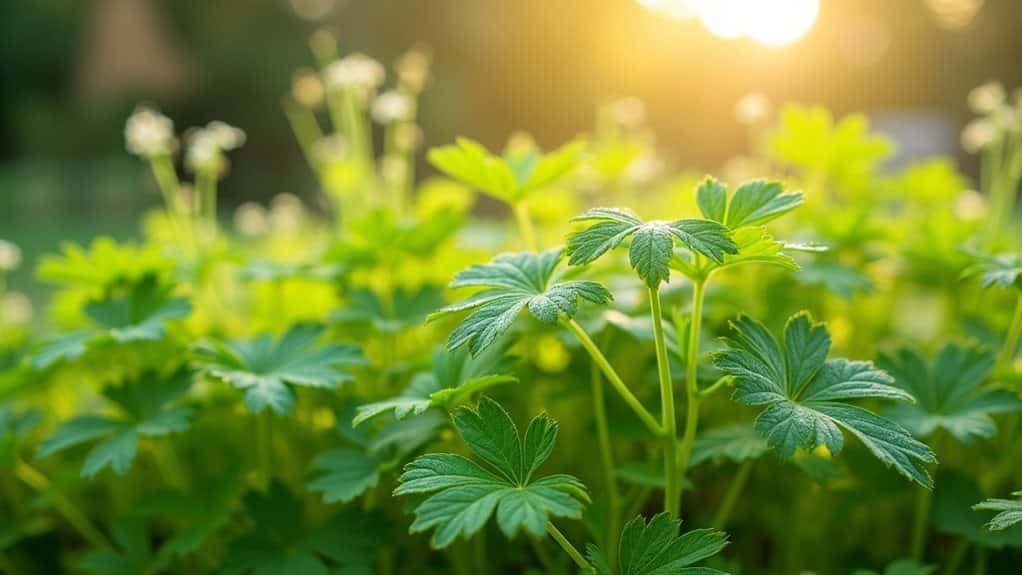
Even if you’re not a gardening pro, you might’ve noticed something weird happening to your cilantro once the weather warms up—suddenly, it shoots up tall, skinny stalks with little white flowers, like it’s trying to win a “Who Can Grow Tallest?” contest. When cilantro bolts, the flowering process kicks in, shifting energy from leaf production to seed production, thanks to environmental cues in the plant’s life cycle. To delay this process, some gardeners use soil testing kits to monitor pH and nutrient levels, helping them create optimal conditions that discourage premature flowering.
Why Does Cilantro Bolt So Quickly in Warm Weather?
When those hot summer days start rolling in and the sun sticks around a bit longer, cilantro basically freaks out and decides it’s time to make seeds ASAP—kind of like if you realized you forgot your homework and suddenly started speed-writing before class!
Warm weather, rising temperature, and longer daylight hours all scream “flowering process” to cilantro. Environmental stressors like dry soil only speed up cilantro bolt, making bolting delay tricky. Additionally, sudden changes in environmental conditions such as moisture levels can also impact the plant’s tendency to bolt prematurely, especially when combined with GFCI trips that may disrupt proper watering routines.
How Heat and Sunlight Cause Cilantro Bolting
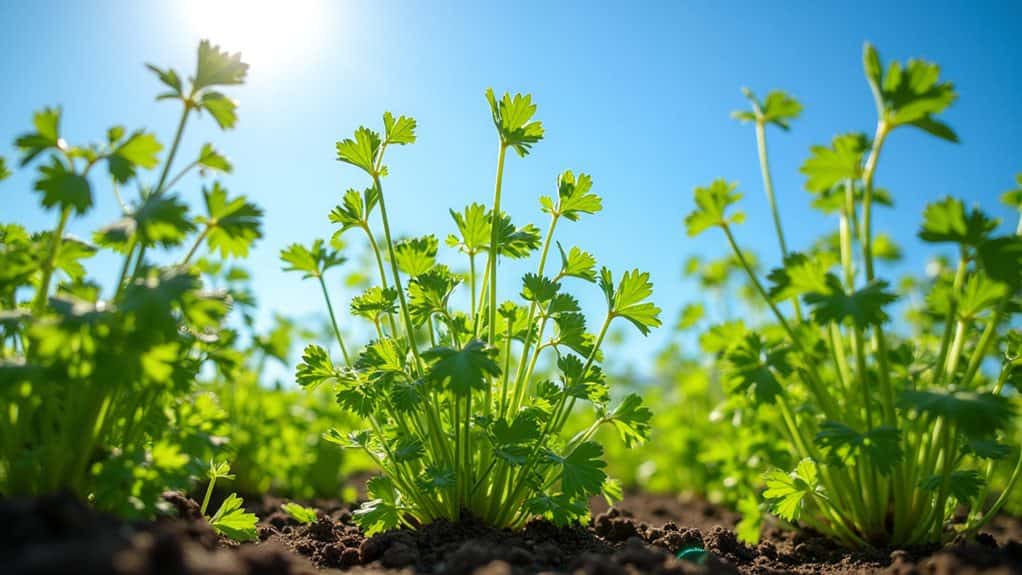
You know how stepping into the backyard on a blazing summer afternoon can feel like setting up camp on the surface of the sun? Well, cilantro feels that heat stress too!
When temperatures climb above 75°F and sunlight blasts your plants, environmental triggers kick in, pushing cilantro bolting and early flowering. Without shade, cilantro rushes to set seed, leaving you with fewer leaves to share.
Additionally, early planting in hot conditions can increase the risk of temperature extremes, which further accelerates bolting and stunts overall growth.
Best Slow-Bolting Cilantro Varieties to Grow
If you want cilantro that sticks around longer during those blazing summer days, you’ve got to check out slow-bolting varieties like Calypso, Santo, and Leisure—they’re basically the secret campers of the herb world, hanging tough when others pack up early!
Ever wondered which types work best in your region, or where to find the freshest, most reliable seeds? (Hint: organic suppliers like Seeds of Change are worth a look.) Let’s talk about the top cultivars, how to pick the right ones for your climate, and why choosing quality seeds makes you feel like you’ve just scored the best campsite at the garden party.
Proper seed selection and planting techniques can also help prevent premature flowering, similar to how proper fastener choice ensures deck stability over time fastener choice.
Top Slow-Bolt Cultivars
Even though cilantro is notorious for bolting faster than you can pack a camping bag, there are actually some awesome slow-bolt varieties that totally change the game for gardeners who want more than just a fleeting sprinkle of fresh leaves.
If you pick slow-bolt cultivars like Calypso, Santo, or Leisure, your cultivar selection means delayed bolting, extended harvest, and reliable hot climate cilantro.
These varieties are perfect for serving up endless fresh salsa!
Regional Variety Recommendations
Packing your bags for an epic camping trip is way easier than picking the perfect cilantro variety for your unique garden climate, but don’t worry, I’ve got your back!
When you’re aiming for slow-bolt cilantro, focus on regional varieties like Calypso, Santo, or Leisure. These champs are bred for climate adaptation, making cilantro selection a breeze for regional cultivation—especially if you’re after heat-tolerant cilantro in steamy summers!
Sourcing Quality Cilantro Seeds
Ever wonder why some cilantro patches fizzle out faster than your campfire s’mores? Here’s the secret: pick cilantro seed varieties labeled “slow bolt” like Organic Calypso or Santo.
Trust reputable seed sources or organic suppliers, and investigate heirloom cilantro for awesome flavor and bolting resistance.
Always check for “slow bolt cilantro” on the label—your salsa-loving friends will thank you for the extra leafy harvest!
Planting and Care Tips to Prevent Early Bolting
Ready to keep your cilantro growing strong and leafy, instead of rushing to flower like it’s late for a camping trip? Start by picking slow-bolt varieties, planting early in cool weather, spacing out your sowings every couple of weeks, and making sure your plants get a bit of shade and plenty of water—trust me, cilantro hates dry, blazing-hot days as much as I hate running out of marshmallows on a hike!
If you keep the soil moist and harvest those tasty leaves often (and don’t forget to pinch off any sneaky flower stalks), you’ll stretch out your harvest and avoid that dreaded early bolting. To further delay flowering, consider implementing a shared driveway maintenance plan to keep your garden area accessible and well-kept, which can help reduce stress on your plants and promote healthy growth.
Choosing Slow-Bolt Varieties
If you’ve ever found yourself frustrated when your cilantro decides to shoot up flowers way too soon—trust me, I’ve been there, staring at those tiny white blooms and wondering where my taco toppings went—you’re definitely not alone!
To beat this, go for slow-bolt cilantro varieties like Calypso or Santo. Grab cilantro seeds from organic seed providers, and you’ll enjoy an extended harvest and serious bolting delay—happy, leafy gardening!
Timing and Succession Planting
Slow-bolt varieties definitely help, but let’s talk about another breakthrough—timing and how often you plant your cilantro.
If you want a steady supply for your next camping taco night, set up a planting schedule, sowing seeds every 2-3 weeks during the cool season.
Use succession planting to swap out any bolting plants fast, and keep harvesting early—trust me, your salsa will thank you!
Managing Sun and Moisture
Although cilantro might seem tough enough to survive your wildest camping escapades, it’s actually a bit of a diva when it comes to sun and water—give it too much heat or let it dry out, and it’ll bolt faster than you can say “pass the guacamole!”
To keep those flavorful leaves coming (and avoid a garden full of tall, flowery stalks instead of taco toppings), you’ll want to pay close attention to where and how you plant. Use shade cloth or tuck cilantro behind taller plants during hot weather to keep soil cooler and protect it from environmental stress.
Watering cilantro early in the day helps keep moisture levels steady, while a good mulch blanket prevents the soil from drying out. Trust me, your salsa will thank you!
How to Harvest Cilantro for More Leafy Growth
When you’re dreaming about endless handfuls of fresh, zingy cilantro for your salsa or tacos, the way you harvest it seriously matters—think of it like packing the perfect camping bag, where every little choice can make or break your trip! Snip only the outer cilantro leaves, always cut above a leaf node, and don’t forget snipping flower stalks—this helps prevent cilantro bolting, enhances leafy growth, and speeds plant recovery. Ensuring proper maintenance and inspection of your plants can also help keep them healthy and productive.
What to Do When Your Cilantro Starts to Bolt
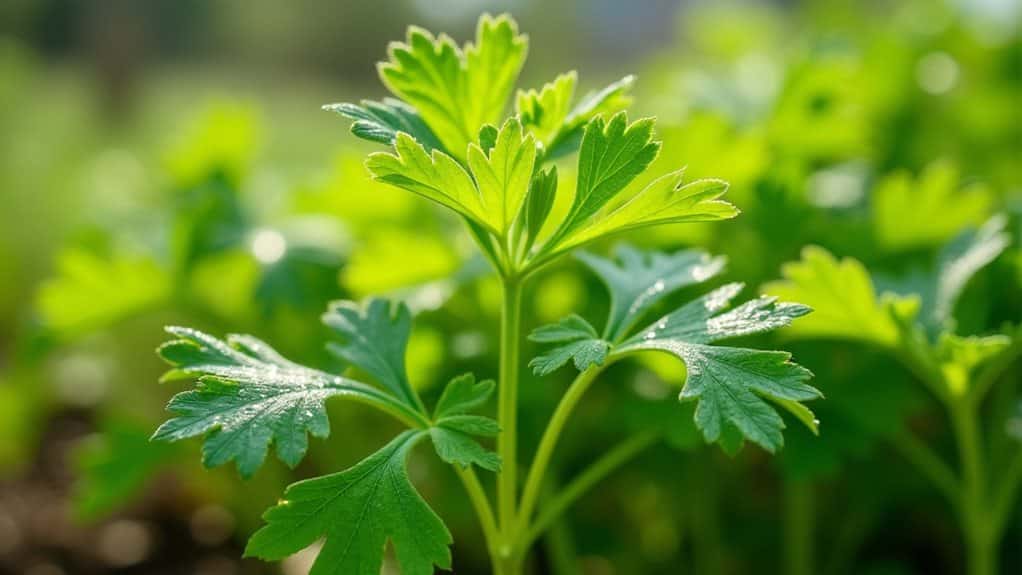
Just like stumbling upon a surprise thunderstorm during a camping trip, seeing your cilantro suddenly shoot up tall flower stalks can feel a bit dramatic and even a little disappointing—especially if you were hoping for a few more harvests of those lush, tasty leaves.
When cilantro bolting begins, act fast: snip off flowering cilantro stalks, harvest as many cilantro leaves as possible, and consider letting some plants produce cilantro seeds!
Monitoring environmental cues like temperature and day length can help you anticipate and manage phenological shifts, enabling better timing for your harvests.
Overall
So, next time you’re growing cilantro and dreaming of fresh salsa on a camping trip, don’t freak out if it bolts—just remember, it’s a bit dramatic in the heat! Try planting slow-bolting varieties, give it some afternoon shade, and keep that soil moist. Trust me, with a little effort, you’ll have enough cilantro to spice up any escapade, whether you’re at home or out exploring the wild. Honestly, it’s totally worth the extra care!