How to Stop Water Dripping Through Deck Boards
First, clear any leaves, pine needles, or pollen that’s clogging the troughs, because those tiny dams push water straight through the boards and into the joists. Next, snap rubber flanges into the board grooves and run joist‑tape along the seams to seal gaps—think of it like giving your deck a waterproof hug. Then, install a deck‑level gutter or a slip‑in drainage panel so rain runs off the edge instead of pooling under the deck. Finally, check the pitch and make sure the deck isn’t flat; a slight slope lets water slide away, keeping the wood dry and mold‑free. Keep these steps in mind and you’ll soon see the drip‑drip drama disappear, plus you’ll discover even more tricks ahead.
TLDR
- Clean and clear debris from deck troughs and gaps regularly to prevent water blockage and overflow.
- Seal board seams and joints with rubber flanges or joist tape to block water intrusion.
- Install an under‑deck drainage system (HDPE troughs or retrofit panels) to channel water away from the deck.
- Ensure proper deck pitch and add deck‑level gutters or downspouts to direct runoff off the deck surface.
- Provide ventilation under the deck to promote drying and prevent rot, mold, and wood deterioration.
Identify Causes of Under‑Deck Water Dripping
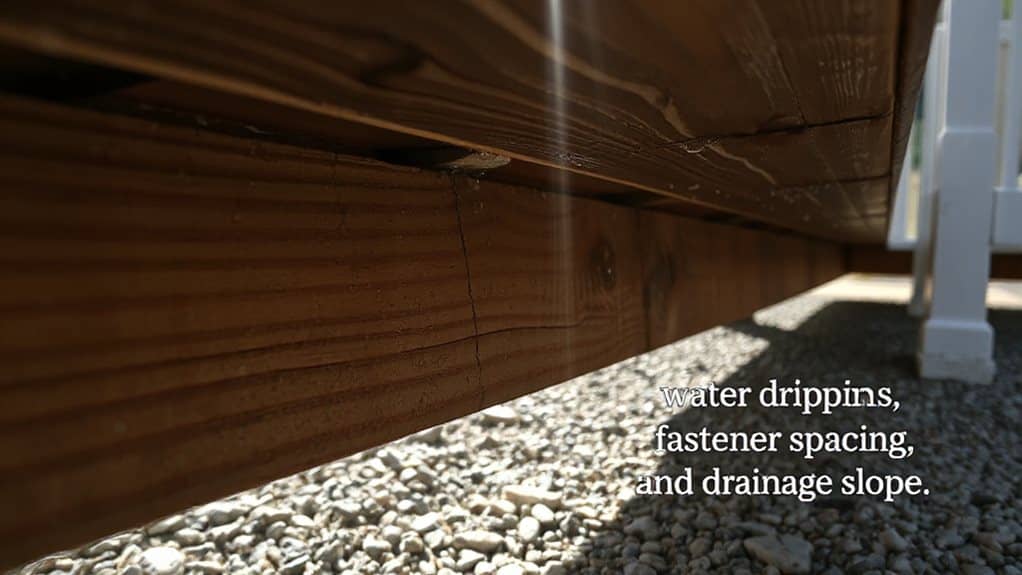
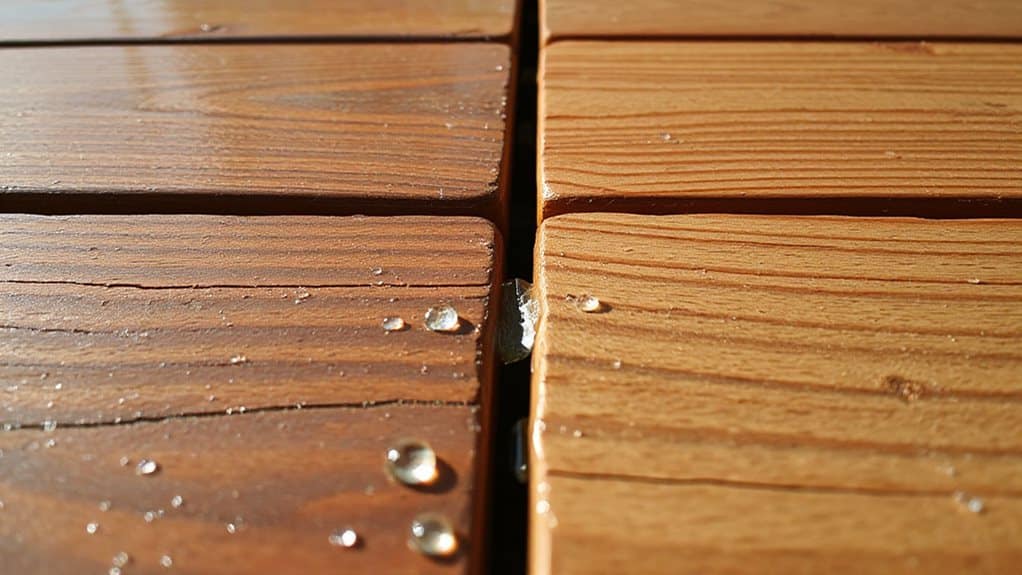
Ever wondered why your deck feels like a leaky tent after a rainstorm? You’ll find debris—leaves, pine needles, pollen—clogging troughs within a couple seasons, turning channels into dams that push water through boards, especially in wooded spots. Temperature swings and UV wear create seam gaps, while improper pitch leaves pools that invite bugs and mold. Regularly rinse, reseal seams, and check slopes to keep the deck dry for your guests. The design flaw is that under‑deck systems manage water after it penetrates rather than preventing entry. Moisture trapped under decks also promotes rot and decay, accelerating joist weakening and insect problems.
Pick the Right Under‑Deck System for Your Deck
So, which under‑deck system should you pick for your deck? If you’re building fresh, go above‑joist with HDPE troughs like Trex RainEscape—water stays off joists, you get a ceiling, and installation’s three easy steps.
For a retrofit, choose ZipUP below‑joist; it slides under, looks sleek, and wipes clean.
Proper ventilation is still crucial to prevent wood rot and mold under the deck.
Seal Under‑Deck Gaps Quickly With Rubber Flanges or Joist Tape
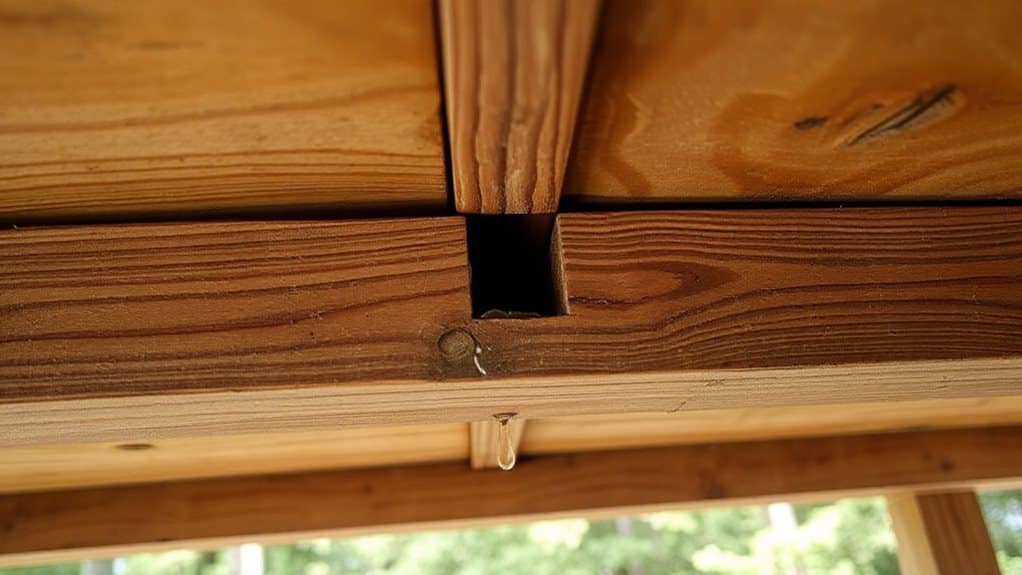
Want to seal those pesky gaps under your deck without tearing the whole thing apart? Grab rubber flanges that snap into board grooves—no clearance needed, and they hug Trex seams like a glove.
Or roll out PolyWall Joist Tape, brown‑camouflaged, sticky even in cold weather, protecting joists from moisture.
Both options zip in fast, cut seams, and keep water out, so you can focus on serving friends on the next camping trip.
Letting in a bit more light and airflow also helps keep sealed areas drier and prevents mold from forming under the deck by reducing trapped moisture and improving drying times, especially in shaded areas.
Route Water Away With Deck‑Level Gutters or Drainage Panels
A deck‑level gutter or drainage panel is basically the superhero cape for your backyard deck, catching rain right where it falls and sending it sliding off before it can sneak through those pesky board gaps and ruin your next camping‑trip snack stash.
Install PVC gutters flush with board tops, secure them with brackets, and link to downspouts; alternatively, slip drainage panels between boards, channel water laterally, and add leaf guards. This keeps decks dry, protects friends’ gear, and makes cleanup a breeze. Wind-aware positioning helps prevent gust-driven water spray and debris from undermining your drainage system, so consider orienting features to reduce wind-driven issues when possible.
Maintain Your Under‑Deck Water Management and Troubleshoot Issues
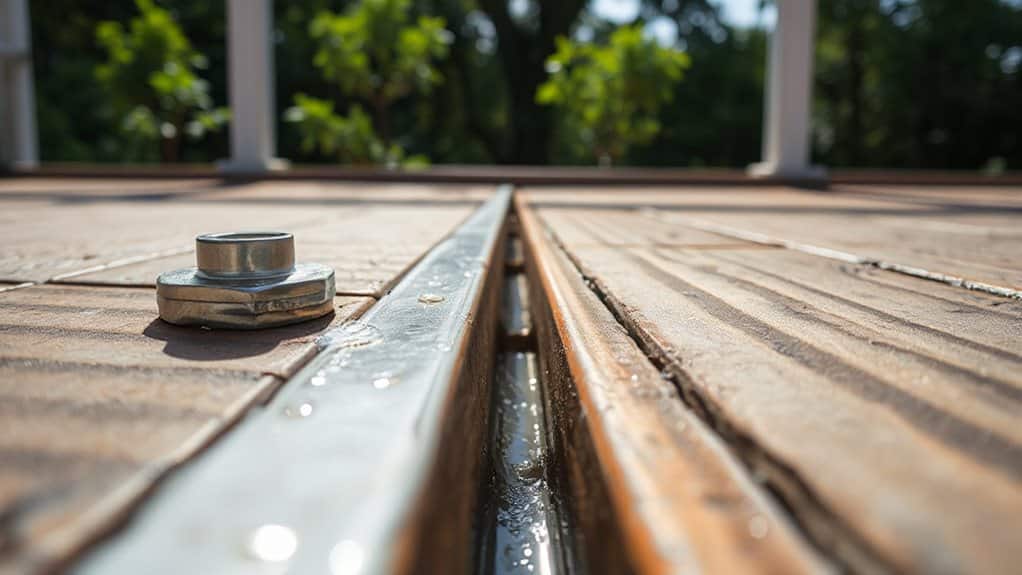
When you’ve got a deck that’s basically a secret campsite for your gear, keeping the under‑deck water system in top shape isn’t just a “nice‑to‑have”—it’s the difference between soggy snacks and dry adventures, so let’s explore the routine checks and quick fixes that keep water where it belongs.
Inspect gutters, clear debris, re‑tape seams, verify membrane seals, and enhance ventilation to prevent rot and mold, ensuring every trek stays dry and fun. Early detection of soft spots and mold can save your deck from costly structural damage.
Overall
Now you’ve got the tools, the know‑how, and a solid plan to banish those annoying drips—so why not turn your deck into a dry, happy hangout? Picture yourself sipping cocoa under a leak‑free canopy, or setting up a camp‑style tent for a backyard adventure; it’s totally doable. Keep an eye on seams, check the gutters often, and don’t forget to laugh when a stubborn splash shows up—because fixing it is half the fun, and the other half is the bragging rights!