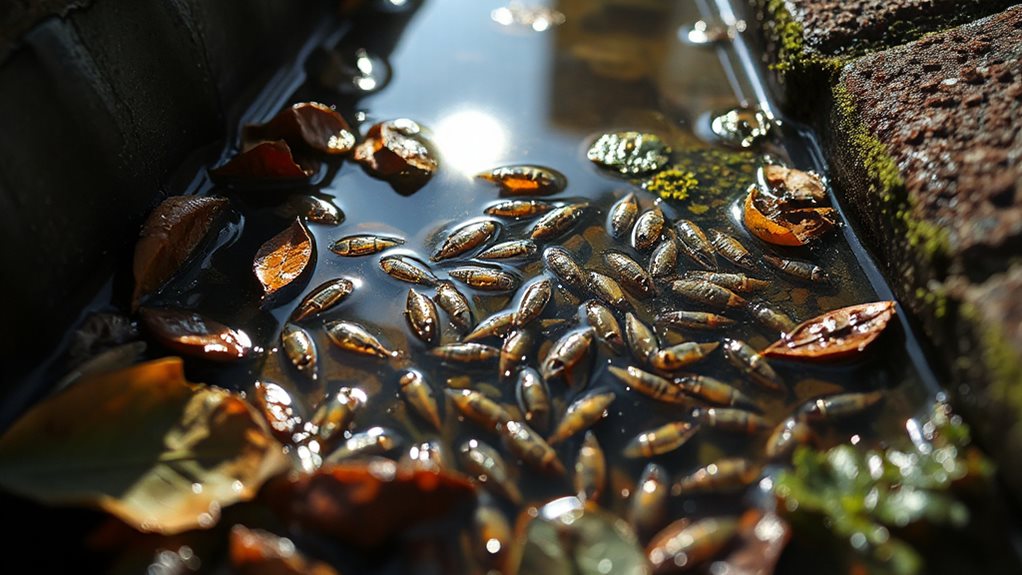
Why Do Mosquitoes Breed in Gutters?
You see, gutters turn into mosquito condos because rain and debris create tiny, warm pools that never drain, giving eggs a cozy film to cling to, wigglers a nutrient‑rich broth of decaying leaves and algae, and pupae a safe tumble zone—all while the summer heat speeds up their life cycle faster than a road trip to the beach. Those clogged channels hold water longer than a puddle on the sidewalk, so a single gutter can host every stage at once, making it a perfect breeding hotspot. Keep cleaning, and you’ll unveil even more tricks to shut them down.
TLDR
- Gutters often retain stagnant water after rain, creating a protected, moist environment ideal for mosquito egg laying.
- Organic debris (leaves, twigs, roof grit) accumulates in gutters, providing nutrients and food sources for mosquito larvae.
- Warm summer temperatures and humid evenings slow evaporation, allowing water to persist long enough for the mosquito life cycle to complete.
- Poor drainage and clogged sections form mini‑reservoirs where water can sit for days, supporting multiple mosquito life stages simultaneously.
- Seasonal factors such as spring temperature rise and summer heat revive dormant eggs and accelerate development, making gutters a year‑round breeding hotspot.
Do Gutters Breed Mosquitoes? The Quick Answer
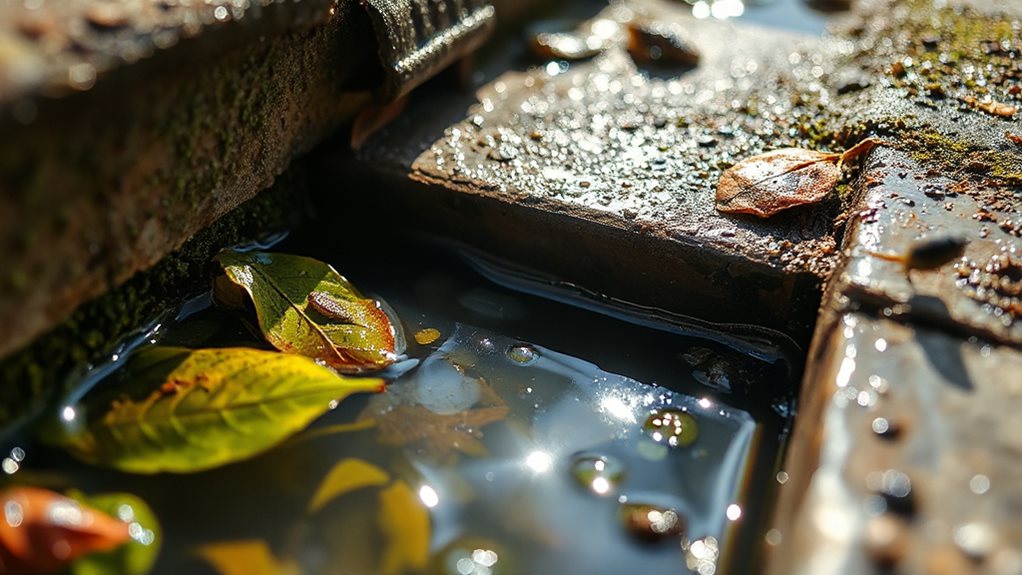
Ever wonder why a rainy day can turn your backyard into a mosquito hotspot? You’ll find clogged gutters literally become breeding gyms: a single tablespoon of stagnant water can hatch hundreds of mosquitoes, and even a tiny bottle‑cap pool fuels egg‑laying. Leaves, twigs, and roof grit form dams, feeding larvae with organic nutrients, so cleaning gutters twice a year stops the party and protects your neighbors. Warm summer temperatures accelerate the mosquito life cycle, making rapid multiplication a common occurrence. Homeowners should also be aware that unchecked gutters can create public nuisance issues under local ordinances and lead to complaints.
How Stagnant Water in Gutters Supports Every Mosquito Life‑Stage
So, why does a little puddle in your gutter turn into a full‑blown mosquito resort? You’ll see eggs clinging to the moist film, then hatch into wigglers that sip and surface, pupae tumble in silence, and adults dry their wings before buzzing away.
Warm, still water speeds each stage, so every drop fuels the whole life‑cycle, turning your gutter into a tiny, buzzing campsite. Fixing gutter drainage and clearing debris reduces standing water and mosquito breeding in these hidden nurseries.
How Organic Debris Fuels Mosquito Larvae in Gutters
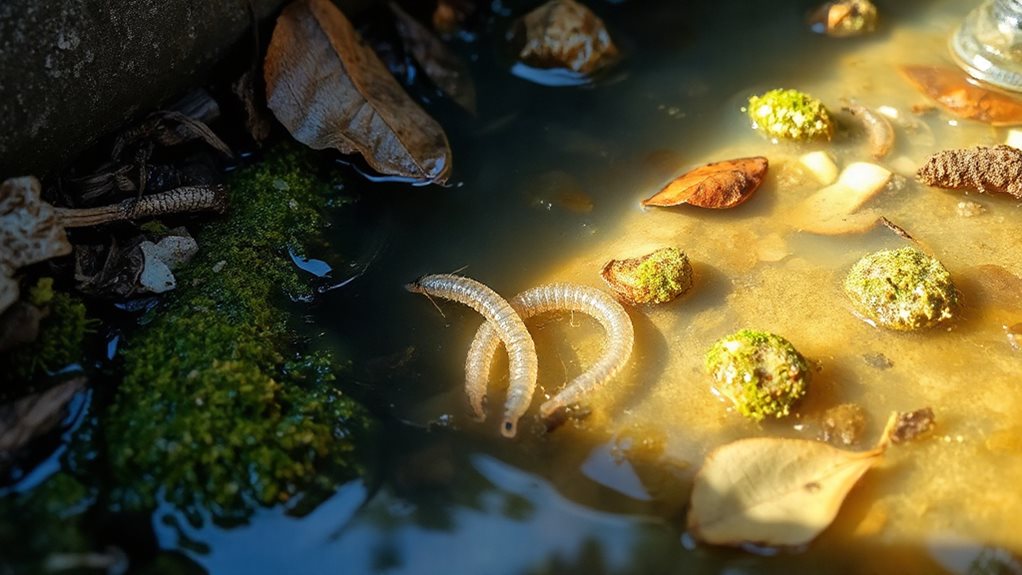
What makes a gutter turn into a mosquito “campground” isn’t just the water—it’s the pile of leaves, twigs, and even that gritty shingle dust that collects after a rainstorm, turning the shallow puddle into a all‑you‑can‑eat buffet for tiny larvae. You’ll see how each decaying leaf releases nutrients, how algae blooms on that shingle grit, and how overhanging trees drop fresh snacks, turning stagnant water into a nonstop feast that fuels rapid larval growth and keeps the mosquito population thriving. Local drainage changes and accumulated organic matter can create persistent standing water that worsens breeding conditions.
How Warm Weather and Seasonal Changes Speed Up Gutter Breeding
When the sun cranks up the thermostat and the air hangs heavy with humidity, your backyard gutters suddenly turn into a buzzing campsite for mosquito larvae, and you’ll notice how fast the whole life‑cycle speeds up—egg to adult in just a few weeks instead of months.
Warm 70‑85°F days turbo‑charge hatching, while humid evenings keep water from evaporating, and spring‑to‑summer temperature jumps revive dormant eggs, so you see swarms exploding faster than a campsite fire.
Debris buildup and poor drainage in gutters also create ideal standing-water habitats that let larvae thrive, especially when stagnant water remains after rains or melting snow.
Why Clogged Gutters Hold Water Longer Than Other Outdoor Spots
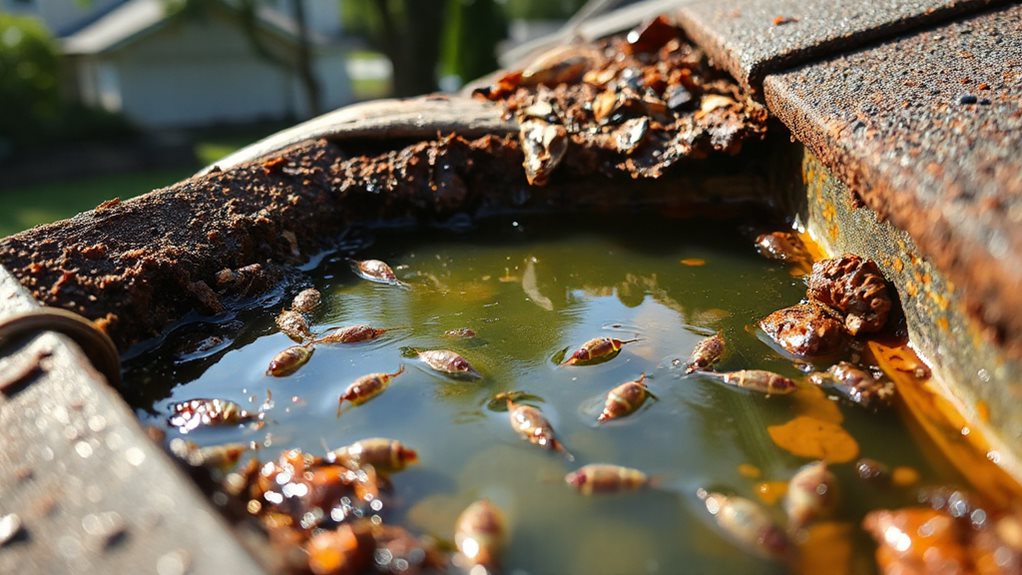
You’ve probably noticed that after a rainstorm your gutters stay soggy way longer than the puddles in the yard, and that’s not just luck—it’s the way debris turns those metal channels into mini‑reservoirs.
Leaves and twigs trap water, blocked downspouts halt flow, and the roof’s shade slows evaporation, so water lingers days while ground puddles vanish within hours.
Some insects also exploit these long‑lasting water sources to overwinter or breed, especially species that seek insulated microhabitats during colder months.
How Mosquito Eggs Survive on Damp Gutter Surfaces
Ever wonder why a mosquito’s egg can cling to a soggy gutter and survive the dry spell that follows a rainstorm? You’ll find that eggs stick to damp, gritty surfaces using tiny suction pads, while humidity, dew, and leaf litter keep them moist; they wait 24‑48 hours for rain to re‑hydrate, then hatch.
How All Four Mosquito Stages Can Co‑Exist Inside One Gutter
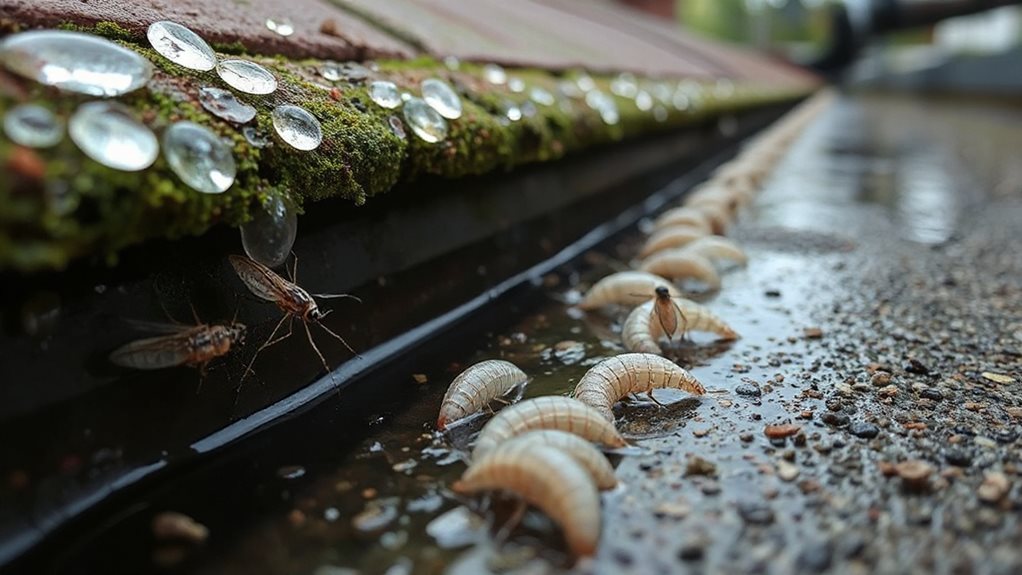
You’ll notice that a single gutter can host eggs, wigglers, tumblers, and adults all at once, because the stagnant water creates a tiny ecosystem where each stage feeds on the leftovers of the one before it, turning waste into a nutrient buffet; have you ever watched a campfire’s embers keep burning while new logs join the blaze?
that’s what’s happening down there, a continuous loop that lets larvae munch on microbes while pupae sip air through their trumpets, and adults hover nearby, ready to lay the next batch of eggs, so you can picture the gutter as a miniature, buzzing campsite where every resident plays a part in the food‑cycle party.
Simultaneous Stage Overlap
Ever wonder how a single gutter can become a thriving mosquito metropolis where eggs, larvae, pupae, and adults all hang out together?
You’ll see eggs hatch in two days, larvae munching while late‑instars turn pupae, and fresh adults skimming the surface, all sharing the same stagnant pool; the constant moisture and warm temps keep each stage thriving, so generations overlap like a nonstop camp‑fire story circle.
Microhabitat Nutrient Cycling
Imagine you’re setting up a little campsite in a clogged gutter, and instead of marshmallows you’ve got eggs, larvae, pupae, and adults all sharing the same puddle—each stage pulling its weight in the nutrient dance that keeps the whole crew alive. You see, eggs ride the flood, larvae munch microbes from leaf litter, pupae bank stored energy while tumbling, and adults sip nectar then blood, dumping nutrients back into the water, creating a nonstop, self‑sustaining buffet that lets every life‑stage thrive together.
Why Mosquito‑Borne Diseases Are a Neighborhood Threat When Gutters Are Infested
You’ll notice that when a single gutter’s full of mosquito larvae, those pesky bugs don’t stay put—they zip across the block, turning your quiet cul‑de‑sac into a buzzing hotspot, and that can quickly spark a community‑wide health alert if a disease like West Nile or Zika shows up.
Have you ever thought about how one neighbor’s unchecked gutters could jeopardize everyone’s weekend camping trips, making the whole neighborhood feel like a giant, unwanted campsite for disease‑carrying insects?
Spreading Within Neighborhoods
So, why does a clogged gutter turn your whole block into a buzzing hotspot? You’ll see mosquitoes spilling out, hitching rides on breezes, and landing on neighboring balconies, because standing water fuels larvae that become adults ready to roam.
When one roof harbors eggs, the whole street gets a mosquito parade, spreading disease risk far beyond the original gutter.
Community Health Impact
What if the next time you step out onto your balcony you’re actually stepping into a buzzing airport, a whole neighborhood’s worth of disease‑carrying mosquitoes taking off from a single clogged gutter? You’ll see how stagnant water fuels dengue and West Nile, turning homes into hotspots where 28% of houses harbor Ae. aegypti larvae, and how your care can protect neighbors from outbreaks.
Collective Prevention Responsibility
Ever wonder why a single clogged gutter can turn your whole block into a buzzing mosquito airport?
When you clear yours, you stop hundreds of larvae from turning into winged disease carriers that hop across property lines, protecting kids at schools and neighbors on camping trips; join the neighborhood clean‑up crew, install guards, and share the responsibility—your effort keeps everyone safe and the air itch‑free.
How to Spot Mosquito Activity in Your Gutters
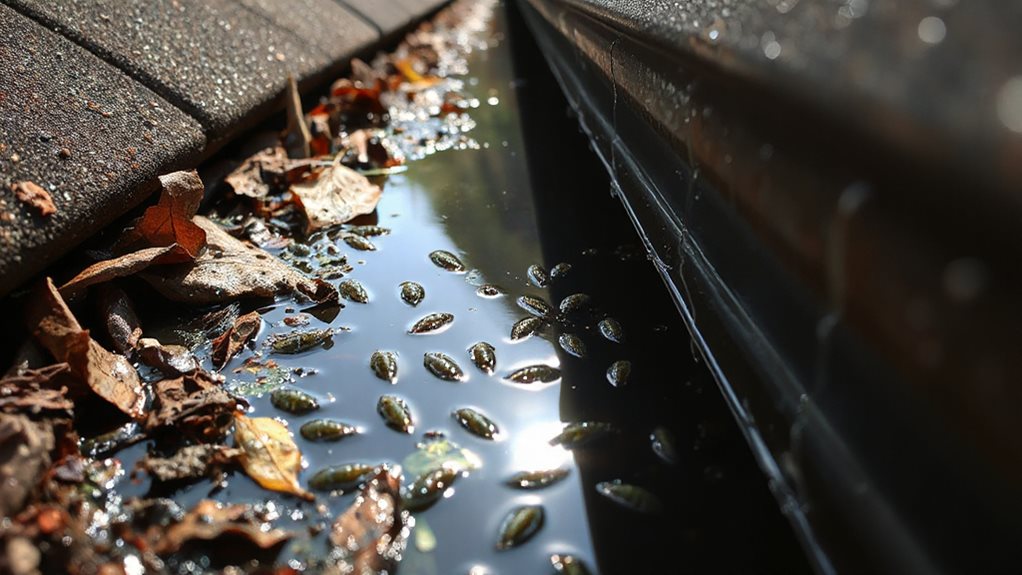
Ever wondered why those pesky mosquitoes seem to set up camp right where your rain gutters drip? You’ll spot them by checking for soggy plant growth, sagging sections, or leaf mats that trap water, then look for tiny worm‑like larvae wiggling in dark pools, swarms spilling from downspouts, and a faint musty smell—signs that standing water’s turned your gutters into a mosquito hotspot.
Simple Steps to Clean Gutters and Eliminate Breeding Habitat
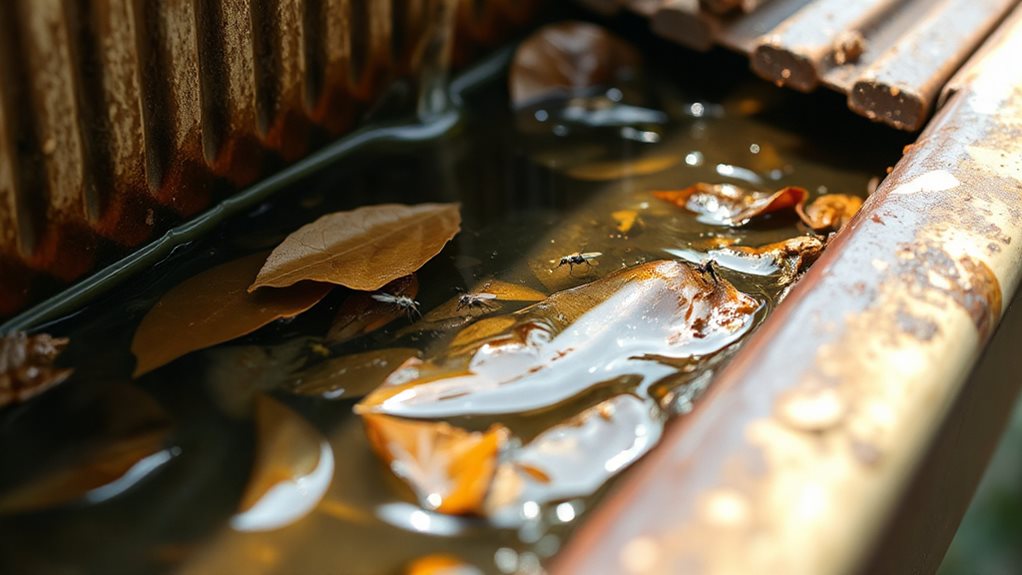
You’ll feel like a campsite‑ready adventurer when you suit up with gloves, grab a ladder, and clear out every leaf and twig, because safety first means no surprise mosquito “guests” lurking in the mess; have you tried installing a gutter guard yet—think of it as a tiny fence that keeps debris out while you enjoy a rain‑free walk, and don’t forget to set a seasonal maintenance schedule, like a camping trip checklist, so you’re checking and cleaning twice a year (or more if trees surround your home) to keep the breeding spots at bay and your backyard feeling fresh.
Safety and
Ever wondered why a simple gutter can turn your backyard into a mosquito hotspot?
When you climb a ladder, wear sturdy shoes, and secure a spot, you protect yourself from falls, sharp debris, and hidden critters; always check for power lines, keep a buddy nearby, and use a long‑handled scoop to avoid stretching too far, because safety lets you clean confidently and keep neighbors mosquito‑free.
Gutter Guard Installation
How do you turn a leaky gutter into a mosquito‑free zone while still feeling like you’re on a backyard excursion? Grab a ladder, gloves, goggles, then clear debris, inspect for damage, and wipe the lip with acetone.
Measure, cut guards with tin snips, overlap half‑inch, slide them under shingles, clip, secure three screws per four‑foot section, and test flow with a hose.
Seasonal Maintenance Schedule
Ever wondered why a clean gutter feels like a backstage pass to a perfect backyard excursion?
You’ll inspect for winter damage, clear pollen and leaves, test flow, and trim branches in spring, then deep‑clean and check drains in summer. In fall, rake leaves, seal joints, and watch for pests. Winter calls for ice‑dam checks and snow removal. Set reminders, snap photos, and adjust frequency by tree density.
Installing Gutter Guards to Keep Mosquitoes Out for Good
Installing gutter guards is basically the secret weapon you’ve been looking for to turn your roof’s rain‑runoff system into a mosquito‑free zone, and trust me, it’s way easier than you think—just envision yourself slapping a foam‑filter insert onto the gutter’s edge, watching water glide right through while leaves, pine needles, and that pesky debris get blocked, which means no more standing pools for mosquito eggs to hatch, plus you’ll cut down on clogs, protect your home from water damage, and ditch the chemical sprays that usually feel like a science‑lab experiment gone wrong, all while feeling like a DIY hero who’s just upgraded the house for the next camping trip excursion.
Why Neighborhoods Benefit When Every Home Keeps Gutters Mosquito‑Free
Ever wondered why a single clean gutter can feel like a tiny victory for the whole block? When you clear yours, you cut mosquito breeding, dropping disease risk for neighbors, so backyard barbecues stay bite‑free, and community health teams can focus elsewhere.
Imagine everyone pitching in—our block becomes a safe campsite, with fewer pests, happier families, and fewer headaches from dengue or West Nile.
Overall
Now that you’ve seen how gutters turn into mosquito hotels, you’ll know exactly why a quick clean‑up can save your backyard from buzzing chaos. Imagine yourself camping under a starry sky, no itchy bites ruining the fun—sounds awesome, right? So grab a ladder, clear out the leaves, install a guard, and keep the water flowing. Your neighbors will thank you, and you’ll finally enjoy those summer evenings without swatting at tiny winged intruders.