How to Improve Backyard Drainage Naturally
Start by reshaping the land so water slopes away from the house, then add a gravel‑filled French drain or dry‑creek swale to whisk runoff toward a rain garden; plant native wet‑soil lovers like milkweed, sedges, and irises for splashy color and pollinator homes, swap any solid patio for permeable pavers or a meadow of native grasses, and sprinkle mulch and compost to boost soil aeration and moisture control—keep gutters clear, cap tree roots, and you’ll watch soggy spots disappear, plus there’s a ton more tricks up ahead.
TLDR
- Install a French drain with a proper slope (≈1 in per 8‑10 ft) using perforated pipe, gravel, and fabric to channel excess water away.
- Create rain‑garden or dry‑creek beds with native wet‑soil plants (e.g., sedges, irises, river birch) to absorb and filter runoff.
- Replace impermeable surfaces with permeable pavers, gravel, or a meadow of native grasses to allow water infiltration.
- Improve soil structure by adding compost, leaf mulch, and earthworms, then aerate to increase porosity and moisture management.
- Re‑grade the yard and add terraced or sloped gravel beds to direct water toward drainage features and away from the foundation.
Diagnose Your Yard’s Core Drainage Problems
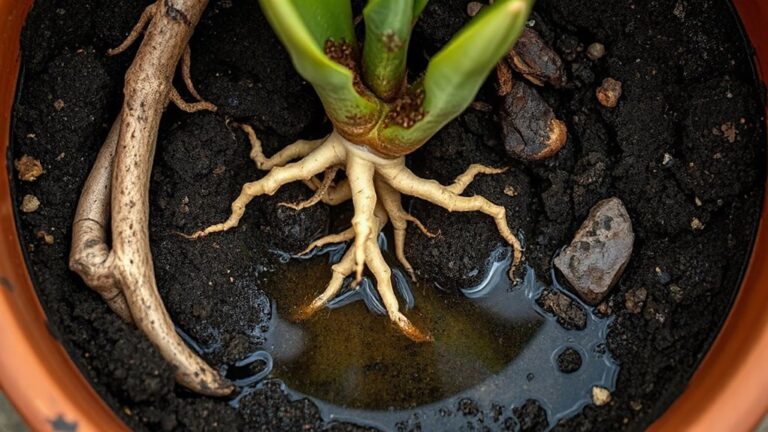
Ever wondered why your backyard feels like a mini‑lake after a rainstorm? You’re probably dealing with a sloping yard that sends water straight toward the foundation, or clay‑heavy soil that traps it like a sponge, plus gutters that overflow because they’re clogged or too short.
Check for tree roots invading pipes, and notice if flower beds or patios block flow—those clues tell you exactly where the drainage drama starts. Improper grading can exacerbate water pooling near the foundation. Local regulations and property boundaries can also affect what drainage fixes are permissible and where you can install solutions like swales or drains local laws.
Select Native Rain‑Garden Plants for Wet Soil
Wondering which plants will turn your soggy backyard into a thriving, wildlife‑friendly oasis? Plant milkweed (SwampMilkweed) for monarchs, dense sedges to slow runoff, and soft rushes for bird nests; add irises for splashy color and river birch or winterberry for height and berries. Choose species that love wet soil, thrive in sun or shade, and give pollinators a party—your garden becomes a living, giving sanctuary. Stagger plantings every few weeks to ensure continuous blooms and extended habitat benefits.
Install a Simple French Drain for Your Rain Garden
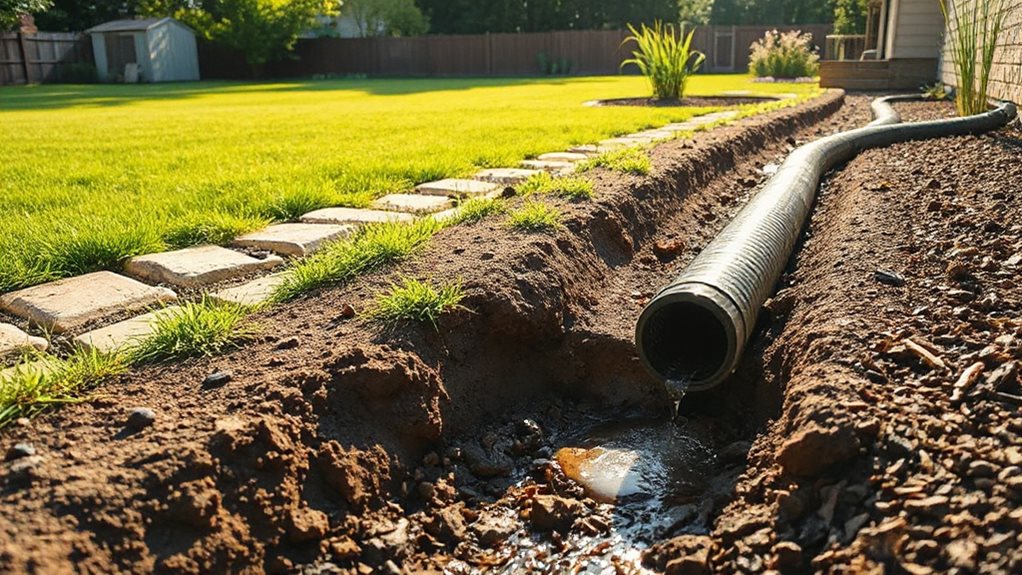
You’ll want a solid pipe slope—about an inch drop every 8‑10 feet—so water rushes away like a mini‑river, and you can pick a perforated PVC pipe that lets the rain garden sip the flow while keeping the rest out; have you ever tried lining a trench with fabric and gravel?
It’s surprisingly easy, just lay the fabric, drop the pipe, and watch the water glide straight into your garden, then cover it up with soil and a splash of grass.
Give it a go, and you’ll feel like a campsite‑ready explorer conquering backyard drainage!
Improving soil health through core aeration and organic matter will help your rain garden and surrounding lawn manage water more effectively.
Choose Ideal Pipe Slope
So, how do you make sure your French drain actually sends water zipping away instead of pooling like a lazy river in your backyard?
Measure the run, drop one inch per eight feet, stake a string, run a line level, and double‑check with a digital gauge.
Keep the trench flat, pack the base, backfill with gravel, and watch the water glide—just like a camp‑trip stream!
Select Perforated Pipe Type
Now that you’ve nailed the slope so water rushes away like a mountain stream, it’s time to pick the pipe that will actually carry it—think of it as choosing the right hiking boots for a trail. Opt for a 4‑inch perforated PVC if you want durability, or a flexible corrugated pipe for easy bends; High Octane adds strength, while EZflow’s pre‑filled aggregate saves time. Use a fabric sock, orient perforations downward, and cap ends to keep stones out, ensuring your garden stays dry and happy.
Integrate With Rain Garden
When you spot those soggy patches after a rainstorm, think of turning them into a mini‑adventure zone by pairing a rain garden with a simple French drain—it’s like giving your backyard a secret tunnel that shuttles excess water straight to a safe outlet, keeping the garden lush and the foundation dry.
First, mark utilities, then dig a 12‑inch‑deep, 10‑inch‑wide trench with a 1% slope, line it with fabric, lay a gravel base, place a downward‑facing perforated pipe, wrap it up, and finally plant your garden.
Build a Dry Creek or Bioswale to Direct Runoff
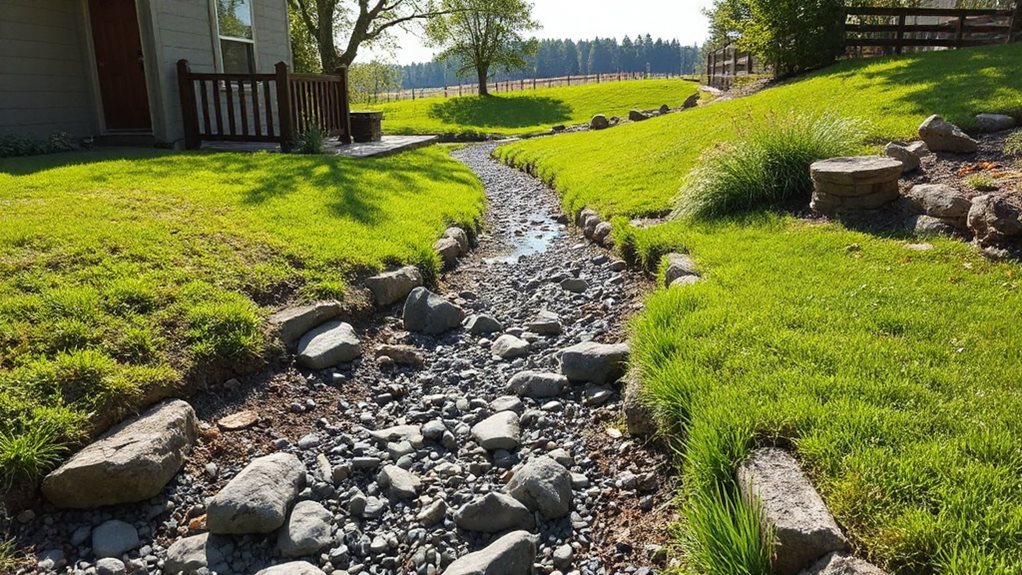
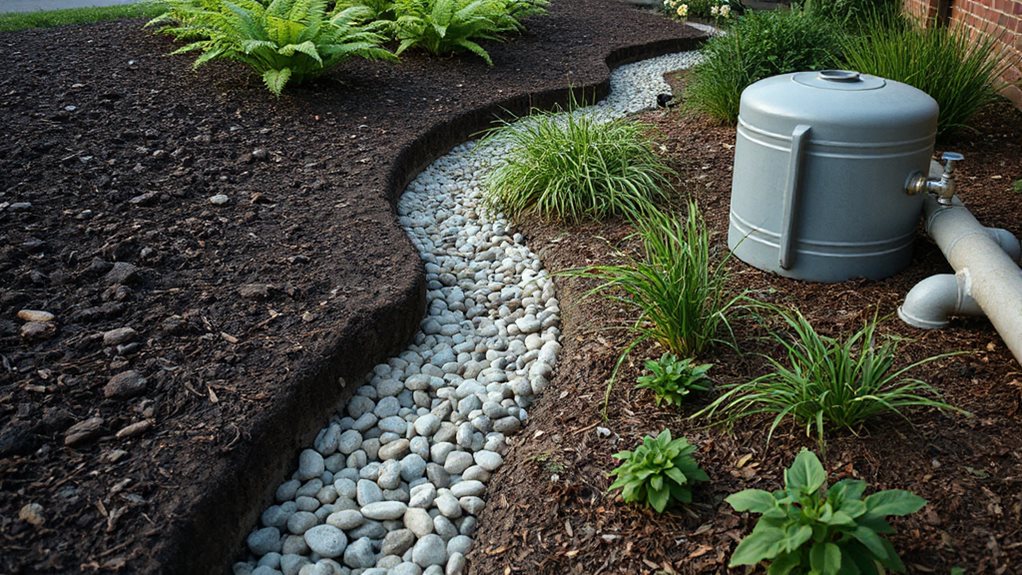
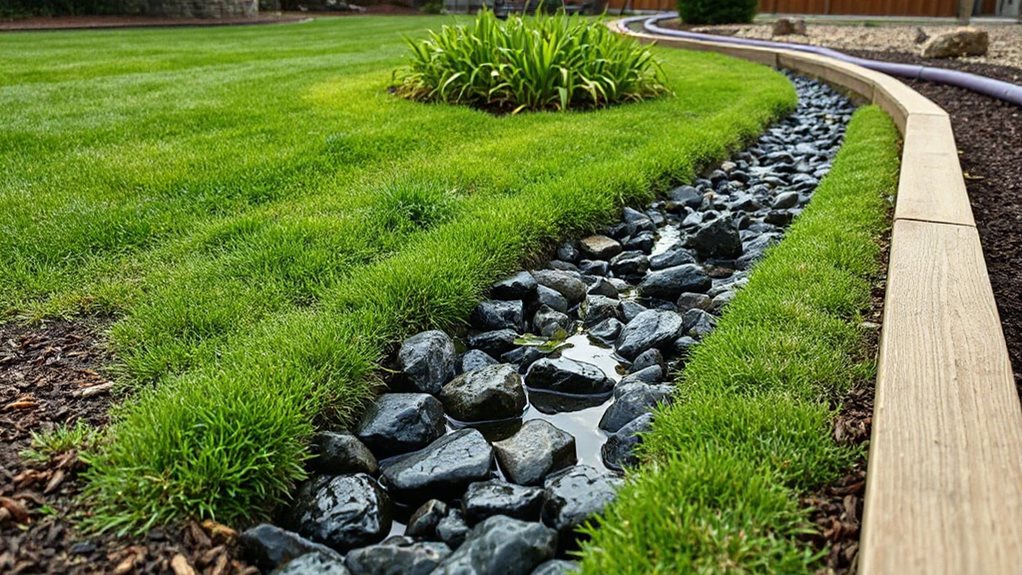
You’ll start by laying a solid gravel base that lets water slip through like a smooth trail, then sprinkle in native plants—think Blackfoot Daisy or other hardy locals—that love the rocky, well‑drained vibe and actually help filter the runoff.
Ever wonder why a dry creek feels like a mini‑adventure trail in your yard? Grab a handful of boulders, stack them with a grin, and watch rain turn into a cool, flowing mini‑river that’s both functional and fun.
In areas with compacted clay, consider incorporating compost topdressing after creating the gravel bed to improve infiltration and help plants establish.
Design Gravel Base
A solid gravel base is the secret sauce that turns a plain ditch into a thriving dry‑creek or bioswale, and trust me, you’ll love watching water glide over it like a mini‑river in your backyard.
First, lay ½‑inch pea gravel on fabric, then a ¾‑inch crushed‑drain layer, top with ⅜‑inch pea gravel, and finish with 1‑2‑inch river rock.
Compact each layer, slope it 5°, and frame with boulders for a natural, sturdy channel.
Select Native Plant Species
Choosing the right native plants is the secret sauce that turns a simple ditch into a lively, water‑loving dry creek or bioswale, and you’ll be amazed at how quickly the terrain changes when you match species to the soil’s mood.
Pick deep‑rooted flag iris for soggy spots, fibrous sedges to filter runoff, and hardy shrubs that hold soil, cut erosion, and need almost no mowing—your backyard becomes a low‑maintenance oasis that helps neighbors and streams alike.
Replace Impermeable Pavement With Permeable Pavers or Gravel
Imagine swapping that boring concrete slab for a cool set of permeable pavers or a bed of gravel, and watching rainwater disappear right through the gaps like magic—no more soggy puddles, no more runoff flooding the street, just a backyard that drinks its own rain. You’ll cut runoff by up to 90 %, filter oil and sediment, protect garden beds from erosion, and give neighbors a dry driveway that feels like a community win. During storms, proper drainage also reduces the risk of water intrusion into outdoor electrical outlets and panels, helping prevent ground faults and short circuits.
Maintain Permeable Pavers and Gravel After Installation
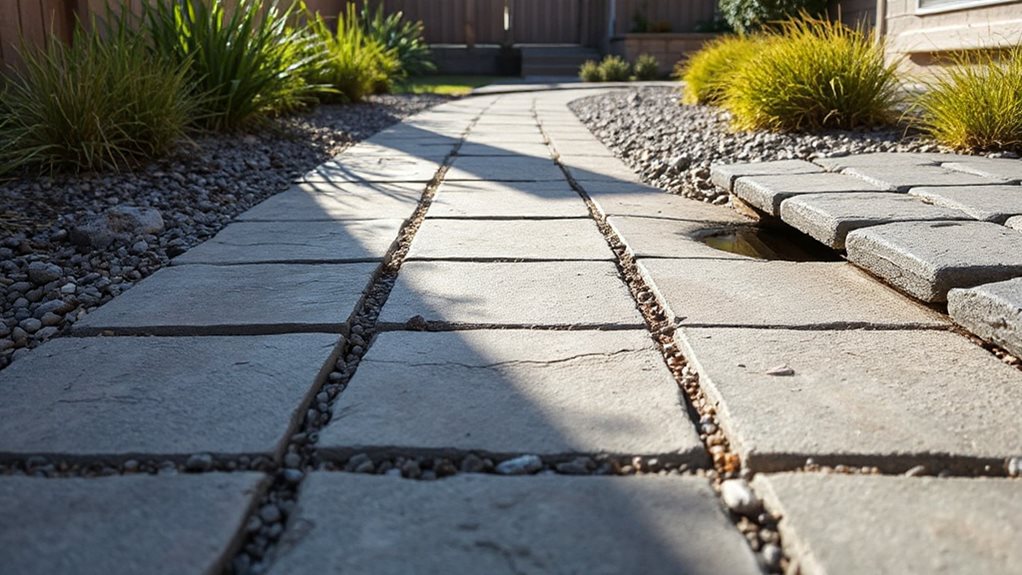
Ever wondered how to keep those cool permeable pavers and gravel beds working like a well‑tuned campsite water‑filter system? Sweep away leaves and twigs weekly, vacuum twice a year, and power‑wash stains gently; check for pooling after rain, refill joint gravel when it drops below the lip, and hand‑weed with natural vinegar.
Replace cracked pavers promptly, and keep the drain outfall clear—your backyard will stay as fresh as a mountain stream.
Replace Turf With a Moisture‑Absorbing Meadow
Ever wondered why a meadow feels like a natural sponge under your feet? You swap your turf for native grasses, sedges, and wildflowers, and those deep roots drink rain, letting water soak instead of sprinting off.
The meadow filters pollutants, stabilizes soil, and needs zero fertilizer, so you save time, money, and help neighbors enjoy cleaner streams—plus it looks cool for backyard camping nights.
Plant Water‑Loving Trees and Shrubs to Soak Up Runoff
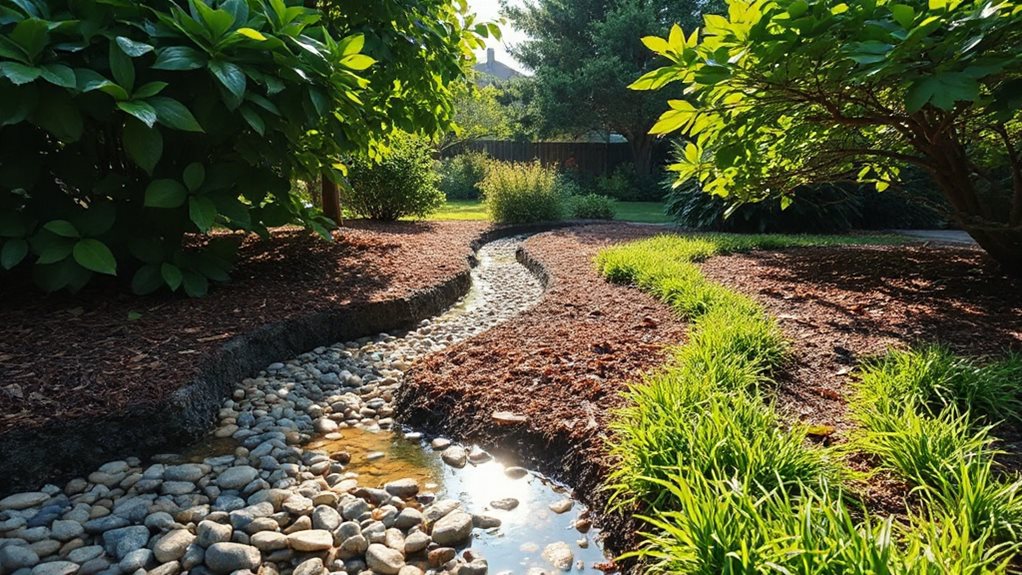
What if you could turn your soggy backyard into a natural water‑sponge playground, just by planting a few trees and shrubs that love soaking up runoff? Plant a weeping willow for massive daily uptake, a red maple for flood‑prone spots, and inkberry or button bush in swampy corners; their roots pull water, prevent erosion, and give wildlife homes, all while you enjoy a greener, friendlier yard.
Use Raised Planters to Improve Soil Drainage and Ongoing Maintenance
A raised planter is basically a superhero‑like garden box that lifts your soil off the soggy ground, letting gravity do the heavy lifting so water doesn’t sit around like a lazy campfire.
You’ll fill it with premium mix, add a gravel base, and tier the beds to keep water flowing.
Then compost, leaf mulch, and earthworms keep the soil airy, nutrient‑rich, and ready for anyone you share the harvest with.
Overall
Now you’ve got the tools to turn a soggy backyard into a dry‑adventure zone, so why not start with a rain‑garden and watch the water disappear like magic? Toss in native plants, dig that French drain, and maybe even a dry creek that looks like a mini‑river—your friends will think you’ve hired a landscape designer. Keep the pavers clean, swap out the turf for a meadow, and you’ll be camping on solid ground, no soggy socks required!