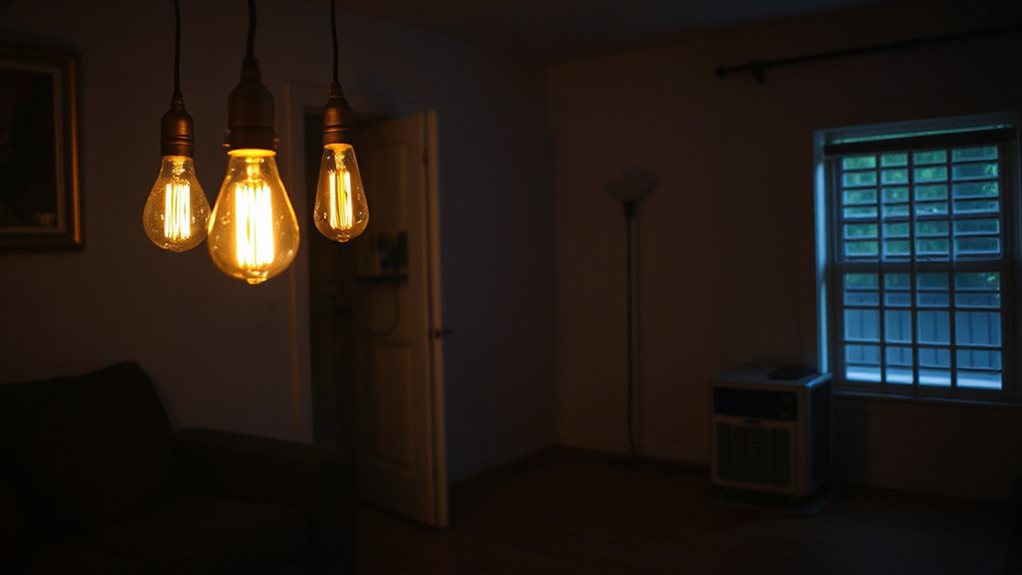
Why Do Lights Dim When the AC Turns On?
When your AC kicks in, its motor gobbles a huge burst of current—sometimes twenty times its normal draw—so the voltage on that circuit drops for a split second, making every bulb flicker like fireflies at a campsite. If the wiring is a bit thin, loose, or the start capacitor is sad, the dip gets even deeper, and the lights dim more noticeably. Shared circuits and overloaded breakers add to the drama, and a loose connection can spark a tiny arcing show. Tightening terminals, adding a soft‑start kit, or moving lights to a separate line usually fixes it, and if you keep exploring you’ll discover even more tricks.
TLDR
- The AC’s motor draws a large inrush current at startup, causing a temporary voltage drop on the circuit.
- Undersized or loose wiring adds resistance, amplifying the voltage dip and dimming nearby lights.
- Shared circuits with other loads spread the voltage drop, so all lamps on that circuit dim simultaneously.
- Faulty start capacitors prolong the motor’s high‑current draw, worsening the dimming effect.
- Tightening connections, upgrading wire size, or adding a soft‑start device can eliminate the dimming.
Why AC Start‑up Causes a Brief Voltage Drop
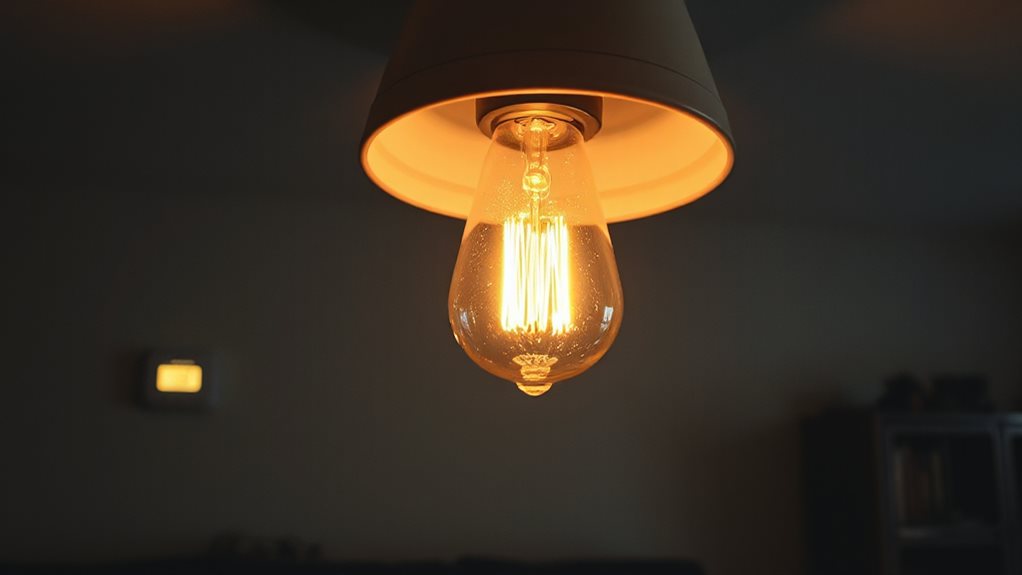
Why does the lights flicker the moment you flip the AC switch? When the compressor kicks in, it draws a surge of current, and any undersized wiring, loose terminals, or corroded connections add extra resistance, causing a brief voltage drop. This momentary dip can also trigger the AC’s control board to temporarily reduce power to other devices, voltage tolerance that leads to the lights dimming. Think of it like a campfire’s spark—sudden, bright, then calming—so your lights dim momentarily before the AC steadies the flow. Outdoor factors like hot weather and undersized cables can worsen startup drops by increasing resistance in cords.
How Inrush Current and Faulty Capacitors Cause Light Dimming When the AC Turns On?
When you flip the AC switch and the lights dim for a split second, it’s not a ghost in the house—it’s the motor’s inrush current crashing the party, and a busted capacitor can make the drama even louder.
The motor draws ten‑to‑twenty times its normal current for a few milliseconds, pulling voltage down, while a faulty start capacitor forces the motor to stay hungry longer, amplifying the dip and making your bulbs flicker noticeably.
Consistent enforcement of rules and documentation, like taking photos and citing specific CCRs, helps homeowners challenge unfair HOA actions that might arise from disputes over visible external electrical work.
How Shared Circuits and Overloaded Breakers Worsen Light Dimming
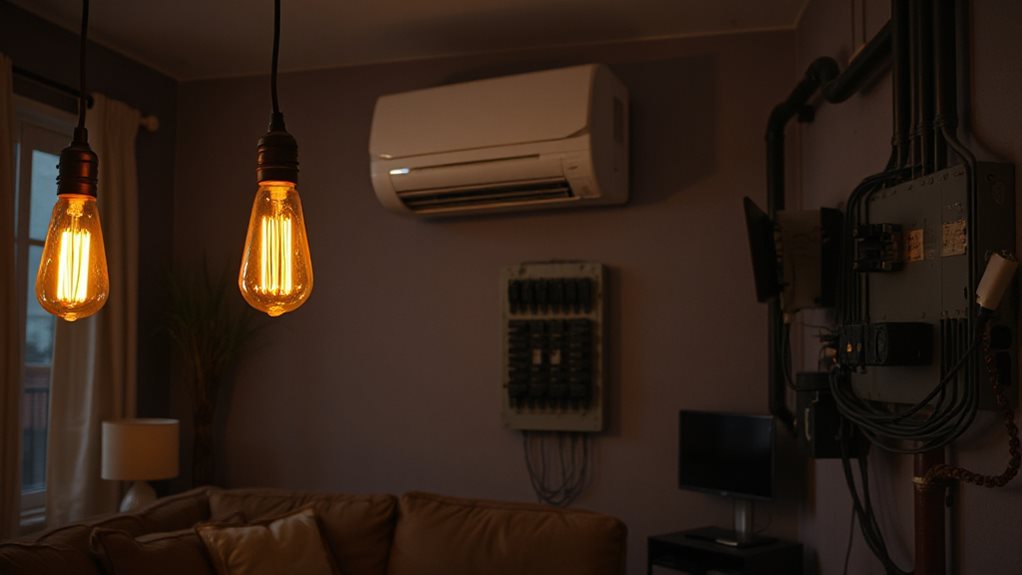
Ever wondered why your hallway lights flicker like a firefly when the AC kicks on? You’re sharing a circuit, so the AC’s huge startup surge trips up the wiring, causing a voltage dip that makes every lamp dim. If the breaker’s already near its limit, the extra load pushes it over, heating wires and flirting with fire hazards—so separate circuits, upgrade the panel, and keep the lights bright while you camp‑out indoors. Consider adding surge protection for appliances to reduce stress on shared circuits and protect devices from voltage fluctuations.
How Loose Connections and Undersized Wire Exacerbate Flickering When the AC Starts
You’ve just seen how a shared circuit and an overloaded breaker can make your hallway lights flicker, but the real culprits often hide in the wiring itself—loose connections and undersized wires that act like a busted backpack strap when your AC bursts to life.
When the AC’s inrush hits a loose lug, arcing spikes resistance, turning lights on and off like a campfire flicker, while thin wires choke the surge, dropping voltage and dimming bulbs dramatically, so you can spot charred spots and know it’s time to tighten or upgrade.
Low system voltage from heavy starting currents also gives clover-like symptoms in electrical systems, where reduced voltage lets problems spread and reveal underlying weaknesses.
Practical Steps to Prevent Light Dimming When Your AC Turns On (and When to Call a Pro)
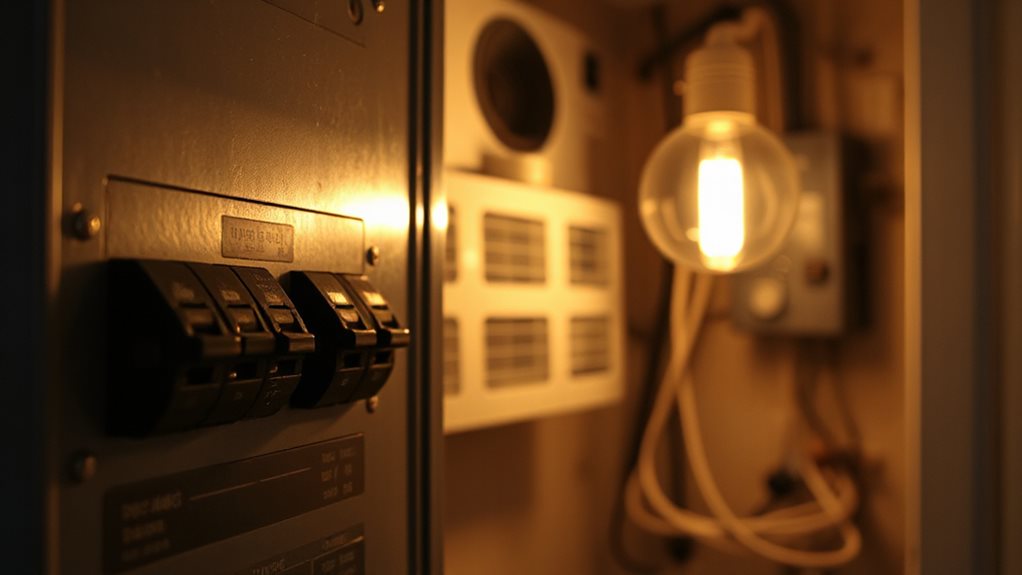
Ever wondered why your hallway lights flicker like a campfire when the AC kicks on, and how you can stop that drama before it ruins your movie night?
First, check if the AC shares a circuit with high‑draw devices; if so, move lights to a dedicated line or upgrade the panel.
Tighten contactor connections, add a soft‑start kit, and call a pro if the unit’s old or the breaker trips.
Also, be aware that fireworks can cause community disturbances and safety risks, including fires and injuries, so report illegal use to authorities when public safety is threatened and review local fireworks laws for consequences.
Overall
Now you know why the lights dim when the AC kicks in—those sudden inrush currents, shared circuits, and loose wiring all play a part, and fixing them can be as easy as tightening a connection or upgrading a breaker. Keep an eye on your system, and if the flicker persists, call a pro before your house feels like a disco. Happy cooling, and enjoy the breeze without the flickering lights!